


Categories: Other Meditation Teachings
May the blessings of the Triple Gem be with you all!
Today, I wish to share a practical understanding for all of you who are developing your spiritual life, engaging with spirituality, or are simply curious about this path. This teaching is about how we should communicate when we meet others, regardless of their social standing. We who follow this path are practically experiencing what spirituality means, and through these teachings, we continuously clarify this for you through practical guidance.
Through this shared exploration, a spiritual community is being built a group of people who investigate, engage with, and pay attention to their inner development. This community forms without regard to age, nationality, or religious background. This article will help you recognize these fellow travelers and understand how to interact with them.
Why is this teaching important? You will understand its value through listening and, more importantly, through practical application. Some of you may have already had experiences like this, perhaps through a rare, wisdom-filled event in your life. This exploration will illuminate that path.
The Energetic Power of a Teacher’s Voice
As someone on a spiritual journey, you may already have a practice of listening to Dhamma talks from a place of deep concentration. I often suggest listening with your eyes closed, as if you are in a state of calm meditation, known in Buddhism as Samatha. You can do this while sitting in a meditative posture or simply relaxed in a chair, perhaps using headphones to focus your mind. Why? Because if the teacher possesses a certain spiritual energy, the sound waves from their voice can help awaken your own spiritual potential.
We have previously discussed how one can receive spiritual energy sometimes called Kundalini or universal energy even through a teacher’s voice. This can lead to a state of deep mental concentration and even the awakening of your energy centers, or chakras.
When you listen this way, you may notice your mind becomes exceptionally calm and focused, drawn to the voice. You might feel a profound sense of peace and find yourself wanting to listen again and again. This experience arises from the teacher’s spiritual strength combined with the emergence of your own past merits. Your diligent practice in past lives your wholesome karma is beginning to surface, creating the conditions for this spiritual communication to be so effective.
From Student to Practitioner: The Art of Mindful Conversation
Now, let’s set aside the role of the teacher. You, yourself, are a spiritual person. Whether you are practicing calm and insight meditation (Samatha-Vipassana) under our guidance, with another teacher, or independently, you have begun your spiritual journey. As you progress, you will naturally meet other spiritual people friends, relatives, or even strangers. A word of caution: do not try to force yourself into the role of a teacher. A true teacher emerges naturally; forcing it is artificial and can lead to rejection. It is crucial to remember this.
When you meet these individuals, you must change the way you communicate. Until now, you may have spoken to everyone spiritual or not in the same conventional manner, asking about worldly comforts and sorrows. While it is fine to ask after someone’s well-being, the style of the conversation must shift. The practice of spiritual communication requires a different approach.
When you speak with someone about spiritual matters, for example, on a phone call, try to enter a state of concentration. This is a state we call samādhi, a deep, stable focus of the mind. I don’t mean you must enter a deep meditative absorption, known as a jhana you may or may not have reached that level. Simply aim for a calm, collected state of mind. With your eyes closed, which is often easier at first, you can achieve this focus.
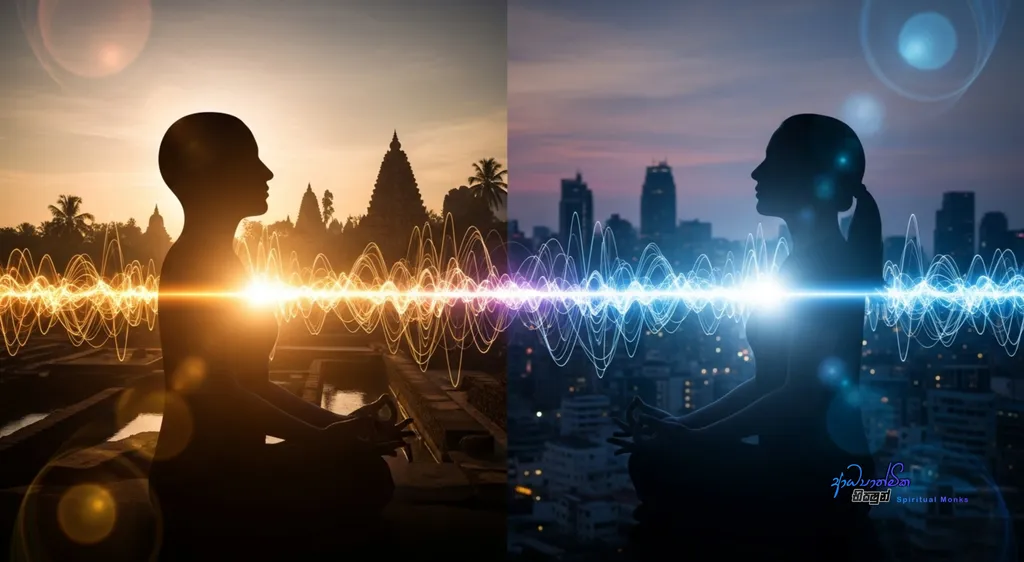
The Transformative Power of Speaking from Samādhi
When you speak from this clear and composed mental state, any spiritual energy you have cultivated can be transmitted to the other person. This can help awaken their own spiritual potential and build their concentration. If both people engage in this way, the practice becomes even more powerful.
Imagine a phone call where both you and the other person speak with your eyes closed, maintaining a state of samādhi. This isn’t a trance where you cannot speak, but a focused awareness. As you both do this, the energy between you builds, and a mutual awakening can occur. This powerful form of spiritual communication can lead to:
- The awakening of Kundalini energy.
- The reception of universal energy.
- The activation of your chakras.
- The clearing of unseen, unwholesome forces around you.
This conversation is no longer ordinary; it operates on a potent energetic level. It is infused with spiritual substance because you are speaking from a state of mindfulness and wisdom. This is the practice of the Four Foundations of Mindfulness (Satipatthana) in action, where your awareness is sharp and present. This is why I encourage you to address others in this way, especially when discussing spiritual topics. It is a profoundly beneficial practice.

Navigating Relationships with Clarity and Wisdom
This practice is especially helpful when communicating between men and women. If a romantic or lustful thought arises, the state of mindfulness from your samādhi allows you to recognize it without getting carried away. You can prevent the conversation from straying into attachment. If a mental defilement, known in Buddhism as a klesha, appears in your mind, you can hold it with awareness and prevent it from taking over.
Furthermore, this clarity allows true insights to arise. You might gain an understanding of past karmic connections with the person. However, I am not suggesting you will be able to do this immediately. Such deep insights only come after significant spiritual development.
Without that maturity, it is easy to mistake our own defilements for profound truths. If a highly advanced practitioner makes such a statement, it can be trusted. But if someone less developed makes claims, we must be cautious and question whether it is truth or delusion. Therefore, it is best to keep the focus of your spiritual communication on the Dhamma itself. This ensures your practice leads to growth, not decline.

A Shield Against Unwholesome Talk
When two people communicate from a state of samādhi, worldly desires whether they be lust between a man and a woman or even material cravings between friends of the same gender do not arise. The concentrated mind naturally blocks these impulses. You won’t even feel the desire to talk about such things. Instead, your conversation will naturally gravitate toward your practice: your concentration, your meditative states, and your insights. You will ask each other, “Are you feeling this state now?”
The method is simple: for the entire duration of the conversation, whether on the phone or in person, keep your eyes closed and maintain your mental focus. You speak with your mouth, but your mind remains anchored in samādhi. This practice cultivates immense spiritual growth. Unnecessary romantic talk, sexual conversations, and discussions about material possessions simply fall away. As you and your friend’s energies activate, you also begin to draw in universal energy, accelerating your development and leading to profound spiritual experiences.
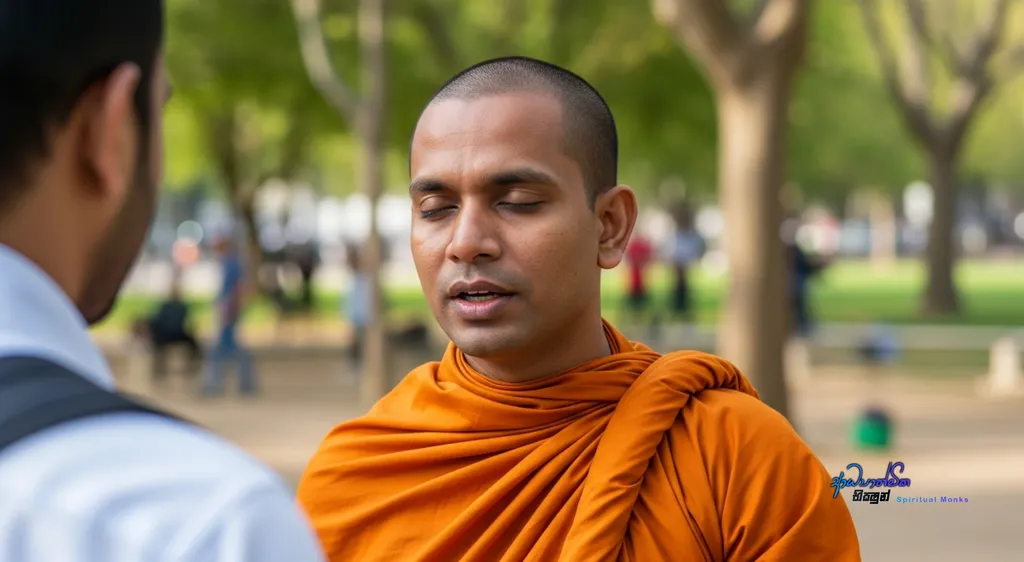
Spiritual Communication in the Modern World
This practice isn’t limited to phone calls. You can use it across any internet platform or in face-to-face interactions. When you meet other spiritual people in your daily life, try to maintain this inner state of concentration as you speak. It may be challenging at first, but it is worth the effort.
Instead of the usual habit of looking each other in the eye and gossiping, imagine sitting together in a meditative posture, with a calm mind, and engaging in spiritual communication. When you do this, unseen negative forces or obstructive energies cannot interfere, because you are protected by the power of your shared concentration. The space you are in becomes charged with powerful, positive energy.
This is why places where enlightened beings like the Buddha or Arahants have taught are still potent today; their deep states of concentration infused those locations with a spiritual charge. Just as ancient sages, or Rishis, are often depicted speaking with their eyes closed, you too can tap into this profound stillness. You can discuss the deepest teachings the Abhidhamma, the Suttas, the Vinaya, or concepts like chakras and universal energy from a place of shared, concentrated experience.
The Ripple Effect: Influencing Others Positively
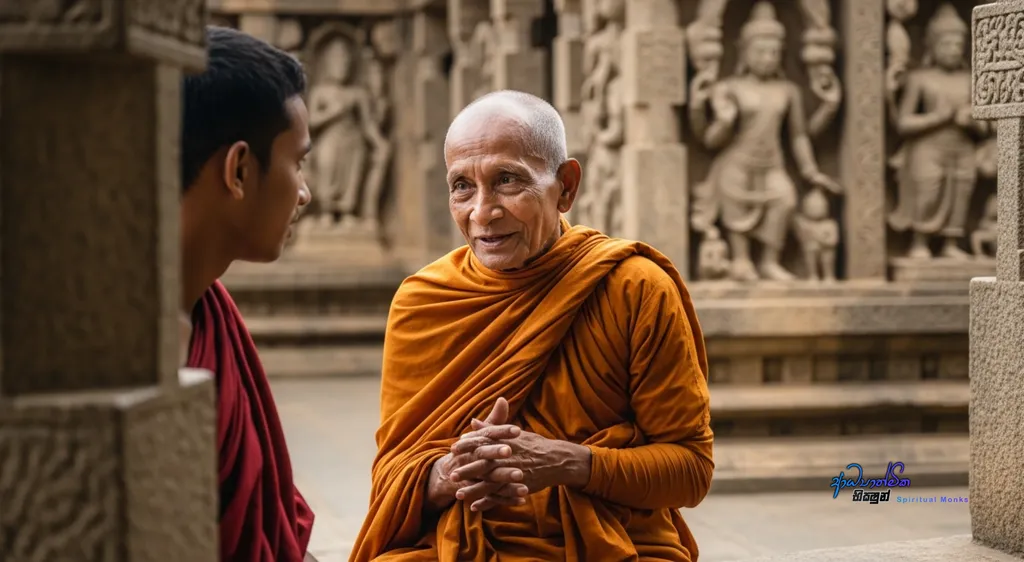
What if you are talking to someone who is not spiritual? Someone who has no interest or knowledge of meditation? You can still practice. Maintain your own state of samādhi while you speak with them. The other person will likely feel a great sense of peace and relief in your presence. This positive experience might be the very thing that sparks their own interest in the spiritual path. They may start asking you questions and begin their own journey. This is a subtle yet powerful way to share the benefits of your practice.
Even when not speaking, this principle applies. When you are writing a message or an email about spiritual matters, try to compose it from a state of concentration. The right answer will flow from you, and the right question will come back. The communication becomes more precise, helpful, and clear. Similarly, when you listen to Dhamma talks in a temple or a monastery, do so from a state of samādhi.
This practice cultivates patience and overcomes anger and lust. Your mind will be able to listen deeply and grasp the meaning of the teachings with an emergent wisdom and intelligence. This is especially beneficial for students in their academic life, as concentration is the key to learning.
Recognizing Truth and Cultivating Your Path
Practicing spiritual communication makes it much easier to recognize genuine spiritual people. True teachers and advanced practitioners always speak from this state of deep concentration. From that stillness, they can perceive things with great clarity, even reading minds (paracitta-vijñāṇa ñāṇa) or seeing a person’s past lives and energetic state.
Such individuals exist today, both in monastic life and as lay practitioners. When you engage with someone from a state of samādhi, unnecessary talk fades away, and you can sense if there is true spiritual substance in them. You can discern whether they are a good person, a wholesome friend for your journey.
These practical skills may not come to you all at once, but the degree of concentration you already have is the perfect starting point. Do not be afraid to practice. You have trusted these teachings and have already progressed on your spiritual path; continue by putting this into practice to further develop your spiritual life.
I advised starting with eyes closed because it is the easiest way to find your concentration. Ultimately, this entire practice is about cultivating mindfulness (sati) and wisdom (paññā). When you speak from this state, your words will not be mistaken. You will speak correctly, knowing what should and should not be said. This is the path to skillful and profound spiritual communication.
A Final Blessing
I have taken some time to explain these matters to you. You may or may not have had these experiences yet, but from today, if you begin to practice in this way, you will. With these words, I conclude today’s teaching.
May the power and blessings of the Buddha, Dhamma, and Sangha the Triple Gem give you the strength to understand these points well and act upon them.
We invite you to walk this path with us. Read our teachings, and most importantly, apply them practically in your own life. as you practice, questions will naturally arise. Please feel free to share your experiences and questions in the comments below, via email or contact form. I will do my best to offer guidance in future talks based on your progress. For now, begin this practice with an open heart and a mind free from expectation. Cultivate it correctly, and may you find the clarity and peace you seek.
Thank you for joining us. We hope this blog will be of great benefit to your spiritual journey.
May you all be well and happy.
May the blessings of the Triple Gem be with you all!.


