


Categories: How to Concentrate the Mind?
May the blessings of the Triple Gem be with you all!
Welcome. Many of you who join us for these spiritual reflections are deeply engaged in demanding work or academic studies. A question I receive constantly, especially from those in professional and educational fields, relates to a struggle with mental concentration. You’ve shared that this difficulty in focusing affects your work and, in many cases, even weakens your memory. You have asked for guidance and a meditation technique that can help.
We have offered personal advice through messages to many of you who have reached out, but I hope that this teaching can serve as a guide for all who wish to cultivate greater worldly and spiritual well-being. We believe this exploration will be useful for both your secular progress and any spiritual development you wish to undertake.
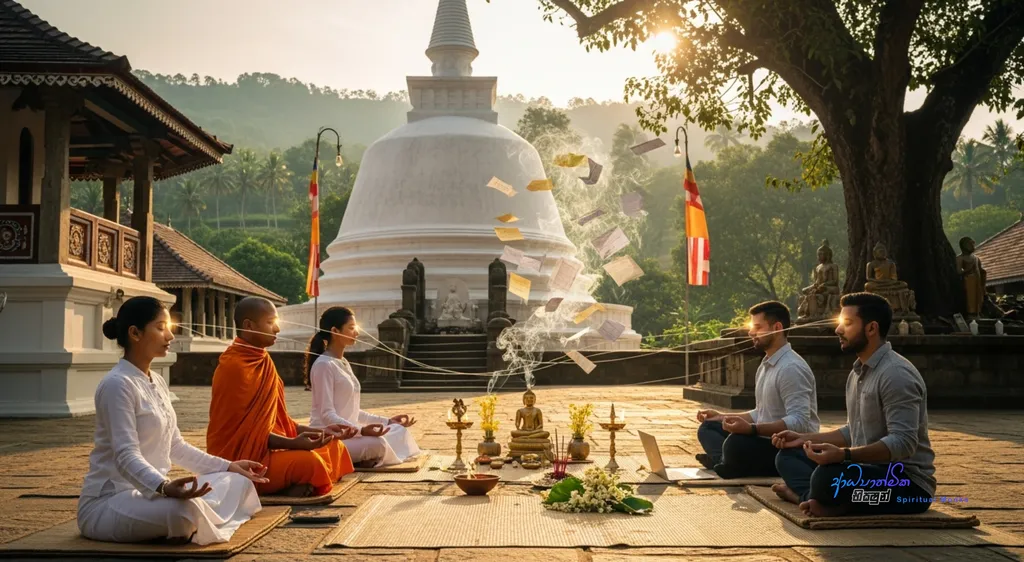
Understanding True Mental Concentration: Beyond Ordinary Focus
First, we must understand what mental concentration truly is. In Buddhism, we call this powerful state ekāgratā, a profound single-pointedness of mind. In this state, the mind does not scatter; it remains fixed on one object. For example, if you are performing a task, your attention is given completely to that task.
However, in our day-to-day lives, maintaining this state is incredibly difficult. Why? Because we have multiple senses: the eye, ear, nose, tongue, and body. Even if you focus your eyes on a book, your ears, nose, and body are still receiving information, which flows into your mind and breaks your attention. If you could focus solely on one input, you might become like a robot, processing only a single stream of data. But that is not how we function.
This supreme level of unwavering mental concentration is typically only accessible to highly advanced practitioners. This includes those who have temporarily withdrawn from the five senses to enter deep meditative states, known as the Jhānas, from the first to the eighth level.
It also includes noble individuals who have attained stages of enlightenment (Magga Phala) and are abiding in that fruition, as well as Fully Enlightened Buddhas, Private Buddhas (Passe-buddhas), and Arahants who attain the cessation of perception and feeling (Nirodha Samāpatti). For those of us who have not yet attained such states, our ability to maintain focus is naturally limited.

The Five Hindrances: Why Your Mind Truly Wanders
So, what can we do? The solution is not to crudely eliminate our senses. Some might narrowly think, ‘Then I must cut off my ears or tongue!’ This is a foolish path and not an answer. The challenge is to work with our senses, strengthening our focus on the one that is most relevant to our task.
When you attend a lecture, for instance, both your eyes and ears are active. But even then, your mind is easily pulled away by sensations on your skin, tastes, smells, or thoughts of the past and future. This is the nature of the mind. It’s impossible to remember every single word a speaker says. We can only grasp key points or a summary, which is why we take notes. The real obstacle to our mental concentration and memory is what the Buddha called the Pañca Nīvaraṇa, or the Five Hindrances:
- Kāmacchanda: Sensual desire; the craving for pleasant sights, sounds, smells, tastes, and touches.
- Vyāpāda: Ill will; feelings of anger, resentment, and hostility.
- Thīna-middha: Sloth and torpor; mental dullness, laziness, and drowsiness.
- Uddhacca-kukkucca: Restlessness and worry; an agitated mind and feelings of regret.
- Vicikicchā: Skeptical doubt; uncertainty and indecision about the path.
If your mind is constantly leaning towards sensual indulgence, sexual desires, listening to music, and always seeking to please the five senses, these cravings are precisely what diminish your memory and weaken your mental concentration. To overcome this, we must subdue these hindrances. Developing meditative absorption, even to the level of the first Jhāna, can completely counteract them.
A Practical Solution: The Power of Mindfulness of Breathing (Ānāpānasati)
For those of you facing these challenges, whether you are a professor, a student preparing for exams, or a professional in any field, there is a powerful tool available: meditation. While achieving deep Jhāna states may seem distant, you can absolutely use meditation to develop a stronger level of mental concentration than you have now.
The most suitable meditation practice for improving memory and focus is Ānāpānasati, or mindfulness of breathing. We have a series of teachings available that guide you through this practice, from foundational instructions to using it to recollect the qualities of the Triple Gem. I strongly encourage you to explore this practice.
By engaging in this training, you will begin to reduce your sensual cravings and weaken the Five Hindrances. Even if you don’t completely eradicate them, you will develop a significantly stronger memory and sharper focus. I can say with 100% certainty that you will see results.
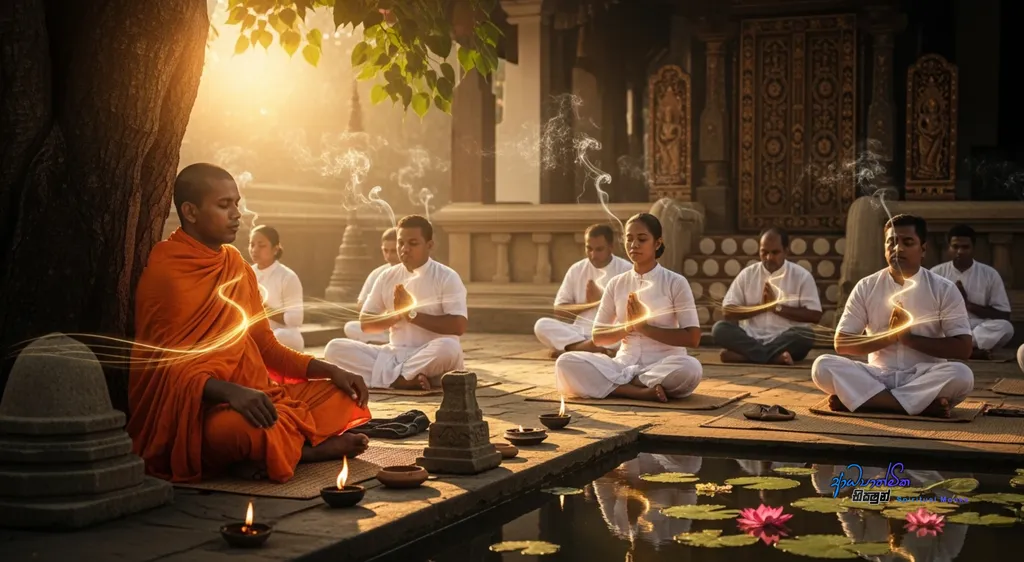
How to Build a Daily Routine for a Sharper Mind
To get started, it doesn’t matter your age or nationality. Find a time in your day, whether morning or evening, that feels right for you to meditate. Prepare yourself by bathing and feeling fresh. It’s best not to practice on a full stomach; a light meal like a cup of tea or milk and a biscuit is sufficient.
Dedicate about an hour, or even an hour and a half or two if you can, to your practice. Afterward, you can proceed with your studies, work, or other responsibilities. By doing this, you will achieve excellent results.
I say this with confidence because we receive countless messages from people who have followed this advice. They write to us on WhatsApp to say thank you or to offer blessings, sharing how their mental concentration and memory have improved. You too can achieve these results if you commit to the practice.
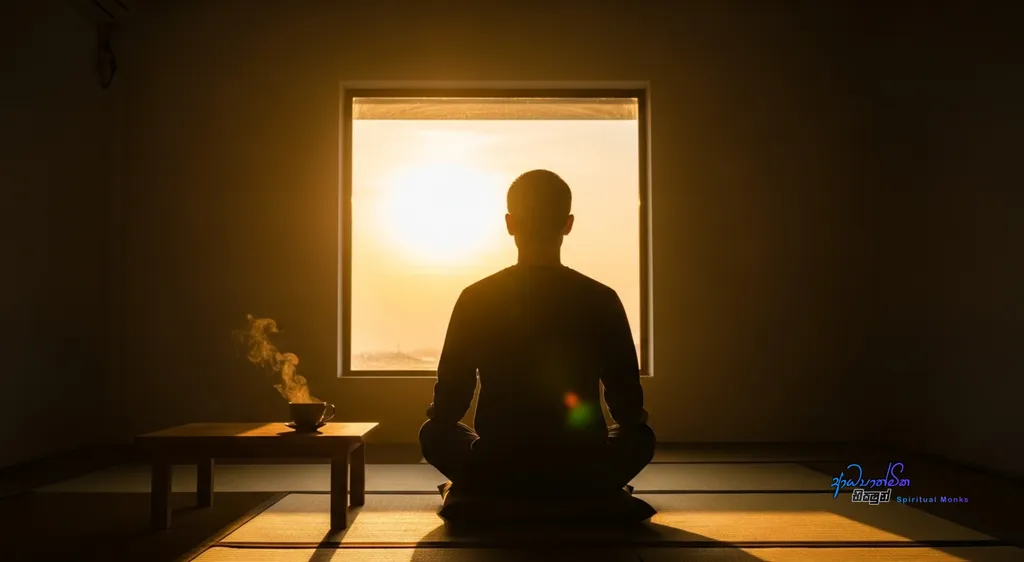
A Tool for Everyone, Regardless of Your Spiritual Goals
It is important to address one final point. Some of you may think, ‘I don’t have a great need to attain Jhāna, develop psychic powers, awaken a third eye, or achieve enlightenment. I just want enough mental concentration to do my work well and stop my mind from running wild.’
That is perfectly fine. There is no problem with that at all. If you do not have a strong inclination toward deep spiritual development right now, you can still use these meditation methods as a tool for your worldly life. Practices like Ānāpānasati will help you develop the focus you need, regardless of your ultimate goal.
Many people message me with this exact sentiment. My advice is this: do the practice. Experience the results for yourself. I am certain you will. And when you do, if you feel inspired, perhaps you can leave a comment with these teachings. Your experience might help someone else who is struggling.
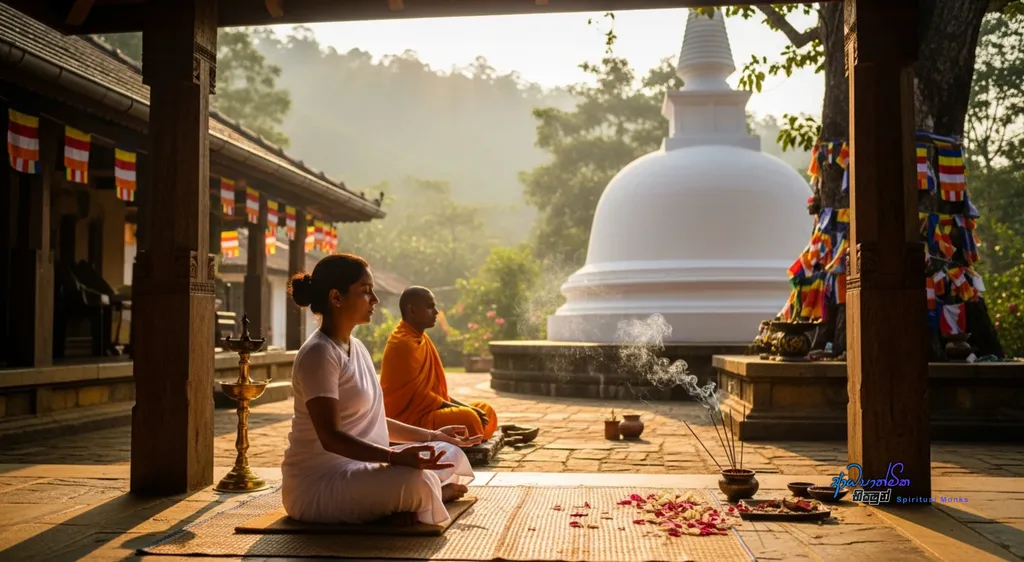
Your Journey to Mental Clarity Begins Now
This was a brief teaching intended to give you this understanding. I will conclude for today. With the powerful blessings of the Buddha, the Dhamma, and the Sangha, the Triple Gem, may you all be able to listen to these words well and put them into practice.
We invite you to walk this path with us. Read our teachings, and most importantly, apply them practically in your own life. as you practice, questions will naturally arise. Please feel free to share your experiences and questions in the comments below, via email or contact form. I will do my best to offer guidance in future talks based on your progress. For now, begin this practice with an open heart and a mind free from expectation. Cultivate it correctly, and may you find the clarity and peace you seek.
Thank you for joining us. We hope this blog will be of great benefit to your spiritual journey.
May you all be well and happy.
May the blessings of the Triple Gem be with you all!.


