


Categories: Other Meditation Teachings
May the blessings of the Triple Gem be with you all!
Today, I wish to share a practical method for developing loving-kindness, especially for those of us facing obstacles in our spiritual and daily lives. This teaching is based on personal, practical experience, designed to be a training you can apply immediately.
First, it’s important to have a clear understanding of what loving-kindness meditation can and cannot do. Many people believe that by radiating loving-kindness, what we call Mettā in the Pali language, to the ten directions, the entire world, or even the universe, they will change all beings and solve all problems. However, it’s crucial to understand that we cannot change the entire world with our practice. If that were possible, the Buddha would have done it first.
The Buddha possessed Mahā Karuṇā, or Great Compassion, a quality unique to a Fully Enlightened One. We do not possess this boundless compassion; what we cultivate is Mettā, a powerful but different quality of boundless love and goodwill. Even among enlightened beings, the capacity for this quality varies based on their level of purification. So, let’s begin with this realistic foundation.
Navigating Life’s Challenges: Loving-Kindness and the Law of Kamma
Even when you cultivate loving-kindness meditation with great diligence, you may still face various obstacles. This is often due to the law of kamma, the principle of cause and effect tied to our intentional actions. If you have committed a powerful unwholesome action, an akusala kamma, in a past life, its results can still manifest. For example, if you took a life in a previous existence, you might face an accident or physical harm from another person in this life, no matter how much Mettā you practice.
However, this is where the power of loving-kindness meditation becomes truly valuable. The strength of your wholesome practice can significantly mitigate the results of past negative kamma. It can transform a potentially devastating karmic result into something much less severe.
A situation that might have resulted in a fatal injury could instead manifest as a minor blow, thereby minimizing the harm. The karmic debt is still paid, but the impact is greatly reduced. Sometimes, the wholesome power generated through your practice can even cause a past negative kamma to become an ahosi kamma, an action that becomes null and void, unable to produce its result. This is how we should frame our understanding of the relationship between loving-kindness meditation and kamma.

Lessons from the Past: When Even the Buddha Couldn’t Stop Kamma
History provides powerful examples of the force of kamma. Even our Gautama Buddha could not prevent the massacre of his own relatives, the Shakyans, by Prince Vidudabha. The Buddha foresaw the danger and physically placed himself in the army’s path three times to stop them, but ultimately, the collective kamma of the Shakyans was too strong to be averted. Their fate was sealed, and the massacre took place.
However, the law of kamma is impartial. Prince Vidudabha and his army, after carrying out the slaughter, camped on a dry riverbed. That night, a sudden flash flood washed them all away, delivering the result of their own horrific actions. These stories, found in texts like the Dhammapada commentary, are not just historical accounts; they are teachings.
We can find another example in the story of an Arahant (a fully enlightened monk) whose alms bowl would always appear empty to him, no matter how much food was offered, due to a past kamma. It was only in his final moments, through the intervention of the great disciple Sāriputta, that he was able to eat a full meal before passing into Parinibbāna. These accounts from Buddhist history all point to one truth: the law of kamma is profound and powerful.

Softening Your Karmic Path: Practical Steps for a Better Future
While kamma is powerful, we are not helpless. We have the ability to weaken the effects of past unwholesome actions and cultivate a positive future. This is done by diligently living a life grounded in Dhamma. You can do this by:
- Observing the Pañcha Sīla, the five basic precepts of ethical conduct.
- Engaging in devotional practices and rituals.
- Performing meritorious deeds, or puñña kamma, such as making offerings.
- Practicing meditation, including both Samatha (concentration) and Vipassanā (insight).
When you walk this spiritual path and consistently engage in practices like loving-kindness meditation, you generate immense wholesome energy. This can cause many past negative kammas to become an ahosi kamma (ineffective kamma) or, at the very least, greatly reduce their negative impact. This is a vital point to understand, which is why I have emphasized it in this teaching.
Transforming Your Personal World: The Practical Reach of Loving-Kindness
While loving-kindness meditation may not change the entire world, its power to transform your immediate environment is immense. You have the ability to change the atmosphere in your own home, among your neighbors, and even within your town or city. It can soften the hearts of friends, family, and colleagues who may be causing you difficulty.
A perfect illustration of this is the story behind the Karaniya Metta Sutta. A group of monks went to a forest to meditate for enlightenment. However, the tree spirits, or devas, living there were unhappy with their presence and began to frighten the monks with terrifying visions to drive them away. The frightened monks returned to the Buddha, who then taught them the Karaniya Metta Sutta, instructing them to radiate loving-kindness. When the monks returned to the forest and practiced as instructed, the spirits were pacified, became supportive, and never troubled them again. This shows how Mettā can directly resolve conflict.
There are eleven specific benefits of loving-kindness meditation taught by the Buddha, which I have detailed in a previous teaching called ‘The Third Eye Loving-Kindness Meditation.’ I encourage you to explore that teaching, as I will not repeat the full list here. However, a key benefit is its power to pacify anger. For those who struggle with intense anger, Mettā can soothe and suppress it. To completely uproot anger, however, one must eventually practice insight meditation, or Vipassanā, to remove the defilement at its root.

A Step-by-Step Guide: Targeted Loving-Kindness for Specific Challenges
Now, let’s turn to the specific practice for overcoming obstacles in your worldly life and spiritual journey. This technique is for everyone. It is for the student who finds it impossible to study, perhaps because of distractions or even the jealousy of others who hide their notes.
It is for those in challenging workplaces who face constant hindrances and cannot find peace. It is for anyone who feels blocked from success in their career, no matter how hard they work. There is no restriction based on age, race, or religion. Whether you are young, middle-aged, or elderly, you can begin this practice today.
This method is slightly different from what we have taught before for general spiritual development. In previous teachings for those practicing insight meditation, we discussed dealing with obstacles from family, friends, or colleagues. This practice is beneficial for them, as well as for those facing hindrances from unseen forces. The method I will now explain is a targeted approach designed for anyone, whether their goal is worldly success or spiritual liberation (lokuttara), who is facing blockages.

The Heart of the Practice: Phrases and Daily Commitment
The key to this practice is its focus. Unlike other methods, we will not be radiating loving-kindness to all ten directions, the whole world, or the universe. Why? Because not everyone is causing you trouble. The obstacles you face come from a specific source, whether it’s a few people or unseen forces. Therefore, we will target our loving-kindness meditation only toward those beings, seen or unseen, who are creating these hindrances.
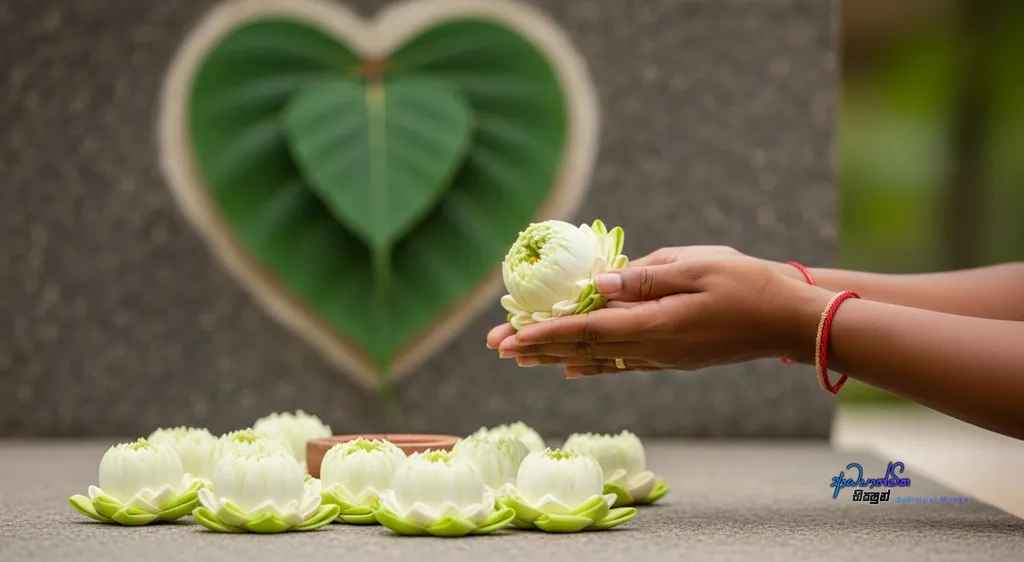
Here is the method. Set aside time at least once a day, preferably in the early morning after you wake up. If you have a devotional practice, perform it first, chanting, making offerings of flowers or incense. If you don’t have much time, simply lighting a lamp or offering incense to the Buddha is enough. Do this again in the evening if you can. Even if you are very busy, commit to doing this at least once. After your devotions, begin the loving-kindness meditation.
Use these or similar words, holding them in your mind. Focus for 15, 20, 30 minutes, or up to an hour if you can:
Feel free to add other positive aspirations you may have learned. Start today, and you will begin to see powerful results. Your environment will start to change. People who were hostile may become more friendly or at least neutral. A person who always scowled at you might offer a smile. But a word of caution: do not become complacent or naively trust a former enemy. Their hostility is being suppressed by the power of your loving-kindness; it can re-emerge if you stop your practice. So, continue radiating Mettā every single day.

Sharpening Your Focus: Directing Loving-Kindness to Specific Individuals
To make this practice even more potent, you can refine your focus. If you know exactly who is causing you obstacles,for instance, a specific colleague or a group of people, you can target them directly. Close your eyes, enter a meditative posture, and bring a mental image of that person or those people to your mind. Then, direct the phrases of loving-kindness specifically to them for half an hour or more. You will notice their obstructive behavior begins to diminish.
This is logical because not everyone is your enemy. We target only the source of the problem. For those who have developed their inner sight, such as through ‘Third Eye’ practices, the image of their adversary may appear clearly in their mind as soon as they intend it. If so, focus on that image and radiate loving-kindness directly to it.
By practicing like this for 30 to 60 minutes a day, you can resolve business obstacles, overcome educational blocks, and remove hindrances in any area of your worldly life. It is a powerful tool for clearing your path.

Beyond Formal Meditation: Weaving Loving-Kindness into Every Moment
This practice should not be limited to your formal sitting meditation. To truly transform your reality, you must integrate it into every moment of your day. For those of us who practice mindfulness of the mind, as in the Four Foundations of Mindfulness (Satipaṭṭhāna), this is a complementary practice that purifies the heart.
Throughout your day, continually bring this thought to mind: “May any being, seen or unseen, obstructing my path be free from hatred, anger, and jealousy… May they be well and happy.” There is no harm in holding this benevolent thought at all times. Carry it with you while commuting on the bus, driving your car, working at your desk, walking, or as you are falling asleep and waking up. This continuous cultivation, across all four postures, sitting, standing, walking, and lying down, will cause even the most stubborn obstacles to melt away.
To summarize simply: we are focusing only on those who hinder us. When you review the eleven benefits of loving-kindness meditation, you will see how this targeted approach helps you receive them all. Furthermore, if you struggle with your own anger, you can use this same technique on yourself. Target your own mind, radiate loving-kindness inward, and you will find your anger is controlled and suppressed. Later, through insight practice, you can remove it completely.

A Practice for the Path: Supporting High Spiritual Aspirations
This practice is especially crucial for those on a profound spiritual journey with high aspirations. I receive messages on WhatsApp from young people, lay followers, and monastics who are striving toward lofty goals, some aspire to become a Buddha, a Pase-Buddha (a silent, self-enlightened one), or a great enlightened disciple. Others aspire to be the mother, father, spouse, or child of a future Buddha. These noble paths are invariably filled with immense obstacles from both seen and unseen worlds.
If this is your path, you must practice this targeted loving-kindness meditation. It is a vital support for your journey. It will help clear away many of the hindrances you face. However, I must repeat my earlier caution: if a past kamma is exceptionally strong, its result may be unavoidable. But by strengthening your own wholesome energy (kusala) through this continuous practice, you can ensure the impact is minimized. As I explained before, this cultivation gives you the power to soften even the most challenging karmic outcomes.
Your Lifelong Companion: The Enduring Peace of Loving-Kindness
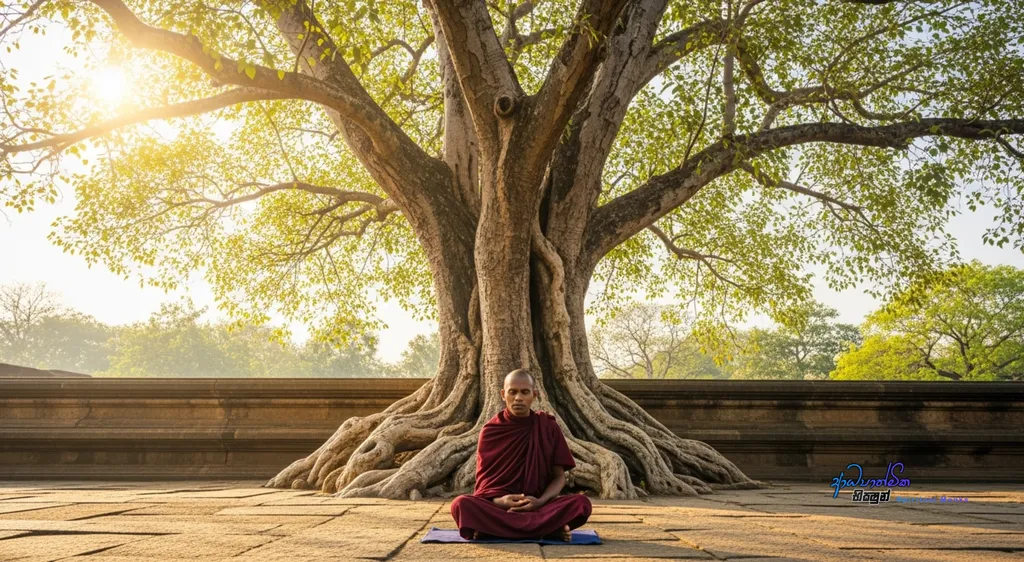
I encourage you to engage with this practice diligently and consistently. Make a strong determination, an adhiṭṭhāna, to continue this practice until the very last moment of your life. Use every day, every moment you can, for this cultivation. You will personally witness your environment change, and you will feel a deep sense of relief and peace within your own mind.
As you practice, I invite you to share your experiences in the comments section below this article. Your story can become a source of help and inspiration for others who may be facing similar struggles.
We will conclude this teaching here. Through the power of the Triple Gem, the Buddha, the Dhamma, and the Sangha, may you all be able to understand and practice these essential teachings on loving-kindness. May you clear your path and find peace.
We invite you to walk this path with us. Read our teachings, and most importantly, apply them practically in your own life. as you practice, questions will naturally arise. Please feel free to share your experiences and questions in the comments below, via email or contact form. I will do my best to offer guidance in future talks based on your progress. For now, begin this practice with an open heart and a mind free from expectation. Cultivate it correctly, and may you find the clarity and peace you seek.
Thank you for joining us. We hope this blog will be of great benefit to your spiritual journey.
May you all be well and happy.
May the blessings of the Triple Gem be with you all!.


