


Categories: Spiritual Expectations
May the blessings of the Triple Gem be with you all!
In our journey of spiritual development, many of us encounter perplexing experiences. This teaching addresses a question we receive frequently from those practicing meditation, especially techniques related to the ‘third eye’: Why do spiritual lights and images appear, only to vanish just as quickly? Many people report seeing beautiful lights (blue, yellow, green, red) or vivid images of nature, their surroundings, and even vast, open skies. Yet, a common frustration is that these visions fade almost immediately. There is a clear reason for this, and today, we will explore it together.
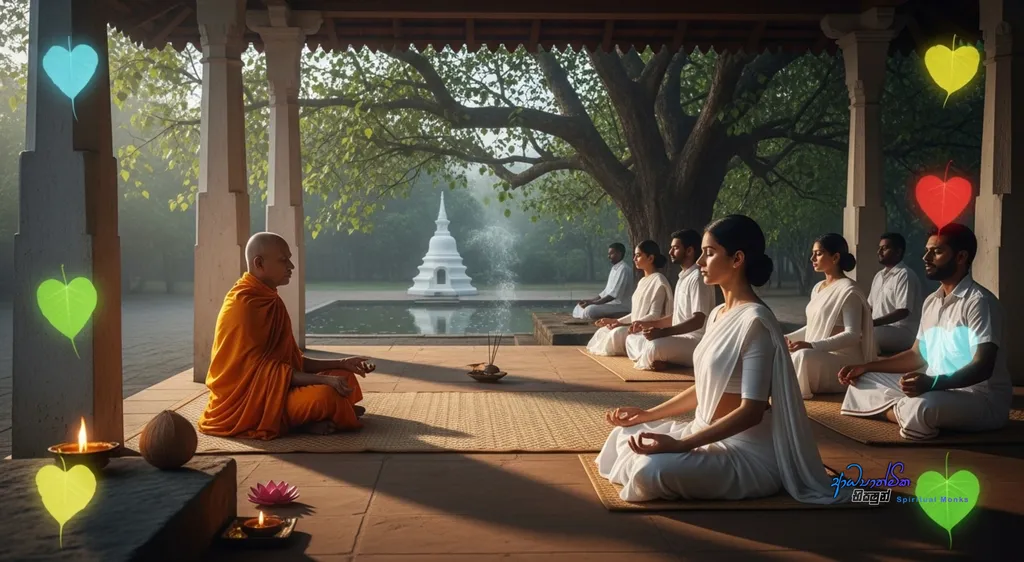
The Hidden Obstacle: Unmasking Spiritual Craving (Taṇhā)
When these inner lights or images appear, our first instinct is often excitement. We might think, “Ah, this is it! The third eye is opening! The divine eye, or Dibba-cakkhu, is arising!” In that very moment of excitement, a subtle form of wanting is born. We become attached to the experience. This is what we call spiritual craving.
In the teachings of the Buddha, this is known as Taṇhā, which translates to ‘thirst’ or ‘craving.’ While we may be familiar with worldly craving for money, possessions, or status a more subtle form exists on the spiritual path. Unlike worldly things, which can sometimes be acquired through effort or money, spiritual realities cannot be bought or grasped. They are a natural unfolding that requires a mind free from clinging. To receive these gifts from the universe, our minds must be cultivated with Alobha (non-greed), Adosa (non-hatred), and Amoha (non-delusion). The moment spiritual craving arises, the conditions that allowed the vision to appear are shattered.
Why Visions Disappear: How Spiritual Craving Makes Visions Disappear
Let’s walk through the exact mechanism. You are meditating, and suddenly, a beautiful yellow light appears. Your immediate thought is, “It’s working! This is the sign!” That thought is saturated with desire. You want to keep it, to hold onto it, to make it yours. This is greed, a form of spiritual craving. As soon as that grasping mind arises, the light vanishes. The same happens with an image or a vision of the sky. The very act of wanting it, of attaching value to it, pushes it away.
The universe, or nature, bestows these experiences when the mind is pure and receptive. When it senses this subtle greed, this spiritual craving, it withdraws the gift. This is the primary reason why these phenomena are so fleeting for beginners. Your attachment becomes the very obstacle you are trying to overcome.

The Antidote: Cultivating Childlike Detachment
So, what is the solution?
I have often said: become like a small child. A baby doesn’t cling to its toys. It plays with them, and if they are taken away, it moves on. It doesn’t understand their value and therefore has no attachment. You must cultivate this childlike mind. When a light appears, think to yourself, “This thing… whether it’s here or not, it doesn’t matter to me. It has no real value.”
Simply be with the experience without judging it or wanting it. Think of it as insignificant. When you can rest in this simple, unbothered state, the vision will stay with you. It remains because you are not trying to possess it. Unlike the material world, where grasping can lead to acquisition, in the spiritual world, letting go is what allows things to come to you. You cannot bribe a spiritual experience with your desire. The only way is through genuine non-attachment.
Beyond Craving: The Three Poisons as Deeper Obstacles
This tendency toward spiritual craving is rooted in deeper mental states. The Buddha identified three core defilements, or Kilesas, that block our progress. They are:
- Rāga: Lust, passion, greed, or attachment.
- Dosa: Aversion, hatred, or ill will.
- Moha: Delusion, ignorance, or confusion.
These are hindrances, or palibodha, to our meditation. We cannot develop our practice while these states dominate the mind. The journey is one of gradually reducing these defilements. You don’t have to be perfect, but you must work to lessen their grip.
If a person in worldly life makes ten mistakes, try to make only one. The goal is to bring the mind to a state of balance and neutrality, or upekkhā. As you purify your conduct and mind, you create the conditions for spiritual insights to not only appear but to remain stable.

The Path Forward: The Four Right Efforts
So, if we are not meant to crave these experiences, what should we cultivate?
The Buddha gave us a clear framework called the Four Right Efforts, or Cattāro Sammappadhānā. These are the only qualities you need to bring to your practice:
- Chanda: The will, zeal, or sincere desire to practice.
- Viriya: The energy, persistence, or effort you apply.
- Citta: The consciousness, focus, or commitment of the mind.
- Vīmaṃsā: The investigation, wisdom, or discerning mind.
These four are what you should nurture. They are wholesome and do not lead to the trap of spiritual craving. With these as your foundation, you can approach meditation with dedication and patience, allowing things to unfold naturally.
The Twin Traps: Clinging and Aversion
When a vision you enjoyed disappears, what happens next?
Often, a feeling of sadness or frustration arises. You might feel a sense of loss. This reaction is the other side of the coin: it is aversion, or Dosa. It is a form of conflict or ‘clashing’ with reality. First, you cling to the pleasant experience (greed). When it vanishes, you are pained by its absence (aversion).
This is why mindfulness, or Sati, is so crucial. You must learn to recognize these reactions as they happen. The disappointment is just as much an obstacle as the initial excitement. The key is to remain neutral. When it comes, don’t cling. When it goes, don’t grieve. Don’t give the experience any value, not even a penny’s worth. Treat the light, the image, or the sky as nothing special. As long as you give it no value, the universe will entrust it to you permanently. The moment you try to claim it or mourn its loss, the gift is withheld.

A Sword for the Battle: Using This Teaching in the Moment
You can listen to this teaching and understand it intellectually, but that is not enough. Do not try to memorize these words. The real work happens in the moment of practice. There is a saying: “Of what use is a sword not present for the battle?” This teaching is your sword. When you are meditating and a light appears, that is the battle. That is when you must remember: “Ah, the teacher said not to cling and not to feel aversion.” You must use this wisdom to cut through the spiritual craving right then and there.
Remain indifferent. Continue your practice as if nothing has happened. This is how you prove you are ready for the next stage. The universe is watching, judging your readiness. When it sees your equanimity, it decides, “This person is now fit to be taken to the next level.” This is how you progress. Don’t think, “I will apply this later.” Apply it the instant it is needed. This is the art of meditation.
Conclusion: The Path to Stable Vision
To summarize, the reason spiritual visions, lights, and images appear and then disappear is our own reaction to them. We suffer from spiritual craving, the clinging that arises from excitement and the aversion that arises from disappointment. The solution is to cultivate a neutral, balanced mind, free from attachment.
Reflect on these teachings. Allow them to sink in. When the time comes in your meditation, may you have the wisdom to use this knowledge like a well-sharpened sword. By understanding and overcoming spiritual craving, may your practice deepen, may your spiritual faculties strengthen, and may you find the stability you seek on the path.

We invite you to walk this path with us. Read our teachings, and most importantly, apply them practically in your own life. as you practice, questions will naturally arise. Please feel free to share your experiences and questions in the comments below, via email or contact form. I will do my best to offer guidance in future talks based on your progress. For now, begin this practice with an open heart and a mind free from expectation. Cultivate it correctly, and may you find the clarity and peace you seek.
Thank you for joining us. We hope this blog will be of great benefit to your spiritual journey.
May you all be well and happy.
May the blessings of the Triple Gem be with you all!


