


Categories: Third Eye: Practical Meditation
May the blessings of the Triple Gem be with you all!
For some time now, through our spiritual teachings, we have explored the path of the spiritual life, how to develop it and the experiences we encounter along the way. A central topic in this journey has been the practice of Third Eye meditation. We have provided practical programs and guidance on how to cultivate this ability and navigate the experiences that arise.
However, I have noticed that some who are dedicated to this path become weakened or confused, unable to understand certain phenomena they encounter. This is especially true when it comes to the appearance of what we call chittarūpa, or mental images.
Understanding this stage is crucial for any meditator, especially if you are exploring this path independently. Developing a clear, courageous, and powerful spiritual personality, regardless of age, requires that you grasp this concept firmly.
Therefore, I wish to offer a detailed explanation to bring you clarity.
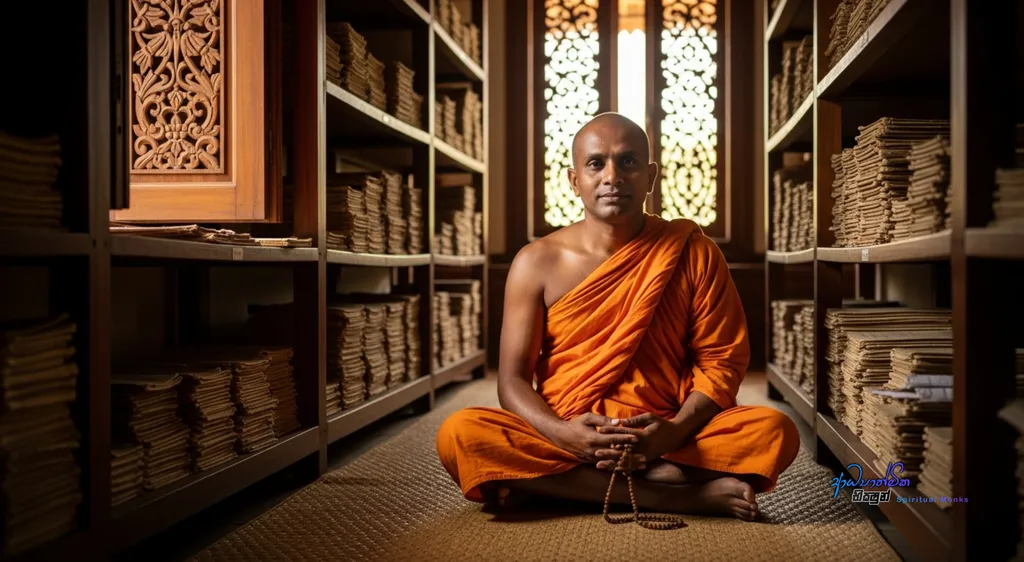
How to Begin: The Correct Way to Focus in Third Eye Meditation
When you begin the practical steps of Third Eye meditation, the first instruction is to sit in a meditative posture, close your eyes, and bring your focus to the point between your eyebrows or the center of your forehead. You are meant to look at this point with your mind.
I want to clarify this, as it is a common point of confusion. Some have asked if they should be focusing with their mind or by physically turning their eyes upward. This misunderstanding can cause issues. Trying to physically look at your forehead with your eyes closed can lead to dizziness or even cause your eyes to cross. We have never taught such a method.
The correct way is to direct your mind, your consciousness, to that spot. To understand this, try a simple exercise. Close your eyes and just think of your right big toe. Notice how your awareness goes there instantly, without any physical effort. You form a mental picture, and your mind is there.
It is the same simple, gentle process. Once you are seated for meditation, simply think: ‘the center of my forehead,‘ or ‘the space between my eyebrows.‘ Place your mind there. From that point of stillness, you can begin to practice cultivating the perception of emptiness, or spaciousness, as taught in our Third Eye meditation program.
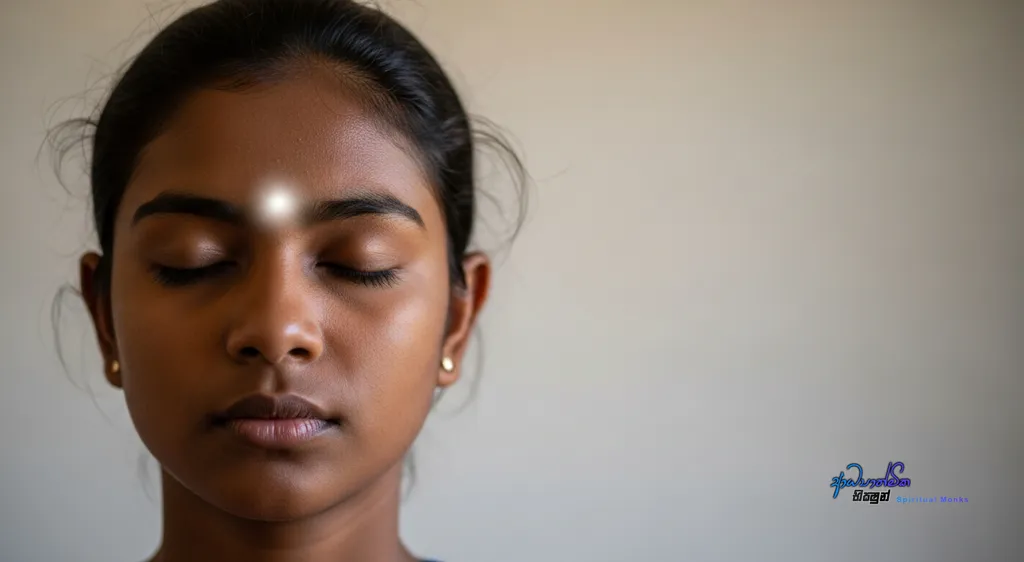
From Pressure to Light: The Initial Signs of Progress
After you begin your Third Eye meditation practice by focusing your mind on the forehead and cultivating a sense of emptiness, certain experiences naturally begin to unfold. It’s important to recognize these stages. After some time, you may start to feel a distinct pressure or tightness in the center of your forehead. This is a common and initial sign of progress.
Following this sensation, the next stage for many, though not all,is the emergence of what we call āloka saññā, or ‘light signals.’ These are perceptions of light that can appear in various colors, such as white, yellow, or blue. You become aware of these lights within your field of vision, even with your eyes closed.
For some individuals, after the light signals appear, the experience can evolve into a sensation of moving rapidly through a tunnel or a dark void, emerging into a new space of perception. These are the progressive stages that can lead toward the full awakening of the Third Eye.
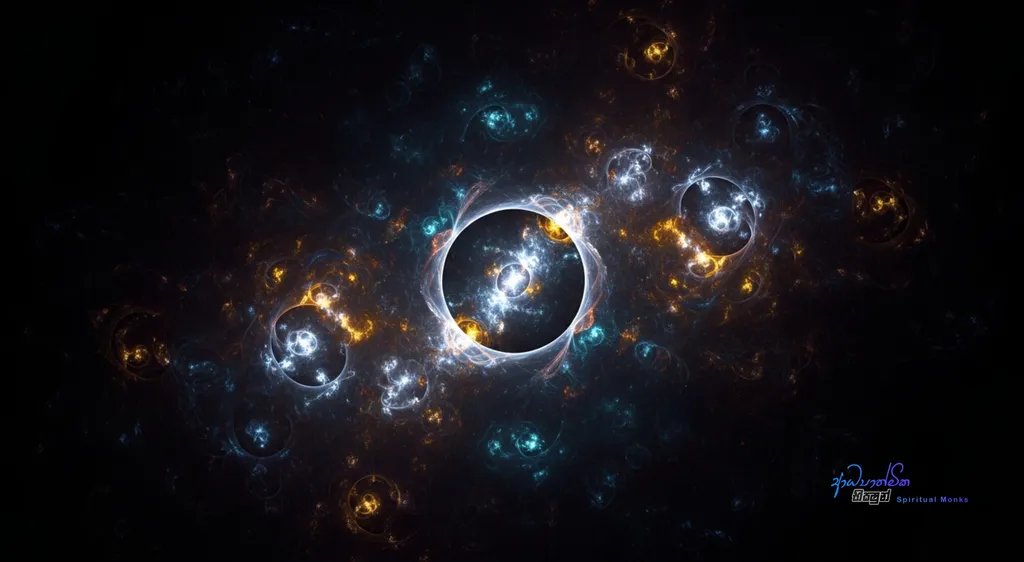
What Are Mental Images (Chittarūpa)? A Critical Stage in Meditation
Now we arrive at the most critical part of our discussion: the stage of chittarūpa. The term chittarūpa translates to ‘mind-pictures’ or ‘mental images.’ These are visions that can appear during your Third Eye meditation, often in conjunction with the light signals, but sometimes even without them. This is the stage just before the Third Eye fully opens.
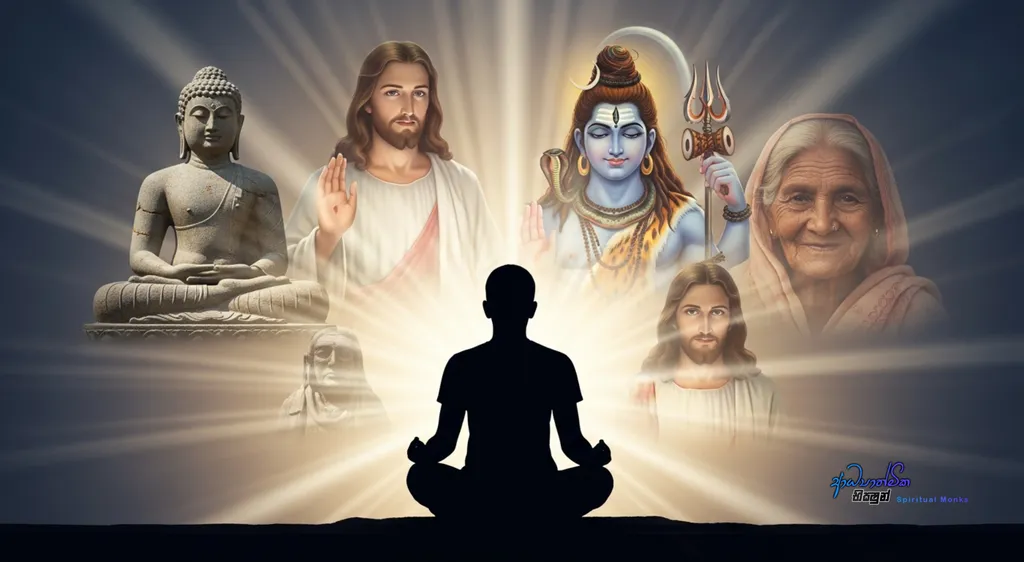
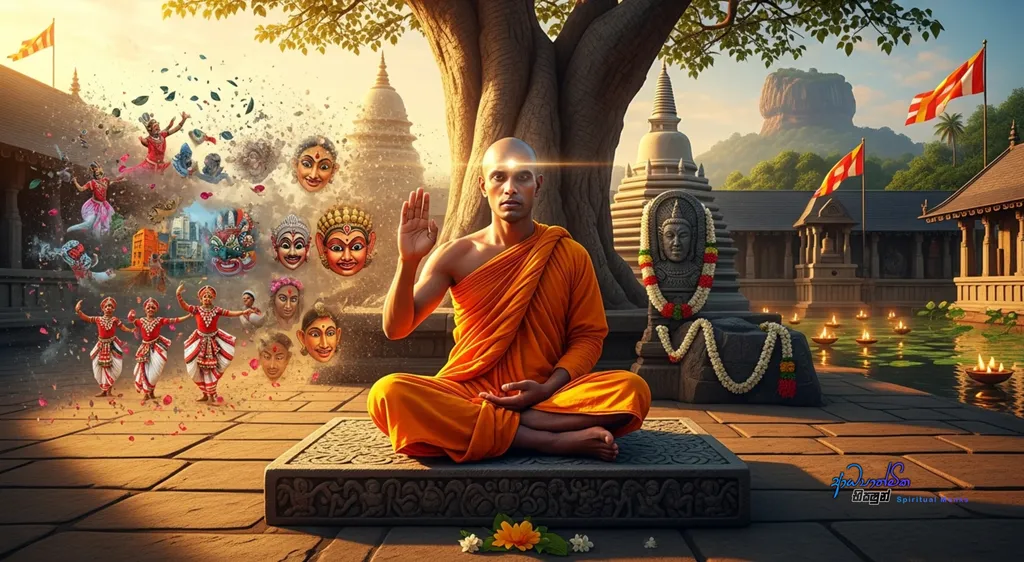
What you see here is not a direct perception of reality but a projection from your own mind. The images are shaped by your personal background, your beliefs, and your deep-seated attachments. For example:
- A person from a Buddhist background might suddenly see an image of a Buddha statue.
- A Catholic meditator has told me they see an image of Jesus.
- A Hindu devotee might see Lord Shiva or other deities from their tradition.
These images appear and then vanish. You might also see other things you are strongly connected to your mother or father, trees and nature, or even unsettling figures like ghosts (preta) or demons (yakshas).
It is essential to understand that this is only a stage. These are just mental images, not the true sight of the Third Eye. Whether you see one image or many, whether they appear with light or without, they are reflections of what is already in your consciousness. This phase occurs in the interval between experiencing the first light signals and the full awakening of the Third Eye, which is known in Buddhism as Dibba-cakkhu-ñāṇa, the divine eye of wisdom.
Beyond Projections: Distinguishing Mental Images from True Spiritual Vision
Do not confuse these mental images with authentic spiritual vision. They are fundamentally different. After you move past the chittarūpa stage, perhaps by passing through the tunnel-like void or moving along a beam of light, the nature of your perception changes. You are no longer seeing projections from your mind.
The perceptions of a fully awakened Third Eye are not mind-made images. You begin to see things in the unseen world, in the universe, in nature itself. You might perceive your own room or house from above, as if viewing it from a drone camera. You may see non-human beings like deities (devas), serpentine beings (nagas), celestial beings (brahmas), or other entities from unseen realms. You may see distant places.
These are not chittarūpa. They are real things. This is the most important distinction you must grasp. Do not mistake everything you see as a mental image. The visions that come after you have successfully passed through the intermediate stages are genuine perceptions.
A Test for Clarity: How to Verify Your Visions (For Advanced Practitioners)
For someone who believes their Third Eye meditation practice has led to a full awakening, a doubt may still arise: ‘Am I truly seeing reality, or are these just more elaborate images from my mind?‘ For such a person, and only for such a person, there is a method to find clarity. It involves making a powerful resolution, known as an adhiṭṭhāna.
If you find yourself in this advanced stage and a doubt arises about a specific vision, make this firm intention in your mind: ‘If what I am seeing is merely a creation of my own mind, may it disappear now. If it is real and truly exists, may it remain.‘
If the vision is a mental projection, it will vanish. If it is a real perception, it will endure.
A CRITICAL WARNING: I must emphasize that you should not perform this resolution while you are in the chittarūpa stage. At that point, you already know from this teaching that you are dealing with mind-made images. Trying to test them is unnecessary and will only create confusion. This practice is solely for the meditator who has moved beyond that stage but seeks to confirm the nature of their perception.
Embracing the Path with Wisdom and Clarity
This, in essence, is the understanding I wanted to share with you about mental images in Third Eye meditation. Please grasp this explanation clearly and do not confuse the stages. If any part is unclear, read it again, perhaps two or three times, until the meaning is fully absorbed. Since it is explained simply, you should be able to understand it directly.
If you know a friend, a relative, or anyone on this path who is stuck or confused by the appearance of these mental images, please share this teaching with them or explain it yourself. And if you have personal experience with this chittarūpa stage, consider sharing a reflection in the comments section below.
Your practical experience can be a great gift of knowledge for another person, helping them understand whether they are in the chittarūpa stage or have truly opened their Third Eye. Sharing your practical wisdom is a meritorious act that also helps advance your own spiritual life.
As we conclude this teaching, I bless you all with the power of the Buddha, Dhamma, and Sangha, the Triple Gem. May you gain the wisdom to correctly understand this stage of mental images that follows the light signals, without getting confused. May you grow in intelligence and act with wisdom on your path.
We invite you to walk this path with us. Read our teachings, and most importantly, apply them practically in your own life. as you practice, questions will naturally arise. Please feel free to share your experiences and questions in the comments below, via email or contact form. I will do my best to offer guidance in future talks based on your progress. For now, begin this practice with an open heart and a mind free from expectation. Cultivate it correctly, and may you find the clarity and peace you seek.
Thank you for joining us. We hope this blog will be of great benefit to your spiritual journey.
May you all be well and happy.
May the blessings of the Triple Gem be with you all!


