


Categories: Third Eye: Practical Meditation
May the blessings of the Triple Gem be with you all!
Today, through our spiritual teachings, I wish to clarify a question that many people wonder about: Does the Third Eye open for everyone? I want to share with you the practical truth of this matter. The question of whether the Third Eye, also known in the Buddhist teachings as Dibba-cakkhu-ñāṇa or the ‘divine eye,’ is attainable by all is a common point of confusion.
I invite you to read this teaching from beginning to end to gain a complete understanding. If you only read part of it, you might arrive at a mistaken conclusion, which is why I encourage you to explore the entire reflection.
By now, you may have gained some knowledge about the Third Eye or Dibba-cakkhu-ñāṇa through our previous articles, or from external sources like books, the internet, or perhaps by reading the Buddhist scriptures, the Tipiṭaka, especially the Abhidhamma section.
However, let’s focus on the practical method we began with in our spiritual program: the practical Third Eye meditation. Before I answer whether it opens for everyone, let me first explain a few things simply.
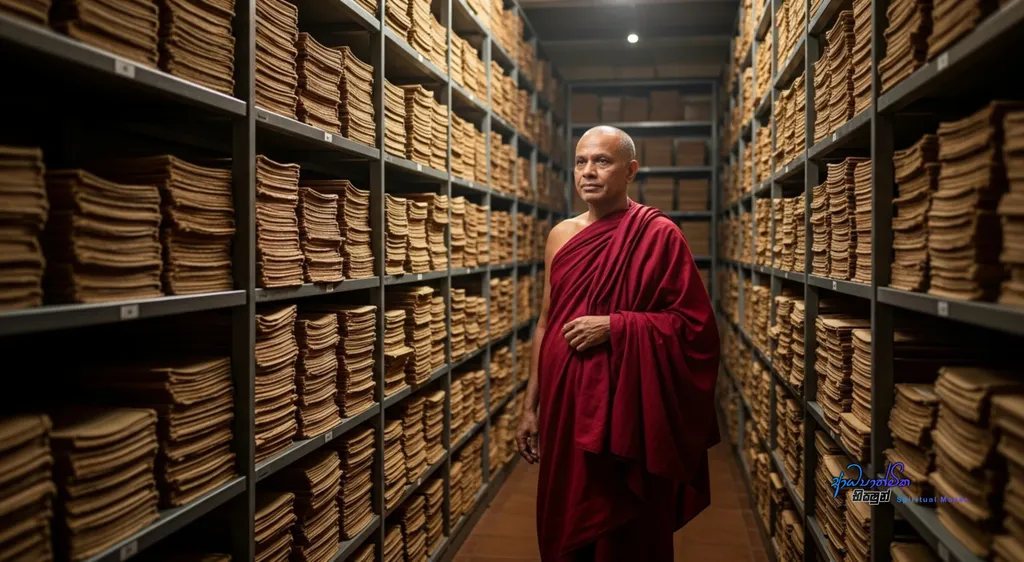
The First Step: A Simple Guide to Third Eye Meditation
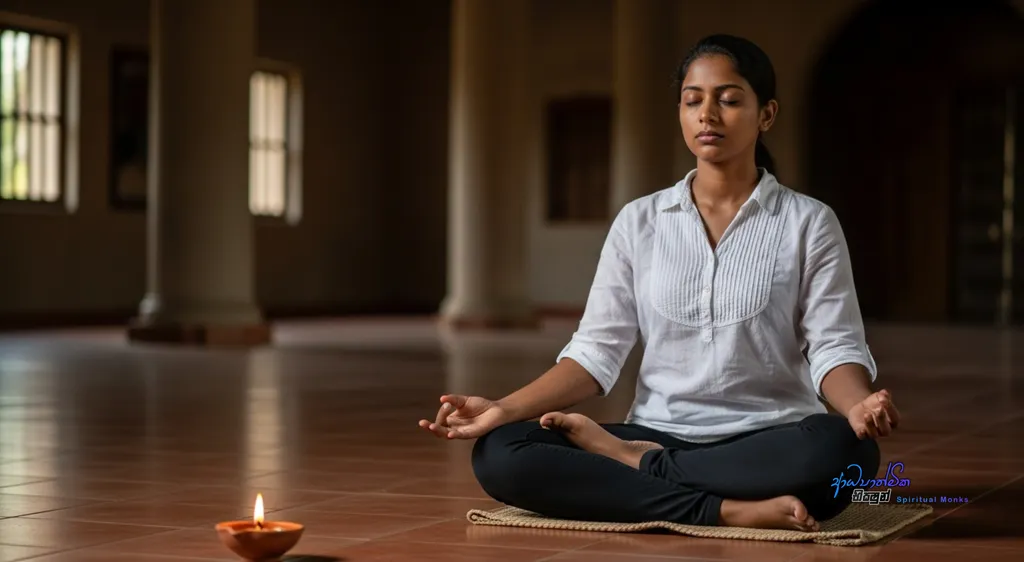
In our practical Third Eye meditation program, we teach you how to begin the practice. How do we start? Simply put, you sit in a comfortable meditation posture with your back straight, close your eyes, and bring your awareness to a point on your forehead. This could be the spot in the middle of your forehead, the area between your eyebrows, or any point along the vertical midline from your nose to your forehead that feels comfortable for you. The instruction is to simply place your attention there and unify your mind on that spot.
As you continue the practice, we introduce a meditation word, or kammaṭṭhāna, to repeat mentally: the word ‘empty‘ (his in Sinhala). As you do this, many people begin to notice various changes and sensations on their forehead. You might feel a pressure, a tightness, something like an electric current or a subtle grounding sensation.
It could manifest as a feeling of coolness or warmth. There are many more sensations than I can list here, and I have described them in detail in other teachings. The key point is that these physical feelings are the first stage.
The Light Sign (Āloka Sañña): The Critical Turning Point
This sensation of pressure or energy on the forehead is something that happens to the vast majority of people who practice it happens to almost everyone. There is hardly anyone who doesn’t feel this. Perhaps only a tiny fraction, maybe 0.01%, might not experience it, but otherwise, it is a universal sign.
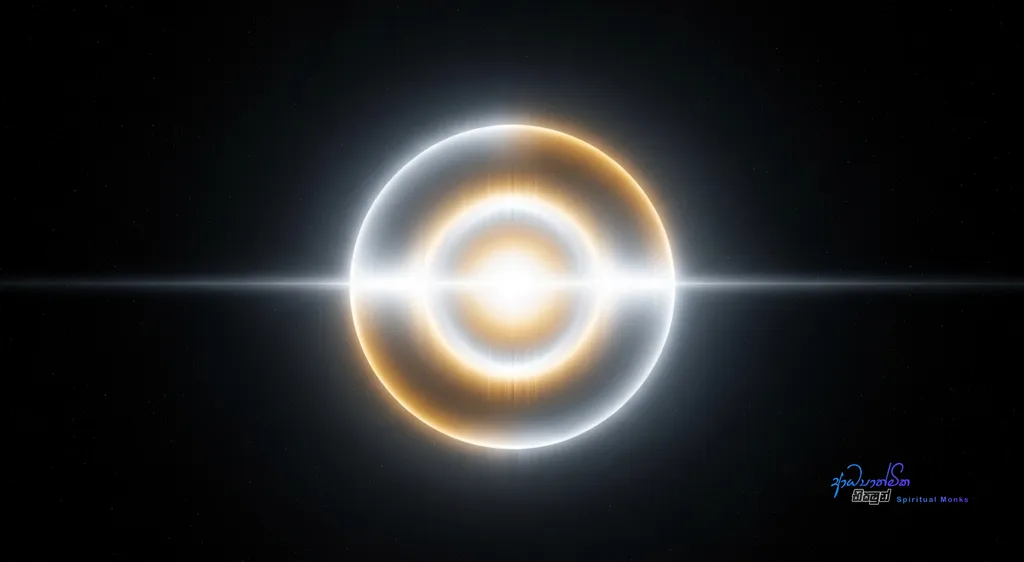
I can state this with 100% certainty based on experience. After this stage, the next step, as I have explained repeatedly in our teachings, is the emergence of what is called an āloka sañña, or a ‘light sign.’
Now, we come to the crucial point. Does this light sign appear for everyone?
Here lies the real question. The truth is that the light sign does not necessarily appear for everyone. For some, it may arise very quickly. For others, it takes time. I cannot give an exact timeline; it could be three days, a few weeks, a month, several months, a year, or even longer. This light sign is the next major milestone in the awakening of the Third Eye, and it is the stage one must reach. But as I said, it does not appear for everyone, and in truth, many may not experience it at all in this lifetime.
Why Progress Varies: The Power of a Pure Mind
Why does this happen?
I remember when we were engaged in our own spiritual development, it took a very long time for the light sign to appear for us. However, some who learned from us, sometimes with the help of our spiritual energy, experienced it in a matter of seconds. Why? Because their minds are pure.
Often, those who observe virtue (sīla) or practice celibacy (brahmacariyā), and those with fewer wrong views (diṭṭhi), progress much faster. I have given teachings on these views before, which you can explore to gain a deeper understanding. Such individuals quickly develop states of meditative absorption (jhāna), awaken energy systems like Kundalini, and connect with universal energy.
Consider giving these practical exercises to young children. You will see that their practice develops much faster than yours. What is the reason for this? Their minds are not yet burdened with the deeply rooted wrong views, unwholesome intentions (akusala cetanā), various mental defilements like greed and anger (kilesa), and the countless opinions we absorb from society. Their attachments and aversions are simple, related to play and small things, not the deep-rooted issues we adults carry.
Therefore, their minds quickly become concentrated, and the light sign appears. For some children, the Third Eye can open in a single moment. This can also happen for adults and young people who maintain a child-like purity of mind, someone who has insight into wrong views, lives a virtuous life (observing at least the Five or Ten Precepts), and keeps their mind clean.
The Echo of Saṃsāra: How Past Kamma Shapes Your Practice
If progress is slow even with a pure mind, we must look at another factor. As followers of the Buddha, we understand that we all have a long journey through saṃsāra the endless cycle of birth, death, and rebirth. We continue to experience mountains of suffering because we have not yet ended this journey. In this very life, we face various sorrows, and even if we avoid physical pain, we still endure mental anguish and stressful thoughts.
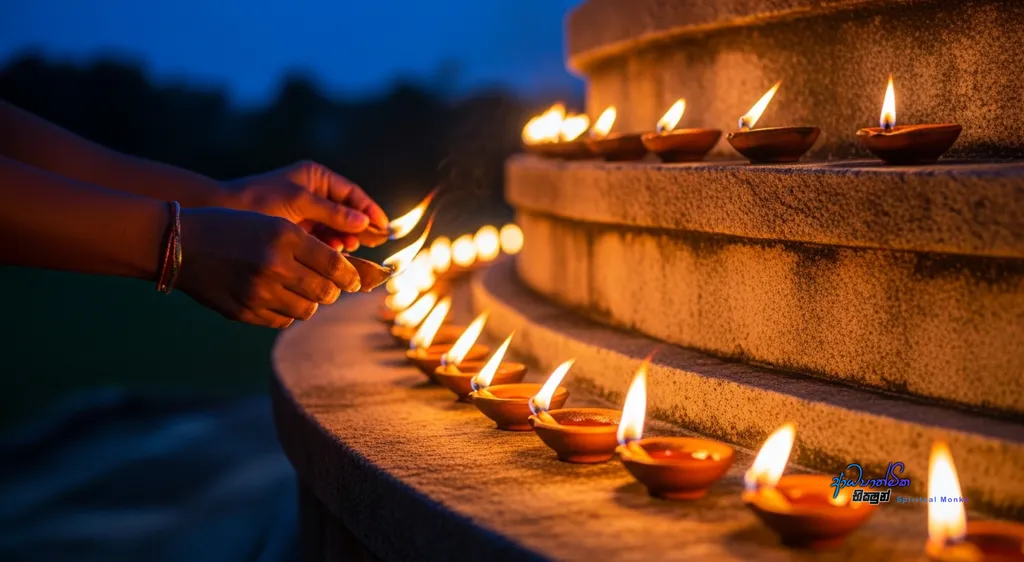
To reach these higher spiritual states, certain causes must have been cultivated in the past. The Buddha pointed to a specific wholesome act that supports the arising of wisdom (paññā): the offering of light (āloka pūjā).
In ancient times, this meant offering lamps. When we make such an offering to the Buddha, the Dhamma (his teachings), and the Sangha (the community of noble ones), we can make a strong aspiration, a resolution (adhiṭṭhāna), such as, ‘May I realize Nibbāna,‘ or ‘May I attain wisdom.‘
I recall that the disciple who was foremost in the divine eye was the great Arahant Anuruddha. He was the master of what we call the Third Eye though the term in Buddhism is Dibba-cakkhu-ñāṇa. It is mentioned in the scriptures that during his past lives in saṃsāra, he made many offerings of light. This is shown as a primary cause. So, having these past wholesome actions, or kamma, is necessary.
Even if we haven’t made such offerings in this life, we must have done so in previous lives. However, do not fall into the wrong view of thinking, ‘I haven’t lit lamps, so I won’t see the light sign.‘ That is not the only reason.
The Power of Habit: The Role of Past-Life Meditation
Making offerings alone is not enough. We must have also practiced meditation in the past. Even the Buddha, during his time as a Bodhisatta, practiced meditation. You have surely heard in the Jātaka tales how he went to the Himalayan forests, mastered meditation, and developed the eight stages of absorption (aṭṭha samāpatti) and the five higher knowledges (pañca abhiññā). Those who read the Jātaka stories can understand these matters.
So, we must have cultivated meditation in our past lives. If we have practiced concentration meditation (samatha bhāvanā) and made offerings of light, this combined past-life conditioning, this habit from saṃsāra, creates the potential for rapid progress. Someone might listen to our teachings in this life and start to practice or begin another method.
If that person be it a child, a young person, or an adult has a pure mind and has cultivated these causes in the past, the Third Eye’s light sign can appear instantly. For some, the Third Eye may open completely, and they attain the Dibba-cakkhu-ñāṇa.
There is no age limit for this. If your mind is pure and your past spiritual practice is strong, these abilities can awaken very quickly. This combination of factors is what determines the opening of the Third Eye and other spiritual abilities, such as reading minds, seeing past lives, and developing psychic powers (iddhi-vidha).
A Call to Wise Effort: What to Do If You Feel Stuck
This is why the Buddha taught that we should cultivate these practices in every lifetime. Now, you might be someone who has not yet seen the light sign, and you may be feeling sad, discouraged, or disappointed in yourself. You might think, ‘Oh, I must not have practiced in my past lives. That’s why I’m not getting these results.‘ Please, do not fall into such a weak state of mind. Don’t let yourself become disheartened.
We don’t know what we have or haven’t done in the vastness of saṃsāra. Don’t even think about it. Throw that worry away, kick it aside. Instead, if you feel you haven’t done the work before, then resolve to start now. If you do not end the cycle of rebirth in this life, during this dispensation of Gautama Buddha, you will only have to regret it in future lives. So, make a firm determination: Even if I don’t get any abilities in this life, I will walk the path of practice the Buddha taught.
I will engage in both the path of offerings (āmisa) and, ten times more intensely, the path of practice (paṭipatti).’ Resolve to cultivate Third Eye meditation, mindfulness, and every other method that comes your way. Vow to train yourself continuously. Whether your path leads toward meditative absorptions (jhāna), psychic powers, or seeing past lives (pubbe-nivāsānussati), commit to walking it fully.
The Middle Path of Practice: Non-Attachment and Natural Awakening
Decide that you will diligently train in the abilities you lack. At the same time, continue to cultivate the qualities that lead to Nibbāna, mindfulness and the wisdom that brings liberation. Make this your life’s great work. Fulfill these practical perfections (pāramitā) and engage in this practice until the very end of your life, all while managing your worldly responsibilities.
I want you to become strong, whether you are a man or a woman, young or old. Take these words to heart and strengthen your resolve to develop your spiritual life. I stand in that same place. I never once thought, ‘I need this ability,‘ or ‘I need to attain jhāna.‘ I don’t even think, ‘I must attain Nibbāna.‘ However, I engage in the practice of all these things. This is all that is required of you. Stand in such a middle, non-attached place. For a person who is balanced and neutral, all the abilities cultivated in saṃsāra will begin to emerge naturally.
And for the skills you haven’t yet developed, your own wisdom will show you the way forward. We are also here to help and support you. Furthermore, as I have taught before, if you make aspirations, you can even receive help from divine beings (devas). Continue your work in this way.
I believe this teaching is sufficient for your understanding. You should now have clarity on the question of whether the Third Eye opens for everyone. It does not open for all in the same way, but you now understand that you can continue your Third Eye meditation practice without any problem or discouragement.
Now, I offer you a blessing. By the power and energy of the Triple Gem, may the abilities you have developed throughout saṃsāra emerge. May your meditations, spiritual gifts, and all higher knowledges blossom. With this aspiration and blessing, I conclude today’s teaching on whether the Third Eye opens for everyone. Once again, I bless you to continue your meditation practice every day without becoming discouraged. May you have the strength to engage in this practical path consistently.
We invite you to walk this path with us. Read our teachings, and most importantly, apply them practically in your own life. as you practice, questions will naturally arise. Please feel free to share your experiences and questions in the comments below, via email or contact form. I will do my best to offer guidance in future talks based on your progress. For now, begin this practice with an open heart and a mind free from expectation. Cultivate it correctly, and may you find the clarity and peace you seek.
Thank you for joining us. We hope this blog will be of great benefit to your spiritual journey.
May you all be well and happy.
May the blessings of the Triple Gem be with you all!


