


Categories: Lost Your Meditation Spark?
May the blessings of the Triple Gem be with you all!
Today, through our spiritual teachings, I wish to shed light on an experience that many of you encounter on the spiritual path: sleepiness during meditation. This is a very common hurdle, one that almost everyone faces when they begin to practice meditation seriously. The topic you saw in the title is indeed about this very challenge of sleep.
Sleep is, of course, a natural part of life for all of us. But when it intrudes upon our meditation, it can be a significant obstacle. First, I would like to explain this phenomenon from the perspective of the Buddha’s teachings. By presenting these core ideas simply, I can then share practical methods, drawn from both the ancient texts and my own experience, to help you overcome drowsiness in meditation.
This sleepiness is a type of dullness or sloth known in Buddhism as Thīna-middha. It is considered one of the ‘Ten Armies of Mara’, metaphorical forces that challenge our spiritual progress. However, my goal today is not to give a detailed analysis of these forces, but to provide a practical guide to understanding and conquering this specific form of drowsiness so you can continue your journey.
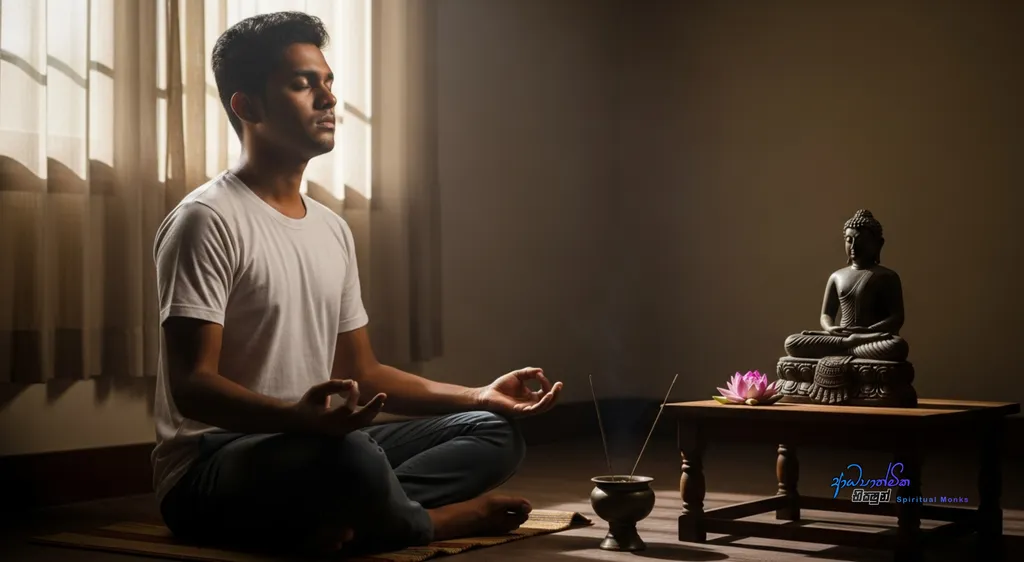
Why We Get Sleepy: Three Common Causes in Daily Life
When we meditate, we often experience sleepiness. Let’s look at the primary reasons this happens, especially for those of us living busy lay lives. Understanding the cause is the first step to finding the solution.
1. Physical Exhaustion
Many of you are laypeople, living wonderfully full but often hectic lives. Whether you are working at a demanding job or managing a household, doing the cooking, cleaning, and caring for children, your body and mind become tired. When you finally sit down to meditate, the practice itself begins to calm the mind.
As soon as your mind becomes tranquil, the physical exhaustion you’ve been pushing through finally catches up. Suddenly, a deep wave of sleepiness washes over you. If you are meditating near your bed, the temptation to just lie down is immense! In fact, meditating to calm the mind before sleep is excellent for your health.
From a medical perspective, relaxing the mind before sleeping improves memory and reduces mental stress and tension. In our modern world, where many are addicted to phones and electronics, choosing to connect with a spiritual practice before resting is a profoundly healthy choice for your brain, your well-being in this life, and your journey through samsara (the cycle of rebirth).
However, if your goal is to meditate deeply, not just to fall asleep, I suggest this: try not to meditate when you are excessively tired. Of course, there are some people who, like lions, have the energy to meditate for an hour even after a long day.
If you are one of them, that is wonderful, please continue! But if you find that exhaustion always leads to sleep, it is better to give your body the rest it needs first. Take a short nap, allow the fatigue to pass, and then begin your meditation with a refreshed mind. This is a very practical way to overcome drowsiness in meditation.
2. Mental and Emotional Strain
Another major cause of sleepiness is unresolved mental pressure. We all face challenges, financial, social, or family problems involving parents, children, or friends. Sometimes, we carry the weight of past actions and feel regret. When you sit to meditate with this mental burden, the practice begins to quiet the storm.
As the pressure subsides, your mind, seeking an escape, can drift into a state of dullness and sleep. You may have experienced this yourself: as you settle into your meditation practice, whether it’s the Third Eye method or any other, the weight of your problem seems to lift, and immediately you feel sleepy. This is the mind’s way of shutting down when faced with suppressed stress. Acknowledging this connection is key.
3. Overeating
The third significant factor is overeating. The Buddha advised that we should not fill our stomachs to the brim before practicing. He taught to stop eating when there are about four or five mouthfuls of space left, and then to fill that remaining space with water. This advice was given to facilitate the path to Nibbāna (liberation), as a heavy stomach leads to dullness.
Heavy foods, like rice or flour-based products common in Sri Lanka, can make you feel very sleepy after a meal. If you eat a large dinner and then try to meditate, drowsiness is almost guaranteed. Medically, overeating is also discouraged. It’s said that a man needs around 2500 calories and a woman around 2000 per day; exceeding this can negatively impact health and even memory.
The Buddha pointed out that overeating directly causes lethargy, laziness, and sleepiness, making meditation impossible. This is why monks are taught to eat only for the sustenance of the body, not out of greed. This reflection is part of a practice called paccavekkhanā, where one mindfully considers the purpose of requisites like food. You can search online for ‘paccavekkhanā’ to read its meaning. The essence is: ‘I take this food not for pleasure, but only to sustain this body so I may continue on the path.‘
You can apply this wisdom in your life. If you struggle with weight or health issues, this moderate way of eating can bring great benefits. In many cultures, like in China, people eat dinner early, often by 6:30 PM, and then go for a walk. This is very similar to the Buddhist practice of walking meditation, or sakmana, which monks do after meals.
Walking barefoot on a natural surface can stimulate nerves, balance the body, and aid digestion. These ancient teachings are incredibly practical. People today often criticize them because they haven’t tried to apply them. These practices work, both for your spiritual progress and your everyday health.

The Buddha’s Timeless Wisdom: The Pacalāyana Sutta
The Buddha, the all-knowing teacher, provided a clear, step-by-step guide to overcome drowsiness in meditation. These methods are found in the Pacalāyana Sutta, located in the Aṅguttara Nikāya of the Sutta Piṭaka (the collection of the Buddha’s discourses). You can find these texts online on sites like pitaka.lk or by downloading a Tripitaka app. The specific text I am referencing is from the Buddha Jayanti Tripitaka series, page 407.
The sutta describes a time when the Venerable Moggallāna, one of the Buddha’s chief disciples, was meditating and became overwhelmed by extreme drowsiness. Seeing this, the Buddha appeared before him instantly through his psychic powers, or iddhi.
The text says he arrived ‘as quickly as a strong man might stretch out his bent arm or bend his outstretched arm.‘ I mention this detail because today, some people who cannot do such things themselves claim these powers are false. Yet, they are mentioned repeatedly throughout the scriptures. When you read the suttas, you will see this for yourself.
The Buddha then addressed the Venerable Moggallāna and offered him a sequence of seven methods to dispel his sleepiness. While these instructions were given to a great disciple 2,500 years ago, they remain powerful and relevant for anyone today who is sincerely striving on the path. I will present these practical points to you simply, so you can use one, some, or all of them to break through lethargy and advance your spiritual practice.
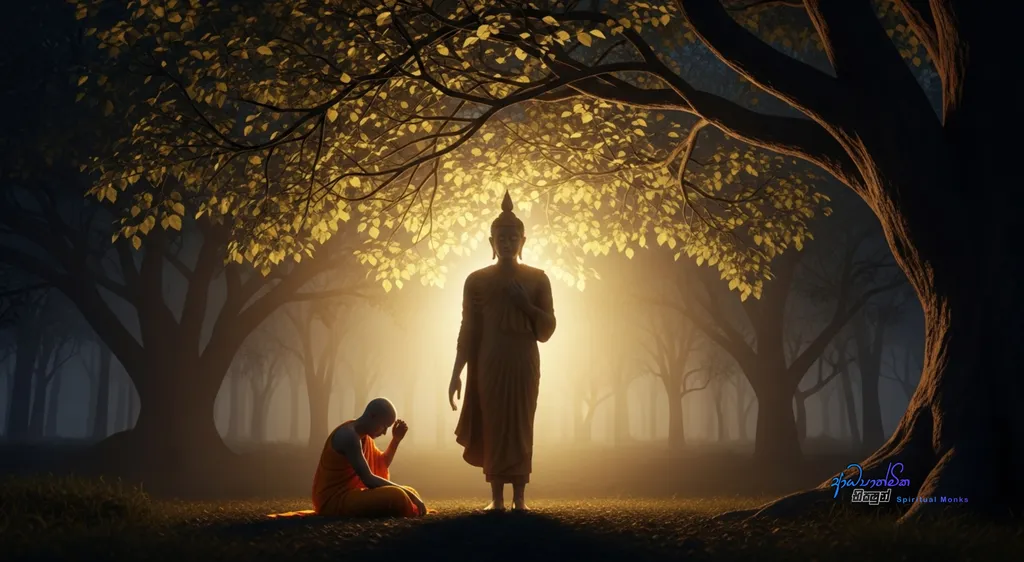
The Buddha’s Seven Methods to Conquer Drowsiness
Here are the practical methods the Buddha taught to conquer sleepiness, presented as a progressive sequence. If one step doesn’t work, you move to the next.
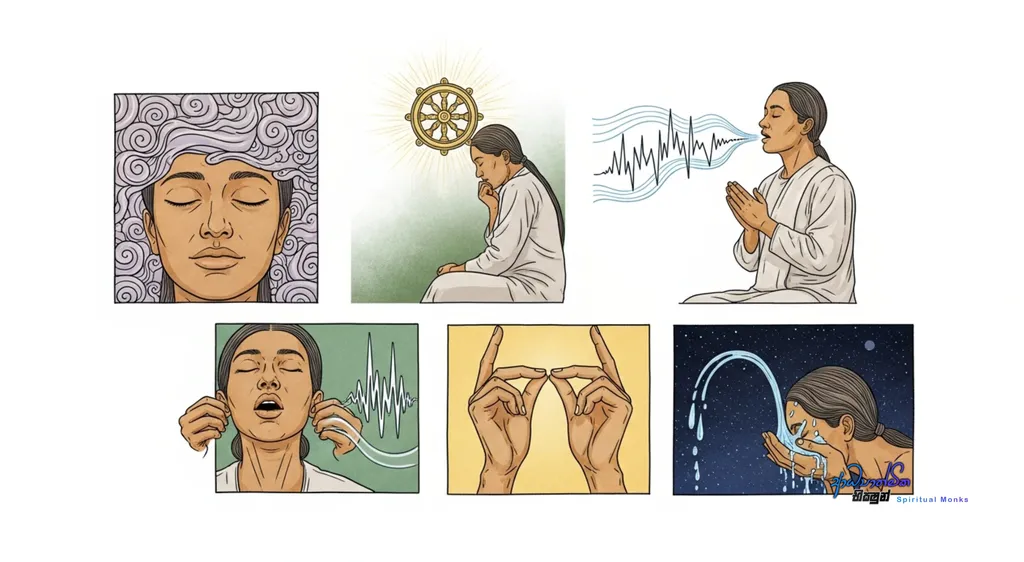
- Do Not Give Attention to the Drowsiness.
The first instruction is to simply not focus on the thought or feeling of sleepiness. If you are practicing your meditation, for example, focusing on the concept of ‘emptiness‘ in our Third Eye practice continue to do so, but without giving energy to the sensation of being tired. Simply be aware of it without dwelling on it. In my own words, just watch the mind with mindfulness and let the feeling be. - Reflect on the Dhamma.
If sleepiness persists, the Buddha advised reflecting on the teachings, the Dhamma. Contemplate profound concepts. You could think about the Abhidhamma, the ultimate realities of mind (citta), mental factors (cetasika), matter (rūpa), and Nibbāna. Engage your mind in this analysis. Why does this work? Sleepiness often arises when the mind is bored or disengaged. When you introduce a stimulating, positive subject, the mind awakens. It’s like when you are feeling drowsy, but then you hear your favorite song; the sleepiness vanishes instantly! Here, the Buddha directs us to use the Dhamma as that stimulating object. - Recite the Dhamma Aloud.
If reflection is not enough, the next step is to recite the teachings out loud. This is known as sajjhāyanā, or chanting. You could chant a text like the Karaniya Metta Sutta or the Ratana Sutta. The Buddha’s instruction was simply to ‘recite the Dhamma aloud.‘ The vibration of your own voice engages the body and mind in a new way. Think about it: if you are nodding off and a friend calls to share some juicy gossip, your sleepiness disappears in a second! The mind is captivated. But gossip pollutes the mind, stirring it up like a muddy lake. Chanting the Dhamma, however, purifies and concentrates the mind, making it a skillful way to overcome drowsiness in meditation. - Pull Your Ears and Rub Your Limbs.
If chanting doesn’t work, the Buddha advised physical stimulation. Gently pull on your earlobes and rub them until they feel warm. Rub your hands together briskly, then rub your arms and legs. While sitting in your meditation posture, you can rub your knees. This creates warmth and a sharp physical sensation that cuts through the mental fog, much like we do when we feel cold. This simple physical action can jolt the system back to wakefulness. - Get Up, Wash Your Face, and Look at the Sky.
If all the previous methods fail, the Buddha said to get up from your meditation posture. Go and wash your face with cool water, paying special attention to your eyes. Then, step outside or look out a window and gaze up at the sky, the stars, and the constellations. This change of posture and scenery provides a powerful reset. In our modern world, we know how looking at a bright phone screen can instantly wake us up. The light itself dispels sleep. The Buddha’s method is a natural version of this, connecting us with the vastness of the universe to awaken our inner state.
Deeper Insights: When and Why Drowsiness Fades
It’s important to understand that drowsiness is primarily a challenge in the early and intermediate stages of practice. Even those with developed concentration (samādhi) or spiritual abilities like the ‘third eye’ can experience it. Why? Because meditation is a form of mental work, and just as the body gets tired, the mind can too. Sometimes, the concentration itself can become so deep that it borders on a sleep-like state, especially in the middle stages.
A helpful tool against this is the perception of light, or āloka saññā. For some, developing this internal light during meditation acts like a bright torch shining in the dark, effectively cutting through sleepiness. However, just as some people can sleep through anything, this internal light doesn’t work for everyone all the time.
So, when does drowsiness truly cease to be a problem? It is completely absent in two main states:
- During Deep Jhāna: For a person who has entered the states of deep meditative absorption, from the first jhāna to the eighth, there is no drowsiness from the moment they enter until they emerge.
- For the Enlightened: Those who have realized the stages of enlightenment on the Buddha’s path, and especially those who have attained Nibbāna, are free from unskillful sleepiness. They sleep, as the Buddha did, only to meet the body’s physical needs. They do not fall into lazy indulgence, what we might say in Sinhala as ‘sleeping until the sun hits your back.‘ They have conquered that tendency completely.
As your spiritual practice deepens, you will naturally find your need for excessive sleep diminishing. This itself is a sign of your progress.
From the Cushion to Daily Life: Cultivating Wakefulness
By using the methods taught by the Buddha and understanding the practical causes I’ve shared, you can break through the habits of lethargy and sleepiness. This is not just for your spiritual life; it is for your worldly life as well. To succeed in any field, we know we must wake up early. Look at the most successful people in the world, the wealthiest entrepreneurs, many of them wake up at 4 AM to meditate. They use various techniques, not necessarily Buddhist ones, but they practice.
Why do they do it? Why do martial artists meditate? Why do artists and scientists meditate? I encourage you to investigate this for yourself. When you understand the reasons, you will find your own motivation.
I could speak for much longer on this topic, but I believe I have covered the most essential, practical points you need to move forward and overcome drowsiness in meditation. I have shared enough for you to get started and see real progress.
I will conclude this teaching for today. By the power and blessings of the Buddha, the Dhamma, and the Sangha, the Triple Gem, may you be able to use these seven methods and the practical advice I have offered. May you break through and conquer your own tendencies toward laziness and sleepiness. May you have the strength to advance on your spiritual path and cultivate wisdom.
We invite you to walk this path with us. Read our teachings, and most importantly, apply them practically in your own life. as you practice, questions will naturally arise. Please feel free to share your experiences and questions in the comments below, via email or contact form. I will do my best to offer guidance in future talks based on your progress. For now, begin this practice with an open heart and a mind free from expectation. Cultivate it correctly, and may you find the clarity and peace you seek.
Thank you for joining us. We hope this blog will be of great benefit to your spiritual journey.
May you all be well and happy.
May the blessings of the Triple Gem be with you all!


