


Categories: Eradicate the Fear of Meditation
May the blessings of the Triple Gem be with you all!
Today, through these teachings, we will explore a question that arises in the heart of many who begin to practice: Can we walk the spiritual journey alone? After we begin meditation, can we proceed independently, without a teacher? This is a common point of confusion, as society is filled with many conflicting ideas, fears, and doubts about the spiritual world that can cause one to feel lost or lose faith.
Let’s bring some clarity to this important topic.
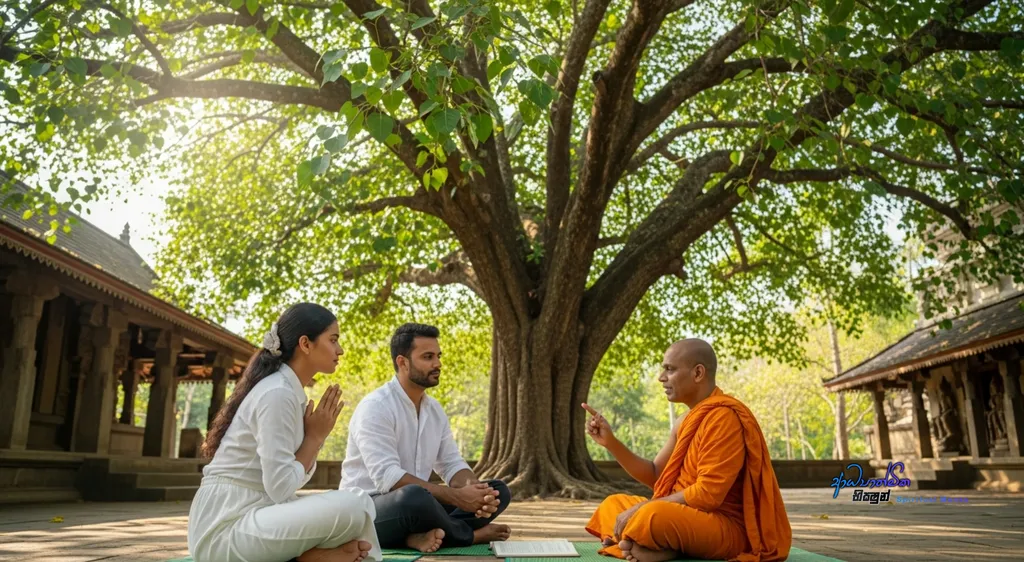
The Teacher’s Role and the Path to Independence
In the initial stages of your spiritual journey, a teacher is indeed very helpful. A guide is necessary to learn the fundamentals: What is meditation, known as Bhavana? What is its purpose? How do you establish an object of meditation? How do you begin a session? For these foundational steps, a teacher’s guidance is invaluable.
However, beyond this initial phase, a teacher is not always strictly necessary. You have the capacity to continue your spiritual journey with independence.
The goal of these teachings is to help you overcome the fear and uncertainty that can arise, allowing you to walk the path with a strong, independent spirit, like a bird flying freely on its own. This is true for anyone, regardless of age, gender, or background.
Remember the path of the Buddha himself. In his early days as a Bodhisatta, a being dedicated to awakening, he sought out teachers like Alara Kalama and Uddaka Ramaputta.
Yet, he ultimately attained enlightenment, or complete liberation, entirely on his own. Similarly, you may have read stories in the Buddhist scriptures, the Tripitaka, about monks who received initial meditation instructions from a teacher and then retreated into the forest alone. Through their solitary effort, they achieved full awakening and emerged as Arahants or fully liberated ones. Our aim is to help you cultivate that same potential for an independent spiritual journey.
Facing the Unknown: Overcoming Fear in Meditation
To walk the spiritual journey alone, the most crucial quality is fearlessness. You must be able to face any experience without fear. As you practice, especially with calmness meditation, called Samatha, or insight meditation, Vipassana, you will encounter new things. Your body and mind will experience sensations, sights, and feelings that are unfamiliar. The belief that you cannot proceed alone often comes from not properly understanding these experiences.
For example, during deep concentration, you might suddenly feel as if your subtle body sometimes called the astral body or, in Pali, the Manokaya is lifting up and separating from your physical body. For someone who doesn’t understand this phenomenon, the immediate reaction is fear. They might open their eyes, abandoning the meditation, and some may be so frightened they never meditate again. They gave in to fear.
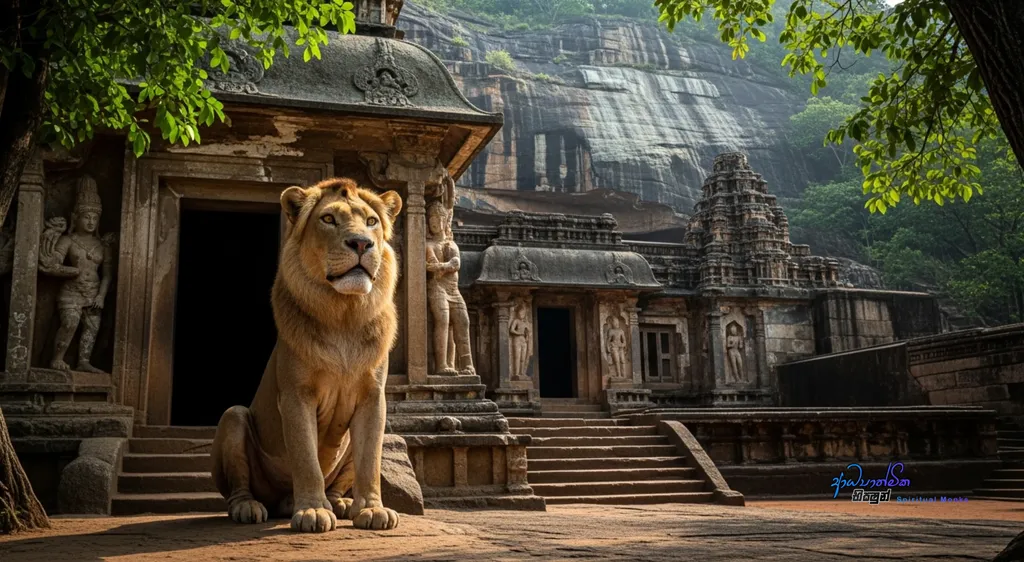
When I first faced such experiences, I did so with a lion-like resolve. I didn’t know what was happening, as no teacher had told me and I hadn’t read about it. But I made a firm decision: “Whatever happens, let it happen. If I am to die, let me die in meditation. It would be a noble death, as a concentrated mind leads to a good rebirth, perhaps in a heavenly realm.” With this positive mindset, I allowed the experience to unfold.
If the body wants to float, let it float. If it feels stuck for days, weeks, or even years, so be it. By surrendering to the process without resistance, nothing harmful occurs.
In fact, these experiences strengthen the mind and even the physical nervous system. This is the positive, courageous attitude we must cultivate on our spiritual journey.
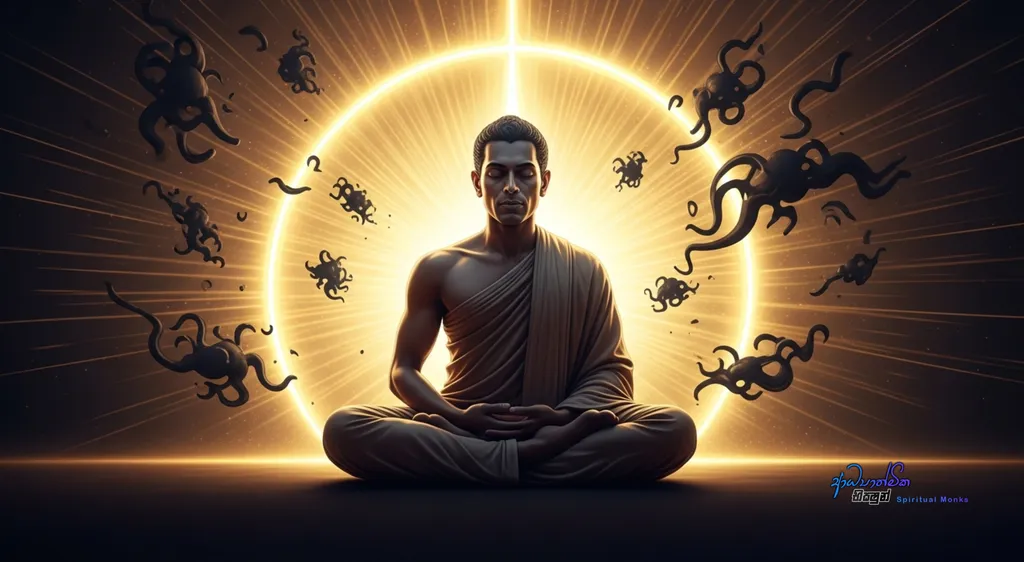
The Wisdom of Silence: Who to Share Your Spiritual Journey With
One of the greatest obstacles on the spiritual journey is discussing your experiences with the wrong people. When you have a profound meditative experience, you must learn to bear it in silence. This is an essential quality.
Imagine you tell your parents, who lack understanding, about the sensation of your mind-body floating. They might immediately think you are losing your mind. Young practitioners often tell me their parents complain to monks, “My child is meditating too much.” If that monk also lacks deep practice and many do, they might give terrible advice like, “Stop meditating, you will go crazy!” This is a profound disservice.
The Buddha himself taught this path after perfecting meditation. How can a follower of his path discourage it? Such advice comes from a place of ignorance.
Therefore, if your friends, family, or even certain monastics disrespect or belittle your practice, even in a small way, do not share your spiritual journey with them. They may be useful in your worldly life, and you can maintain that relationship, but keep them separate from your spiritual life.
Such people, in the context of the spiritual path, act as Mara a tempter or obstacle. Quietly endure your experiences and let them be. With time, understanding will dawn. You will not go crazy, and you will not fall ill from meditation. This has been explained in other teachings.
Beyond Spiritual Pride: The Mark of a True Practitioner
Another weakness we must overcome is the urge to talk about our spiritual experiences. For some, after a small taste of a meditative state, they feel a compulsion to tell someone, almost like an itch that needs scratching. This is a sign of a weak foundation.
The Buddha and the great Arahants did not go around announcing their attainments to everyone. They spoke only to those who were ready to understand and who could benefit from the teaching.
There are people who, after learning a little bit of Dhamma, want to preach everywhere, not knowing the difference between a receptive audience and an unreceptive one. They might try to teach meditation to people who don’t even observe the basic five precepts. This is pointless. Likewise, some who have a minor meditation experience act like they are masters, trying to show off to society. This is truly a delusion.
Those who have genuinely deep experiences on their spiritual journey feel no need to advertise them. They possess a quiet confidence. They use their wisdom to act appropriately for the time and place, just as the Buddha displayed his abilities only when it was of great benefit to others. They neither claim nor deny their abilities, but act with profound, situational wisdom.
Cultivating Fearlessness and Patience for the Solitary Path
From the first day you begin to meditate until the very last, the principles of fearlessness and calm endurance are your essential companions. When you encounter any experience, physical or mental, do not become afraid, and do not become agitated. Face it with the positive resolve we discussed. And then, remain calm and patient until the experience concludes on its own.
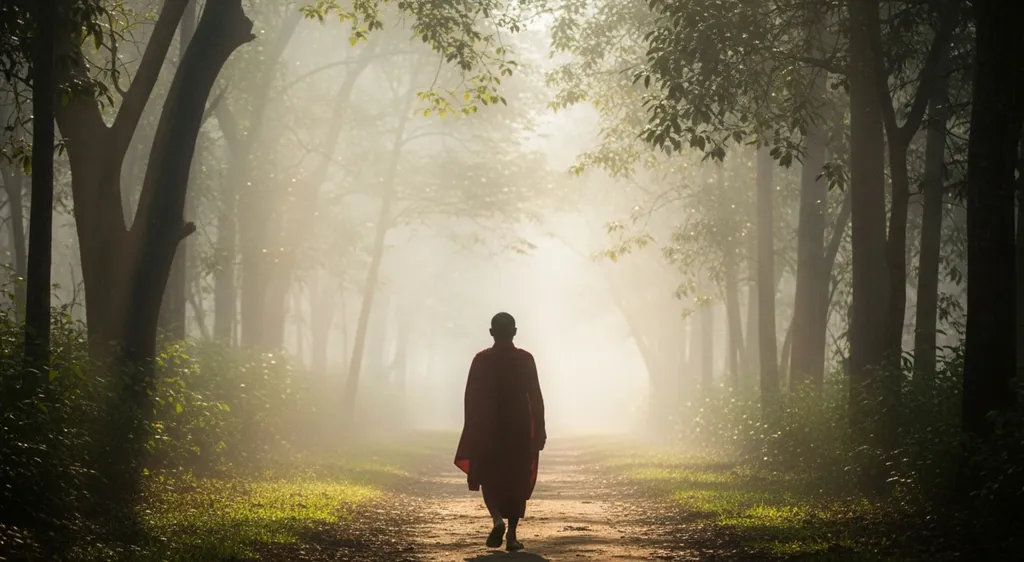
If you can master this, you can walk your spiritual journey to its very end without a teacher. Using mindfulness combined with wisdom what is known as Sati-Pañña you can reach the culmination of insight. You can perfect calmness meditation. This is the key characteristic you need.
Some people are born with a natural fearlessness for the spiritual journey; it is a habit from past lives. Many are on a path to awakening, perhaps as a future Buddha, a chief disciple, a silent Buddha (Paccekabuddha), or an Arahant. Such beings have an innate capacity for this independent work. But since we do not know our own karmic history or what perfections (Pāramī) we are fulfilling, it is best for all of us to cultivate these qualities.
Build your strength, your fearlessness, your patience, and your self-trust. Quietly walk your path.
Your Independent Path: A Universal Spiritual Journey
Therefore, endeavor to walk your spiritual journey independently. Use teachings like these as a support. Explore the words of otherwise teachers, read the scriptures, and study the commentaries to increase your knowledge. But be careful not to let knowledge become an obstacle a form of Mara for your practice. Learn, read, and listen, but use that knowledge to support your independent path, not to hinder it.
This path is open to everyone. It is without distinctions of age, gender, race, religion, or caste. I have received messages from many people, both men and women, who are proceeding independently on their spiritual journey.
Some had these profound experiences years before our articles began and are now happy to find their experiences validated, realizing what they did was correct. You, too, can do this. With these qualities, you can certainly walk your spiritual journey alone, with confidence and peace.
We invite you to walk this path with us. Read our teachings, and most importantly, apply them practically in your own life. as you practice, questions will naturally arise. Please feel free to share your experiences and questions in the comments below, via email or contact form. I will do my best to offer guidance in future talks based on your progress. For now, begin this practice with an open heart and a mind free from expectation. Cultivate it correctly, and may you find the clarity and peace you seek.
Thank you for joining us. We hope this blog will be of great benefit to your spiritual journey.
May you all be well and happy..


