


Categories: Other Meditation Teachings
May the blessings of the Triple Gem be with you all!
A question I am often asked is, “Do I need to retreat to a forest to begin my meditation practice?” Many people struggle with this idea of seclusion and feel that to begin their spiritual journey, develop their mind, or cultivate states of calm and insight, they must be in a remote, natural setting. This has become a significant point of confusion.
So, is it necessary to go to the forest to develop what we call Samatha (calmness meditation) or Vipassana (insight meditation)? Is solitude a prerequisite?
Let me begin with my own experience to give you a clear and immediate answer. I, who share these practical teachings and experiences with you, live in the city and in the forest. I am among crowds of people, and I am in places of solitude. I can be anywhere, and none of it is a problem for my practice. Let this be the first clue for you to understand the message I wish to convey. The place where we are should not be an obstacle to developing our spiritual life and meditation practice.
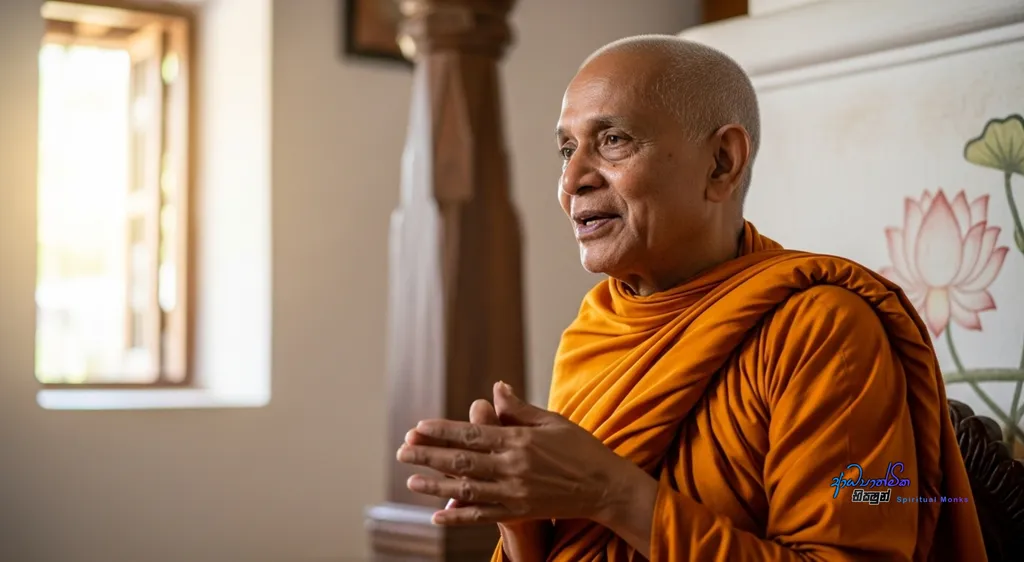
The Myth of the ‘Perfect’ Environment
Let’s consider a common example. Imagine a very busy person living in a bustling city. Perhaps their home is crowded, with six or seven family members, and people are constantly coming and going. I receive calls from people in exactly this situation, feeling trapped and unable to find freedom from the noise and activity.
However, the teachings I share, which come from the Buddha, are entirely practical. They can be applied at any time, in any era. The Dhamma is described as Sanditthika, meaning it is visible here and now, and Akalika, meaning it is timeless. You can experience its benefits in the very moment you practice. If we let our environment, these external circumstances prevent us from engaging with something so priceless, it is a great folly. These spiritual treasures are invaluable; they cannot be bought with billions of dollars. To abandon such a precious opportunity because of external disturbances is truly our own foolishness. If we have the desire to engage in this meditation practice but use our surroundings as an excuse not to, it is the greatest mistake we can make.
Learning from the Buddha: Practice in the City and the Forest
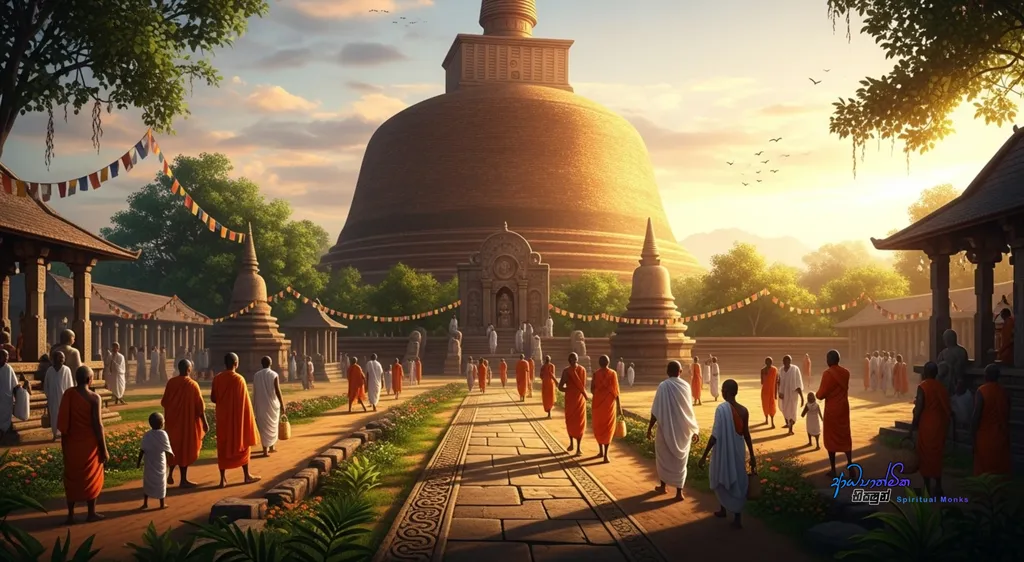
There is no rule that says you must go to a forest for your meditation practice. The Buddha himself lived in the city. The Jethavanaramaya monastery was located in the city of Sāvatthī, which had a population of around seventy million people, according to the commentaries. The Blessed One resided right in the midst of this vast population.
At the same time, the Buddha also spent time in seclusion, such as in the Pārileyya forest. In those days, the distinction we sometimes see today between ‘village-dwelling monks’ and ‘forest-dwelling monks’ was not so rigid. Monks lived in the forest and in the villages. While some things have changed, the fundamental human experience has not. The same kinds of people existed then as now, people running businesses, people with jobs. The only major difference is our modern technology. The minds and attitudes of people are the same. Therefore, to believe that you absolutely must go to the forest to practice meditation is a mistaken idea.
The Art of Balance: Integrating Spiritual and Worldly Life
For those of you living a lay life, you have responsibilities. You need to earn money, manage your finances, and perhaps care for your parents or are planning to get married. If you are married and have children, your life is filled with countless duties. Even if you are unmarried, there are bills to pay and a job to maintain. These are the realities of life.
Many people live this way, enjoying life, and then pass away without having cultivated any spiritual qualities or merit. But it doesn’t have to be that way. Even within that busy life, you can engage with the spiritual teachings we share, right from your own home. Many people who practice with us do so from their houses and apartments. It is entirely possible and convenient.
You must become skillful. Skillful at managing your family life, showing your children a path for their future, providing for their education, caring for your spouse and relatives, all while earning a living and developing your financial stability. Whether you have a job or a business, you must learn to balance this worldly side of life (what we call the laukika world) while also engaging in the spiritual activities (the ādhyātmika path) that we teach. If we cannot do this, our practice is incomplete. You cannot simply abandon your responsibilities; a married person with children cannot just leave to become a monk. They must first raise their children, see them settled in jobs and marriage, and only then, in their old age, might they have that opportunity. So, we must understand this and not let our duties become an obstacle.
Practical Techniques for Meditating Anywhere
Now, this does not mean I am telling you not to go to the forest. This advice is for those who cannot easily go to a solitary place. I have extensive experience meditating in crowded, urban environments. It is entirely possible. The key is to practice with the obstacles. In a way, having obstacles is good; it strengthens your meditation practice.
The paths the Buddha taught, both Samatha (calmness meditation) and Vipassana (insight meditation) can be practiced anywhere. Do not get confused about this. We have practitioners from all walks of life: busy professionals, university students, schoolchildren, people of different ages, nationalities, and even religions, all joining us. We have people from overseas and from Sri Lanka. They are all busy with their family and work lives and rarely get a holiday.
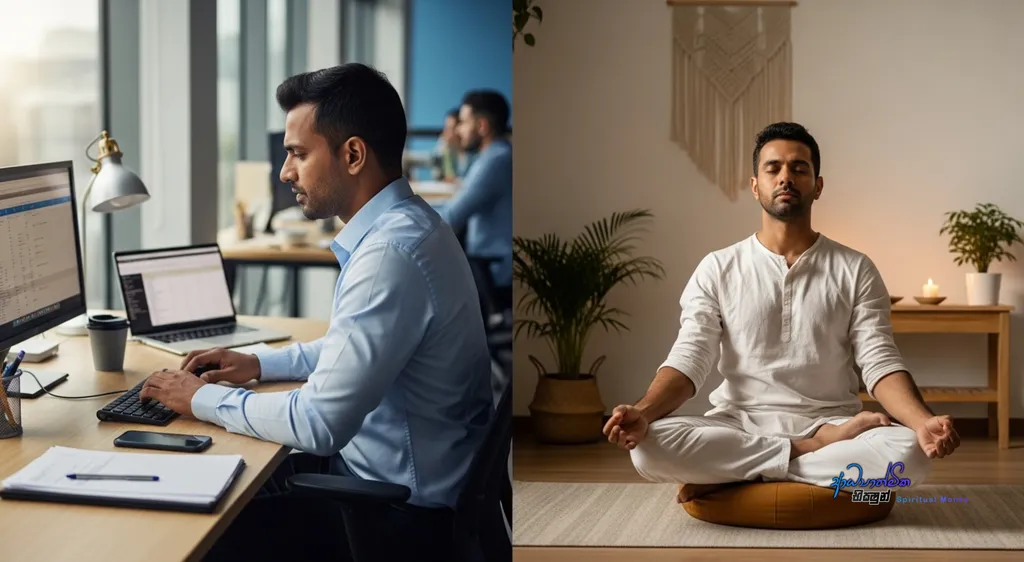
Does this mean they cannot meditate? Not at all. Whether you have five, ten, or fifteen minutes, you can practice. It doesn’t matter where you are at work or at home. If you are practicing Samatha, you can simply close your eyes. We used to do this all the time while traveling on the bus. People might have thought we were sleeping, but we were not. Leaning our heads back, we were engaged in our meditation practice, using that brief moment to develop calm. For Vipassana, which involves maintaining mindfulness and recognizing thoughts as they arise, your job is no obstacle at all. In fact, you can maintain mindfulness while doing your work. Insight meditation is not just a sitting practice; it can be done in all four postures (sitting, standing, walking, and lying down. Hoeing a field, driving a bus, or working at a computer) none of these activities are a barrier.
Transforming Obstacles into Allies for Your Practice
External factors should never be an obstacle. What about the loud TV at home? This is a common complaint. But even this is not a problem. Think of it as a helpful tool. If you can turn it off, great. If you can’t, think of it as a support for your practice. Adopt a positive mindset. Tell yourself, ‘This is fine. This noise is an opportunity for me to develop my mind.’ Use it as an aid for your meditation practice.
Never let your physical environment or the problems around you become a barrier. Approach every obstacle positively, changing your attitude as the Buddha taught, and continue your meditation practice without interruption. Don’t fall into the trap of thinking you must go to the forest.
The Danger of “Someday”: Why You Must Start Your Practice Now
Many people procrastinate. Those living abroad think, ‘I must come to Sri Lanka to meditate.‘ Don’t think like that. If you are only able to return in two or three years, that whole time is wasted. Others think, ‘I will go to the forest when I get older.‘ Who knows if you will live that long? Imagine you plan to return to Sri Lanka in a few years, but something happens on the journey. That time would be wasted for nothing. Seize the opportunity you have now. Don’t postpone it.
When I was a young man about to ordain, someone told me, ‘These things like meditation and spiritual development are for old age.‘ I thought to myself, ‘What foolishness.‘ It is actually very difficult to practice when you are old. Not because of the mind, but because of the body. The body gives pain and develops various ailments. The Buddha himself advised that it is best to engage in these practices while young, because in old age, the body becomes weak with sickness, and it can be difficult to even sit properly for meditation.
Now, if you are older and hearing this, do not be discouraged and think, ‘I cannot practice.‘ No matter the pain in your body, maintain the determination, ‘I will do my meditation practice.‘ Otherwise, you may never get another chance in this life. We do not know what kind of birth we will have in the next life, so do not misunderstand this point. Whatever your age or physical condition, resolve to develop your spiritual life right now.
Breaking Free From the Prison of Rigid Views (Diṭṭhi)
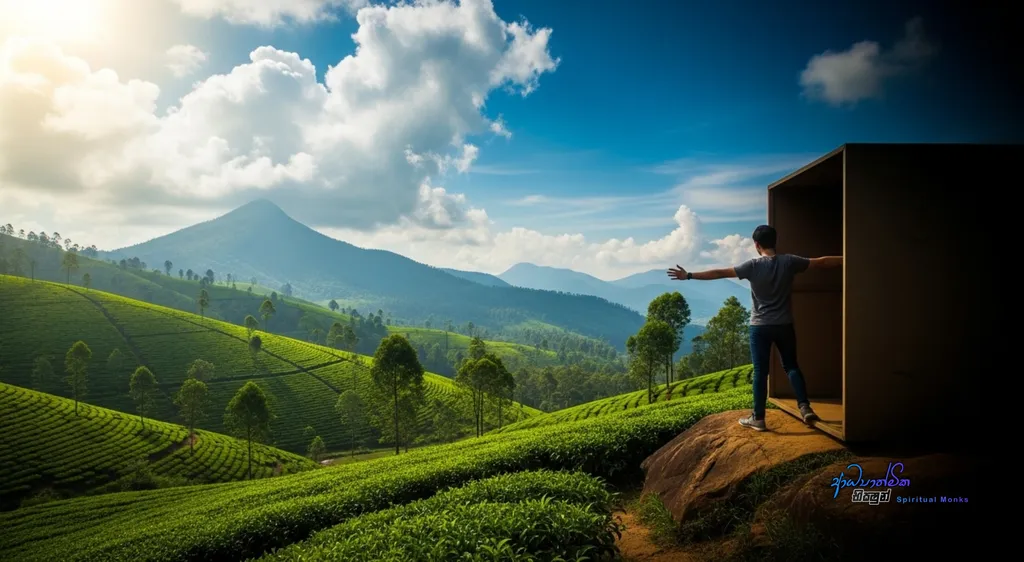
The idea that you must go to the forest for meditation is a kind of diṭṭhi, a rigid view or a fixed belief. It’s a box that people put themselves in. This is simply not true. It is not necessary to go to the forest to develop either Samatha or Vipassana.
The only advantage of the forest is that it can be easier because you are free from the bustle of crowds. For those who have that opportunity (who are single, retired, or have the freedom) then by all means, go. It is not a problem. But for those who cannot, it is not a requirement. Remember both points.
Some people, even monks living in forests, might tell you that seclusion is necessary. This is their own mistaken view. It’s a falsehood, a framework we have constructed. If it were true, how could the Buddha and so many enlightened beings (Arahants) have lived and practiced in a city of seventy million? The commentaries state that out of seventy million people in Sāvatthī, fifty million were stream-enterers or higher. They lived amidst the crowds. The Buddha remained unshaken, unconcerned by any external factors. These external things are not the real issue. The problem, if there is one, is a fault in our own mind.
Your Path, Your Choice: A Final Encouragement
I want to make this very clear one last time. If you have the desire, opportunity, and freedom to go to the forest for your meditation practice without any external problems, then please do so. There is no issue with that.
If you decide, ‘No, I don’t need to go to the forest. I will develop my mind right here at home, at my workplace,’ then make that determination and practice right where you are. You can experiment. If you live in the city, you can take a holiday for a few days or a week and go to a quiet monastery or retreat center to practice. Many families or couples do this together. They take a short break, meditate in seclusion, and then return to their jobs. Conversely, if you have been practicing only in the forest, you can go to the city and test your mind. See if your meditation is disturbed. This is an important experiment.
But for those of you who cannot leave, who are bound by duties and responsibilities, you can and should practice right where you are. The only things necessary are your own effort, dedication, and interest. If you have these, no external factor can be an obstacle. Race, color, social status, nationality, none of it matters. Whether you are in an arctic wasteland or a bustling city, you can develop your mind. The Buddha’s teachings are practical for anyone, anywhere.
Conclusion: The Only True Requirement for Meditation Practice is Within You
I shared this teaching today to address a common misconception in society and a question I am frequently asked. This mistaken view, that you must go to a forest is often spread by people who think they are experts, or even by those in seclusion who may not have a complete understanding. They create a stumbling block for others, disrupting their potential for practice. I gave this talk to break down that restrictive frame of mind and free you from that mental trap.
I trust that you have understood this point. Do not let any of these external things be a problem or an obstacle. Continue to develop your spiritual life, your calm meditation, and your mindfulness. Whether you are a student, a professional, married with children, or looking after grandchildren, none of these external factors are a true barrier to your spiritual life. We can carry on our spiritual practice with balance alongside our worldly duties.
By understanding this, you can also help others. If you meet someone who is stuck in this misunderstanding, you can share this perspective and help them begin their own journey. That is a great merit. As you become freer in your own mind, you can help others become free as well.
May the blessings of the Triple Gem be with you all. May you have the courage, effort, and dedication to develop your meditation practice. I offer you these blessings as I conclude today’s teaching.

We invite you to walk this path with us. Read our teachings, and most importantly, apply them practically in your own life. as you practice, questions will naturally arise. Please feel free to share your experiences and questions in the comments below, via email or contact form. I will do my best to offer guidance in future talks based on your progress. For now, begin this practice with an open heart and a mind free from expectation. Cultivate it correctly, and may you find the clarity and peace you seek.
Thank you for joining us. We hope this blog will be of great benefit to your spiritual journey.
May you all be well and happy.


