


Categories: Maintaining Mindfulness
May the blessings of the Triple Gem be with you all!
As we explore the spiritual life together, it’s essential to understand the profound difference between a mind that engages in spiritual practice and one that does not. This article aims to bring clarity to the nature of an untrained mind how it thinks, perceives, and desires and to contrast it with the perspective of a dedicated meditator. To begin this exploration, we will unpack a seemingly provocative statement: ‘All who do not meditate are mad.’ This isn’t meant as an insult, but as a starting point to analyze a deep truth about the human condition.
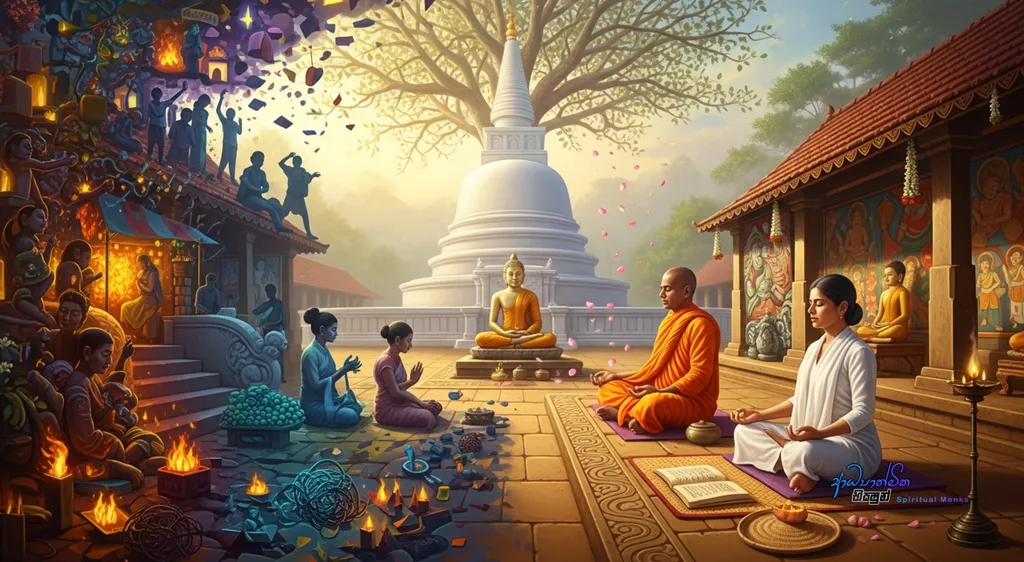
The Untrained Mind: A Perspective from Experience
When you engage in practical meditation, you learn a great deal about the nature of your own mind. You witness its restlessness, its patterns, and its potential for calm. Because you have experienced this directly, you have a genuine understanding. Now, from this place of experience, try to imagine someone who does not meditate.
Consider a person who has never looked inward, who hasn’t recognized the quality of Sati (mindfulness), who hasn’t cultivated the calm of Samatha (concentration meditation), and who knows nothing of Vipassanā (insight meditation) the profound path taught by the Buddha over 2,500 years ago, rooted in mindfulness and wisdom (Paññā).
Based on your own practical understanding, even if it’s just beginning, you can begin to surmise the state of such a mind. You can see how their perception might be limited and how their understanding of reality is shaped only by the external world. This isn’t about judgment, but about recognizing the transformative power of genuine spiritual practice.
A Shocking Diagnosis: Why the Buddha Called Worldlings ‘Mad’
Today, I want to share a Pali phrase that the Buddha himself taught, a statement known to many: “Sabbe puthujjanā ummattakā.” This translates to: ‘All ordinary worldlings are mad.’ An ordinary worldling, or a puthujjana, refers to anyone who has not yet attained any stage of enlightenment. The Buddha used the word ummattakā, meaning mad or deranged, to describe this state. Why would the Buddha, the embodiment of compassion and wisdom, use such a strong word? This wasn’t to condemn, but to diagnose.
The Buddha’s teachings, contained in the eighty-four thousand segments of the Dhamma found in the Tipitaka (the three baskets of Buddhist scriptures), are a precise reflection of reality, of natural law, and of the mind itself. Reflect on why such a stark statement is part of this profound teaching.
When you contemplate this with the wisdom gained from your own spiritual practice, you will find answers that transcend simple book knowledge. Your understanding will vary based on your level of wisdom, but the inquiry itself will deepen your path.
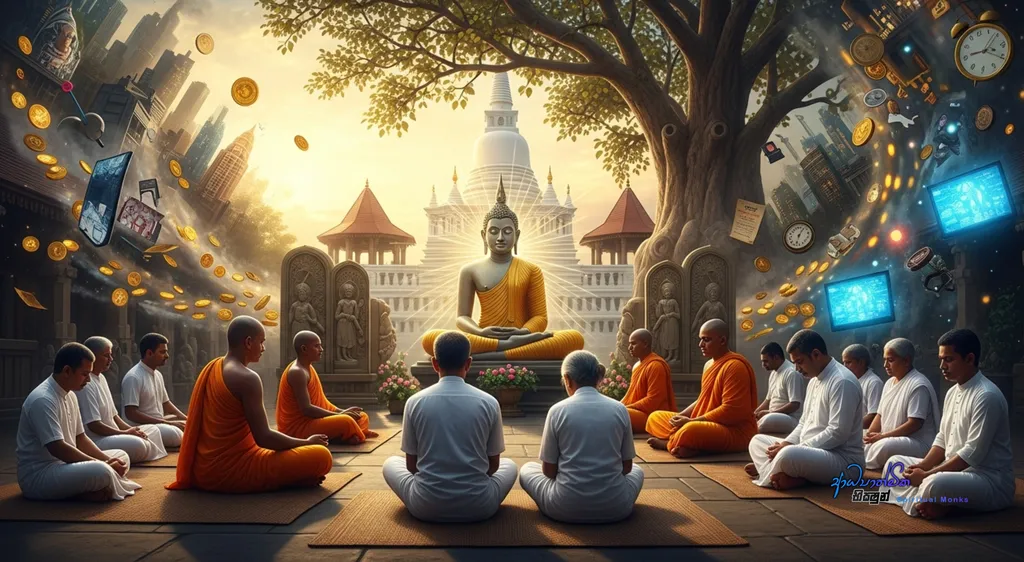
Facing Skepticism: Defending Inner Experience
In our spiritual practice, we experience things directly. Yet, there will always be those who challenge these inner experiences. Some people may ask, ‘Where is this third eye you speak of? Where are these inner lights?’ They might try to pathologize these profound spiritual states, labeling them with terms from Western psychology and dismissing them as symptoms of a mental illness. This is often the work of Māra not a literal demon, but the embodiment of delusion and the forces that obstruct awakening.
If someone challenges you this way, ask them a simple question: ‘The Buddha spoke of the Dibba-cakkhu-ñāṇa, the divine eye or clairvoyant knowledge, in the Abhidhamma and throughout the Tipitaka. What is it?’ Then, if these so-called pundits continue, ask them for the practical technique to attain it not words from a book, but the step-by-step method.
Just as we have taught the practical steps to open the third eye, from beginning to end, ask them to explain it simply, without jargon. You will quickly see whether their knowledge is real, born of spiritual practice, or just empty boasting.
The Limits of Science and the Wisdom of the Mind
Today, there are certain groups, including some who identify as ‘radical non-religious,’ who make it their mission to criticize and mock the Buddha and his followers. This includes young people and older individuals alike. True non-religious people often live peacefully, neither adhering to nor insulting any religion. However, this radical faction in Sri Lanka seems dedicated to attacking the Dhamma. They ridicule the stories of the Buddha’s life, from his birth to his enlightenment, measuring everything with a materialistic and cynical ruler.
Why do they do this? Think about it. When they mock the story of the Buddha walking seven steps at birth, it’s because they have no understanding of concepts like saṃsāra (the cycle of rebirth) or pāramitā (the perfections cultivated over countless lifetimes). To someone who sees the world only through the lens of modern science, these things are incomprehensible. But science has its limits.
The universe and nature contain truths that extend far beyond what science can currently measure. To understand them, we must unite with nature and the universe. The only way to do this is by developing the mind, our sixth sense. Through states of deep meditation (jhāna), awakening energies like Kuṇḍalinī, and progressing towards Nibbāna (liberation), the mind can access different layers of reality.
The Enduring Power of a Developed Mind
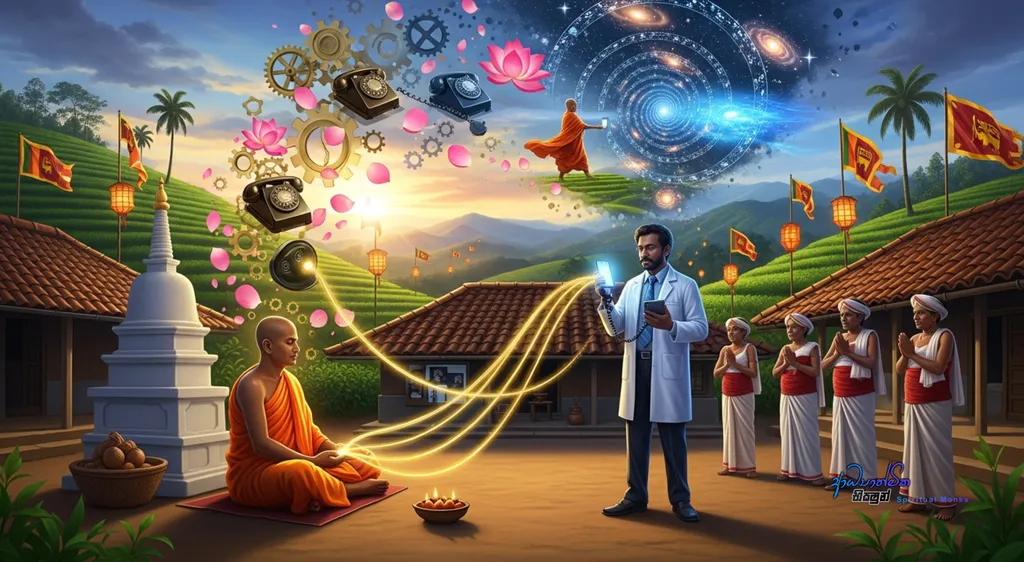
Long before modern science, the Buddha described the arising and passing away of world systems, all through the power of his developed mind. We use electronic devices and technology today, and I am using this platform to share these teachings. But are these things permanent? Consider a scientist who spends a lifetime trying to uncover a universal secret.
They may only discover a small piece before they pass away. Their work is then continued by another, who also may not complete it. The telephone, for example, was developed over generations. This is the way of worldly knowledge.
No matter how much technology advances, one person’s lifespan is not enough to fully comprehend the universe. Eventually, that person dies, and another takes their place, until the world itself faces destruction through famine, disease, or war. At that point, all scientific progress is wiped out. However, someone who develops the sixth sense, the mind, is not dependent on external technology.
If there were no modern tools, I would go from village to village to teach. Advanced practitioners can even connect to another’s mind to teach them, or, like the Buddha, use psychic powers (iddhi) to travel anywhere in an instant to help someone in need. This is the world of spiritual practice.
Levels of Insight: How Practice Shapes Perception
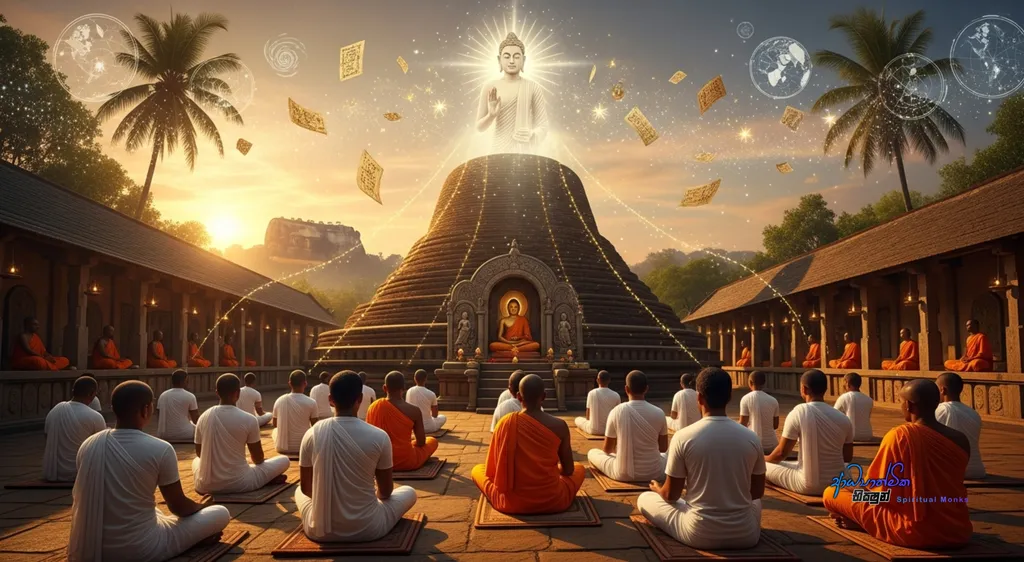
When a world system ends, all its scientific knowledge disappears. But a great being like the Buddha, a master of the mind, or an Arahant (fully enlightened being), or even a dedicated yogi, can rediscover truths that science takes centuries to find. While you might spend hundreds of years piecing together fragments of how the universe began and how it will end, a person with a highly developed mind can perceive this in its entirety in a matter of minutes. For a Buddha, whose mind is perfected through infinite pāramitā, this perception is instantaneous.
Now, consider the birth of such a supreme being, a Great Bodhisatta. Can you truly imagine what it would be like? Your ability to grasp this is limited by what I am telling you, by your own meditation experience, and by your understanding of the Dhamma. Your comprehension deepens with your virtue.
A person who observes the Five Precepts (Pañcasīla) will understand the Buddha better than one who doesn’t. This understanding grows as one observes the Eight or Ten Precepts, and further still with the full ordination vows of a monk. The higher one’s virtue, the more profound their vision of the Buddha becomes.
The Arrogance of Ignorance vs. The Humility of Practice
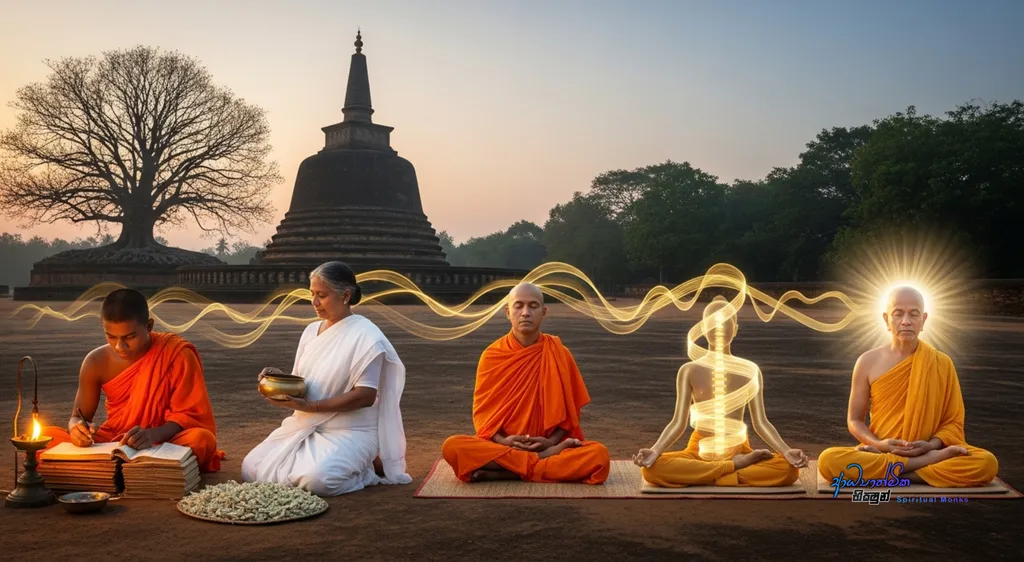
Understanding continues to deepen. Someone who studies the scriptures, the Tipitaka, will see more than someone who only maintains virtue. But if that person moves beyond books and develops true concentration (samādhi) a state of profound mental stillness we have discussed in other teachings their insight becomes greater still.
Beyond that, a person who experiences states of jhāna, awakens cosmic energy (Kuṇḍalinī), and develops psychic abilities has an even more direct and different view of the Buddha. Finally, the perspective of a Stream-enterer (Sotāpanna), a Once-returner (Sakadāgāmī), a Non-returner (Anāgāmī), and an Arahant are all progressively more profound. Each sees the Buddha through a clearer lens. These are crucial things to understand.
Yet, you have people with no virtue, no concentration, no generosity not even the basic practice of giving (dāna) who presume to define and judge the Buddha. It’s like a complete stranger, who has never met or spoken to your parents, telling you, ‘This is what your mother is like; this is what your father is like.’ You have every right to conclude that such a person is a fool. These radical non-religious critics are a group guided by Māra, the force of delusion. Especially in Sri Lanka, they receive resources to fund their mission of insulting the Buddha and misguiding others.
The Unseen Purpose and the Unqualified Critic
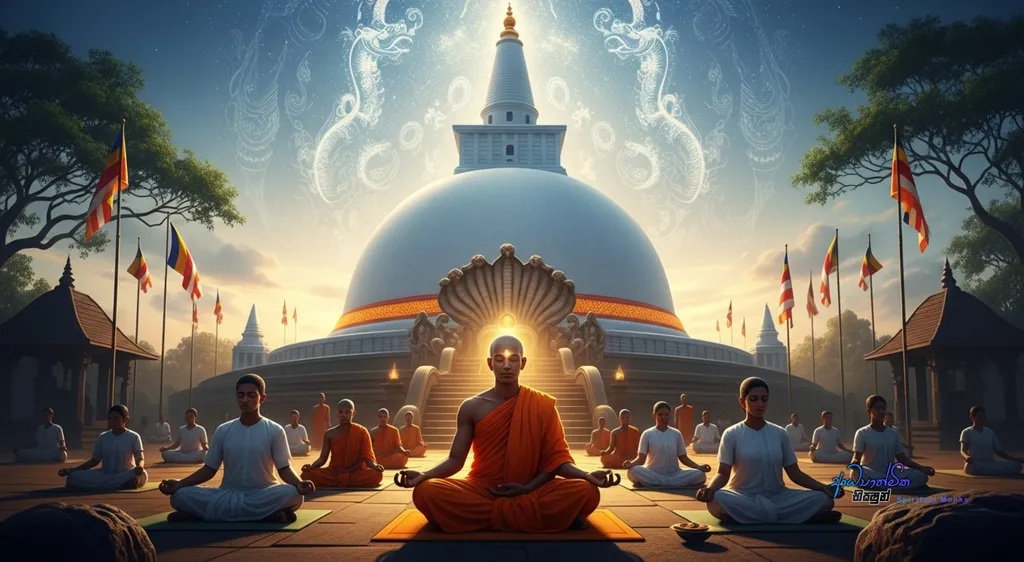
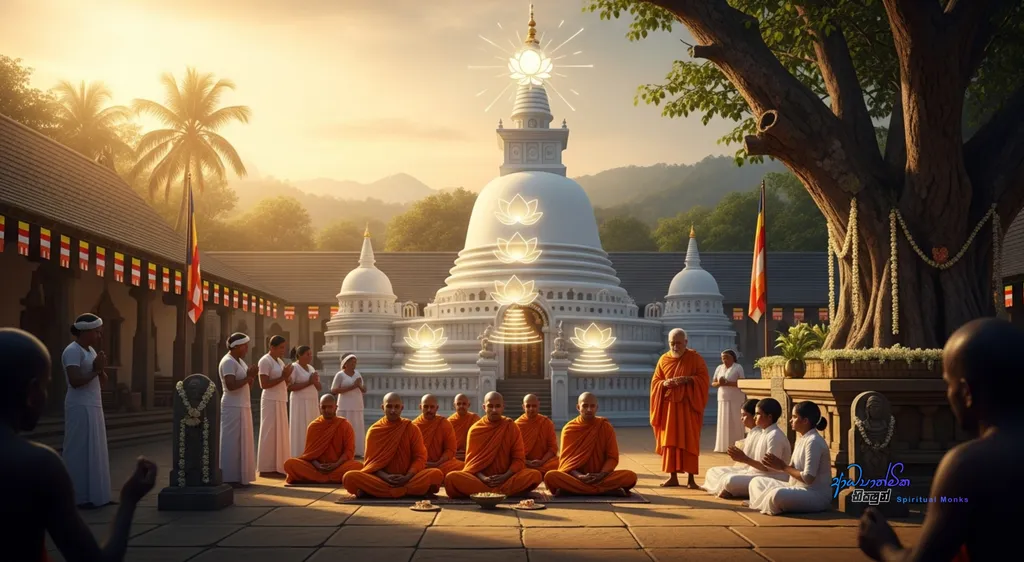
This is the reality of the situation. Furthermore, sacred structures from our past, like the great Ruwanwelisaya stupa, were not built only for people to make merit and progress toward Nibbāna. They serve a much larger, often unseen purpose: the protection of the universe and the safeguarding of this island of Lanka.
There are many such cosmic functions occurring that you may not be aware of. However, if you develop your mind sufficiently, you can perceive these truths through your third eye the Dibba-cakkhu-ñāṇa. As you attain states of jhāna and the fruits of the path (magga-phala), your understanding of these hidden realities will continue to grow.
From all these points, you should now understand why our topic is ‘All who do not meditate are mad.’ The reasons I have given should be more than enough to grasp the meaning. When a person without spiritual practice criticizes the building of a stupa, claiming ‘This is not what Buddhism is about,’ look closely at their lives. Often, you will find people who drink alcohol, smoke, and engage in sexual misconduct. They are filled with jealousy and obstruct the progress of others. These are the kinds of people who appoint themselves as judges of the Dhamma.
The Challenge to Critics and the Path of Wisdom
You should ask these critics the same questions I mentioned earlier. ‘If this isn’t Buddhism, then tell us what is. Teach us the practical way to Nibbāna. Explain the Four Noble Truths and the Four Foundations of Mindfulness not by reciting from a book, but by showing us the practical method to attain them.’ You can also ask, ‘Do you say these things while upholding any virtue (sīla)?’ They are like someone trying to judge a family from outside the house. Even the Buddha advised us not to believe something just because we see it with our eyes; direct experience is key.
So do not be provoked when people with no spiritual practice present their opinions on the Buddha’s life, the scriptures, or sacred sites. Their goal is to stir you up. They are behaving like fools, carrying out the duty of Māra. Their sole purpose is to destroy the Buddha’s teaching in this country, to corrupt the youth with their views, and lead them to destruction. After death, such people are reborn in lower realms, the four states of misery (apāya).
From Story to Reality: The Power of Direct Experience
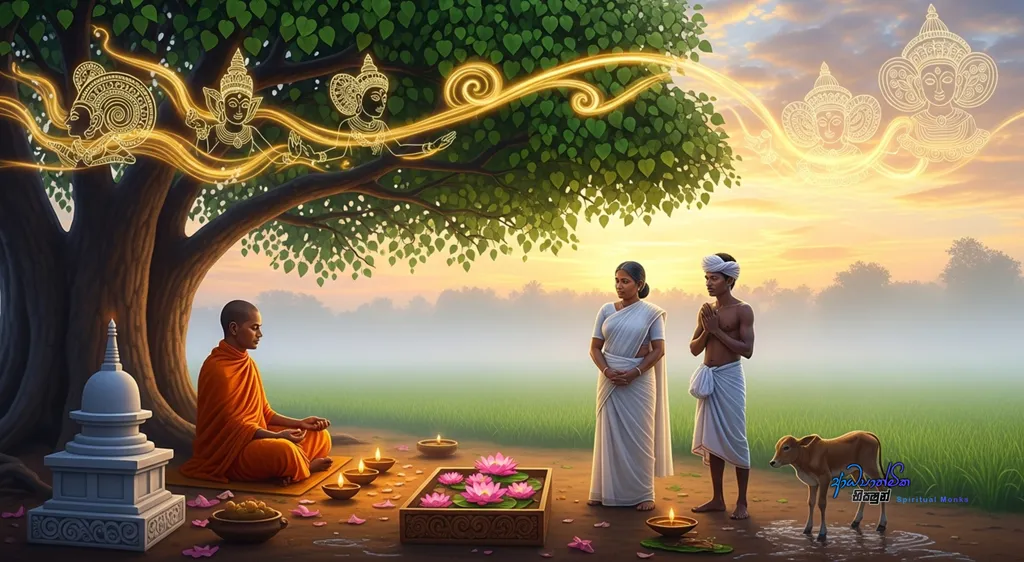
Some say that the stories in Buddhism are just literature. As I have said in a previous teaching, ‘Until it becomes practical, Buddhism is just a story.’ Every part of it, from the Buddha’s birth onwards, remains a mere narrative until you experience its truth. You don’t need to look far for extraordinary events.
Have you ever seen a newborn calf? It stands up and walks almost immediately after birth. I have seen this many times. The world is full of events we cannot easily explain. To truly judge these matters, one must have deep experience in meditation and the spiritual world. Do not pay attention to the proclamations of people who lack this experience.
And here is a small warning. Everyone agrees that politicians are currently destroying the country. But remember this: if someone repeatedly attacks the one who taught the ultimate truth of the universe, the path to end the cycle of suffering (saṃsāra), the one who perfected himself through countless eons of hardship if someone attacks such a great Bodhisatta who became a Buddha then nature, the universe, and the deities will deliver punishment to them far more swiftly than to any politician. You will see this more and more in the future. Understand this well.
Don’t Get Stuck: The Progressive Path of Practice
All of this happens for one reason: the lack of spiritual practice. Now, I must mention a Sutta for our Buddhist practitioners as well. Some limit their practice to just five minutes a day. While a five-minute meditation certainly brings merit, and that is not a problem, our goal should be to progress. We should aim to meditate for half an hour, an hour, or two hours, constantly improving. The Buddha did not expect his followers to remain stagnant, and neither do we.
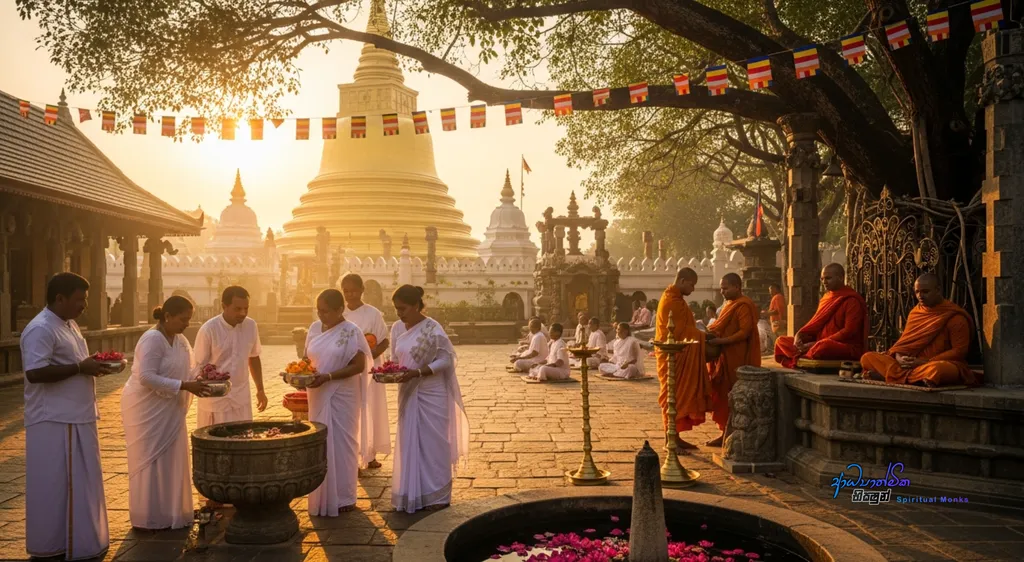
Many Buddhists stop at the level of giving (dāna), participating in Kathina ceremonies and offering alms. I am not saying to stop doing these things please understand this clearly. But they get stuck there. Others stop at observing precepts (sīla) on Poya days. Still others stop at the stage of concentration (samādhi), doing only five minutes of loving-kindness meditation. Do not stop there. Others get stuck in states of jhāna.
If you are a Buddhist following the Triple Gem, you should engage in all three: giving (dāna), virtue (sīla), and meditation (bhāvanā). The Buddha emphasized giving the most time to practice (paṭipatti) to exploring the spiritual life practically. A major reason for the decline of the Buddha’s dispensation today is that people get stuck in scriptural knowledge (gantha dhura) alone. The correct way is to practically realize what is in the scriptures so you can properly teach it to another. Without this spiritual practice, the decline cannot be stopped.
The Heartwood of the Path: A Call to Deeper Practice
You must understand this. Regarding this importance of not getting stuck, there are suttas in the Majjhima Nikāya you can read: the Cūḷasāropama Sutta (The Shorter Heartwood-Simile Sutra) and the Mahāsāropama Sutta (The Longer Heartwood-Simile Sutra). You can find them in teachings online, as PDFs, or in Tipitaka apps.
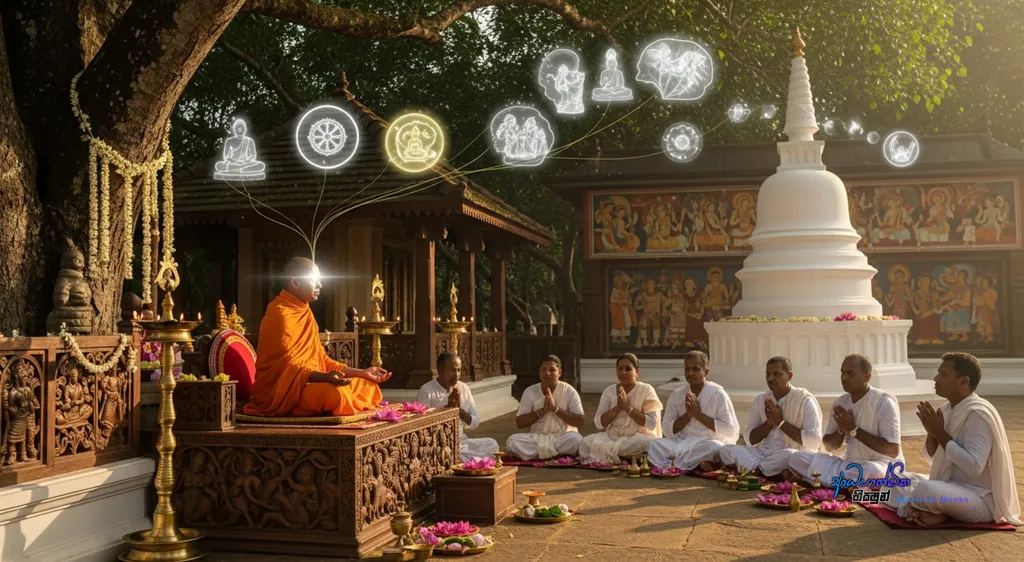
They will help you understand. Do not limit yourself at any stage. My hope is that while you give offerings and keep precepts, you will dedicate more time to your meditation, practicing for at least half an hour, and ideally one and a half to three hours. I hope to see you become a person who, while maintaining virtue, does not stagnate in concentration or jhānic states, but always strives higher.
From today’s teaching, you can see that those who do not meditate are indeed like ‘madmen’ in a spiritual sense. Without practical experience, they make judgments about the Buddha, much like a kindergarten child trying to evaluate a university graduate with a PhD. This is the nature of these radical critics and those who challenge genuine spiritual experiences like the third eye. It’s important to understand this.
Final Reflections and a Blessing for Your Journey
Before I conclude, I want to remind you: these radical non-religious groups will say many things. There is no point in getting angry or trying to answer them. They will not last long in society; they will fade away. They cannot do this forever, because the power of our spiritual practice and the power of the Triple Gem are far greater. Moreover, this land of Lanka is protected by the Buddha’s four great resolutions and by deities. So have no fear; they cannot succeed in their mission. They can struggle for a while, but they cannot win.
And one last reminder: ask them those critical questions. If they comment on our teachings, ask them for the practical method to open the third eye, without bookish words. Ask them to explain the five supernormal knowledges (pañca-abhiññā) taught by the Buddha in the Abhidhamma: reading others’ minds, seeing and hearing other realms, knowing past lives, and psychic powers.
Ask them for the practical technique to realize the path-fruits and Nibbāna, not just Pali terms. If they cannot answer, you will understand why we say that without meditation, the mind is unbalanced.
I believe the points I have shared are sufficient for you to reflect upon. Understand that those without spiritual practice are like ‘madmen,’ and resolve to be a practical person. Today, I will end this teaching here. By the power of the Buddha, Dhamma, and Sangha, may you all become individuals who, instead of being impractical, develop your minds day by day, elevating your spiritual life through dedicated practice.
We invite you to walk this path with us. Read our teachings, and most importantly, apply them practically in your own life. as you practice, questions will naturally arise. Please feel free to share your experiences and questions in the comments section below, via email or contact form. I will do my best to offer guidance in future talks based on your progress. For now, begin this practice with an open heart and a mind free from expectation. Cultivate it correctly, and may you find the clarity and peace you seek.
Thank you for joining us. We hope this blog will be of great benefit to your spiritual journey.
May you all be well and happy.
May the blessings of the Triple Gem be with you all!


