


Categories: Maintaining Mindfulness
May the blessings of the Triple Gem be with you all!
Welcome. For those of you on a spiritual path, engaged in the practical aspects of your inner life, today’s teaching offers a clear, subtle way to explore and prepare the mind. This is a practical method for anyone, designed to help you gain control over your thoughts. Please approach this exploration with equanimity, impartiality, and mindfulness. After reading, the most important step is to begin putting this understanding into practice immediately.
This article will show you how maintaining mindfulness supports your spiritual abilities. Through our teachings, you have likely come to understand the great importance of this mindfulness practice, and many of you have already gained valuable experiences by applying it. When you share these experiences, perhaps by reflecting on them, it serves as a great help and inspiration for others on their own spiritual journey.
The Universal Nature of Thoughts: A Common Ground for All
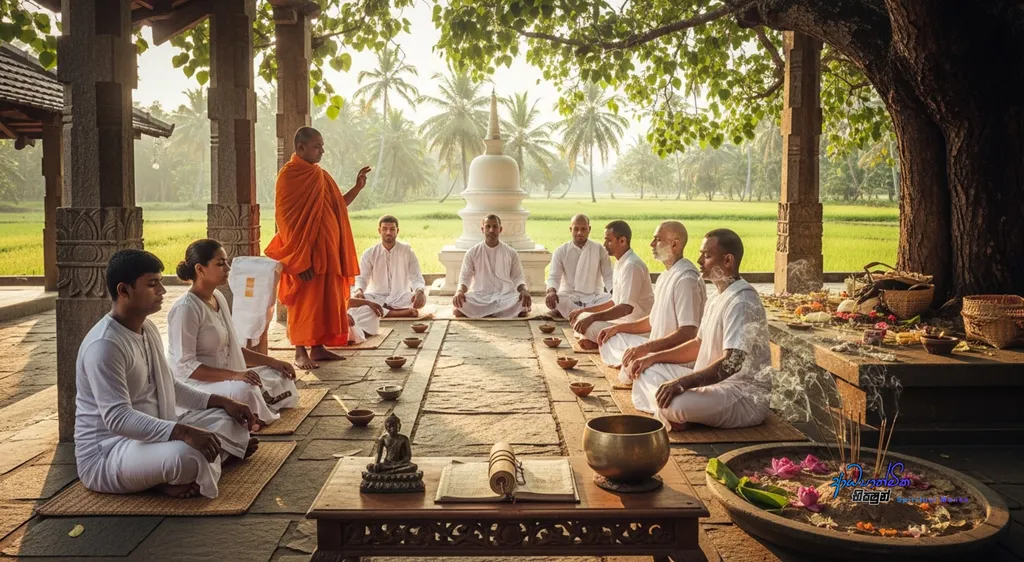
To begin this exploration of mindfulness practice, let’s start with the mind itself. Consider the mind as described in the teachings of the Buddha. Some of you may have been born into a Buddhist culture, perhaps in Sri Lanka, while others come from different nations and backgrounds.
Yet, what is the one thing common to the minds of every single person, regardless of where they were born? We all have thoughts. The quantity and quality of these thoughts can vary greatly from person to person. They can be good or bad, wholesome or unwholesome, what in Buddhism we call kusala (skillful actions leading to happiness) and akusala (unskillful actions leading to suffering).
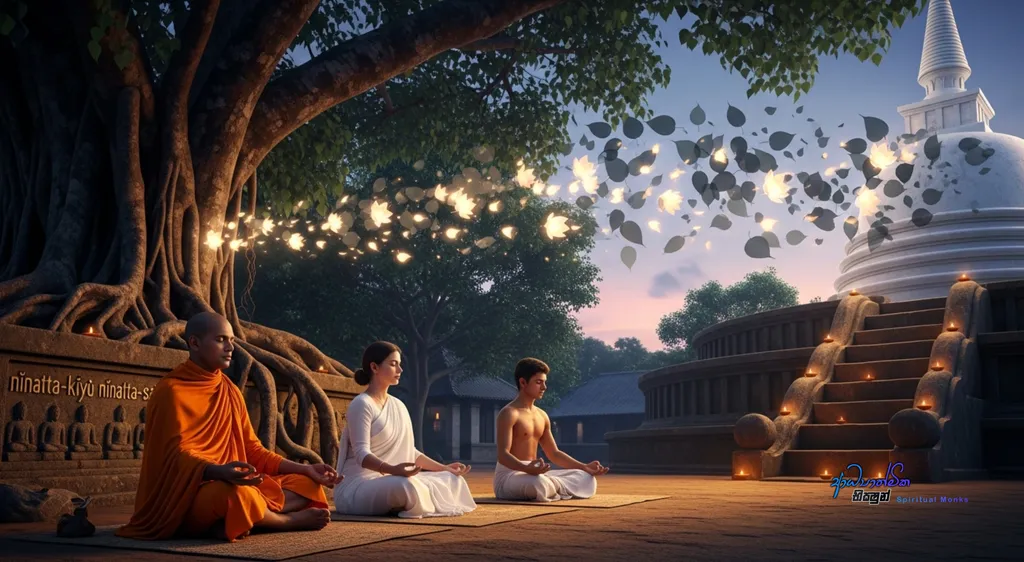
The Buddha pointed this out in a teaching known as nānatta-kāyā nānatta-saññā, which means ‘diverse in body, diverse in perception.’ It highlights that people in this world have different physical forms and, more importantly, different perceptions or thoughts. Here, ‘perception’ or saññā refers to this very stream of thoughts. While we could analyze this Pali phrase in great depth, my purpose here is not to give a linguistic breakdown but to offer you a practical tool.
Beginning the Journey: From Formal Meditation to Everyday Mindfulness
So, we’ve established that everyone, no matter their religion or nationality, has a stream of thoughts. Now, imagine someone comes across these spiritual teachings and is guided to start a practical exercise, such as the ‘Third Eye’ meditation, a practice of focusing the mind on the point between the eyebrows or the center of the forehead. A question naturally arises: ‘How can I tame this mind all at once?’ This teaching provides the answer.
When you first try to hold your attention on this point, you’ll find your mind doesn’t become concentrated there immediately. It wanders. To help with this, we’ve suggested using a word like ’empty’ or ‘space’ as a focus, gently repeating it. However, this formal meditation is not the only part of the practice.
The more crucial element is the mindfulness practice you do outside of formal sitting sessions. While you are at work, doing chores, or engaging with your family, we have taught you to simultaneously watch your own mind. This is the practical application of mindfulness, and many of you are already engaged in this, getting to know your mind. This continuous observation is the foundation.
Watching the Mind’s ‘Garbage Pile’: The First Insight
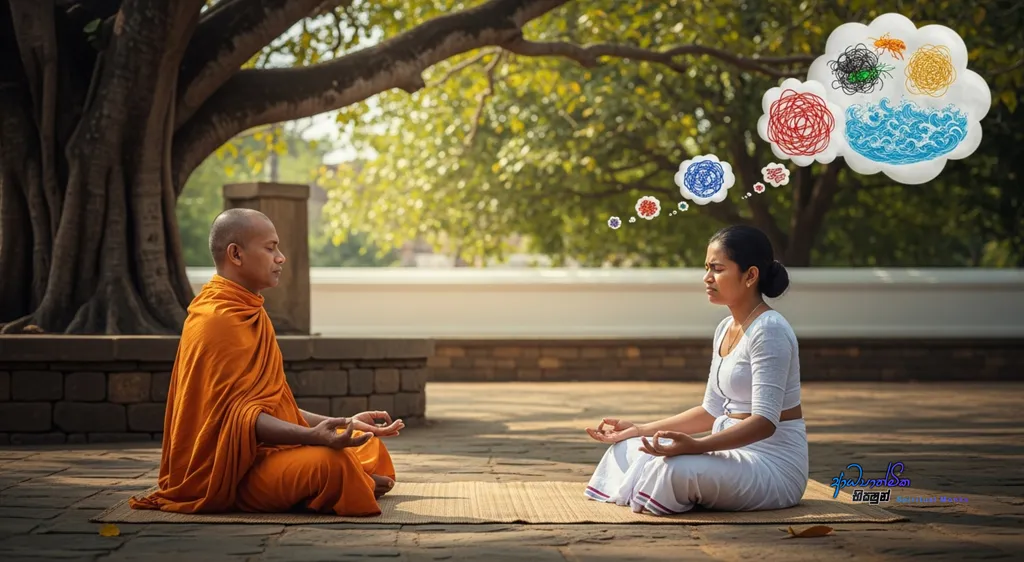
Let’s begin from that starting point: you’ve read a teaching and decided to start a mindfulness practice. It doesn’t matter if you are Buddhist, Catholic, Muslim, or from any other background. You take this core instruction, to observe the mind, and you begin. As you practice, you start to see your mind. You see how it scatters in countless directions. Thoughts arise, a whole heap of them, like a pile of garbage. There are good thoughts and bad thoughts, constantly churning.
Remember, you are not in a formal meditation posture. You might be sitting on a chair, riding a bus, just looking at your mind with open eyes. This is also a form of meditation, just not the traditional eyes-closed concentration practice, or what is known as Samatha. You are simply watching. As you continue this observation, you see thoughts coming and going. Some thoughts arrive and stay for a very long time.
Unbelievable thoughts. You see everything from your past resurfacing: things you’ve done and said, memories from childhood, all appearing one by one. And that’s when you have a realization: ‘Wow, this is astonishing. It’s like a massive junk pile! Every single record of my past is stored here, and it’s all being replayed!’ This is the first powerful insight that the mindfulness practice reveals.

The Unstoppable Spring: Accepting the Mind’s Nature
You have surely experienced this yourself. This relentless stream of thoughts. You have probably tried to control them, to make them stop, but you’ve found it doesn’t work. It’s an impossible task. We cannot forcefully stop the mind. You can never dry up a natural water spring by wiping it with a cloth. It’s simply not how it works.
So, what do you do? You continue the practice. You keep observing your mind with mindfulness, again and again. While riding the bus or train, getting on or off, talking with someone, working in the office or at a worksite. When you come home, you continue while helping your parents, playing with your children, interacting with your spouse, or meeting friends.
Even if you go on a trip for fun, to a party, or to play a sport, whatever you do, you remain aware of your mind. As you continue to watch and watch, you begin to understand it deeply.
‘This mind is an amazing thing,’ you realize. ‘Thoughts come and go in such a surprising way. Things I did in the past come back to me. When my senses, eye, ear, nose, tongue, body, make contact with something, new thoughts arise.’ If you see something with your eyes, it can trigger jealousy, anger, or hatred. Or it might inspire you to give charity, to spend money on food you crave. You see this incredible variety of thoughts arising, and as you watch them, again and again, you gain practical experience.

The Calm Doctor and the Agitated Patient: Gaining Equanimity
After practicing this for some time, you realize the futility of trying to control the mind by force. You understand that it’s not possible. Over time, you come to accept its true nature: thoughts arise, they persist for a while, and then they cease. Some thoughts are especially troublesome and stick around, tormenting you. You see all these different facets just by watching.
This is when you understand the saying, ‘The patient may be agitated, but the doctor remains calm.’ After a while, you realize that no matter how agitated the mind becomes, you don’t have to become agitated with it. This understanding comes from practice.
It arises because you have taken the time, through mindfulness practice, to understand the mind’s behavior and its processes. You now know that thoughts come, some are bothersome for hours, but you’ve also seen how a thought that used to torment you for an hour now only lasts 40 minutes, then 30 seconds, and now, some don’t bother you at all. They just come and go. You know this through your own direct understanding.
Connecting Mindfulness (Vipassana) to Concentration (Samatha)
This is how the mindfulness practice is done. There is no need to do it too quickly or too slowly. If you do it with a balanced, neutral, and equanimous attitude, the mind naturally settles in this way. You already have experience with this. This is the path forward.
Now, for the person who has begun to understand their mind through this method, which is a form of insight meditation, or Vipassanā, the path to liberation shown by the Buddha, we can return to our main topic: how this mindfulness practice supports the development of spiritual abilities.
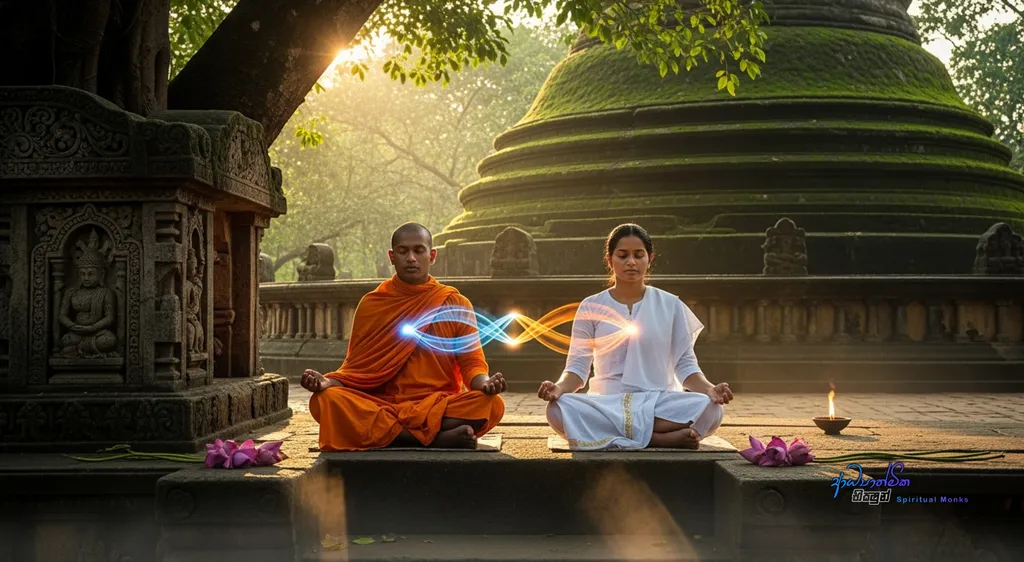
This person, who has been maintaining mindfulness, also engages in concentration meditation, or Samatha. In our teachings, we guide you in both Samatha (tranquility) and Vipassanā (insight), because it is through the balance of both that your spiritual life develops.
How Mindfulness Practice Makes Formal Meditation Effortless
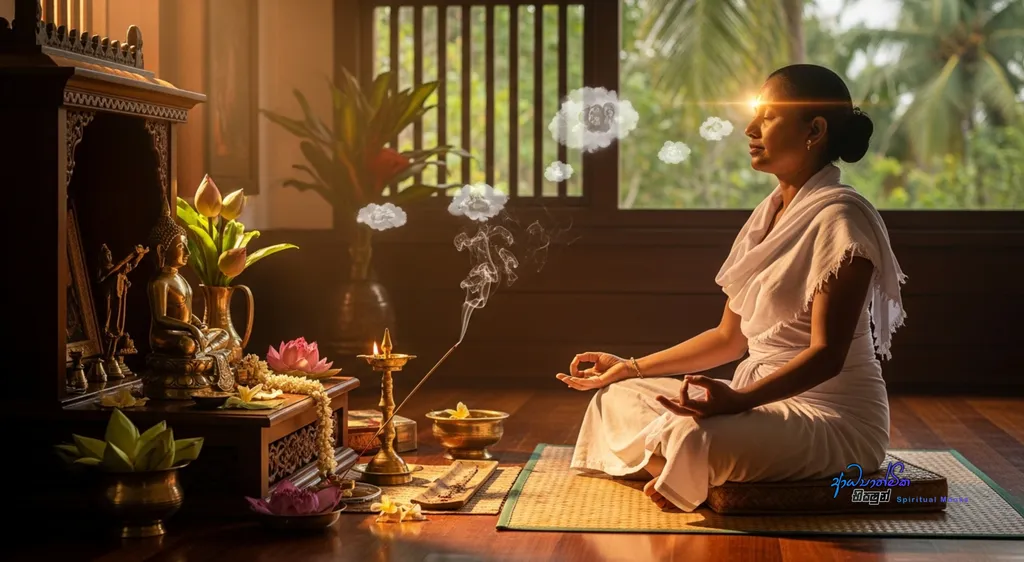
Imagine this person now sits for formal meditation. They go to their usual spot,in front of the Buddha statue at home, on their bed, or on a cushion in a quiet place. Having already understood their thoughts through mindfulness, they now sit down in a comfortable posture. They are still watching their mind as they settle in and close their eyes. Is what they see with eyes closed a new world? No. It’s the very same mind they were observing with their eyes open.
With eyes closed, this person directs their attention to the point between the eyebrows or the center of the forehead, as we taught in the practical ‘Third Eye’ meditation. They place their mind there and begin to cultivate the concept of ’emptiness’ or ‘space’. Is this a chore for them? Not at all. It’s effortless.
As they repeat the word, their mind may wander to the past again. But because they have been practicing constant mindfulness, they catch it instantly. ‘Ah, the mind has gone to the past. It has drifted to a sensual thought, something that stirs up lust, anger, or jealousy.’ They see the mind moving between skillful and unskillful thoughts.
The moment they recognize this, there is no great effort needed. They don’t fall into frustrating internal arguments like, ‘Oh no, my mind wandered again!’ They don’t panic. Because of their training, the mind returns to the point of focus between the eyebrows almost instantaneously.
Navigating Doubts and Impatience in Meditation
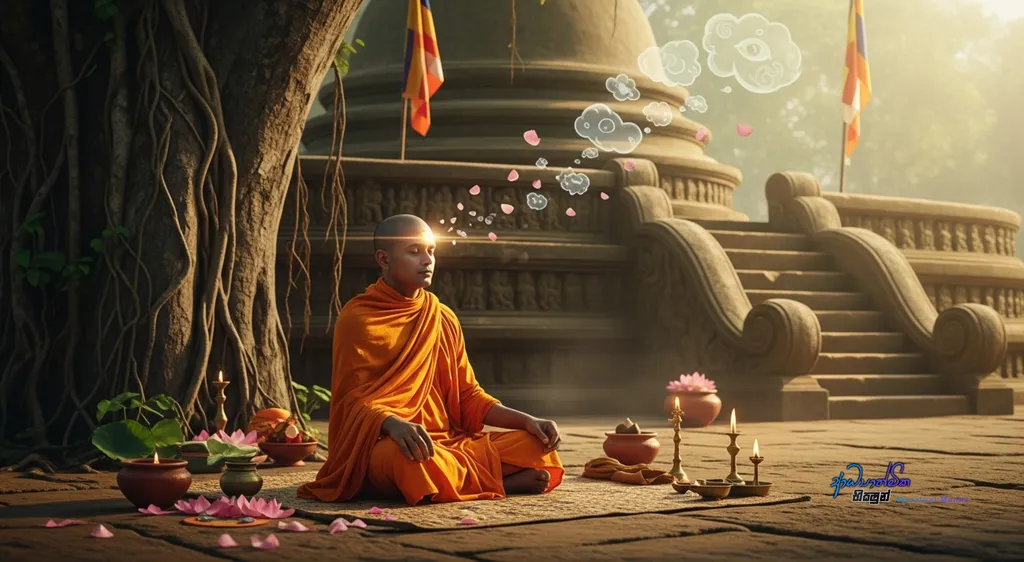
Once the mind has returned, they continue cultivating the sign of ’emptiness.’ The practice is now much easier. Why? Because they are more mindful than ever before. This method makes the Samatha ‘Third Eye’ meditation incredibly smooth. But even so, other thoughts may arise: ‘Ugh, I still haven’t seen a light signal.’ ‘I haven’t had any mind-images.’ ‘My Third Eye still hasn’t opened.’
But does this person get upset or discouraged by these thoughts? No. For someone with an understanding and experience of watching thoughts, they recognize that the thought ‘I am not seeing a light’ is just another thought. ‘I’ve been practicing for three months, six months, and my Third Eye isn’t awake yet.’ This, too, is just another thought to be observed. In this way, they continue their concentration practice while simultaneously understanding the nature of their mind.
The Power of a Balanced Path: Samatha and Vipassanā Together
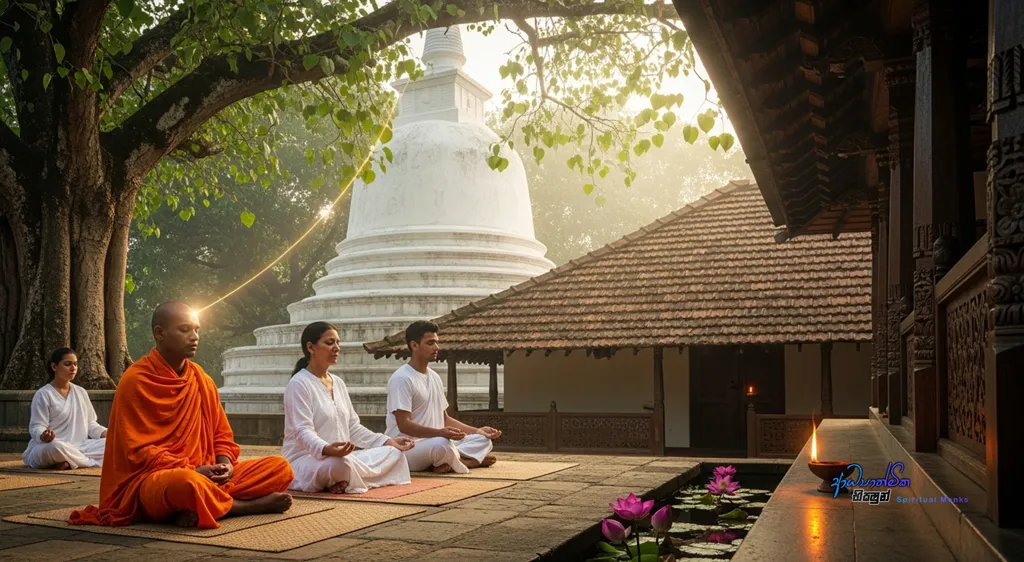
This integrated approach makes meditation incredibly easy. This is the method the Buddha taught as samatha-vipassanā yuganaddha,the yoking together, or balancing, of tranquility and insight. It is a very accessible way to practice.
To help you understand, let me offer a comparison. Imagine someone who tries to practice only Samatha,just staring at the point between the eyebrows, perhaps under a different teacher, without the foundation of insight. They will face great difficulty, because they lack an understanding of the mind’s thoughts.
It is not impossible for them to open the Third Eye or see lights, especially if they have strong conditioning from past lives. Some people grasp these techniques quickly due to past practice. But for someone without that background, trying to force concentration alone can be exhausting. This is why we say that the continuous mindfulness practice is so helpful.
Deepening Insight and Unlocking Spiritual Potential
When you understand your thoughts, it doesn’t matter if you sit for six months, two years, or ten years without seeing a light. You recognize it’s all just thought. While you are practicing the Samatha exercise of focusing on ’emptiness’ at the Third Eye point, you are simultaneously practicing the insight of recognizing your thoughts. Because of this, you experience a profound mental peace in your life, every single day.
From here, the insight practice can go even deeper. You can observe your mind closely: When there is no light signal, does the mind react with aversion? When concentration is weak, does a feeling of frustration arise? Conversely, when a light signal does appear, does the mind cling to it with a special pleasure? This subtle clinging and aversion are critical points to see. Please reflect on this section again; it is extremely important.
You must train your mind in this same way for all future experiences. If a light signal appears, continue practicing with the same equanimity. If mental images
or citta rūpa, which I have discussed in another teaching
arise, practice in the same way. Even after the Third Eye awakens, continue to train the mind in this way. As you progress into meditative absorptions, or the Jhānas, this same training applies. A person who practices Samatha meditation with this foundation of mindful understanding can very quickly develop spiritual abilities.
Beyond Meditation: Worldly Benefits and Expanded Consciousness
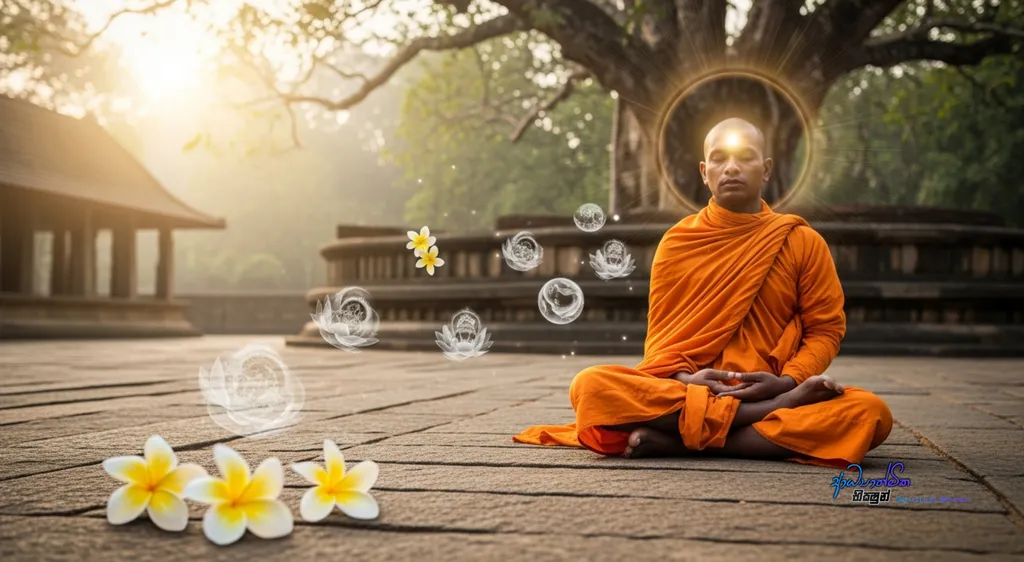
Spiritual abilities are not limited to the Third Eye. They include reading the minds of others, the divine ear (hearing sounds from other realms), psychic powers (siddhi), seeing past lives, and many other skills within these five main types. The ability to attain the Jhānas, from the first all the way to the eighth, becomes accessible very quickly. This progress depends on one’s past conditioning, but when the mind is understood in this way, it can be tamed and controlled with remarkable speed.
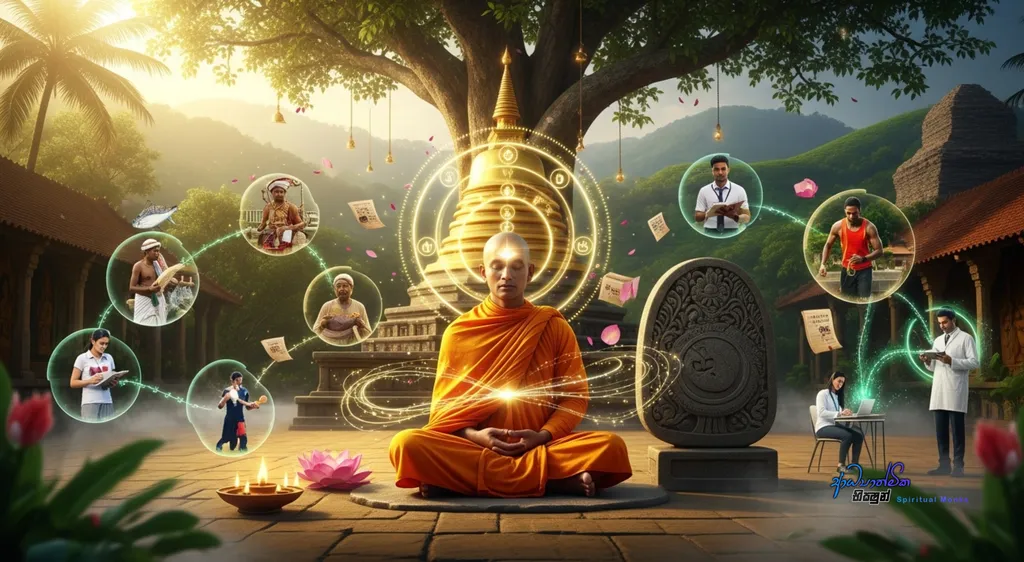
There are worldly benefits as well. For a student, this practice dramatically improves memory. For a university student, an athlete, or someone practicing martial arts, this mental discipline allows them to excel. If you are a scientist seeking new inventions, it enhances your ability to think clearly.
This applies to every field, technology, agriculture, counseling. It cultivates a wise human being who can think deeply. Your mind expands. Your intelligence and wisdom, or paññā,increase. Just look at how your mind is elevated as you practically engage with these teachings of the Buddha. This is what you need to see.
The High-Speed Train to Liberation
Therefore, use this practical method I have shared today for developing all spiritual abilities and for entering the Jhānas. For one who has understood their mind with mindfulness and wisdom, developing the aspects of concentration is incredibly fast. The journey into these states is not like an intercity bus; it’s like a high-speed electric train.
This is a truly practical and liberating teaching. The path the Buddha showed us is a simple, freeing reality. Just consider how many people are lost because they cannot understand this.
I believe what has been shared today is more than enough for your reflection. With the blessings and power of the Buddha, the Dhamma, and the Sangha, the Triple Gem, may you all understand this teaching well, apply it practically, and gain true insight into your own minds.
We invite you to walk this path with us. Read our teachings, and most importantly, apply them practically in your own life. as you practice, questions will naturally arise. Please feel free to share your experiences and questions in the comments below, via email or contact form. I will do my best to offer guidance in future talks based on your progress. For now, begin this practice with an open heart and a mind free from expectation. Cultivate it correctly, and may you find the clarity and peace you seek.
Thank you for joining us. We hope this blog will be of great benefit to your spiritual journey.
May you all be well and happy.
May the blessings of the Triple Gem be with you all!


