


Categories: Maintaining Mindfulness
May the blessings of the Triple Gem be with you all!
Welcome. In our series of teachings on establishing mindfulness, we will explore a fundamental question: What is the true purpose of this practice? When we seek to develop our spiritual lives according to the Buddha’s teachings, such as the Four Foundations of Mindfulness (Satipaṭṭhāna Sutta) and the practice of insight meditation (Vipassanā), our ultimate aim is liberation from the cycle of suffering, or Saṃsāra.
You have likely heard from many teachers that to achieve this, we must engage in ‘the destruction of the defilements.’ This means eradicating the mental pollutants known as kilesa, the unwholesome roots of greed (lobha), hatred (dosa), and delusion (moha) that reside in our hearts. This is the universal instruction.
The path to achieve this is often called the ‘Middle Path’ (Majjhimā Paṭipadā), which is the Noble Eightfold Path. While these terms may be familiar, their practical application can be elusive, truly understood only by the wise. And this brings us to a crucial word for our exploration today: ‘wisdom.’ The entire purpose of developing mindfulness is to awaken and cultivate this profound quality within ourselves. The practice of mindfulness is the direct path to help us develop wisdom, which is the very vehicle that carries us toward deeper understanding and liberation.
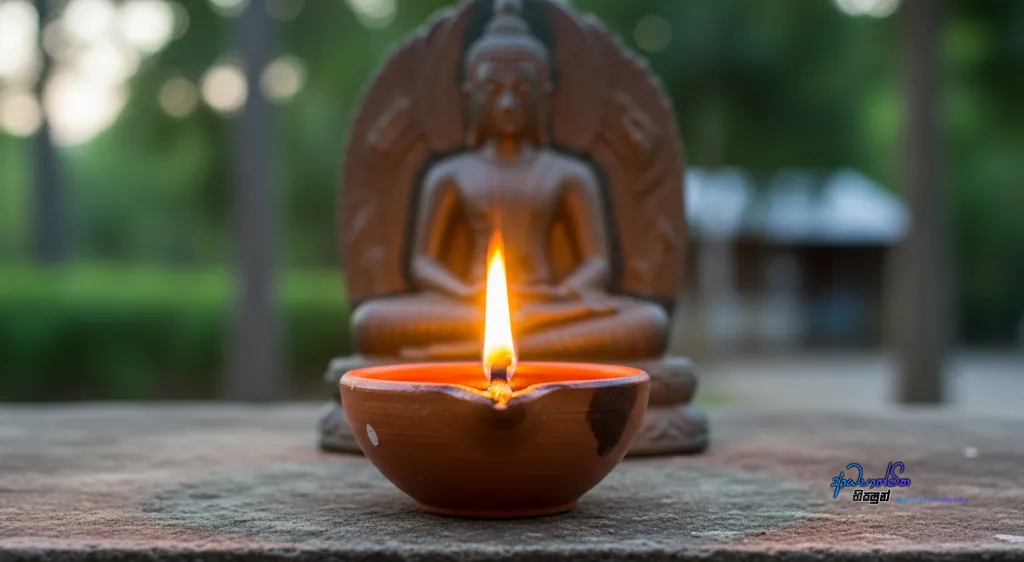
What is True Wisdom? (It’s Not What You Think)
Many people misunderstand what ‘wisdom’ truly is. It’s essential to clarify this. Most people equate wisdom with knowledge. They might think that having extensive knowledge of the Buddhist scriptures, the Sutta, Vinaya, and Abhidhamma Piṭakas, is wisdom. Others believe that vast secular knowledge about the environment, nature, or technology constitutes wisdom. But we must understand that these are all systems of knowledge, information passed from one person to another.
Even the teachings of the Buddha, which he shared after attaining supreme enlightenment through his own spiritual practice, are presented to us as a form of knowledge. Today, we use this precious knowledge as a guide. However, there is a clear distinction. Worldly knowledge and even the scriptural knowledge of the Buddha’s higher teachings are tools that can assist us. But wisdom itself, in Pali, Paññā, is something far more intimate and personal.
It is an inner quality that arises within you. It can be described as ‘wisdom appropriate to the moment,’ but not in a cunning or worldly way. In the spiritual journey, this inner wisdom is the only tool that can truly destroy the mental defilements. It is not something you learn, but something you awaken. To develop wisdom is to unlock your own innate capacity for seeing clearly.
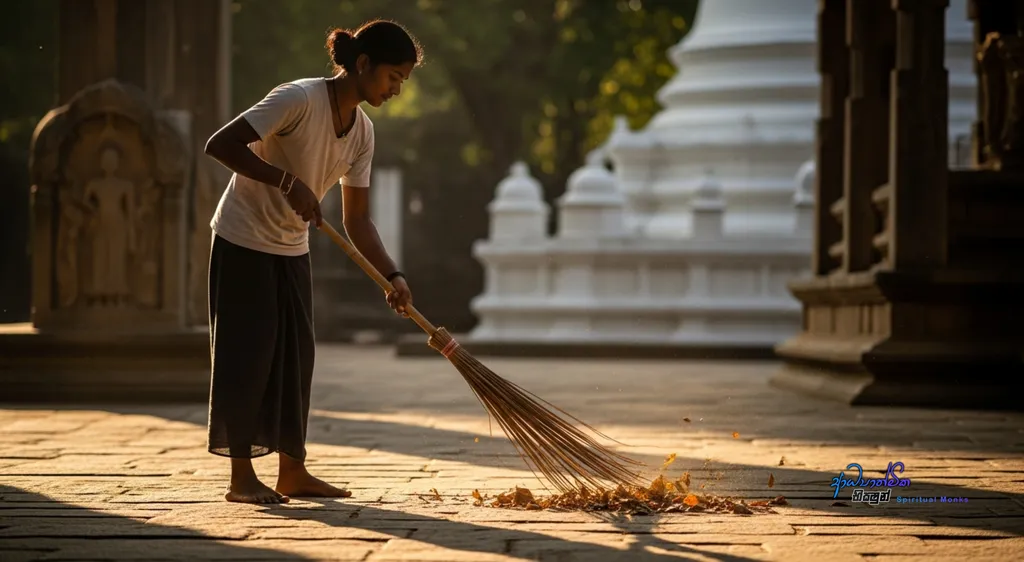
The Unseen Revealed: How Mindfulness Awakens Wisdom
So, why do we constantly hear teachers, from the Buddha and his great disciples like Sāriputta and Moggallāna to modern meditation masters, emphasize the need to ‘develop mindfulness’? We do this to awaken wisdom. Without wisdom, there is no path to liberation, no reaching the four stages of enlightenment, no attaining Nibbāna. Mindfulness, or sati, is the key that unlocks it.
Think of mindfulness as a magnifying glass or even a powerful electron microscope. It helps you see things that were previously invisible. For years, you may have lived your life completely unaware of the inner workings of your mind. But when you begin to practice mindfulness, you start to see. For example, as you go about your day, sweeping the yard, cooking, working, or studying, you begin to notice that your mind is not in one place. It is scattered, jumping from one thought to another.
Who is it that sees this? It is your own wisdom, awakened by mindfulness. Before this moment, if I told you ‘the mind is scattered,’ it would just be a piece of information for you, knowledge. But when you practice mindfulness and see for yourself, ‘Wow, my mind is truly scattered, it doesn’t stay on one object,’ that direct seeing, that realization, is the dawn of your own wisdom. At that moment, the wisdom that leads to freedom has begun to function within you. Notice that this has nothing to do with your education, intellect, or literacy. It is a direct, practical experience.

The Harvest of the Mind: Mindfulness and Wisdom in Action
In the ancient text, the Milinda Pañha, a beautiful analogy is given for the relationship between mindfulness (sati) and wisdom (paññā). It says that mindfulness is like the hand that gathers a bundle of rice stalks, and wisdom is the sickle that cuts them.
They work together. You cannot have one without the other. When you practice mindfulness correctly, wisdom naturally arises to see things as they are. This is why a truly wise person can understand the nature of their mind quickly and progress rapidly on the path to liberation.
A Bodhisattva, an aspirant to Buddhahood, who is strong in wisdom can fulfill their spiritual perfections (pāramitā) in a much shorter time because their understanding is swift. There are different types of Bodhisattvas, some strong in faith, some in effort, some in wisdom. For those who wish to learn more about this, the book ‘Pāramitā Prakaranaya’ by the venerable Rerukane Chandawimala Thero offers deep insights.

From a Scattered Mind to a Centered Heart
As you continue your practice, perhaps with a concentration meditation like those we have discussed, you will see a further change. The scattered mind begins to settle. It becomes unified. A state of concentration, or samādhi, starts to build. You recognize this change internally. You realize, ‘Compared to before, my mind is less scattered by thoughts; it is now becoming focused.’ This very recognition is your wisdom at work, made possible by mindfulness.
Without practice, many people, like some of our devout elderly lay-followers, may spend their entire lives wishing for Nibbāna and making offerings, yet never progress because they haven’t engaged in the practical training. It is sad to see them stranded. While offerings (āmisa pūjā) are good, the Buddha always taught that the practice itself (paṭipatti) is far superior. Mindfulness helps you see the state of your mind, and wisdom understands it. This is how you truly develop wisdom.
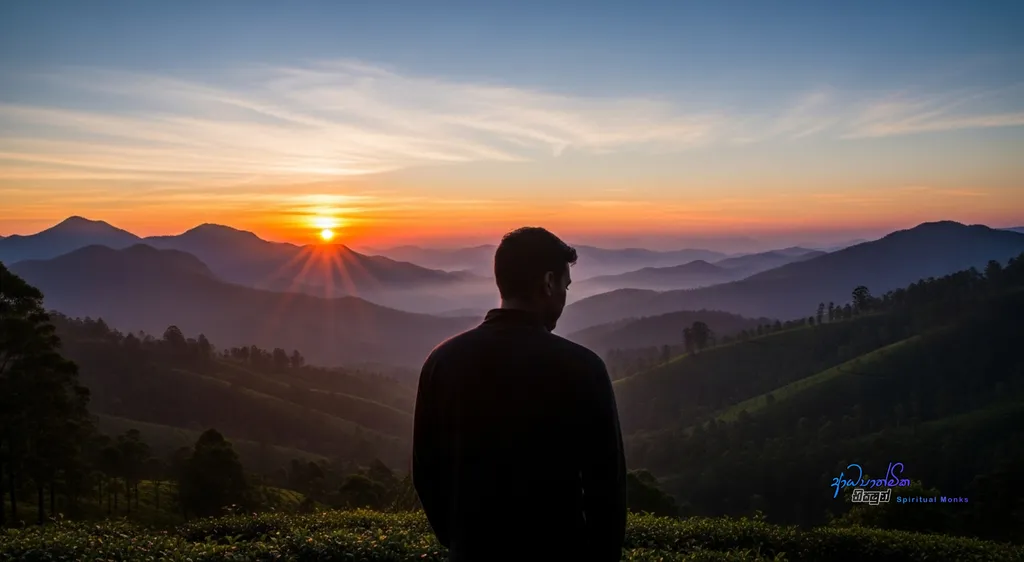
The Inner Scientist: Observing Your Mind’s Landscape
This powerful combination of mindfulness and wisdom allows you to identify not just a scattered mind, but also the Five Hindrances (nīvaraṇa) that block progress: restlessness (uddhacca-kukkucca), sloth and torpor (thīna-middha), and skeptical doubt (vicikicchā). As you progress, it also helps you recognize higher states like meditative absorptions (jhāna). This is why liberation is self-realized. No teacher needs to tell you that you are free.
You know for yourself the level of your own defilements. If you don’t know, it simply means your mindfulness and wisdom are not yet strong enough.
This practice isn’t just for the meditation cushion. The Buddha taught the Four Foundations of Mindfulness to be practiced in all four postures: sitting, standing, walking, and lying down. In your daily life, when a thought of lust (rāga) arises, you can recognize it. You see how long it lasts and when it fades. The same goes for anger, jealousy, or even wholesome states like faith (saddhā) or the wish to give.
When you experience loss, the death of a loved one, the end of a relationship, or damage to a possession, you can observe the pain. You can see how long it stays, how it subsides, and how it reappears hours or days later. You become a scientist of your own mind, investigating your defilements. This is the practical path to develop wisdom.
Wisdom Belongs to Everyone: A Timeless, Universal Path
When you understand this process, you see that it has no connection to language, knowledge, or age. A child who has practiced in past lives might grasp this more quickly than an elder. This is why, during the Buddha’s time, young people like Sumana Sāmanera and Sunīta Sopāka were able to attain Arahantship. Their wisdom was already mature from past efforts.
You might recall the story of Cūḷapanthaka, who was given a white cloth and a simple phrase to contemplate. That method was specific to his past conditioning. We should not foolishly think we must wait for a future Buddha to give us a personal instruction. If we do not practice with the teachings available in this Gautama Buddha’s era, we won’t even have the mental inclination to listen to a future Buddha.
The path is open right now. The Buddha clearly stated that as long as the Four Foundations of Mindfulness are practiced, his teaching will not be empty of Arahants. The dispensation is said to last for 5,000 years, and there is still much time. There are many unseen monks and laypeople, living in forests and villages, practicing diligently. The Buddha’s teaching is for today, and it proves itself through practice.

Fueling the Journey: The Power of Effort and Awareness
Of course, this journey requires effort (viriya), diligence and dedication. It’s common for this effort to fade. Many people tell me, ‘Venerable sir, my enthusiasm for meditation has suddenly dropped.’ They wonder if it’s an external force or Māra, the tempter. While such things can exist, the primary reason is our own defilements and the nature of the mind itself, which is impermanence (anicca). Enthusiasm arises and passes away. This is where your training becomes critical.
With mindfulness and wisdom, you recognize: ‘Ah, a moment ago I had great energy, and now it is gone. I am feeling lazy.’ You see your mind has fallen back into its old habits of greed and aversion. This very act of seeing allows you to consciously generate effort again. It’s like driving a car. As the driver, you are aware of your speed, you know when you are in control and when you are losing it. You are the driver of your mind, and to develop wisdom is to become a skillful one.
Remember, a wise person is not someone with ten degrees from a university. They may be a professor or even a learned monk, but if they do not practice, they are merely ‘learned,’ not wise. Conversely, an ‘uneducated’ person in the worldly sense who undertakes this practice is truly wise.
The Buddha’s teachings in texts like the Dhammapada make this beautifully clear. This path transcends all labels, rich or poor, educated or uneducated, Buddhist or non-Buddhist, any race or caste. While the Sinhala Buddhist culture has been a noble guardian of these teachings, they belong to all humanity.
Your Invitation to Practical Wisdom
I have taken some time to explain these matters, to distinguish mindfulness from wisdom and to show that the purpose of developing mindfulness is to understand the workings of your own mind, directly. You see for yourself what is there. I hope this teaching inspires you to move from being a non-practitioner to a practitioner, to truly walk this path. To develop wisdom is not a theoretical exercise; it is the most practical and transformative journey you can undertake. If you understand this, you will feel an urgency to begin.
I will not extend this teaching any further. I hope you have grasped how valuable this practice is and how it directly impacts your journey through Saṃsāra. May the power of the Buddha, Dhamma, and Sangha, the Triple Gem, bless you with the ability to understand these points clearly and to put them into practice.
We invite you to walk this path with us. Read our teachings, and most importantly, apply them practically in your own life. as you practice, questions will naturally arise. Please feel free to share your experiences and questions in the comments below, via email or contact form. I will do my best to offer guidance in future talks based on your progress. For now, begin this practice with an open heart and a mind free from expectation. Cultivate it correctly, and may you find the clarity and peace you seek.
Thank you for joining us. We hope this blog will be of great benefit to your spiritual journey.
May you all be well and happy.
May the blessings of the Triple Gem be with you all!.


