


Categories: Be Happy 24 hours
May the blessings of the Triple Gem be with you all!
Welcome. In our ongoing exploration of the spiritual life, we often turn to the practice of mindfulness. It is a powerful tool for looking at your own mind from many different angles to understand its nature, to explore its landscape, and to see what is really there: the good, the bad, its length, and its breadth. To recognize everything that resides in the mind, we teach how to practice and train in mindfulness, which in the Buddhist tradition is called Sati.
Through this practice, many people, regardless of age, race, religion, or background, have begun to learn about the mind’s defilements, its wholesome and unwholesome qualities. This practical application is what truly matters. This practicality is essential all the way to liberation, or Nibbana the ultimate goal. The tool needed to reach Nibbana is this very mindfulness. Nibbana can be understood as the highest point of mindfulness, a state where it is constantly and fully present.
Everything we do is to reach that state. A Buddha, an Arahant, a Pacceka Buddha, and the noble disciples on the path Sotāpanna, Sakadāgāmī, Anāgāmī are all practitioners of this path. Their mindfulness is more developed than that of an ordinary person. For those who have eradicated all mental defilements, mindfulness is permanently and intensely developed. This is what we are working towards.
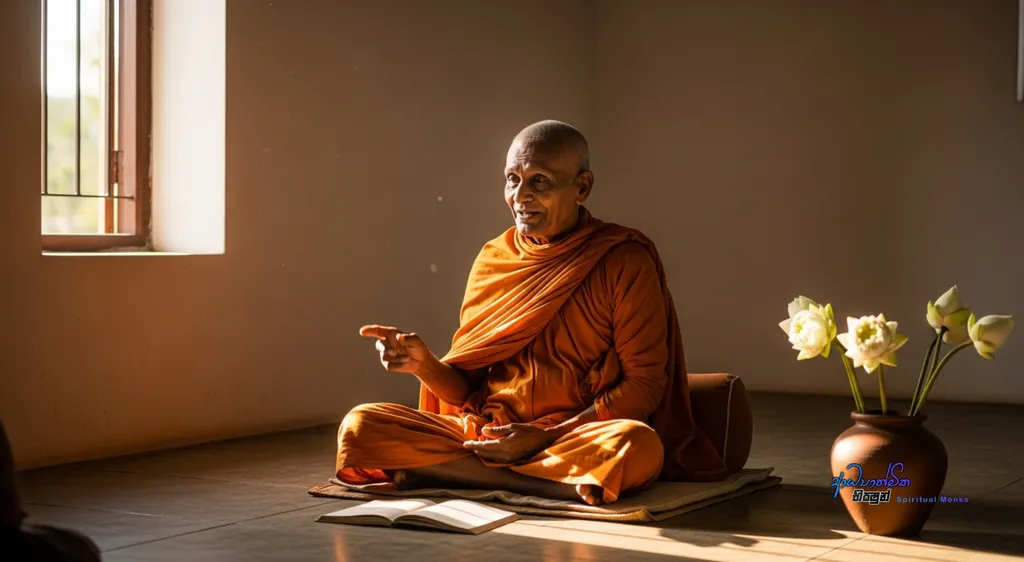
The Four Postures of Mindfulness
To help us develop this quality, the Buddha taught us to be mindful in four main postures: sitting, standing, walking, and lying down. We have often spoken about developing mindfulness while seated, especially in the formal meditation posture known as Paryankaya or Padmasana (the lotus position). This posture is frequently used to cultivate deep concentration, or Samatha, and insight, known as Vipassanā.
However, mindfulness, or what is called Sati Sampajañña (mindfulness and clear comprehension), can be developed in all postures. The Buddha himself explained this in the Satipatthāna Sutta, the discourse on the Four Foundations of Mindfulness.
While you practice bringing mindfulness into your daily life during your work, with your family, and in all your duties there is another posture that can greatly accelerate your progress. It is a practice you may already know, hinted at in the title of this teaching: the simple act of walking. You have a great opportunity to develop profound mindfulness through the practice of walking meditation.
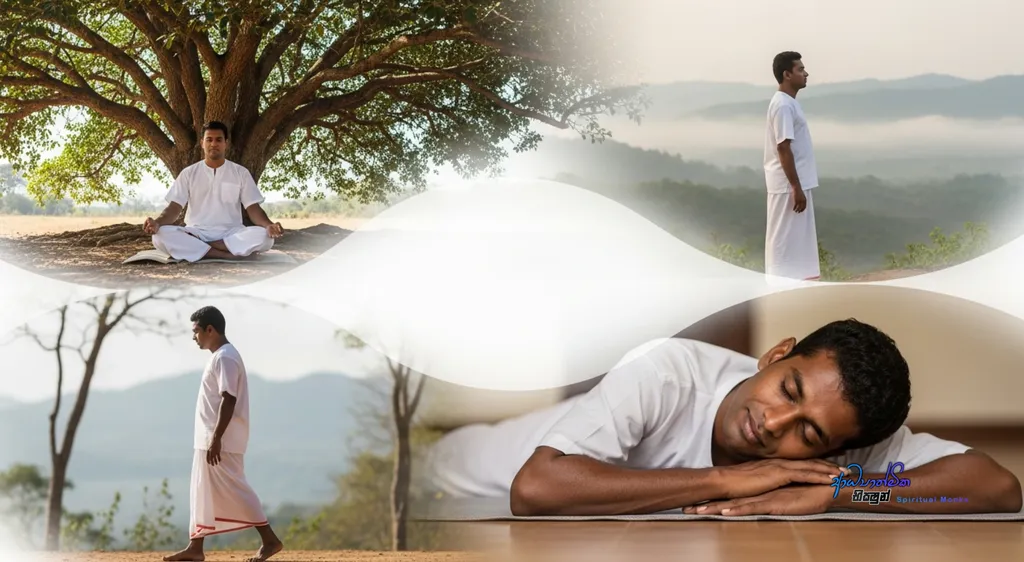
Introducing Sakmana: The Art of Walking Meditation
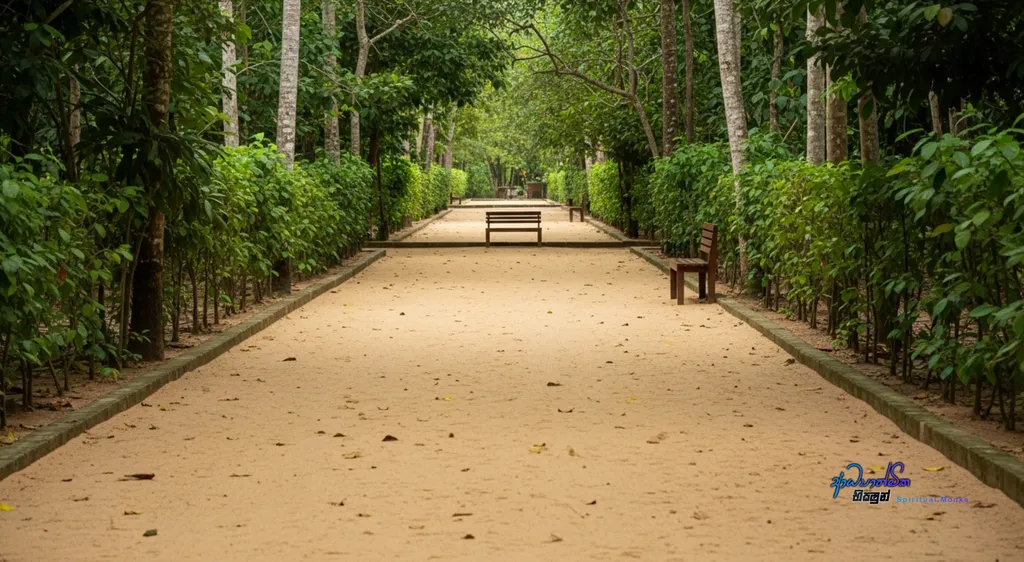
So, how do we develop mindfulness through walking? You have likely heard the term Sakmana, which is the traditional name for walking meditation. You may have seen the dedicated paths for this practice, called sakman malu, especially in forest monasteries. These paths are often 30 to 40 feet long and about three to four feet wide. Sometimes, there is a seat at the end of the path, offering a place to sit in meditation or simply to rest after the walk.
For a Buddhist monk, life is centered around these two practices: sitting meditation and walking meditation. With fewer external duties, a monk’s primary focus is on developing their spiritual life, cultivating both calm (Samatha) and insight (Vipassanā) to move towards liberation. This has been the way since the time of the Buddha.
You too can create such a space. Many homes have a hallway, a corridor, or a verandah that is at least 20 feet long. Even an outdoor space can be used. You can adapt what you have. You don’t need a special monastery to begin the practice of walking meditation.
The Ground Beneath Your Feet: Unexpected Health Benefits
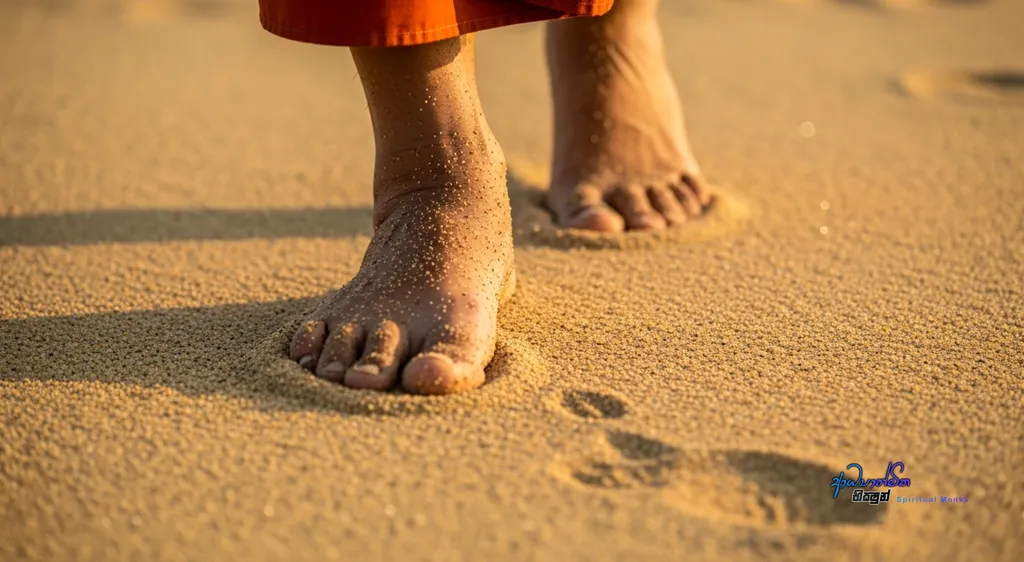
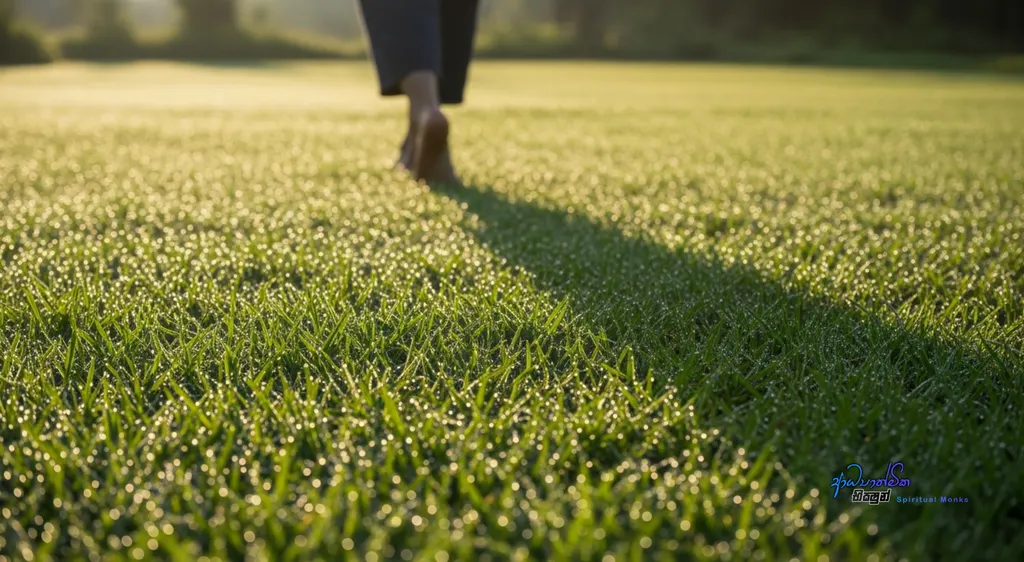
You might notice that these walking paths are often filled with fine sand. There is a reason for this. In ancient times, people in Sri Lanka did not wear rubber sandals. In truth, modern rubber footwear is not conducive to good health. It is essential for the soles of our feet to touch the earth.
Foreign invasions brought many changes to our culture, including our habits and attitudes, and we became accustomed to wearing rubber shoes. But for true health, it is best to get used to walking barefoot, even in a forest. This connection to the earth supports our well-being.
The nervous system related to our brain, eyes, ears, mouth, and nose our entire head is connected to the soles of our feet. Someone skilled in nerve points (nadi) can even make your teeth tingle by pressing a specific point on the sole of your foot. Walking on fine sand stimulates these nerves, a phenomenon the Buddha would have understood deeply.
While the Buddha did not use modern terms like ‘Kundalini energy,’ he was a master of the mind and body who had reached the highest levels of spiritual development. He saw that walking meditation on sand stimulates and clears blockages in the brain’s neural pathways.
Walking on sand for 15, 30, or 45 minutes is more beneficial than walking on cement or even wood. As we explore this practice, you will understand why. The physical body operates through the brain, which receives messages from the mind. If the brain is damaged, even a capable mind cannot operate the physical body properly. We use natural elements to support our physical well-being, and this is what the walking path does.
You can investigate this for yourself, either through spiritual insight or even through Western scientific study. This is why monks since the Buddha’s time have practiced on sand paths. Our feet need to feel the stones and sand of the earth; it brings great health benefits. We are creatures meant to touch the earth. If we weren’t, we would have wings to fly.
A Note on Nature: Concrete Jungles and Native Grass
For those living in cities surrounded by concrete, do not worry. Use the ground you have. The benefits of walking meditation can still be found. The main goal is to use the process of walking to develop mindfulness. If you have the chance to visit a place with a natural surface, by all means, use it, but do not let your environment become an obstacle.
It is also worth noting the value of grass, particularly grass native to Sri Lanka. In recent times, many wealthy people have taken to planting foreign grass in their gardens, not knowing that these varieties lack the same beneficial properties. You can research this scientifically; native Sri Lankan grasses have a superior quality.
Just like with sand, when our soles frequently touch these natural, living plants, it supports mental concentration and the development of both calm and insight. It even helps purify the blood. If you have a lawn, even of foreign grass, a strip of 20 feet is enough. Use it for your walking meditation practice. It will be of great value.
How Walking Meditation Heals Mental Pressure
I titled this teaching with the idea of relieving mental pressure. If you suffer from conditions caused by mental stress such as migraines, anxiety, or general turmoil or if you simply feel overwhelmed by your studies, work, or family life, please use this method. Sometimes, it is difficult to sit down for meditation when the mind is agitated. The sitting posture, the Paryankaya, can feel impossible.
Instead of forcing yourself to sit, you can use walking meditation as a bridge. Practice walking for an hour or so, and then try sitting. Or, sit for as long as you can, and when you feel restless or experience physical pain, switch to walking. By alternating postures, you can sustain your practice and continue to develop your mind. If you find yourself stuck in one posture, unable to deepen your concentration, changing to another can be very helpful. This flexibility allows you to steadily cultivate calm and insight in the way we teach.
Practical Steps: How to Begin Your Walk
There are many ways to practice walking meditation, taught by various teachers. The method I will share is based on my own spiritual practice, rooted in the Four Foundations of Mindfulness (Satara Satipatthana), particularly from the perspective of observing the mind (Cittānupassanā). Others may teach it from the perspective of observing the body (Kāyānupassanā). Ultimately, it doesn’t matter, as our goal is to develop mindfulness to understand the mind. This method is valuable for cultivating both calm and insight.
Do not get caught up in arguments about what the Buddha did or did not say. Those who argue are rarely the ones who have reached the higher stages of the path. The important question is: who is teaching something practical? Try the practical advice and see for yourself if it yields results. Otherwise, you are left with empty words, like a mad person shouting into the wind.
Here is how you can begin:
- Choose Your Path: Find a space, as we discussed a hallway, a yard, a lawn. A length of at least 15-20 feet is good because it allows for a continuous walk before turning.
- Walk Naturally: You may have seen videos of people walking with extreme slowness, very peacefully. This is not necessary to begin with. Walk at your own natural pace, the way you would walk on a path or in a forest. Don’t try to artificially slow it down or speed it up.
- If Stressed, Walk Faster: If you are feeling a lot of mental pressure, start by walking back and forth briskly while keeping your attention on your mind. Walk the 20 feet, turn around, walk back. As you do this, you will notice the stress begin to decrease. Your body might feel a little tired. Like slowing down a car, you can then gradually reduce your pace. You will feel a sense of relief as you find the power to reduce the stress within your own mind.
- Time is No Barrier: You can do this practice at any time morning, noon, or night. Don’t entertain foolish ideas about spirits or negative energies. Such things are not relevant here.

The Inner Landscape: What to Observe While You Walk
The core of the practice is this: while you walk, watch your mind. Just as you observe the mind when you sit in silence, do the same during walking meditation.
As you walk back and forth, simply observing, you will begin to see the mind’s contents clearly. Thoughts of desire (rāga), aversion (dvesha), and delusion (moha) will appear. Good thoughts, bad thoughts, jealousy, memories from the past, plans for the future all of it will surface. If you are 30 years old, the data you have collected through your five senses over 30 years is stored in your mind, and it will inevitably come up. This is the nature of the mind.
Do not be disturbed by what you see. Don’t make it a problem or stop your practice because of it. Anger may arise, hatred may arise just watch it. External sounds will pull at your attention: a TV, a radio, a passing car, people talking. The mind will immediately issue a command: “Turn your head and see what that was!” You can see this thought arise. You will notice how the mind tries to control you, to direct you, to make you react. You begin to understand that you have been taken over by it.
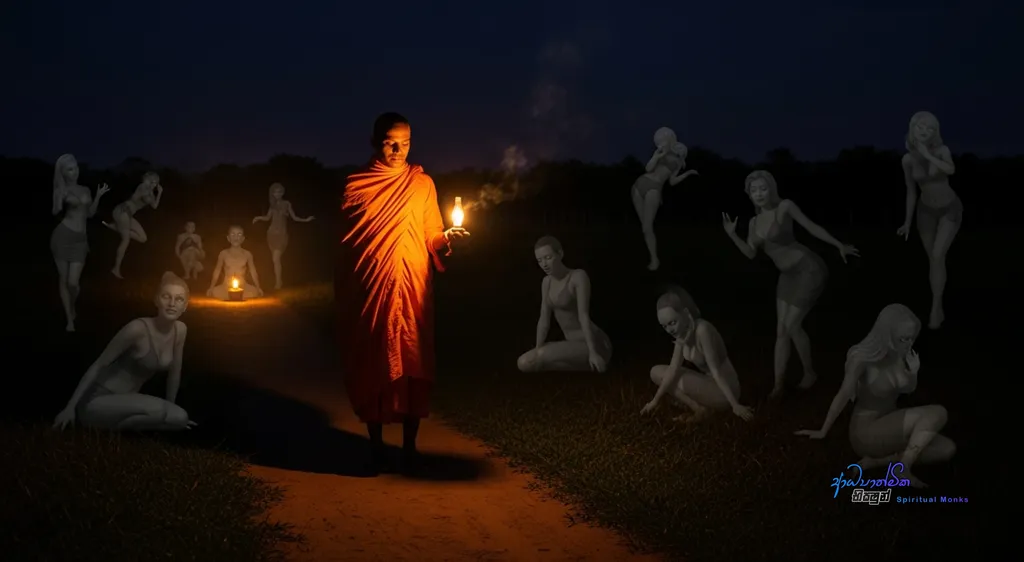
You might also experience optical illusions. Out of the corner of your eye, you might see movement and think someone is there. Perhaps it is just the rustling of a leaf or a play of shadows. Your mind creates a doubt “Is someone walking there?” and you might turn to look, only to find no one. You might even laugh at yourself. Through these experiences, you start to grasp the nature of the mind. This is the most important thing.

Discovering the Three Marks of Existence
As you continue this practice of walking meditation, you begin to directly experience the fundamental truths taught by the Buddha.
1. Impermanence (Anicca)
You will see the mind’s constant changing. One moment it’s empty, the next it’s filled with thoughts of lust, then jealousy, then memories, then future plans. It shifts from one state to another, never staying still. You witness this constant flux and understand, “This is the nature of the mind. It is impermanent.”
2. Unsatisfactoriness (Dukkha)
Within this impermanence, you see suffering. Painful memories arise a lost love, the death of a parent, unfulfilled desires for a car or a house. You see the sorrow and grief tied to these thoughts. You realize, “There is a deep unsatisfactoriness, a profound stress, inherent in these changing mental states.”
3. Not-Self (Anatta)
The mind will give you orders. After 30 minutes of a planned one-hour walk, a thought will command, “Stop now. You’re tired. Go eat something.” At this moment, if you are mindful, you can ask yourself: “Who is giving this order? If this mind is ‘me’ or ‘mine,’ why doesn’t it obey my wish to walk for an hour?” You see clearly that the mind is not under your absolute control. This is the direct experience of not-self, or Anatta. It is not some external demon or god controlling you; it is the mind’s own conditioned process. It operates based on a chain of cause and effect, what the Buddha called Dependent Origination or Paticca-samuppāda. The mind acts based on the database of information it has collected throughout your life. It is a process, not a self.

Navigating the Path: Mara, Emptiness, and Joy
A person without wisdom might misinterpret these experiences. When the mind says, “Stop walking,” they might think it’s a command from an evil spirit or Māra, the tempter. They might run to a temple, spending money on rituals out of fear. Please, do not behave in this foolish way. There is no external demon here. Your own mind becomes Māra.
When you are truly mindful, the external Māra has a hard time interfering. He can only create external disturbances. He can enter your mind only when you are unmindful, stirring up your defilements to deceive you. This is why the Buddha constantly stressed the importance of developing mindfulness. Do not try to bribe Māra by offering merits; it is a foolish and useless act. He will take your bribe and still cause you harm. The only defense is unwavering mindfulness.
During your walking meditation, you may experience moments of profound peace, joy (Pīti), or a sense of emptiness where thoughts cease. Do not get attached to these states or think you have achieved some high attainment. See them also as just another state of mind. Observe the emptiness, observe the joy, and keep walking while watching the mind. You may also feel unusual physical sensations, as if you are floating. Simply observe these experiences with the same detached mindfulness.
As you practice, your attention will naturally start to notice more. You will feel your arms and legs moving, the sensations in the soles of your feet as they touch the ground, or even the process of breathing. When the mind is empty of thoughts, you can gently direct your attention to the movement of the body. Over time, your mind will learn to stay with the present action of walking. This is the goal.
Integrating Walking Meditation into Your Life
This practice is a powerful support for all aspects of your life and your formal meditation. After walking for an hour, you will find it much easier to sit for a period of calm or insight meditation. The mind will be more settled.
Walking meditation is especially useful in certain situations:
- When feeling sleepy: If you feel drowsy during sitting meditation, switch to walking. It is one of the methods the Buddha recommended to overcome sleepiness.
- After a heavy meal: It can be difficult to sit in meditation right after eating. A period of walking meditation can aid digestion and prepare the mind for sitting.
- For those who cannot sit long: If you are elderly or have physical limitations that make sitting difficult, do not be discouraged. Walking meditation is a powerful practice in its own right and can be your primary method for developing the mind.
Start with 10-15 minutes a day and gradually increase the time as your mindfulness strengthens. You might find you can walk for an hour or more, until your body is covered in sweat. The benefits are immense: your memory improves, your concentration sharpens, and your physical health is enhanced. You are exercising your body and mind simultaneously. What need is there for a separate trip to the gym? The Buddha did not prescribe gym workouts; he prescribed practices like walking for alms and walking meditation, which build true, internal strength, not just inflated muscles.
Your Journey Forward
This teaching provides a foundational understanding of walking meditation. Whether you are dealing with intense mental pressure or are simply seeking a deeper connection with yourself, this practice is for everyone. It transcends religion, race, and culture. Try it, especially when you feel stressed, and notice the profound relief it brings. Within minutes, you can find a space of calm.
Continue the practice without stopping. As you gain your own experiences, you will see for yourself what happens. In the future, we will explore more subtle aspects of this practice based on the different states of mind you may encounter. For now, begin with this method.
May the power of the Buddha, Dhamma, and Sangha the Triple Gem bless you with the ability to watch your mind correctly as you practice walking meditation.
We invite you to walk this path with us. Read our teachings, and most importantly, apply them practically in your own life. as you practice, questions will naturally arise. Please feel free to share your experiences and questions in the comments below, via email or contact form. I will do my best to offer guidance in future talks based on your progress. For now, begin this practice with an open heart and a mind free from expectation. Cultivate it correctly, and may you find the clarity and peace you seek.
Thank you for joining us. We hope this blog will be of great benefit to your spiritual journey.
May you all be well and happy.
May the blessings of the Triple Gem be with you all!


