


Categories: Other Meditation Teachings
May the blessings of the Triple Gem be with you all!
Today, through the spiritual teachings we share, I wish to clarify a question that many practitioners encounter: Why do my eyes suddenly open during meditation? This is a practical problem that several people have mentioned, and it can be a significant hurdle on the spiritual path. My hope is to explain why this happens and provide a clear, practical way to face and resolve this issue. If you’ve ever been deep in practice only to have your eyes jolt open, this teaching is for you.
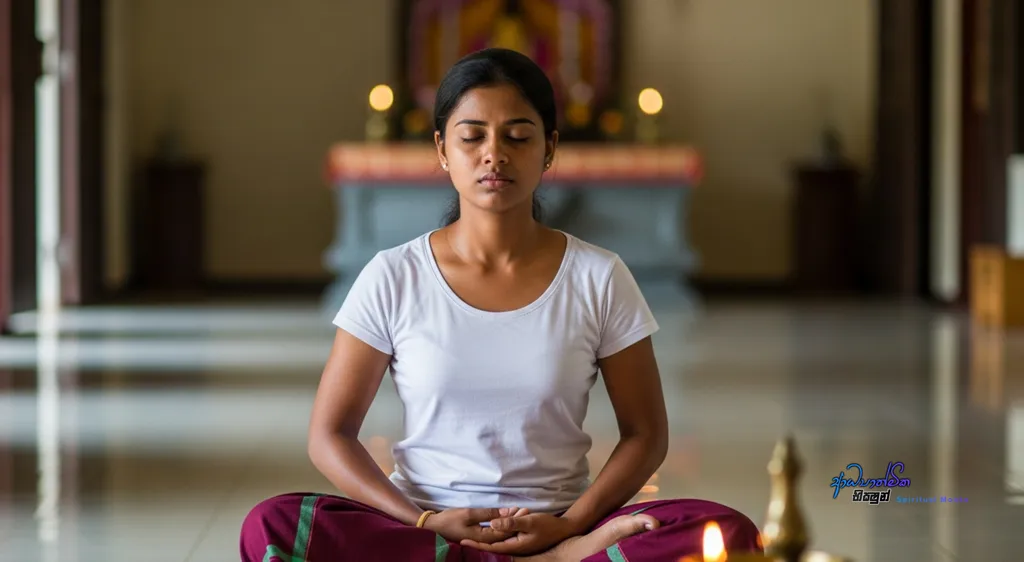
The Two Core Reasons: Agitation and Fear
When we explore the experience of eyes opening during meditation, we can identify two fundamental causes. The first is a state of mental agitation or restlessness. The second is fear. These two emotional reactions are almost always at the heart of this issue.
When you are settled in meditation and your eyes suddenly open against your will, it is a clear sign that one of these forces is at play. Let’s look at the first cause, agitation, to understand how it disrupts our practice.
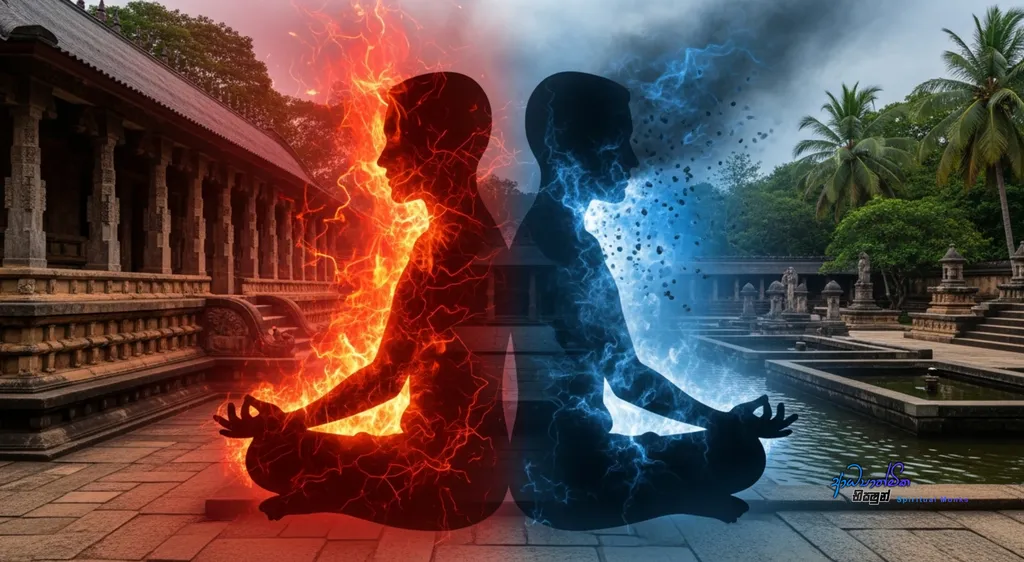
Understanding Agitation: When Excitement Becomes an Obstacle
Many of you follow the spiritual guidance offered in these articles, learning about the step-by-step progression of practice. For instance, in the meditations related to the ‘third eye‘, I have explained that signs of light, or āloka saññā, may appear as the mind concentrates between the eyebrows. Not everyone experiences this, but for some, it is a distinct stage.
Now, imagine you are meditating, and suddenly, that very light signal appears. Your mind, having learned about what comes next, immediately becomes agitated. It races ahead, recalling the subsequent stages I have described: the appearance of mind-images (citta-rūpa), seeing deities or even unsettling figures, colors intensifying and expanding.
This sudden flood of thoughts, driven by excitement and anticipation, creates a powerful mental disturbance. It becomes an almost physical shock that your system cannot bear. In that instant, your eyes begin to twitch and then fly open. The light signal vanishes, and the experience is lost.
This happens because we lack self-awareness and composure in that crucial moment. The agitation itself is a mental defilement, known in Buddhism as a kilesa. It is a negative, unwholesome thought state. We must understand deeply that the spiritual journey cannot be traveled with a restless, hurried mind. You cannot force these experiences on your own timeline. As we understand our own mind better, this agitation naturally begins to fade.
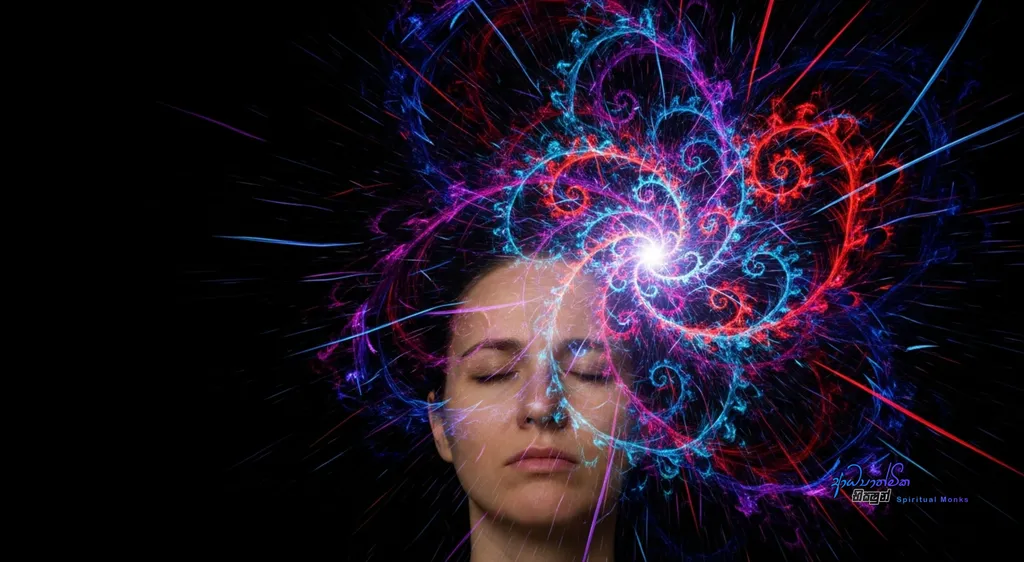
The Vicious Cycle: Why Chasing Spiritual Experiences Pushes Them Away
If you allow agitation to take over, you will not be strong enough to face the physical and mental phenomena that arise later in the spiritual path. Worse, those profound experiences may not return.
Think about the person who saw the light, became agitated, and had their eyes opening during meditation. After I explain this principle, they might sit down again, determined not to get agitated next time. This is a good intention. However, the problem shifts: now they meditate with the expectation of seeing the light again.
They are actively waiting for it. Because of this craving, the light does not appear. Frustration sets in, followed by disillusionment with the practice itself. Thoughts of giving up arise automatically. This is the nature of an untrained mind.
It is essential to be aware of this tendency. Wanting an experience is a form of attachment that creates a barrier. The true reality is that these experiences arise when the conditions are right, not when we demand them.

Confronting Fear: When Mind-Images Appear in Meditation
The second major reason for eyes opening during meditation is fear. Let’s move to the next step in the practice. After seeing light signals, a meditator might begin to perceive mind-made images, or citta-rūpa. As you know from these teachings, these images appear before the ‘third eye’ or divine vision (dibba-cakkhu-ñāṇa) is fully developed. You might see a beautiful image of a deity or the Buddha, but you could just as easily see an unsettling image of a demon or a spirit.
When such an image appears unexpectedly, the immediate reaction is often fear. The moment fear arises, the same thing happens as with agitation: your eyes jolt open. Here, both fear and agitation are present. The experience is immediately cut short, and the mind-image vanishes. All progress is lost in that moment, simply because of fear.
You must not give in to fear. You must remain neutral, or ‘equanimous’. Fear is also a kilesa a weak, defiling thought. Just like agitation, it prevents spiritual development. The journey requires you to face many new sensations, both physical and mental. If fear is present in your mind, you will lack the strength to face them. Therefore, you must recognize that this thought of fear has no place within you.
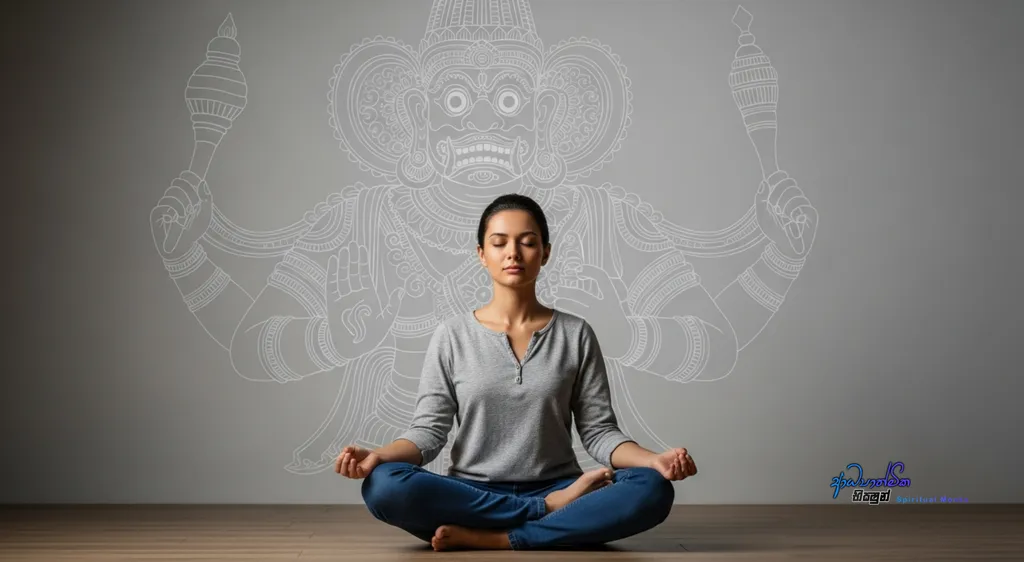
The Antidote: Using Mindfulness to Dissolve Fear and Agitation
So, how do we eliminate these reactions?
The solution lies in a practice we constantly teach maintaining mindfulness (sati) and identifying your thoughts as they arise. We have offered many teachings on this, such as how to establish the mind in the present moment.
When you are meditating and you approach a new experience be it a light or a mind-image your task is to look at your own mind. With sharp mindfulness, identify the very first thought form that arises in reaction to the experience. Ask yourself:
- Is this a thought of agitation?
- Is this a thought of fear?
- Is this curiosity about what will happen next?
When you mindfully recognize the thought for what it is, ‘Ah, this is fear arising‘ or ‘Ah, this is curiosity‘ its power over you is immediately broken. The defilement subsides. This is the true key. By identifying it, you prevent it from taking control, and you gain the ability to face the experience and proceed to the next step.
Without this skill, you cannot develop either calm meditation (Samatha) or insight meditation (Vipassanā). When your eyes opening during meditation becomes a pattern, it is because this crucial step of mindful recognition is missing.
Embracing a Warrior’s Heart: The Fearless Path to Liberation
As you encounter new spiritual experiences, whether in Samatha or mindfulness practice, you will feel various things in the body and see many things in the mind things you have never heard of before. While our teachings aim to remove your fear by explaining many of these phenomena, there will always be experiences I have not described. When you face these unknown steps, if curiosity, fear, or agitation arise, you will be unable to proceed.
Therefore, train your mind starting now. When a new experience arises in meditation, watch your own mind. See how your thoughts operate. Face the event with mindfulness. When you do this, you will be able to face the experience with neutrality and equanimity (upekkhā) without agitation, fear, or curiosity. This is how you handle such things.
Many people ask me what to do. My answer is this: you must develop a powerful inner personality. Face these things fearlessly, like a lion. Whether you are a man or a woman, you must cultivate the dignified bearing of someone on the path to truth. Adopt the mindset, ‘It is okay even if I die.’ This is not about carelessness, but about a radical commitment that dissolves fear. This is the attitude that all great beings from Bodhisattvas seeking enlightenment to the Arahants who attained it held. They were fearless, like noble lions.
Cultivate this inner strength. If you do, it won’t matter if you are in a forest or a city; you will be able to do this work.
Your Path Forward: A Practical Summary
These are practical points from direct, practical experience. This is why I teach them to you with compassion. Understand these principles and apply them directly when you face these challenges.
I have now explained the issues of fear, curiosity, and agitation that can cause your eyes opening during meditation. I have also explained how not to avoid them, but to face them directly. With this understanding, you can move forward.
This brief teaching should be more than enough. Grasp it, develop a strong spiritual backbone, and face your practice like the strong man or woman you are. I conclude this teaching on the problem of why eyes open during meditation.
May the powerful blessings of the Triple Gem the Buddha (the Enlightened One), the Dhamma (His Teachings), and the Sangha (the community of noble disciples) give you the strength and personality to face these steps. May you be able to identify each stage with mindfulness and act with clear understanding.
We invite you to walk this path with us. Read our teachings, and most importantly, apply them practically in your own life. as you practice, questions will naturally arise. Please feel free to share your experiences and questions in the comments below, via email or contact form. I will do my best to offer guidance in future talks based on your progress. For now, begin this practice with an open heart and a mind free from expectation. Cultivate it correctly, and may you find the clarity and peace you seek.
Thank you for joining us. We hope this blog will be of great benefit to your spiritual journey.
May you all be well and happy.
May the blessings of the Triple Gem be with you all!


