


Categories: Other Meditation Teachings
May the blessings of the Triple Gem be with you all!
As we explore the spiritual life, we encounter many people in the world who lack a genuine understanding of the mind, particularly of meditative states. Instead of gaining insight through practical training and direct study, some individuals choose to live by criticism alone, often disparaging the very path they have not walked. We must recognize that this atmosphere of negativity often arises from the influence of what Buddhism calls Māra, not a literal demon, but the personification of the forces that obstruct spiritual progress. Today, even some individuals wearing the robes of monks present these misleading views.
As a spiritual community, we want to make you aware that on this journey, you will meet people holding various conflicting views, whether in Sri Lanka or anywhere else in the world. It is essential to understand the foundation of true Buddhist practice.
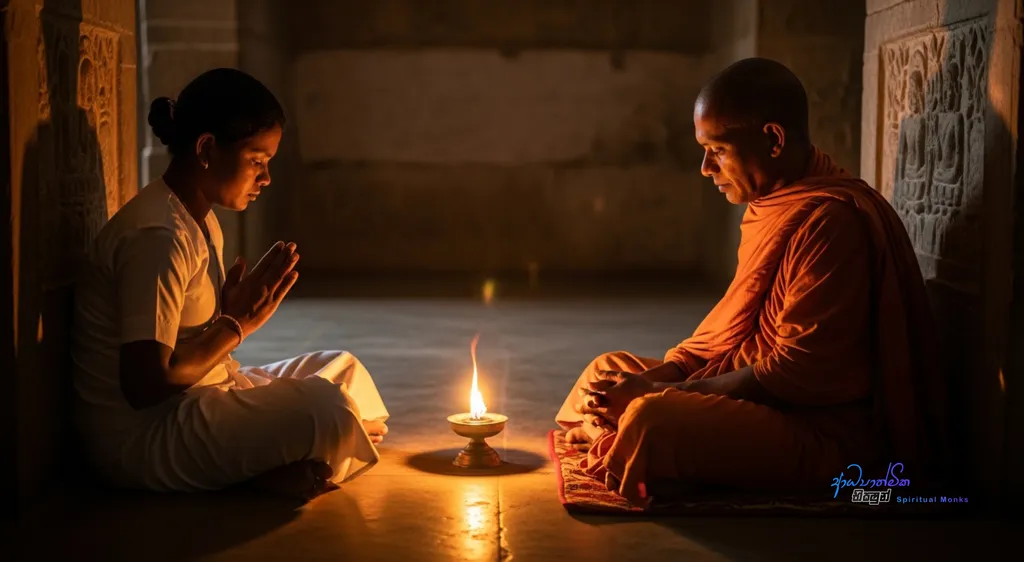
The Buddha’s Journey: The Middle Way of Direct Experience
The Buddha, a being of supreme wisdom, or sarvajñatā ñāṇa (all-knowing wisdom), did not discover the truth through theory. He developed his own mind to investigate the nature of the universe, the inner workings of our planet, and the existence of other beings, both human and non-human. He taught us what our human minds could comprehend, as he understood our limits.
Before his enlightenment, as the Bodhisatta Siddhattha, he undertook a period of extreme asceticism due to a past unskillful action, or kamma. It’s important to know that not all Bodhisattas (beings destined for Buddhahood) undergo such severe practices. For our Bodhisatta, it was the result of a past verbal action.
He ultimately abandoned this path of self-torture, known as attakilamathānuyoga. He also abandoned the other extreme: a life of maximum sensual pleasure, or kāmasukhallikānuyoga. As a prince, he had experienced more luxury than any of us could imagine, endless comforts, food, and company.
He realized neither extreme was the correct path to liberation. Thus, he discovered the Majjhimā Paṭipadā, the Middle Path, a balanced, moderate way of life. It was through this practical, experiential journey that he laid out the path for us to follow. Every step was a practical training.
He didn’t just think his way to enlightenment; he trained his mind, developed deep states of meditative absorption called Jhāna, and used the virtues he had perfected over countless lifetimes, the ten pāramitā, to elevate his own mind to the state of full awakening. This entire process was one of internal development, not external validation.

Wisdom Beyond Intellect: The True Nature of Buddhist Practice
Look anywhere in the Tipiṭaka, the Buddhist scriptures. Is there any mention of the Buddha attending a particular university, holding an academic position, or teaching in a formal institution? Is there any record of him attending a certain school? This is not an attack on education but a clarification of what truly matters on the authentic spiritual path.
The knowledge accumulated in one lifetime at a school or university cannot be compared to the vast wisdom a Bodhisatta gathers across countless lives. The perfections, or pāramitā, are practiced and accumulated over cosmic cycles; they are not limited to a few years of study. Those with strong wholesome tendencies can continue to build upon this spiritual momentum, while for others, these accumulations can be lost or forgotten over time.
The key point is this: the Buddha never used worldly education or the lack of it to attain enlightenment. What he needed was paññā, transcendent wisdom. This is why, in this spiritual tradition, an uneducated person with wisdom can attain the four stages of enlightenment (stream-entry, once-returning, non-returning, and Arahantship). Likewise, an educated person can only achieve this if they possess true wisdom. Your academic credentials are not relevant to the path of liberation. What is required is the quality of your wisdom.

The Dangers of Criticism Without Practice
It was with this profound wisdom, cultivated through deep meditation, that the Buddha could see things our modern technology cannot. He explained the journey of beings through samsara (the cycle of birth and death), how worlds are formed and destroyed, and the beginning of the universe. He compassionately taught us about other human worlds, the existence of unseen beings, and the mechanics of kamma, how intentional actions lead to specific rebirths.
He did not invent these truths; he simply revealed what was already there but hidden from ordinary sight. He also taught us how to stop this cycle, how to get out of it, using the word Nibbāna (Nirvana) to describe this ultimate liberation. He taught all of this from a mind of deep concentration, or samādhi, and explained the Noble Eightfold Path as the way to walk this journey.
He did not learn these things from a book or a teacher. The Dhamma he taught, which is now recorded in the Tipiṭaka, came from his direct experience. Later, great masters wrote commentaries (Aṭṭhakathā) and sub-commentaries (Ṭīkā) to help explain difficult points. But today, unable to comprehend the Buddha’s profound wisdom, some monks in Sri Lanka, appearing as agents of Māra, have fallen to the view that there are no hells and no heavens.
This is because they lack samādhi. They may have degrees from universities, but a university degree has no relevance to the journey of samsāra. If you use your education as a source of pride to mislead others religiously, claiming there is no hell, no heaven, it won’t be long before you also claim there is no Nibbāna and no Buddha. This is a gradual poisoning that unfolds over years.
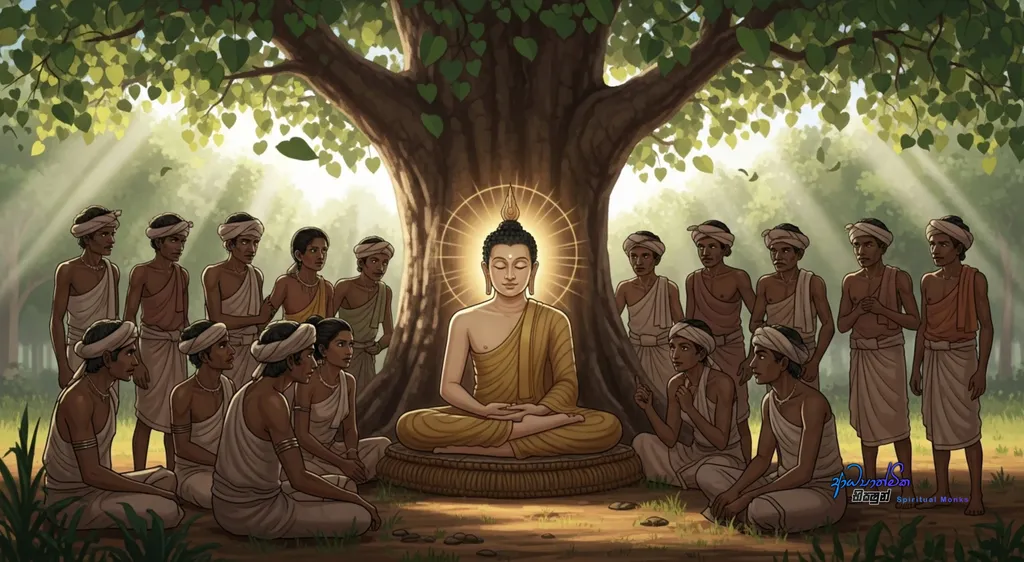
Misusing the Kalama Sutta: A Common Pitfall
Often, those who criticize the teachings will highlight the Kālāma Sutta. You can find this discourse in the Aṅguttara Nikāya. In it, the Buddha advises the Kalama people not to accept things just because they are in scriptures. However, he was speaking to them specifically because they were confused, visited by many teachers with conflicting doctrines, and unable to discern truth from falsehood. He was not speaking to those who had already taken refuge in him. For a devoted follower, this advice is not needed in the same way; their job is to engage in the training.
This sutta is very suitable for secular people or those of other faiths who are trying to find the right path. But for a Buddhist who follows the Buddha with faith and respect, the path is practice. Ironically, those who misuse the sutta to reject teachings conveniently ignore other parts of it. The Buddha also said:
- Do not accept something just because it aligns with your logic or reasoning.
- Do not accept something just because the person teaching it is respectable or highly educated.
These are the very things the critics rely on! The Buddha asks us to investigate with our own minds. I don’t need to prove to you that heavens and hells exist; they cannot be shown with technological instruments. But they exist. The only way to verify this is through your own dedicated Buddhist practice.
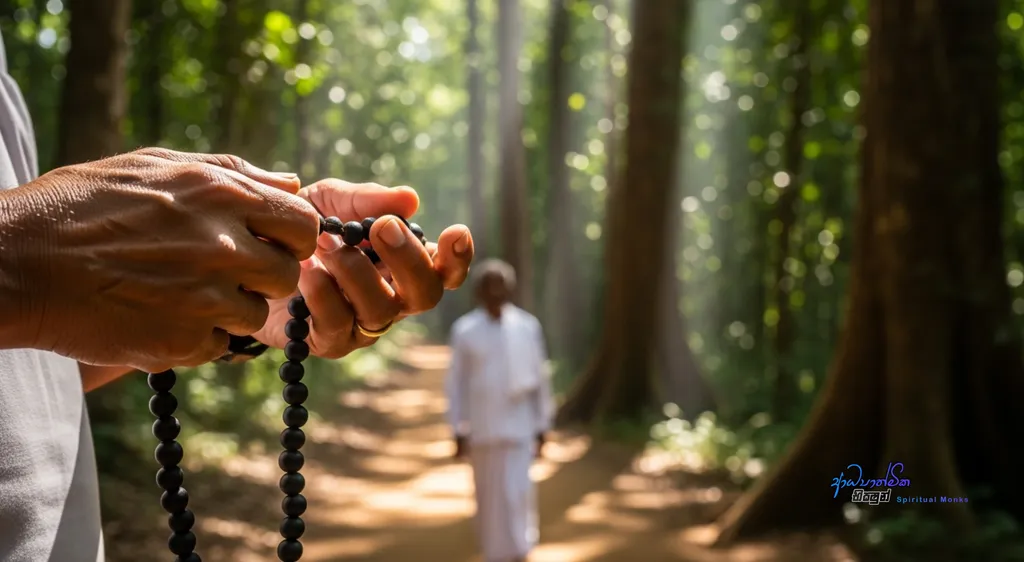
From Faith to Direct Knowing: The Role of Personal Experience
You accept the Buddha’s teachings not because you have seen everything or practiced it all perfectly, but because of your faith, or saddhā. Perhaps you were born a Buddhist, which may be the result of your merit from past lives. Your faith itself might be a continuation of faith you cultivated in previous existences. That is why you have this acceptance.
However, if you wish to go beyond belief and verify the truth for yourself, there is only one way: practical training. Listening to the words of monks who lack samādhi is fruitless. If a monk makes such claims, they should have the humility to admit, “I am saying this without having practiced myself.”
The Buddha taught these things after developing his mind and awakening his wisdom. How can someone with an undeveloped mind and no meditative stability dare to criticize his words? If they were humble, they would not speak this way. Instead, they use their academic achievements as an ornament and a shield to mislead society. Do not fall for such things.
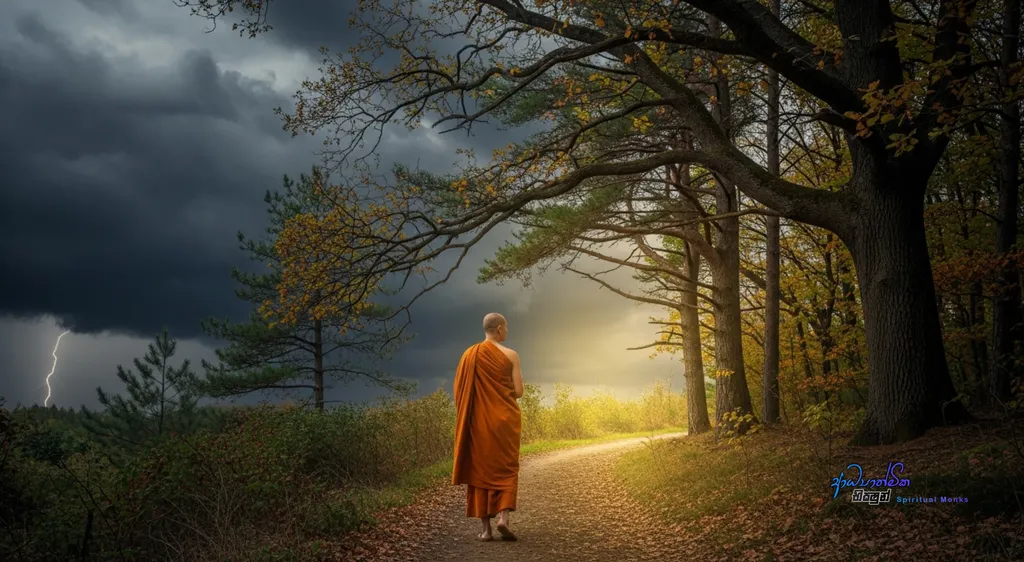
Discerning Truth and the Paradoxical Work of Māra
If, through these teachings, you have developed even a small amount of meditative stability and realized there is something more to discover, then you should resolve to continue your Buddhist practice until the day you die. If you have followed our practical meditation guidance, perhaps feeling the changes in the middle of your forehead, experiencing signs of light (āloka saññā), or feeling a deep sense of bliss and peace in your mind, then you have already tasted the practical nature of this path.
To those monks acting as agents of Māra, these light signs are a joke. They call them lies or symptoms of mental illness, quoting Western psychology books. While many mental health professionals work respectfully alongside Buddhism, some extremists use their field to pathologize spiritual experiences, claiming they need to be ‘cured’ with medicine. These views may become more common in the future.
So you must remain discerning. It is pointless to listen to or argue with such monks. If someone argues with you based on their teachings, they are only harming their own journey through samsāra. It is not wise to even speak with such people. However, I can say one thing with certainty: through their very actions, through the work of Māra, the true teachings of the Buddha will eventually shine even brighter from another direction.
As they criticize and accumulate unwholesome kamma, potentially leading to lower rebirths, their negativity forces people with wisdom to think more deeply and realize the truth for themselves. In time, their misguided efforts may even cause a resurgence of genuine practitioners who attain deep meditative states, insights, and the stages of enlightenment. Do not misunderstand this: we are not endorsing their wrong actions. Their work is unwholesome. But remember that because of their wrongdoing, the right path is illuminated.
A Call to Authentic Practice: Beyond Half-Measures
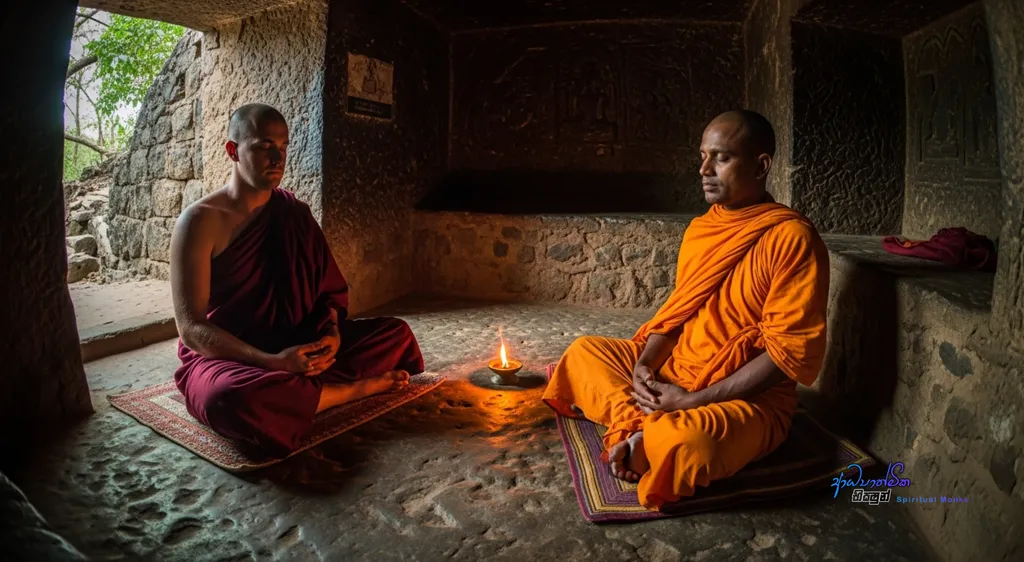
So, do not trust the words of a monk who lacks samādhi and has not developed jhāna. Ask them directly: “Do you have meditative stability? How do you practice it? How does one generate jhāna? Do you have this attainment yourself? How can you criticize these teachings from books alone without any practical experience?”
People in Western countries often act more intelligently in this regard. When a Western scientist encounters Buddhism, they don’t accept it blindly. They study it from every angle before coming to a conclusion. Today, many such Westerners have become monks in Sri Lanka, and they often choose forest monasteries because they understand where the essence of the Buddhist practice lies.
In contrast, in Sri Lanka, there is a generation of youth who are half-scientists and half-philosophers. They may have studied a completely unrelated subject for their exams, but after watching a few tech videos on YouTube, they think they know all of science. After reading a couple of books, they think they know everything. This is the audience that is easily swayed by the sensational claims of these critical monks.
Do not be a half-scientist or a half-philosopher. Study this path completely. And the most profound study is practical. If you do, you can bring your mind to a very good place. Do not listen to those who are half-monks either. They may be educated or uneducated, but if they lack samādhi and jhāna, and do not even attempt the training, do not fall into the trap of believing them. This message is not for all monks, only for those who come in the guise of monks but serve the agenda of Māra.
The Ultimate Dishonesty: Undermining the Path That Sustains You
Throughout the Tipiṭaka, the Buddha’s message is clear: “Monks, develop samādhi! Monks, develop jhāna! Monks, strive to realize the fruits of the path you have not yet realized!” If someone ignores this core instruction and instead spends their time criticizing the Buddha, his physical attributes, and his teachings on heavens and hells, consider this analogy: a country has laws and a constitution, and its citizens must live by them.
If a person lives in that country, eating its food and using its resources, yet constantly criticizes and undermines its very foundation, how low have they stooped? Think about it again and again.
It is the same with those who criticize the Buddha’s teachings on meditation without practicing them. How low is a person who uses the Buddha’s teachings to build a platform, only to mislead society? Are they not doing Māra’s duty? Sometimes, these individuals receive funding from various non-governmental organizations (NGOs) abroad.
Initially, it may not be about money, but they do these things to gain fame and create a position for themselves in society. As they continue, the funding from NGOs increases. As more people approve of their views, the financial support grows, and it becomes a livelihood built on narrow, selfish aims.
I wanted to make you aware of these dynamics. You may be in a state of doubt about whether these spiritual realities exist. For those who are part of our spiritual community and are developing meditative stability, there is no doubt. But if you are in doubt, I invite you to engage in the Buddhist practice yourself. Follow the teachings systematically, listen, and then put them into practice. Through direct experience, you will be able to understand these matters clearly.
Your Path Forward
Let us move forward with this understanding. This is the main point I wished to convey today. I will conclude this teaching for now. By the power of the Triple Gem, the Buddha, the Dhamma, and the Sangha, may you all gain the ability to understand these matters clearly and act accordingly.
We invite you to walk this path with us. Read our teachings, and most importantly, apply them practically in your own life. as you practice, questions will naturally arise. Please feel free to share your experiences and questions in the comments below, via email or contact form. I will do my best to offer guidance in future talks based on your progress. For now, begin this practice with an open heart and a mind free from expectation. Cultivate it correctly, and may you find the clarity and peace you seek.
Thank you for joining us. We hope this blog will be of great benefit to your spiritual journey.
May you all be well and happy.
May the blessings of the Triple Gem be with you all!.


