


Categories: Dhamma Discussions
May the blessings of the Triple Gem be with you all!
Today, we will explore personalized meditation guidance. Instead of a formal discourse, this will be an interactive session. I will provide specific instructions for each of you based on your unique experiences and challenges in meditation. Please feel free to share any questions or difficulties you are facing, whether they relate to tranquility meditation, known as Samatha, or insight meditation, known as Vipassanā.
As you read the advice given to others, listen with an open mind. Take what applies directly to your practice, and let the rest serve as a source of knowledge. It’s important not to confuse another person’s instructions with your own path. Simply be aware that different paths exist for different people. Our focus today is on clarifying your meditation objects, resolving stuck points, and understanding the nature of your mind, whether through mindfulness practice or the cultivation of deep calm.

When Light Appears: Navigating Visions in Meditation
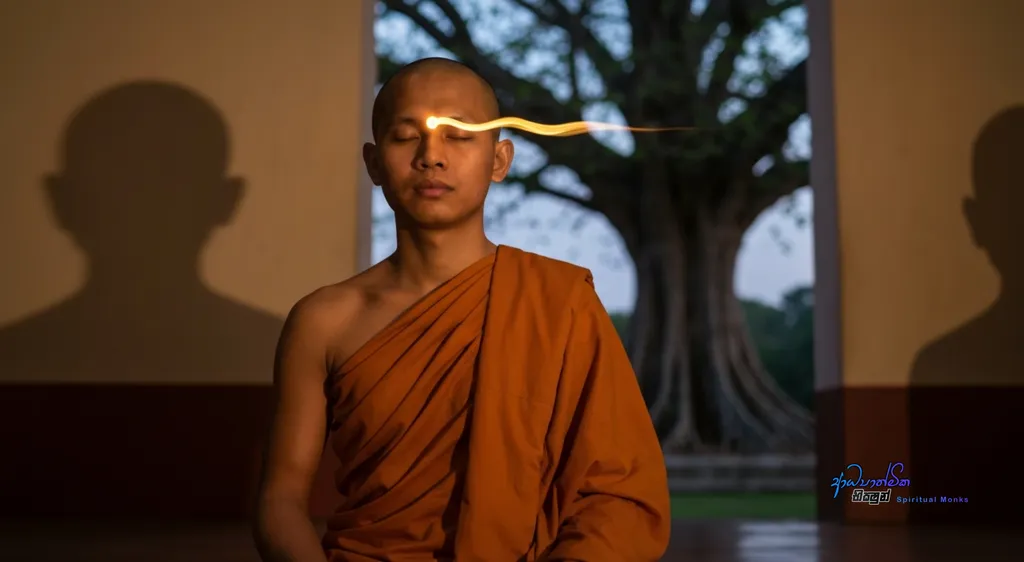
A common experience in meditation is the arising of inner lights or visions. One might see a spot of light, like a small torch beam, that appears and disappears. You might notice this with your eyes open, seeing it superimposed on a wall or the floor, and also with your eyes closed, where it might appear as a subtle signal of light that grows stronger over time.
If this happens, the first step is to discern whether you can separate this light from physical reality. Can you still see the floor clearly, distinct from the light? If so, you have the ability to manage this phenomenon. If the light becomes a distraction, you can make a firm mental resolution, an adhiṭṭhāna, thinking, “For now, may this inner light not appear. May I see it again only when I resolve to do so.” This allows you to return to a clear perception of the physical world.
However, this light is a powerful object for meditation. To work with it, close your eyes and gently focus your attention on the light. You may find that your mind becomes very clear and calm, free from sleepiness or boredom. You can remain in this state for a long time. As you hold your attention on the light, concentrate your mind on it. Let your mind become one-pointed. The light may seem to flicker, grow, or shrink. It may appear and disappear. As you observe this changing light, begin to silently repeat a single word in your mind: “Empty.”
Continue to hold your awareness on whatever light appears, gently thinking, “Empty… Empty… Empty…” Do not be concerned if the light vanishes; simply wait for another to arise and continue the reflection. As you do this, other experiences may arise. The light may expand or change in various ways. Observe these changes and continue the practice. This is your path forward for now.
The Wandering Mind: Embracing Restlessness with Wisdom
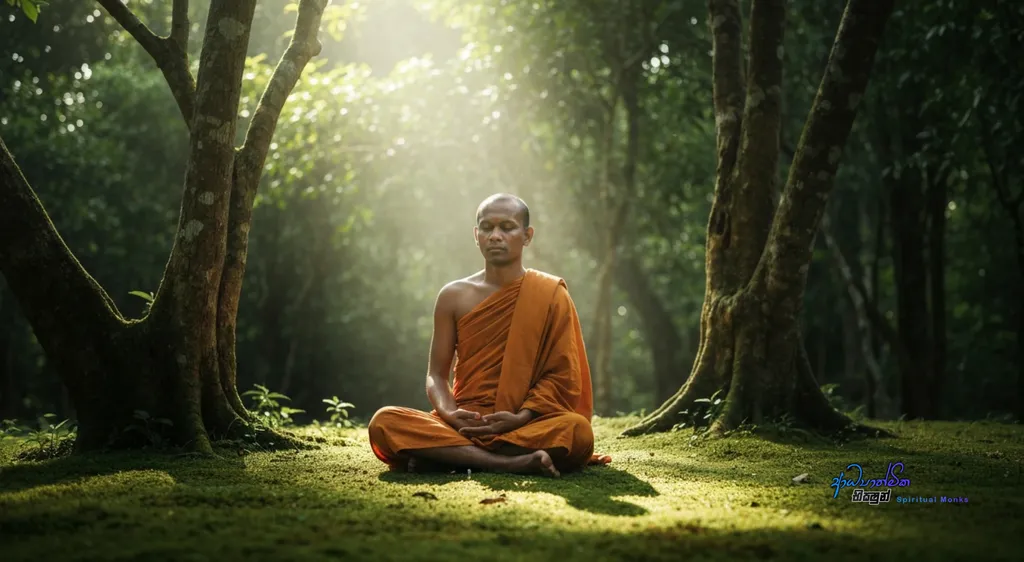
Another frequent challenge is the restless mind. You might find that after a period of calm, particularly after practicing breath meditation (Ānāpānasati), your mind begins to wander uncontrollably. It darts from one thought to another, and even though you are aware that it’s wandering, you can’t seem to stop it.
This is not a personal failing; it is a natural characteristic of the mind. In Buddhist teachings, this state is known as Uddhacca-kukkucca, or restlessness and remorse. For you, the primary issue may be restlessness (Uddhacca). The mind is simply agitated. The greatest victory here is not in stopping the mind, but in recognizing that it is wandering. Your awareness is the key.
Do not try to force the mind to be still. Instead, use your mindfulness (sati) and wisdom (paññā) to simply watch it. Allow it to run, but keep a watchful eye on it. As you continue to practice mindfulness in your daily life, this inner restlessness will naturally begin to settle, and the mind will come to rest closer to you. This takes time and patient practice.
When you observe this constant mental movement, you are directly seeing a fundamental truth: the changing nature of the mind. This is the characteristic of impermanence, or Anicca. Understand this as the mind’s nature. This insight is a core aspect of Vipassanā, or insight meditation.
Guidance for Walking Meditation (Sankamana)
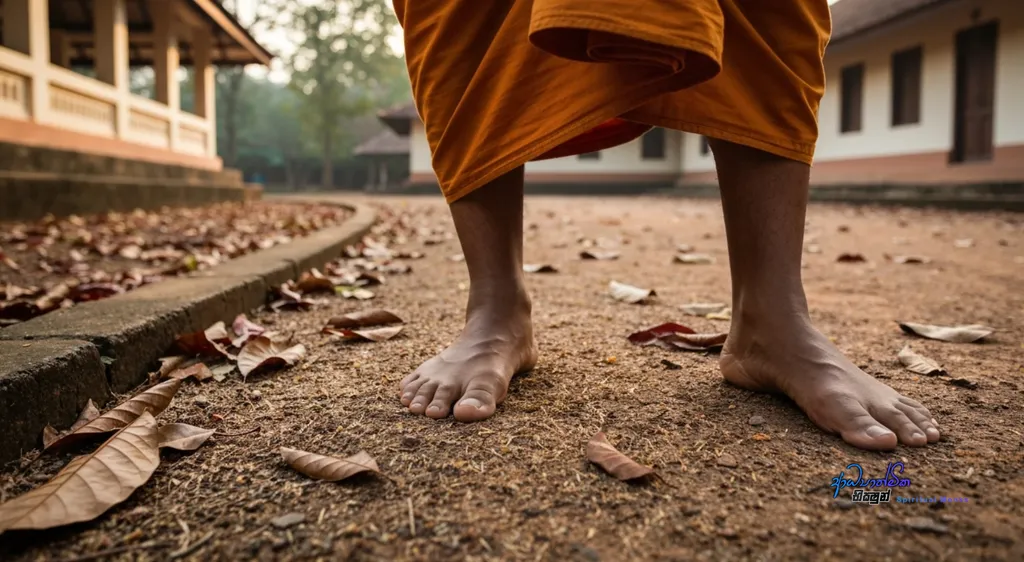
Walking meditation is an excellent practice to complement your seated sessions. As you walk, place your attention on the movement of your feet: lifting, moving, placing. Lifting, moving, placing. What is happening here? Constant change. This is a direct experience of impermanence, or Anicca. The foot that lifts is not the same foot in the next moment as it moves, nor in the moment it is placed. Each phase arises and passes away.
If you find it difficult to grasp this deeply, simply hold the thought, “changing… changing…” as you observe the movements. Your mind will inevitably wander. When it does, this is normal. Acknowledge that it has wandered, and gently bring your attention back to the walking. If a particularly strong unwholesome thought, a kilesa like desire, anger, or regret, arises, stop walking. Stand still.
The mind is now with that thought, not the feet. There is no point in continuing to walk mechanically. Instead, turn your full attention to this difficult thought. Observe it. Feel the pressure or pain it causes. Watch it without judgment until it naturally fades away. You will see that it, too, is impermanent. Once it has passed, and you know it is gone, resume your walking meditation.
You can integrate this mindfulness into all activities: when you are on alms round, when you are doing chores. By maintaining this awareness, you will see your mind and its contents with crystal clarity. Remember, the mind is always changing. It might feel peaceful now, but old patterns, like thoughts of your past life, can return. Do not be alarmed. This is also the mind’s changing nature. Simply recognize it, and it will lose its power. You will realize that this path of mindfulness offers a freedom that the old life could not.
Integrating Loving-Kindness (Metta) and Breath Meditation
Many practitioners cultivate loving-kindness, or Metta, by sending well-wishes to all beings in the ten directions. This is a wonderful practice for developing a calm and positive mind state, which belongs to tranquility meditation (Samatha).
After you finish your Metta meditation, instead of ending your session, transition your focus to the breath (Ānāpānasati). Bring your attention to the sensation of the breath coming in and going out. Simply watch this natural rhythm. As you observe, you may notice many things: the breath may seem to go high up or low down; sometimes it may feel as if the breath has stopped altogether. Do not panic.
Just keep watching. At other times, the breath may become rapid or very slow, with long pauses in between. Observe every one of these events with calm awareness.
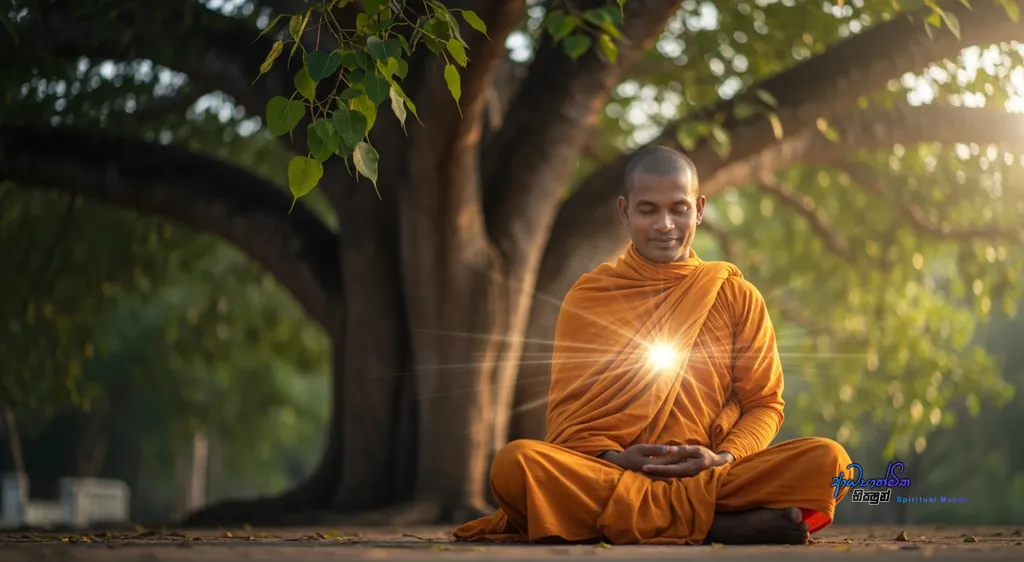
As you stay with the breath, a feeling of lightness and ease may arise in the body. You might feel a sense of freedom. If this feeling of lightness becomes very strong and prominent, you can shift your attention from the breath to this pleasant sensation. Let your mind rest in that lightness. At this point, the breath is no longer the primary object. However, if your mind starts to scatter, gently guide it back to the breath to re-establish concentration.
If the lightness grows, you can make a gentle determination: “May this feeling of lightness increase.” Repeat this softly in your mind a few times. This can help the state deepen. But it is crucial not to expect this to happen. Expectation creates tension and becomes an obstacle. If it doesn’t happen, simply remain with the breath. Practice without longing for a specific outcome.
The Body as Stone: A Sign of Deepening Concentration
As your concentration (samādhi) deepens, you may have a powerful experience where your body feels solid and heavy, as if it has turned to stone. When this happens, the mind is often very still and does not wander. This is an excellent sign of progress, a state that precedes the deep meditative absorptions known as the Jhānas. It is not a Jhāna itself, but you are very close.
At this stage, your meditation object should shift. Do not bring your mind back to the breath. Instead, let your awareness rest entirely on this sensation of the body being like a stone. Stay with it for as long as you can. It’s possible to remain in this state for an hour, two hours, or even longer, without moving.
While resting in this state, you can make a gentle but firm resolution (adhiṭṭhāna). You can think, “May my mind move to the next step,” or more specifically, “May my mind attain the first Jhāna.” Repeat this resolve three times, and then return to simply abiding in the stone-like sensation. Gradually, you may notice a shift: the feeling of solidity dissolves, and a joyful, light, and vibrant state emerges. This is the next stage.
It is essential that others reading this do not start expecting their body to turn to stone. These experiences are individual. Do not create a rule for yourself or anticipate a specific outcome. Practice patiently, and let your own experience unfold naturally.
The Numbness of Absorption: Navigating Deep Meditative States
Another powerful experience, often arising from concentration practices like focusing on a visual object (kasina), is a sensation of the entire body tingling or becoming numb. It can feel as if pleasant goosebumps cover your entire body. When this happens, you are in a state of deep absorption. External sounds may still be heard, but they don’t register or disturb the mind until after you have emerged from the state.
A challenge here can be the feeling of being unable to move or open your eyes when you want to. It might feel frightening, as if you are stuck. The first piece of meditation guidance is this: do not try to leave prematurely. This state is a sign of progress. Why rush to end it? Stay with the tingling sensation for as long as you can. If you can sit for an hour and a half, or two hours, do so. Do not waste this opportunity.
When you are ready to end the session, do not try to force your eyes open. The concentration is too strong. This would be like stepping from a dark room directly into a blinding light; it’s jarring. Instead, make a clear resolution: “May this concentration subside.” Allow the mind to gently withdraw from that state of deep focus. Wait until the body feels more normal and the intensity has faded. Only then, slowly and gently, open your eyes. This allows for a smooth transition back to ordinary consciousness.
Working with Agitation, Pain, and Frustration
Sometimes, the primary obstacle isn’t a wandering mind but a pervasive feeling of fatigue, agitation, or even anger. You might find yourself easily frustrated by small things, like your meditation cushion not being perfectly arranged. This frustration can quickly turn into a deep sense of discouragement, making you feel that the practice is pointless.
This is a critical moment for mindfulness. The key is to observe these states. Understand that a thought is the root cause. An angry thought arises, and the body tenses, the head aches. A happy thought arises, and the body feels joyful. The feeling comes from the thought. Therefore, when a difficult thought or feeling, like frustration or a past worry, comes up, your practice is to watch it. Don’t engage with it or push it away. See it with mindfulness. Understand its nature with wisdom.
Mindfulness is the tool that helps you see the thought clearly. Wisdom is what understands it. As you watch the frustrating thought, you begin to see it for what it is, an impersonal mental event. As you understand it, its power over you diminishes. The enemy’s strength weakens when it is seen. This takes patience. The change happens gradually. Whenever you feel pressure, whether it’s a headache from a migraine or mental pressure from a recurring worry, turn your awareness towards it. Investigate its cause within the mind. By understanding the thought that fuels the feeling, you can allow it to dissolve naturally.
Guidance on Kasina Meditation and Moving Forward
For those practicing with a visual object (kasina), you may see a colored light, such as a blue dot, appear in your mind’s eye. This dot might seem to move or have things within it. The instruction is to focus on that blue light. Make a determination, “May I be able to enter this light.” With sustained concentration, you can indeed feel as though you are moving into that space.
Sometimes, this dot of light can suddenly expand to fill your entire field of vision, becoming an intense, deep blue. This can be startling, but it is a sign of the mind unifying with its object. Don’t be afraid. Stay with it. These light signs (nimittas) are not yet stable for many, so they may appear and disappear. The goal is to strengthen the concentration so you can travel through this light.
For all of you, the path forward is clear. Take the specific meditation guidance you have received today and apply it diligently for the next week. Be patient with yourself.
Whether your task is to watch the breath, observe a light, stay with a body sensation, or mindfully watch difficult emotions, practice with earnest effort. Arrange your posture in a way that is sustainable for you; if you need a cushion for support, use it. The goal is to create the conditions for the mind to settle. Practice consistently, and we will discuss your progress in our next session. Your own experience will be your greatest teacher.

A Path of Patient Practice
Remember, the mind has its own rhythm. Some days, concentration will be easy; on others, it will feel impossible. The key is to continue your practice with gentle persistence. Whether you can sit for 40 minutes or longer, every moment of mindful attention is valuable. If you find your mind wandering, you know what to do: acknowledge it and gently return. If you see vivid images of waterfalls or jewels, notice them and return to your object. These are all just phenomena of the mind.
Let’s commit to our practice until our next meeting. Set aside time in the morning and evening, especially after chanting. You can sit for as long as is comfortable, even late into the night. Don’t give up on a session just because it feels difficult. Stay with the process. Each session, whether easy or hard, is a step forward on the path. We will build on this foundation together.
We invite you to walk this path with us. Read our teachings, and most importantly, apply them practically in your own life. as you practice, questions will naturally arise. Please feel free to share your experiences and questions in the comments below, via email or contact form. I will do my best to offer guidance in future talks based on your progress. For now, begin this practice with an open heart and a mind free from expectation. Cultivate it correctly, and may you find the clarity and peace you seek.
Thank you for joining us. We hope this blog will be of great benefit to your spiritual journey.
May you all be well and happy.
May the blessings of the Triple Gem be with you all!.


