


Categories: Maintaining Mindfulness
May the blessings of the Triple Gem be with you all!
Today, we gather again within our spiritual community to explore a question that touches the heart of practice. I received a query recently that many of you may share: Does the practice of mindfulness aim to eliminate all our thoughts?
This is a vital question, and while I have touched on it before, it deserves its own dedicated reflection. Let’s delve into the relationship between mindfulness and thoughts to find clarity.
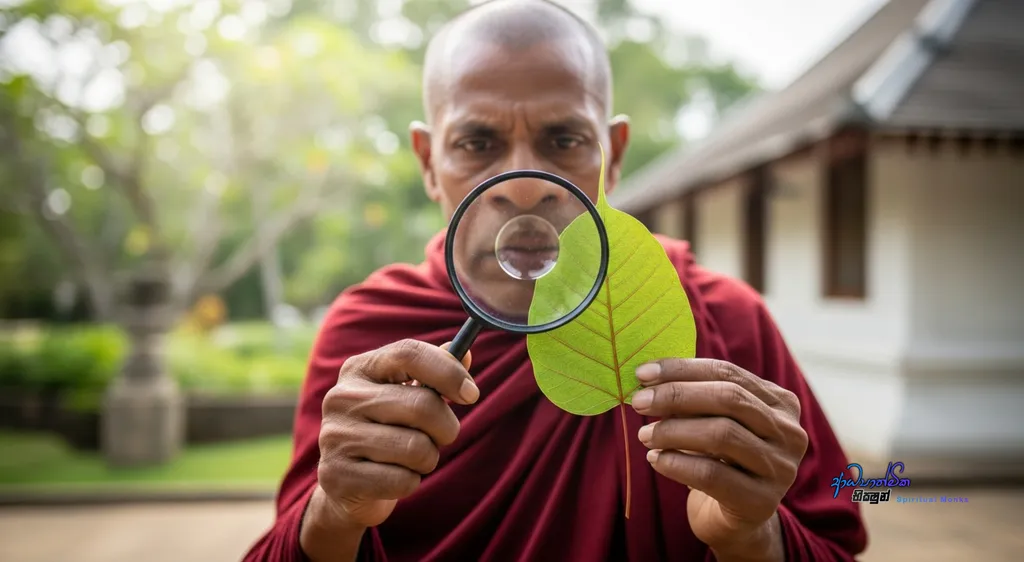
Mindfulness: A Magnifying Glass for the Mind
When we develop mindfulness, or what is known in the Buddhist tradition as Sati, we are not trying to erase our thoughts. Instead, mindfulness serves a different purpose: it helps us to recognize our thoughts. Think of it like a magnifying glass. You use it to see tiny details that were already there but invisible to the naked eye. Similarly, mindfulness is a tool that allows the vast and subtle world of our own thinking process to become visible to us.
It is an instrument of observation, like a microscope revealing a hidden ecosystem of microorganisms. Mindfulness simply illuminates what is occurring in the mind, moment by moment. It doesn’t destroy what it sees; it merely reveals it with clarity.
Recognizing the Variety of Our Thoughts
As we use this ‘magnifying glass’ of mindfulness, we begin to identify the many different types of thoughts that arise. We can’t categorize them into simple boxes, but broadly, we can see thoughts we might label ‘good’ and thoughts we might label ‘bad’. More specifically, we see thoughts rooted in desire, which in Buddhism is called Raga (greed or lust). We see thoughts rooted in aversion, called Dosa (hatred or ill-will). And we see thoughts rooted in confusion, known as Moha (delusion or ignorance).
Alongside these, we also recognize their opposites: thoughts of generosity (alobha), thoughts of loving-kindness (adosa), and thoughts of wisdom (amoha). We see jealousy and its absence. We see anger and compassion. We see kindness and cruelty. The mind is a constant flow of these varied mental states. This is the nature of the untrained mind. These patterns, especially the unwholesome ones, are known as defilements, or kilesas. When we are unaware, we either cling to them or push them away. This very process of clinging and aversion is what fuels our journey through the cycle of rebirth, a concept known as Samsara.
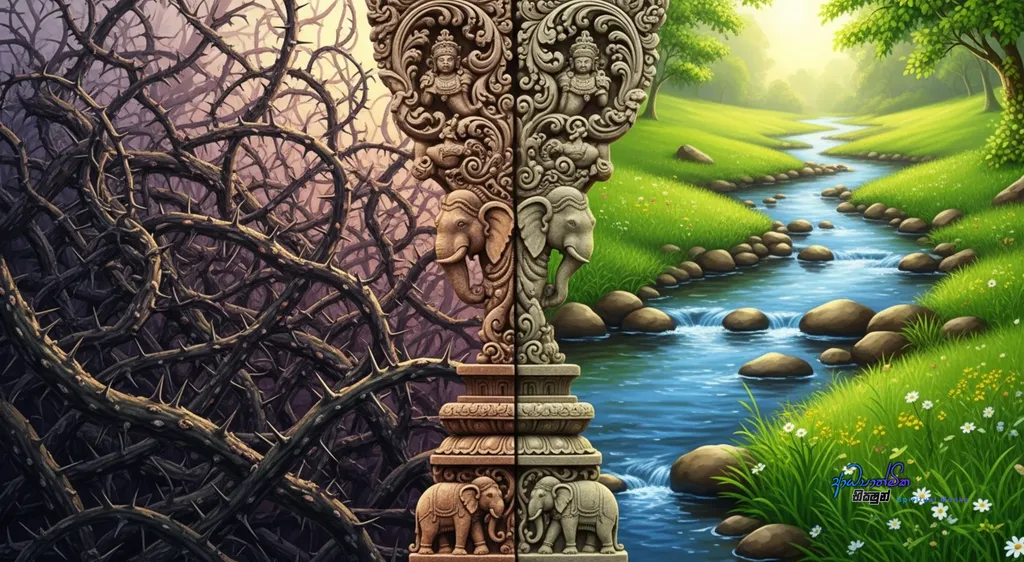
What We Truly Aim to Eliminate: Not Thoughts, but Their Unwholesome Roots
So, let’s be very clear: we never try to forcibly stop or eliminate thoughts. It is not possible, nor is it the goal. The practice of mindfulness helps us identify our thoughts. Once identified, particularly on the path to liberation, or Nibbana, a certain group of thoughts naturally begins to cease. However, not all thoughts disappear.
The thoughts that fade are those that bind us to the cycle of suffering, the ones fueled by greed, hatred, and delusion. When we train in mindfulness correctly, as taught in the Four Foundations of Mindfulness (Satipatthana), these are the thoughts that are uprooted and released. Everyday functional thoughts, what to eat, where to walk, what to wear, do not disappear. We need them for our daily life. To eliminate them would make it impossible to function.

The Mind of an Enlightened Being: Thoughts Without Suffering
To understand this better, let’s consider the mind of a fully enlightened being, an Arahant. Even these perfected ones, who have completely destroyed the defilements, still have thoughts. According to the deeper teachings of the Abhidhamma, their minds produce what are called ‘functional thoughts’ or kiriya citta. These are not karmically potent thoughts; they are simple, direct, and free from the stain of greed, hatred, and delusion. An Arahant thinks about walking, eating, teaching the Dhamma, or putting on their robes. But these thoughts are not colored by attachment or aversion.
They can see, hear, smell, taste, and touch, and thoughts related to these experiences arise. The crucial difference is that they do not cling or resist. They do not generate craving or hatred. The roots of suffering have been completely eradicated. Their thoughts are simple, free, and unburdened. To get a feel for this, think of a simple, neutral thought you might have, like ‘I need to stand up and walk to the door.’ Notice how that thought is free of clinging or aversion. An Arahant’s mind is consistently in this state of unburdened clarity, which is why their cycle of rebirth has ended.

The Subtle Trap of Attachment to ‘Good’ Actions
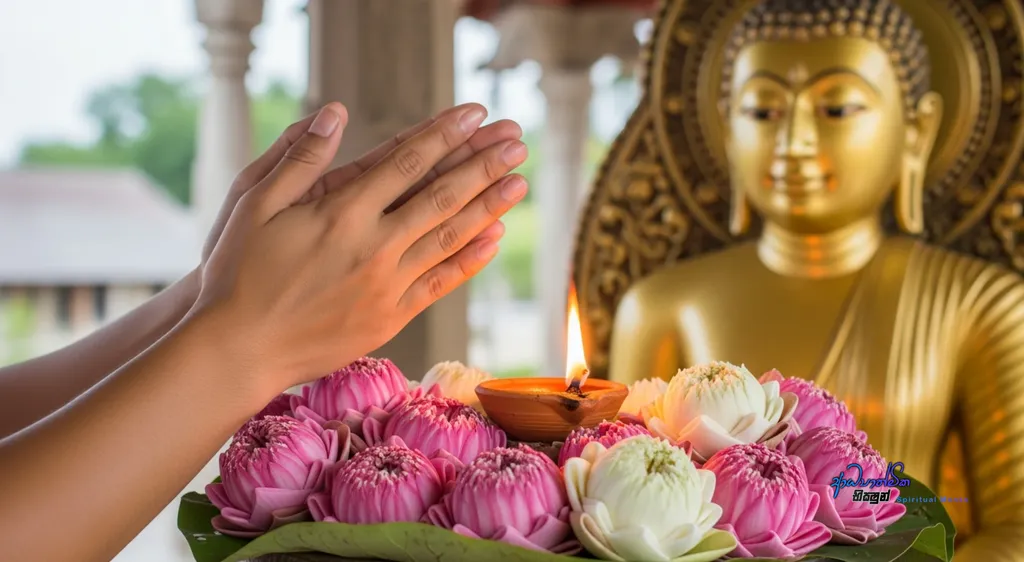
This principle applies not only to negative states but also to positive ones. On the path to liberation, we must even be mindful of our attachment to ‘good’ things. For instance, a person might become attached to the act of making offerings, like lighting lamps or presenting flowers (an act called amisa puja). They might do it with the hope of a favorable rebirth in a heavenly realm. While this is a wholesome action, the clinging itself becomes a form of fuel that keeps the engine of Samsara running.
An Arahant may also perform such offerings, perhaps placing flowers before a great stupa like the Ruwanwelisaya. However, their mind perceives it as a simple, functional act. They do it out of reverence and to inspire others, not to gain any personal reward. They know that no new karmic results (vipaka) are being created. They do it to help preserve the path for future generations who may need these external supports to avoid lower realms and find their way to a good destination. Therefore, a person walking the path to Nibbana can perform countless wholesome deeds without attachment. The moment you cling, it becomes fuel for another life.
Cutting the Fuel, Not the Engine: The True Goal
So, as we practice, we are not trying to stop thinking. We are trying to stop the fuel supply for suffering. The fuel is clinging and aversion, rooted in greed, hatred, and delusion. As these roots are gradually weakened and finally eliminated, the unwholesome thoughts naturally diminish. The fuel for rebirth runs out. When the fuel is completely gone, we say that person has realized Nibbana and become an Arahant, a Buddha, or a Pacceka Buddha. The gradual reduction of this fuel marks the stages of enlightenment, such as Stream-enterer (Sotapanna) or Once-returner (Sakadagami).
There are states of deep meditation, known as Jhana, where ordinary thoughts temporarily cease, and only a single, unified state of mind remains. But once the meditator emerges from that state, if they are not yet enlightened, the ordinary thoughts of the sense-world will return. Thoughts are necessary for the functioning of this physical body, which Western science attributes solely to the brain. But the Eastern spiritual traditions, including Buddhism, understand that the mind (manas) is the driving force that operates through the brain. A dead body has a brain, but no thoughts, because the mind is no longer present.

From Theory to Reality: The Call to Practice
Ultimately, this is not something to be understood merely by listening. This knowledge can only be truly realized through practice. I encourage you, if you are new to this path, to explore the practical teachings. Engage with practices like ‘Watching the Mind in Silence’ or the ‘Four Foundations of Mindfulness.’
Commit to this exploration with determination, deciding to practice until your very last moment. Through direct experience, you will begin to see for yourself. You will notice, ‘I am not as reactive as I used to be. Thoughts of anger are less frequent. Thoughts of desire have less power.’ Many young people who practice tell me this directly.
They see an old enemy and feel no hatred. They see a beautiful person and feel no obsessive desire. The thoughts tied to attachment and aversion have diminished. What remains is a simpler, more peaceful mind, thoughts about meditating, cleaning your space, or washing your face. You will find a profound freedom and happiness in this simplicity.
May the power of the Buddha, Dhamma, and Sangha, the Triple Gem, bless you with the strength to understand these points and put them into practice.
We invite you to walk this path with us. Read our teachings, and most importantly, apply them practically in your own life. as you practice, questions will naturally arise. Please feel free to share your experiences and questions in the comments below, via email or contact form. I will do my best to offer guidance in future talks based on your progress. For now, begin this practice with an open heart and a mind free from expectation. Cultivate it correctly, and may you find the clarity and peace you seek.
Thank you for joining us. We hope this blog will be of great benefit to your spiritual journey.
May you all be well and happy.
May the blessings of the Triple Gem be with you all!.


