


Categories: Monastic Training Discourse Series
May the blessings of the Triple Gem be with you all!
Today, we are here to talk about the monastic life, the path of a monk. For many of you, this is an entirely new experience. You are about to enter a new world, a new way of being that you have not encountered before. Your mind and body will need to adapt to this new role. This journey of becoming a Buddhist monk begins with a simple, yet profound act: shaving the head.
For some, this is a minor change, but for all, it is symbolic. On the day of ordination, the first few locks of hair are cut by a senior monk, and with it, you are given a theme for meditation. This reflection starts with the hair, or kesā in the Pali language, marking the first step in turning your attention inward. This initial meditation is a vital part of the process, which is why we ask you to let your hair grow a little, so this teaching can be tangibly felt. But do not worry if you cannot; the inner work is what truly matters.
This is not a formal sermon where I speak and you simply listen. Instead, let’s have a discussion. If this were a one-way lecture, some minds might drift, some might even fall asleep. I want all of you to be engaged, to be curious, and to truly understand what we are about to undertake together.

What Do We Think a Monk Is? Exploring Our Preconceived Notions
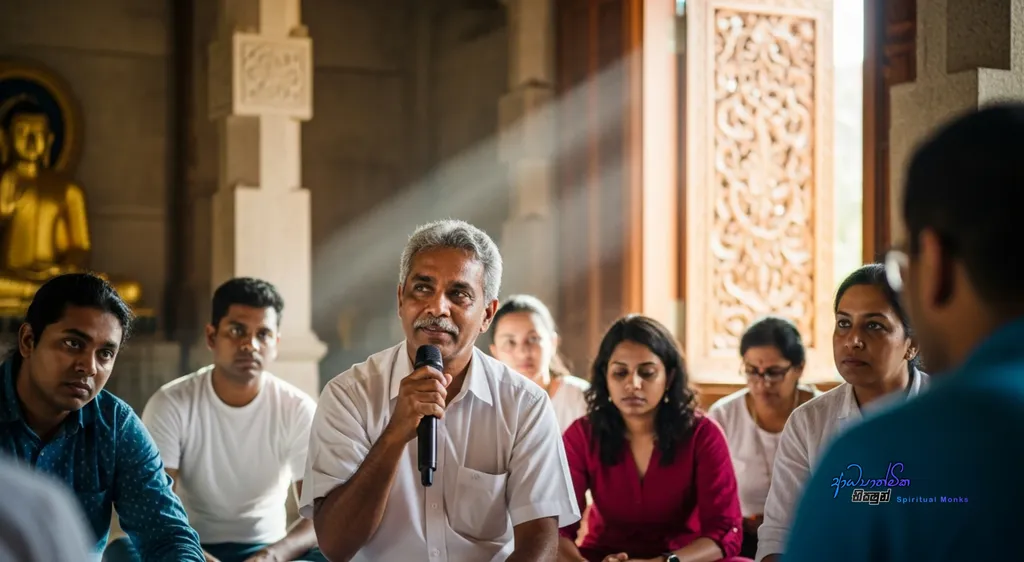
Before we go further, let’s explore a fundamental question: What is your idea of a monk? What have you seen and understood the monastic life to be? Let’s hear your thoughts.
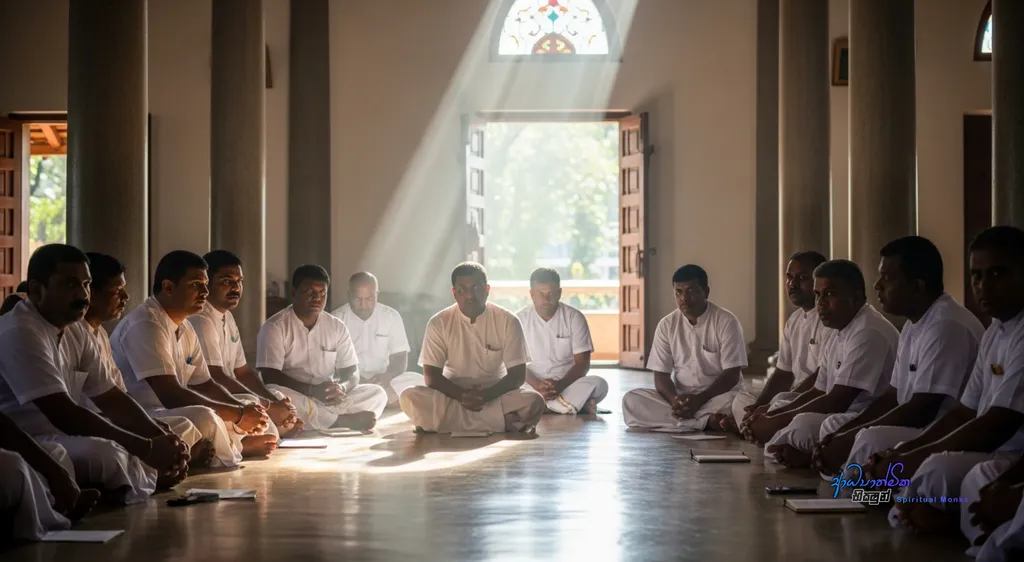
One person shared that it is about leaving the lay life to pursue a transcendent, or lokuttara, life. Another described the external image: someone with a shaved head, wearing robes, speaking gently, abstaining from evening meals, a pleasant and serene figure. Someone else mentioned the inner goal: walking the Noble Eightfold Path to understand the Four Noble Truths and attain Nibbāna, or liberation.
Another valuable insight was shared: a monk is someone who has abandoned worldly distinctions like caste, social status, and even the labels of ‘forest-dweller’ or ‘village-dweller’, living in a unified spiritual role. These are all valid observations based on what you have seen, heard, and experienced in your lives.
Beyond Appearances: The Buddha and the Arahants
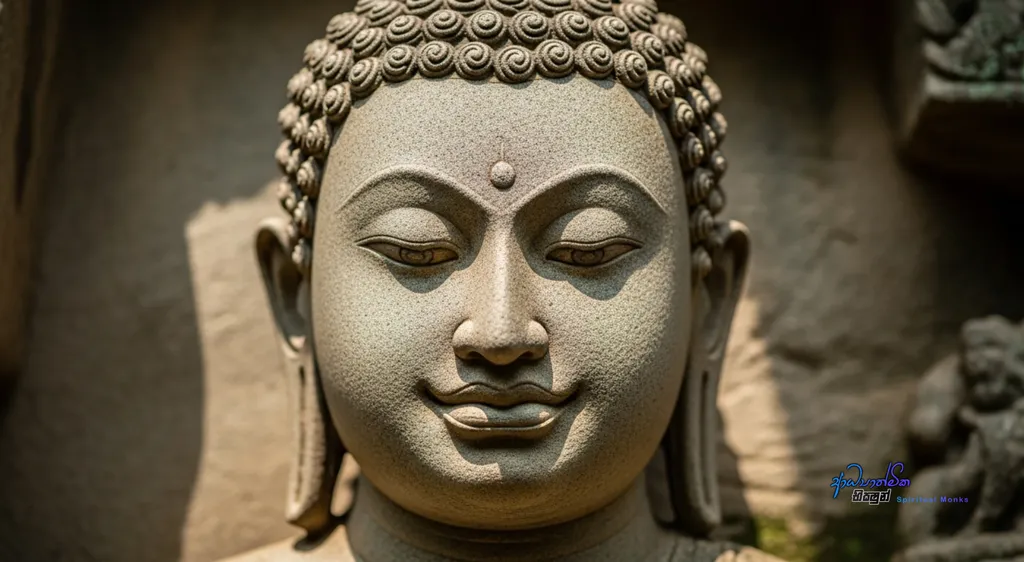
You all have brought up powerful images, but let’s look deeper. Many mentioned a shaved head. However, the Buddha himself is never depicted as having a completely shaved head. His hair was said to be of a specific length, never growing longer or shorter, a result of his perfected spiritual qualities, or pāramitā. While some traditions refer to followers of the Buddha as ‘shaveling monks’, this term was often used by outsiders for the disciples, not necessarily the Buddha, who was addressed as ‘Gotama the Ascetic’ (Samaṇa Gotama). Our reverence leads us to call him the ‘Buddha’, just as we use respectful titles for other religious figures.
So, can we measure a monk by his hair? Of course not. Some of you here have little hair; does that make you a monk? No. Shaving one’s head does not make one a monk, and having grown hair does not disqualify one. In the Buddha’s time, a barber would visit the Jētavanārāma monastery only once a month. Great enlightened beings, like the Arahant Mahā Kassapa, were sometimes seen with grown hair and beards. We see this reflected in some statues of the enlightened ones. The point is not the hair, but the inner state. The external rules have their place, but we must not cling to them as the essence.
The Trap of Judging by Speech and Behavior
Many of you also mentioned a calm and restrained demeanor. You spoke of gentle speech and mindful actions. This is certainly an ideal. However, we must be careful not to make this our only measure.
Consider the story of the Arahant Pilindavaccha. He was a fully enlightened being, yet he had a habit from 500 past lives as a high-caste Brahmin of addressing people as ‘outcast’ (vasala). Imagine meeting a monk today who spoke like that. You would immediately question his spiritual attainment. But in his case, it was a deeply ingrained verbal habit, completely disconnected from any inner defilement. His mind was pure. This teaches us that we cannot always judge a person’s inner state by their words alone.
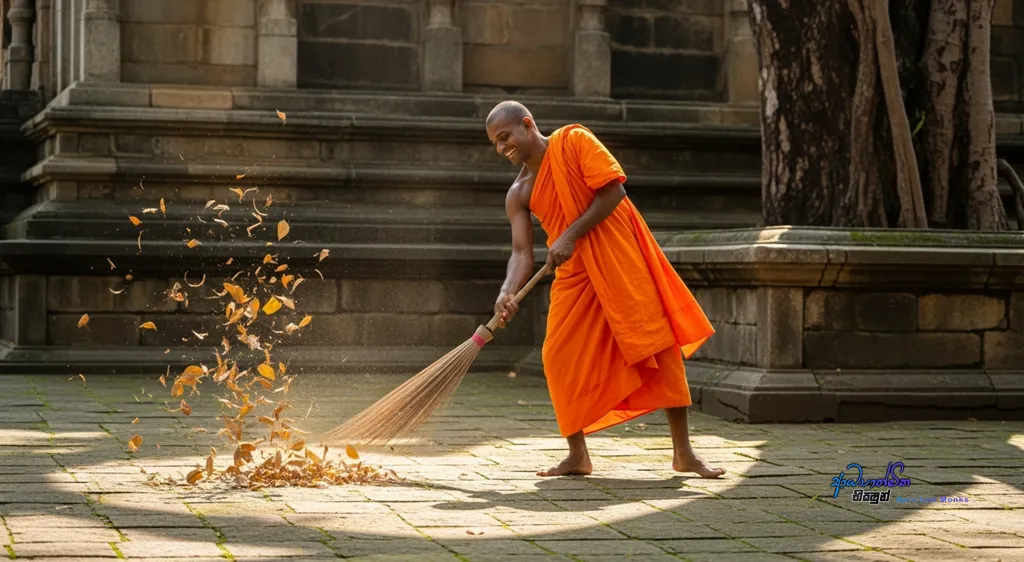
Similarly, there is a story of King Dutugemunu searching for Arahants. One enlightened monk, hearing the king was approaching, wished to avoid the fame and offerings that would follow. He quickly ran into the courtyard, disheveled his robes, and began sweeping frantically like a madman.
The king saw him, thought, ‘What kind of monk is this?’ and turned back. This Arahant acted this way because, for a liberated being, excessive material support is a burden, not a blessing. They cherish a simple life (alpeccha). Just as you might get tired of your favorite food if you are force-fed it, the enlightened ones feel burdened by excess. So, we cannot judge by a person’s outward behavior either. The slow, measured walk is not the ultimate sign of a monk.
The Danger of Fixed Views: The Greatest Obstacle
This brings us to the most crucial point before becoming a Buddhist monk. All these ideas we have, that a monk must look a certain way, speak a certain way, or act a certain way, are what we call diṭṭhi, or fixed views. If we enter monastic life holding onto these rigid mental pictures, we set ourselves up for failure. It becomes an obstacle to even attaining the first stage of awakening (Sotāpanna), let alone developing our meditation.
What happens when you ordain with a fixed view? You will look at the monk next to you and judge him based on your internal checklist. ‘He is not living up to my standard.’ You start labeling him a ‘shaveling monk’ in your mind. He, in turn, is judging you by his own set of views. This creates conflict and completely misses the point of renunciation.
You are here to let go of everything, your homes, your families, your possessions. But the most difficult thing to let go of are your views. Before you put on the robe, you must put down these ideas. You must be prepared to enter this life completely empty.
The Empty Person: The True Meaning of a Bhikkhu
So, who is a true Bhikkhu, a true monk? It is the one who has become an empty person. Someone who enters this path completely empty of preconceived notions. An empty person has no rigid ideas about shaved heads, quiet speech, or perfect stillness. He does not waste his energy thinking, ‘That monk is always in the kitchen,’ or ‘This one is always watching me.’ He has let go of all of it.
This is the middle path the Buddha taught. We can so easily fall into extremes, thinking, ‘This is a monk,’ and ‘This is not a monk.’ We must establish a new definition for ourselves: a monk is one who dwells in emptiness. This is a state of profound freedom. The Buddha was the ultimate empty person, free from all views, dwelling in complete liberation. That is the essence of becoming a Buddhist monk. That is the goal you should hold in your heart.
Wisdom from an Ancient Text: Why Our Attachments Bring Sorrow
This truth is beautifully illustrated in a dialogue from the scriptures between Māra, the tempter, and the Buddha. Māra represents the voice of worldly attachment. He says:
‘He who has sons rejoices in his sons. He who has cattle rejoices in his cattle. For a man, attachments (upadhi) are the source of his joy. He who has no attachments does not rejoice.’
Māra is speaking a worldly truth. We find happiness in our children, our wealth, our homes, our technology. Without these things, we feel empty and sad.
But the Buddha reveals a deeper, more profound truth in his reply:
‘He who has sons sorrows because of his sons. He who has cattle sorrows because of his cattle. For a man, attachments (upadhi) are the source of his sorrow. He who has no attachments does not sorrow.’
This is the heart of the matter. The very things that bring us fleeting joy are the same things that bring us deep pain. You raise your children with expectations, but they grow up to live their own lives, and you feel sorrow. Your wealth can be lost, your property damaged, and you feel grief. The Buddha once said, ‘”I have sons, I have wealth,” so the fool worries. But in truth, he does not even have himself. How then can he have sons? How then can he have wealth?’
Your own body is not under your control; it aches, it sickens, it resists you. If you cannot even control yourself, how can you possess anything else? The source of all suffering is this clinging, this holding on. Like clenching your fist around a glass until it hurts, the pain comes from the grasping. When you let go, there is ease, there is freedom. This is the freedom you are seeking in becoming a Buddhist monk.
Questions from the Path: Clarifying the Way Forward
You have asked some very important questions. One of you pointed out that in society, we do see monks who act in unrestrained ways and are sometimes corrected by their elders. You asked if this means the external standards we discussed are, in fact, necessary.
This is an excellent point. The simple answer is that such problems arise precisely because those individuals have not become ’empty persons.’ They have carried their worldly habits and views into the monkhood. For the first twenty years of the Buddha’s dispensation, there were no disciplinary rules, or Vinaya. Why? Because the community was composed of people who were already empty of defilements. The rules were only established later, as people with various views and unresolved issues joined the Sangha.
Another of you asked about the robe itself. Does wearing the robe make one a monk? As we’ve discussed, it doesn’t. A uniform doesn’t automatically transform a person. The true transformation is internal. The first and most vital qualification is to cultivate this inner emptiness. You wear the robe as an expression of your commitment to that inner work within a conventional society.
Finally, a young man asked a very sensitive and practical question: How does one let go of attachments, especially when one is a sensitive person? It is true that this cannot always be done at once. For some, it is a gradual process. This is exactly what we will train in.
Through the practice of meditation, particularly the Four Foundations of Mindfulness (Satipaṭṭhāna), we will show you, step by step, how to loosen these bonds. You will learn how to live with relationships without being bound by them. Many laypeople in the Buddha’s time attained high levels of awakening while still living in the world. So do not worry; the path is practical, and we will guide you.

The Rare and Precious Opportunity of Ordination
As we conclude our discussion, remember the phrase you chant: Dullabhā pabbajjā, ‘Rare is the opportunity for ordination.’ Reflect on the journey it took for you to be here for just these few days. It was not easy. This difficulty itself shows the value of what you are doing. In life, anything truly worthwhile requires effort and sacrifice.
You have fought many battles to be here, perhaps getting permission from family, overcoming personal doubts. This struggle is a testament to the preciousness of this path. Embrace the beautiful, simple, and empty life that awaits you. Do not spoil this profound freedom by clinging to old views and judgments. Live with an open heart and an empty mind.
We have shared in this wholesome discussion, and you have cultivated merit through your sincere intention and practice. Let us share this merit with all divine beings.
May we also share these merits with all our departed relatives, from this life and countless past lives.
Finally, may the merit from listening to and discussing these profound teachings be a condition for all of us to realize the ultimate peace of Nibbāna.
We invite you to walk this path with us. Read our teachings, and most importantly, apply them practically in your own life. as you practice, questions will naturally arise. Please feel free to share your experiences and questions in the comments below, via email or contact form. I will do my best to offer guidance in future talks based on your progress. For now, begin this practice with an open heart and a mind free from expectation. Cultivate it correctly, and may you find the clarity and peace you seek.
Thank you for joining us. We hope this blog will be of great benefit to your spiritual journey.
May you all be well and happy.
May the blessings of the Triple Gem be with you all!.


