


Categories: Dhyana: Practical Training
May the blessings of the Triple Gem be with you all!
Today, through our spiritual teachings, I want to explore the rather unusual topic you may have seen. (Jhana meditation) I kindly ask that you read this article in its entirety before forming a conclusion. Absorb the message, reflect on it, and then feel free to share your thoughts.
What I am about to share is incredibly important for your future meditation practice and spiritual development, which is why I introduce it with such care. You might have noticed that the title mentions substances like cannabis, heroin, ice, and alcohol. I’ve also used the word Jhana, suggesting a pleasure greater than what these drugs can offer.
This might seem strange. Some of you may grasp the meaning instantly, while for others, it might be a new and curious idea. This teaching is for both groups. Let me be clear from the start: this is not a drug prevention program. It is, as the title suggests, a guide to something far superior, the profound states accessible through meditation. I invite you to read this teaching all the way to the end to understand its full depth.
Understanding the Universal Search for an Escape
First, let’s talk about why substances like alcohol and drugs are so prevalent in our world. In Sri Lanka and across the globe, we find a wide variety of drugs known by many names: marijuana, also called ganja or kansa, heroin, ice, kush, and various injectable substances. We also have intoxicating drinks like arrack, brandy, whiskey, and wine, as well as cigarettes.
Why do these things exist, and why do people use them?
This is a question especially relevant for the many young people, young men and women, university students, professionals, both in Sri Lanka and abroad, who follow these teachings and practice meditation independently. Why do people, regardless of their background, get drawn to these things? There must be a reason, a perceived benefit. We need to explore the root cause.
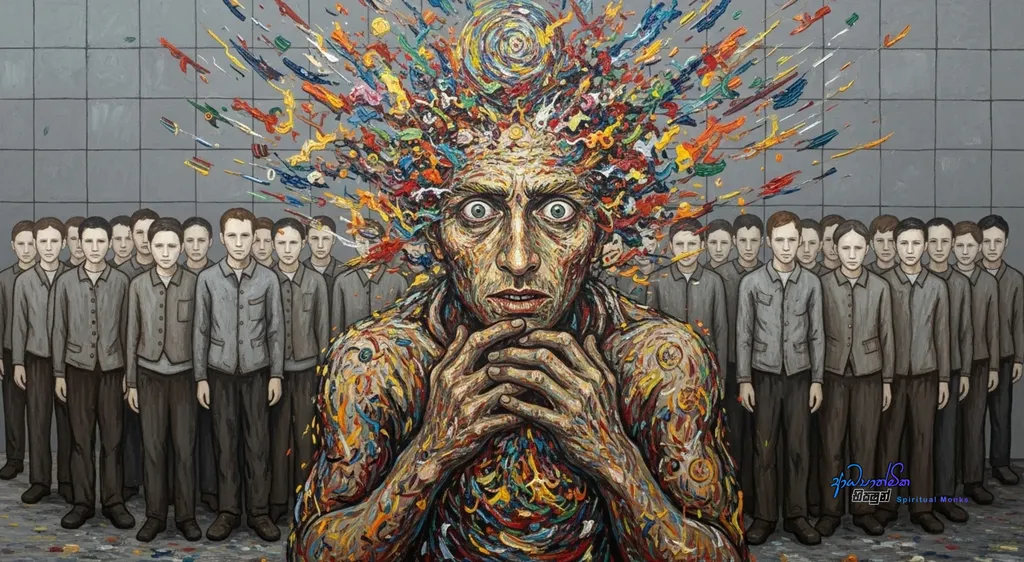
The answer lies in the pressures of life. From the moment we begin to understand the world as a child until the day we die, life presents us with countless challenges. These challenges don’t discriminate based on social status. A deep, pervasive stress, which in Buddhism we call Dukkha, touches everyone. It’s not just pain, but a fundamental sense of unsatisfactoriness and pressure that runs through life.
The Many Faces of Modern Stress
This mental pressure, or stress, comes from all directions. For a student, it’s the endless cycle of studying for exams. For an employee, it’s the demands of their job. For a business owner, it’s the weight of responsibility. It also arises from family life, conflicts between husband and wife, or worries about children. Even parents fighting can create immense pressure for a child.
In today’s world, social media adds another layer. We see friends or family on Facebook or Instagram posting pictures of what looks like a perfect life. We see their happy family photos and travels, and we start comparing. We think, ‘They have such a good life, why don’t I?’ This comparison breeds dissatisfaction and more pressure.
Then there are economic hardships. In a developing country like Sri Lanka, high taxes and rising costs of living create financial stress. Businesses struggle, people can’t pay their bills, and sometimes there isn’t enough to eat. Even those who do hard physical labor, like masons building our homes, often turn to alcohol at the end of the day to cope with their exhaustion. The common thread in all of this is the search for relief from an underlying unhappiness. No one in society is truly, constantly happy. Many pretend to be, but deep down, they are seeking a way to relax and release this constant pressure. They are looking for an escape.

The Temporary Fix and Its Ultimate Limits
So, how do these substances offer relief? Let’s take alcohol (arrack, whiskey, brandy).
Are they delicious? No, they have no pleasant taste; people often drink them with aversion. Do they smell good? Not at all; the smell can be nauseating. A soft drink is far more pleasant, but it doesn’t relieve stress. However, when someone drinks alcohol and becomes intoxicated, their mind enters a different state. The stress and pressure are temporarily suppressed. They enter a state of aversion, an escape that provides what some might call a ‘chill’ or a ‘buzz.’ I’m not saying this to endorse it, which is why I urge you to understand the complete message of this article.
This intoxication works by weakening the connection between the brain and the mind. Thoughts begin to function differently, without mindfulness. The person is living in another world. This altered state is what people desire. However, this effect is incredibly short-lived, lasting maybe 12 hours at most. It’s a temporary solution to a deep-seated problem.
I know people who frequent nightclubs daily, especially in Western countries like Australia, where it’s almost a social norm to go out on a Sunday. Why? To release the stress accumulated from a week of hard work. They dance and drink to forget the pressure. But this is a temporary exercise. The core issue remains. This is the fundamental reason people turn to these things: to manage mental pressure, to relax, and to search for happiness, however fleeting. This happens across all demographics, young and old, educated and uneducated, rich and poor. Many who are addicted to these substances will recognize the truth in what I’m saying as they read this.
A Superior Solution: Introducing the Bliss of Jhana Meditation
Based on my own life experiences and those of the spiritual practitioners who meditate with me, I want to share a far superior alternative. Some of the people who follow our teachings on the ‘Adhyatmika Bhikshun‘ YouTube channel and the WebSite are actively using substances while also learning to meditate. I advise them not to try and quit abruptly if it’s too difficult. Instead, I tell them to continue their meditation practice. As their meditation deepens, the craving for substances will naturally fall away. This is a certainty. I also hear from people trying to help their friends escape addiction, and I offer them practical advice, which I will cover in a separate teaching.
The true, lasting solution is found in what we call Jhana meditation. A Jhana is a state of deep meditative absorption characterized by profound peace and bliss. The pleasure and lightness experienced in these states are unimaginable, far surpassing any feeling you could get from a drug. For instance, the second Jhana is a state filled with Pīti, which means ‘rapture’ or ‘joy.’ It’s an incredible lightness, a happiness you can’t even fathom. All your problems simply vanish.
A Journey Through the Levels of Meditative Joy
I want to share the experience of someone from another country who used to take a certain type of injection that made them feel like a strange beetle was moving inside their body, a sensation they sought for pleasure. Through meditation, this person experienced the second Jhana and told me that the joy of Pīti was infinitely greater than that drug-induced feeling. This is the power of Jhana meditation. It’s a place of supreme bliss. The first and second Jhanas are filled with a happiness that is difficult to describe in words. I’m using simple language so that everyone, especially young people, can understand without getting lost in deep terminology.
If the first two Jhanas are so blissful, imagine the others. The third Jhana is a state of Sukha, or ‘happiness,’ that goes beyond the joy of Pīti. It is a profound bliss that you feel constantly, 24 hours a day. The body feels so light it’s as if it’s not even there. You don’t even feel the need to eat. The fourth Jhana is even more sublime.
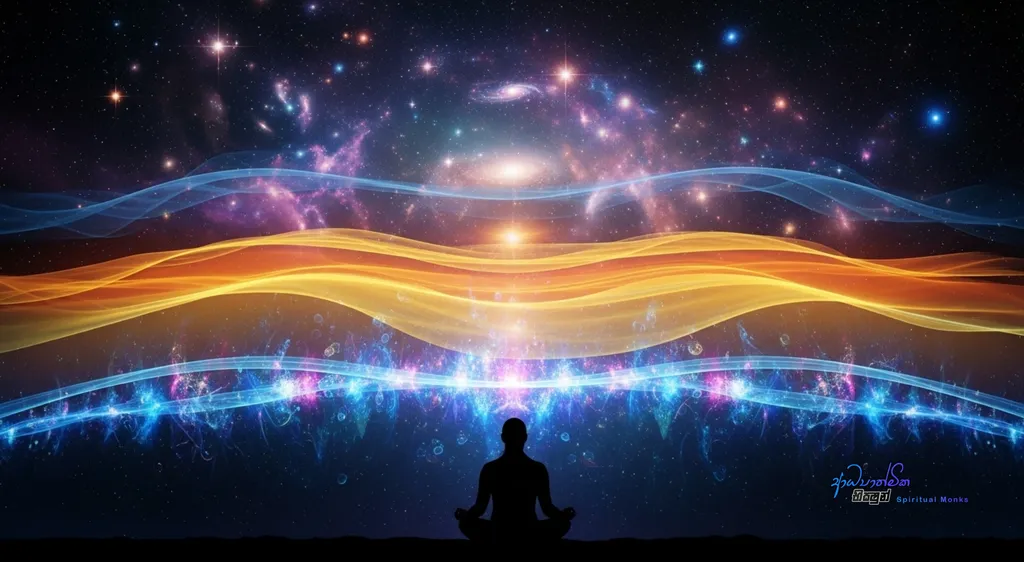
Then we come to the formless Jhanas. The first of these is the Ākāsānañcāyatana, or the dimension of infinite space. This experience is similar to what some people report when using marijuana, feeling like they are floating in the sky or on the moon. But there is a critical difference: the drug user is in a state of mindlessness, whereas the meditator in this Jhana is fully aware and mindful. After coming out of this meditation, you can feel like you are floating through your entire day. You do your work with an incredible lightness. This is a state of unimaginable comfort and pleasure but experienced with perfect clarity.
As you progress to the higher Jhanas, like the dimension of infinite consciousness (Viññāṇañcāyatana), the dimension of nothingness (Ākiñcaññāyatana), and the dimension of neither perception nor non-perception (Nevasaññānāsaññāyatana), the experience deepens. In these states, it can feel as though only your heart is beating. You are not dead but temporarily abiding in the Jhana.
There are no sounds, no memories. When you emerge from even the first Jhana, you begin to question the pleasures of the sensual world. You think, ‘What did I really gain from alcohol, cigarettes, drugs, parties, making money, or even family life and relationships?‘ The bliss of the eighth Jhana is so immense that all worldly pleasures seem utterly meaningless in comparison. You can remain in these states for days, I know people who can stay in a single meditation posture for three days, sustained by this profound peace.
This Path Is for You: No Special Vows Required
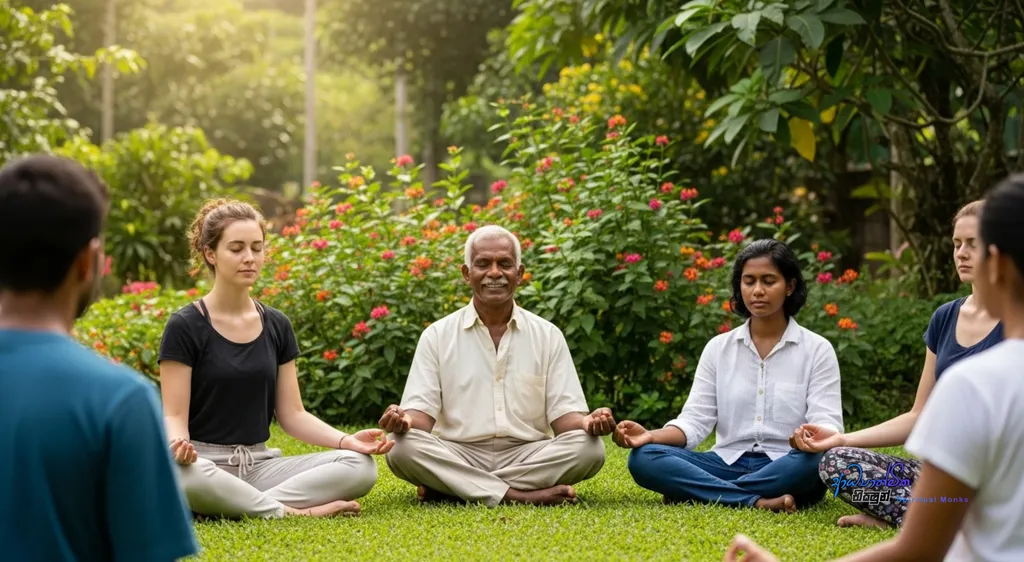
I share these things with joy and lightness because I want you to know this is possible. You don’t have to be a monk or go live in a forest to experience this. The advantage of monastic life is freedom from worldly ties, but even if you are entangled in responsibilities, you can still attain this bliss. Many people ask me if they need to be celibate (practicing Brahmacharya). No, none of that is necessary. If you feel the inspiration to uphold certain precepts, then do so. But you can start right where you are. Simply develop your meditation.
This path is for everyone: people in family life, those with children, married couples, parents, students, and university attendees. I know many university students, both male and female, turn to drugs because of academic pressure. I am not saying everyone does, but it is a significant number. I invite you to get ‘addicted’ to this instead. Get addicted to Jhana meditation.
The Buddha himself said that one who becomes addicted to Jhana cannot be easily pulled away. Once you are hooked on this, you are truly hooked. It is like taking heroin or ice, but it is a million times more powerful and profound. From the first Jhana to the eighth, you will discover a pleasure and a peace that is beyond all comparison. So please, strive to experience this bliss for yourself. It does not take a long time to develop these states.
Awakening Your Potential: From Inner Peace to Outer Service
As you progress on this path, especially towards the eighth Jhana, your clarity of mind, sometimes called the ‘third eye,’ will open up. I see comments where people challenge me, asking to see winning lottery numbers or the PINs on their debit cards. These things can be done.
Even agencies like the CIA are training people in meditation to read the minds of terrorists. But I will not teach these skills, because they can be used for harm, like stealing. In the future, I will provide teachings on how to see what is coming in the next moment in a way that is wholesome and not for personal gain. Our foolish people in Sri Lanka only value these sensational powers.
For now, I urge you to strive for the eight attainments, the Ashta Samāpatti, which refers to these eight Jhanas. Meditate, be diligent. The goal is to first find your own liberation, your own ‘fun,’ your own ‘joy,’ your own supreme happiness. Once you have established yourself in this peace, then you can work to serve your country, your religion, and help guide others onto this path.
Your Journey Begins Now: A Final Blessing
I believe that if you have read this article from beginning to end, you now understand the message I am trying to convey. There is a place of strange and wonderful happiness, a place of equanimity where you can feel like you are floating in the sky. All you have to do is make the effort to get there.
So, this concludes my simple talk on the topic, ‘Jhanas with more pleasure than Ganja, Heroin, Ice, and Alcohol.’ Your task is to become addicted not to those substances, but to Jhanaa meditation, and to keep rising higher and higher. Understand these points and commit to your practice. Don’t waste your life. Don’t waste your time. Strive like a lion to develop your meditation.
Read these teachings again and again. If there are things you don’t understand, you can reach out to us with a voice message or via WhatsApp to clarify your questions and get a foothold in this spiritual world.
May the power of the Triple Gem bless your meditation practice. May you attain the Jhanas and higher mental powers. May your brain’s neurons open up to wisdom and the path to Nibbana (liberation). May all sleepiness and laziness disappear, and may you be able to practice without any obstacles or hindrances.
We invite you to walk this path with us. Read our teachings, and most importantly, apply them practically in your own life. as you practice, questions will naturally arise. Please feel free to share your experiences and questions in the comments below, via email or contact form. I will do my best to offer guidance in future talks based on your progress. For now, begin this practice with an open heart and a mind free from expectation. Cultivate it correctly, and may you find the clarity and peace you seek.
Thank you for joining us. We hope this blog will be of great benefit to your spiritual journey.
May you all be well and happy.
May the blessings of the Triple Gem be with you all!


