


Categories: How to Concentrate the Mind?
May the blessings of the Triple Gem be with you all!
Welcome. Through our spiritual teachings, I wish to share a reflection with you all today. Many people, of all ages and from all walks of life, have been practicing meditation with us for a long time. Many of you are already experiencing results; you feel them, and you understand things in a new way. From the dozens of teachings we have shared, many have listened, practiced meditation, and shared the fruits of their efforts. You can often see these experiences and insights shared in the comments, where people express what they have learned.
Yet, while many are progressing, some are still in the beginning stages. A very common question for those starting out is the difficulty to concentrate the mind. I have offered teachings on this before, and I encourage you to explore those as well. However, today, I want to clearly explain one specific message: Do not rush to concentrate the mind.
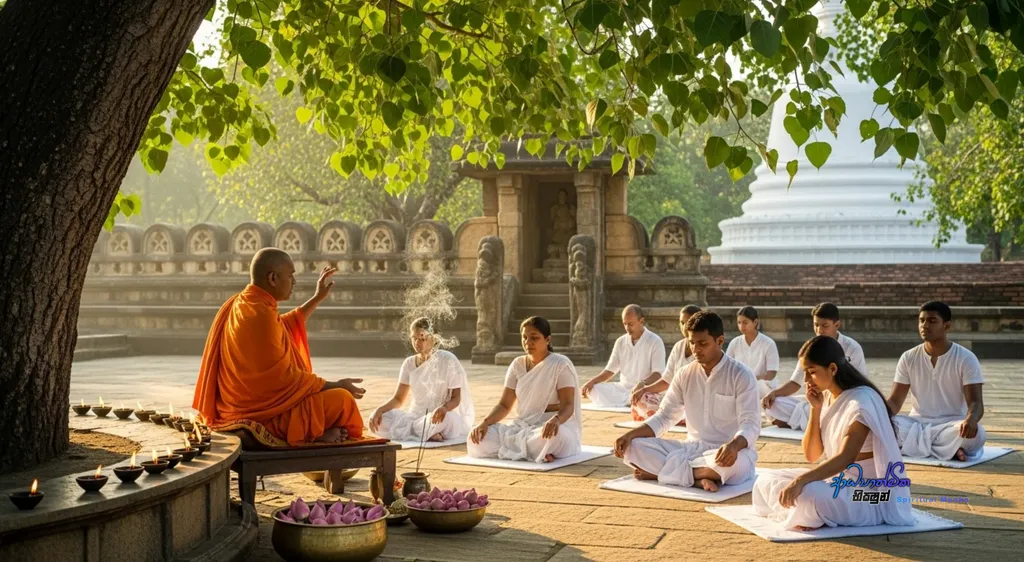
The Wisdom of Patience: Why Rushing Hinders Progress
When we give a teaching, we do not rush. We remain calm and unhurried. If you panic, you cannot accomplish anything worthwhile. Please, read closely to what I am sharing. There is no harm in returning to this teaching again and again; in fact, it is beneficial. Each time you engage with it, you will understand it on a deeper level. The second time you read it, you’ll grasp more than the first. The third time, even more. It’s like reading a book, each reading reveals new layers of meaning.
By revisiting these ideas, you will find them incredibly valuable for your practical meditation. All of our teachings are designed to be practical. As you meditate, re-reading them will provide answers to the questions that arise. You will recall, ‘Ah, in that teaching, this point was explained.’ This happens because the guidance is already within you.
Beyond Worldly Haste: The Spiritual Pace
As I said, we do not rush. In life, we should not rush anything. One of our great weaknesses, which we must recognize, is our tendency to be hurried. We want everything to happen instantly; we expect immediate results. This pressure we put on ourselves actually traps us. In the worldly sphere, you might be able to force some things and get by, though many attempts end in failure. The material world is a mix of success and failure.
However, the spiritual path cannot be traveled this way. You cannot rush spiritual development. This is the first and most important point to remember. As a teacher sharing these spiritual truths, I am never in a hurry. When I prepare a teaching for you, I do it with a sense of calm. If I were to rush, I would lose the ability to speak clearly, and the correct words and ideas would not come. Therefore, I share my experiences and insights freely and with ease. When you read and put these teachings into practice, you too must do so with a sense of freedom, without any feeling of hurry or pressure.
The Mystery of Our Path: Results in Their Own Time
Let’s reflect on our journey through Samsara, the long cycle of rebirth. We don’t know if we have meditated in past lives. We have no memory of our previous spiritual background. Yet, I have given you three resolutions, or adhittāna, to make before you begin your practice. These resolutions are designed to help you draw upon any latent strengths from past efforts and awaken your innate spiritual habits.
For some who start with these resolutions, results appear in a single day, or even in the first minute of practice. For others, it may take a week, three weeks, a month, six months, or even a year. These longer timelines are also part of the process, and even during that year, they will feel subtle shifts and changes. This is the nature of the path. We cannot know our past conditioning, so we cannot demand when results should appear.

The First Trap: Expecting Results Instead of Loving the Practice
So, what is the main reason we cannot concentrate the mind? The primary cause is the expectation of results. You are not in love with the meditation itself; you are in love with what you think meditation will give you. That is the problem.
For example, I have spoken about practices related to the ‘Third Eye.’ I have explained the steps, and many are drawn to these potential abilities. But this focus on outcomes is what creates the inner turmoil. Your attempt to concentrate the mind is tied to an agenda, to a desire for a specific result. This is the first major obstacle.
The Second Trap: The Rigid Rule You Set for Yourself (Ditthi)
The second reason your mind feels agitated is that you create a rule for yourself: ‘My mind MUST be concentrated right now.’ Where does this law come from? Who says it must be so? There is no such rule in this world. It is a useless, self-imposed burden. It’s like being back in school and comparing yourself to another student. Just because they got good marks, you try to force yourself to be at their level. But it doesn’t work that way. Everyone learns differently. Meditation is the same. Some people progress quickly, others slowly. Do not measure yourself against others.
This habit of comparison is destructive. Trying to live up to others’ standards or blindly adopting their ways leads to ruin. So, do not impose these rules on yourself. The idea that your mind must concentrate because someone else’s did is a primary cause of your agitation. As long as you hold onto this rigid frame, you will not find peace. If you want to concentrate the mind, you must dismantle this framework. This rigid idea ‘My mind must be concentrated‘ is a barrier. You cannot even approach Nibbāna, or liberation, with such constraints.
In Buddhism, these rigid frameworks are called ditthi, which means ‘views’ or ‘wrong views.’ The Buddha explained these in many ways. These are not just the obvious wrong views like denying kamma; they are much more subtle. As you go deeper into the practice, both in Samatha (calm-abiding meditation) and on the path to insight, you encounter incredibly subtle forms of ditthi. The belief ‘my mind must be concentrated’ is one of the most subtle. It is a view, a frame. Get rid of it. It is completely useless.
The Middle Path: Finding Peace Between Effort and Surrender
Your mind being concentrated is one thing; it not being concentrated is another. You should remain in the middle. This is true equanimity. It is fine if it happens, and it is fine if it doesn’t. You are poised in the middle, unshaken by either outcome. However, this does not mean being lazy. Your interest and effort must remain. Remove the rigid view, but keep your dedication and enthusiasm.
Love the act of meditation, not the things you hope to get from it. Yes, you will gain relief, mental well-being, and various spiritual or supernormal abilities can develop. Acknowledge these possibilities, and then let them go. I have explained this process of letting go in other teachings, such as ‘Living Happily 24 Hours a Day.‘ Integrate those lessons here. Whether you are practicing to open the Third Eye or for rebirth in the Brahma worlds, these principles apply. They can all be practiced together.
In the future, I will give a separate teaching on how to maintain mindfulness, or sati. For now, learn to think in this way. Do not rush. Focus only on loving the practice, without cultivating intense craving or tanhā for the results. If you do, you cannot win this inner battle. So, remove that first rigid view I mentioned, the demand that the mind must be concentrated.
Recognizing the Mind’s Illusions and Traps
Once you have removed this useless rule, let’s say you are meditating on the Third Eye, a practice many are very eager to try. In our guided meditations, we give you a point of focus, the middle of the forehead, between the eyebrows, or the line from the nose to the forehead. Simply maintain your attention there. Let the mind run wherever it wants, but you remain mindful. Stay with your chosen mantra or reflection. When the mind gets agitated, don’t you get agitated. Let it dance its dance; you don’t have to join in. Do not let your own mind pull you down.
If you find yourself struggling, try meditating for longer than your usual time. Let the mind do whatever it wants. As I said, practice mindfulness always. Recognize the thoughts and views your mind presents to you. It will make proposals and set traps to break your focus. It will say, ‘Let’s eat now,’ or ‘Let’s go on a trip.’ It tests you to see if you will fall for the bait. If you do, you are finished; your focus is broken.

The Spiritual Ego: The Mind’s Most Cunning Trick
Observe the traps your mind sets. It will say, ‘You’re feeling sleepy now. You should go to sleep.’ So many people say they feel drowsy during meditation. That is one of its tricks! When sleepiness comes, what should you do? Stretch your body a little. Or, more simply, get up, wash your face with cool water, and start again. I will give a more detailed teaching on this later.
The mind will do everything it can to agitate you and break your calm. It will stir up sensual desire (rāga) and anger (dvesha). Many have mentioned that lust arises during these calming meditations. I will also give a separate teaching on this in the future. The mind will try everything to trap you, to make you agitated, to shatter your ability to concentrate the mind. Do not panic. Simply maintain your focus on your chosen point and continue your reflection.
If you do not fall for these worldly traps of greed and aversion, the mind moves to the next level: spiritual traps. It will bring you magnificent fantasies to ensnare you. ‘Ah, you must gain this power from meditation! You must work to save your country, your people, your religion!’ Or, ‘You must heal the sick!’ It presents these grand ideas, but they are just illusions. You cannot achieve those things in that way. Then it will suggest, ‘You need to attain the meditative absorptions (jhāna),’ or ‘You must become a meditation teacher,’ or ‘You have a power, you should test it.’ All of these are tricks to break your primary focus.
The mind is an incredible trickster. I have said again and again in my teachings that the mind is an illusion. The Buddha taught, māyopamaṃñāṇaṃ viññāṇaṃ, meaning ‘consciousness is like a magician’s trick.’ It will do everything it can to make us fall. You must grasp this point. Identify these points where your focus is broken, recognize the traps, and then do not panic.
Your Unique Path: Embrace Your Own Pace
I believe these points are clearer now. I have spoken for some time, but I encourage you to revisit this teaching. When you do, you will feel a pickup, an inspiration to meditate again, and a deeper understanding will dawn. As I mentioned earlier, listening a second time is more powerful than the first. Gain this understanding and continue your practice.
If you have more questions, you can mention them in the comments or send us a message. I prefer messages, especially voice messages, as it allows me to help more people. Let me know what you need, and I can help you move forward on your journey. Even if it takes a year, it doesn’t matter. Do not rush to concentrate the mind. If you practice little by little, the results will surely come one day. That is certain.
I am this way myself. There are students who learned from these teachings and achieved results much faster than I ever did, people of all ages. It took me a very long time. Yet those who learn from me can progress more quickly. That is the system. It would be useless for me to feel jealous; if I did, my own meditation would decline, and I would fail as a spiritual teacher. I will not fall to that level.
There are those who have gained results much faster than me. Some things that took me years to understand, others grasp in an instant. This is the nature of things, depending on their past merit (puñña) and wholesome actions (kusala). We don’t know our past, and we don’t need to investigate it. We simply perform the three resolutions, and if results come, they come. If not, it is not a problem for us.
The title of this teaching was ‘Don’t Rush to Concentrate the Mind.’ So, in that very spirit, maintain your mindfulness, recognize the nature of the mind without panic, and continue to guide your awareness to your point of focus. I trust you have understood this teaching. If anything is unclear or you need more guidance, please let us know, and I will prepare future teachings accordingly.
Today, I conclude this teaching. By the power of the Triple Gem may you all comprehend these matters well. May you be able to develop your mind through both calm and insight meditation. May you understand the mind’s illusory nature and move forward in your practice without rushing, and may you successfully learn to concentrate the mind.

Final Blessing
We invite you to walk this path with us. Read our teachings, and most importantly, apply them practically in your own life. as you practice, questions will naturally arise. Please feel free to share your experiences and questions in the comments below, via email or contact form. I will do my best to offer guidance in future talks based on your progress. For now, begin this practice with an open heart and a mind free from expectation. Cultivate it correctly, and may you find the clarity and peace you seek.
Thank you for joining us. We hope this blog will be of great benefit to your spiritual journey.
May you all be well and happy.
May the blessings of the Triple Gem be with you all!


