


Categories: Maintaining Mindfulness
May the blessings of the Triple Gem be with you all!
Today, I wish to explore another facet of the spiritual journey, especially for those of you who are earnestly seeking to deepen your spiritual life. As you engage with these teachings and strive to put them into practice, there are subtle aspects of the mind that require careful attention. This article, part of our series on mindfulness of the mind, is intended to illuminate one such critical area you will encounter on your path.
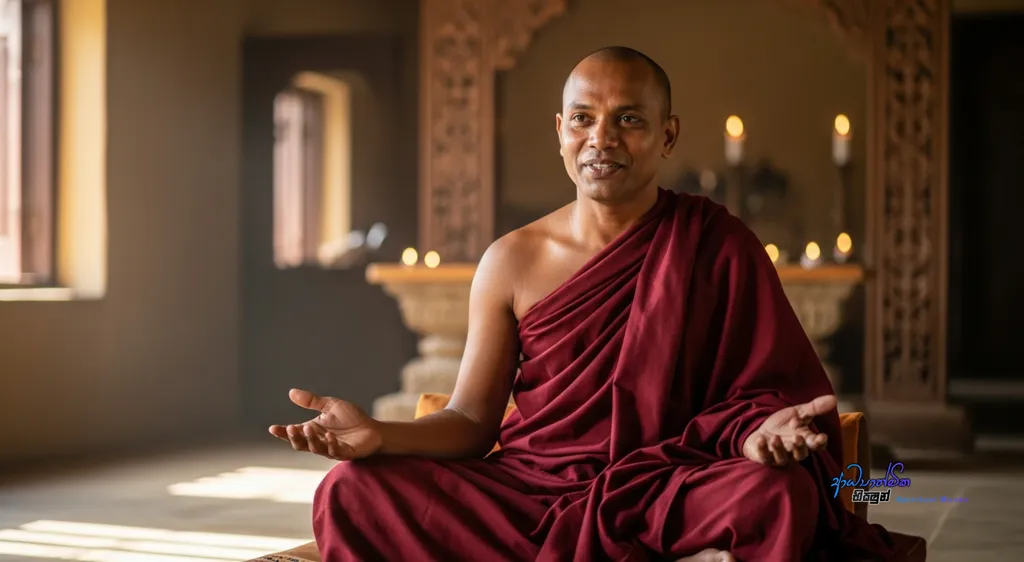
The Natural Pull Towards Solitude
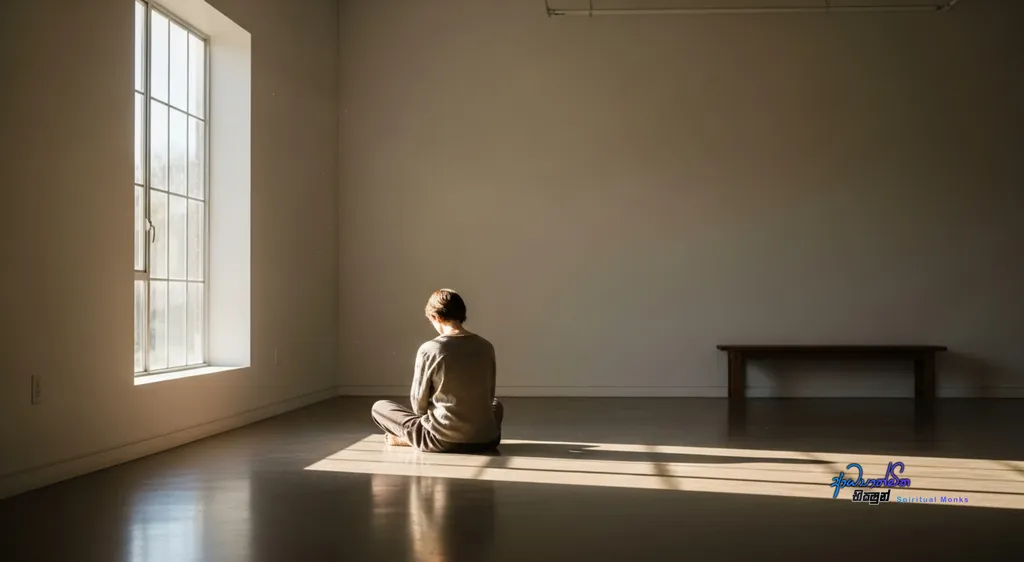
As we begin to explore a spiritual life, we naturally start to find a sense of calm. We feel a pull towards quiet environments and may actively seek them out. Whether you are living a lay life or a monastic one, this tendency is a special characteristic of spiritual development. You might find yourself seeking solitude in your room, in your home when it’s empty, or even within a bustling society. For some, this path may lead to a monastic life, dedicated to exploring the mind in seclusion.
This impulse to be alone is a normal and healthy sign for anyone who has started on a spiritual path. It is in this quiet space that the deep work of self-observation can begin. This is a common experience in the spiritual world.
The Illusion of Peace: When Defilements Lie Dormant
When we spend time in solitude, an interesting phenomenon occurs. The mental defilements, what we call the kleshas in Buddhism, can become suppressed. The powerful forces of greed (rāga), hatred (dveṣa), and delusion (moha), which are the root causes of our suffering, may not arise. Because the external triggers are gone, you might feel a profound peace, almost as if you’ve reached a high spiritual state, perhaps even the ultimate goal of Nibbāna (liberation).
Your mind can become so settled that even memories of the past don’t stir these defilements. It feels like you are completely free from them. However, it’s crucial to understand a key word I used here: suppressed. The potential for this inner turmoil is not gone; it is merely lying dormant.
The Inevitable Return to the World
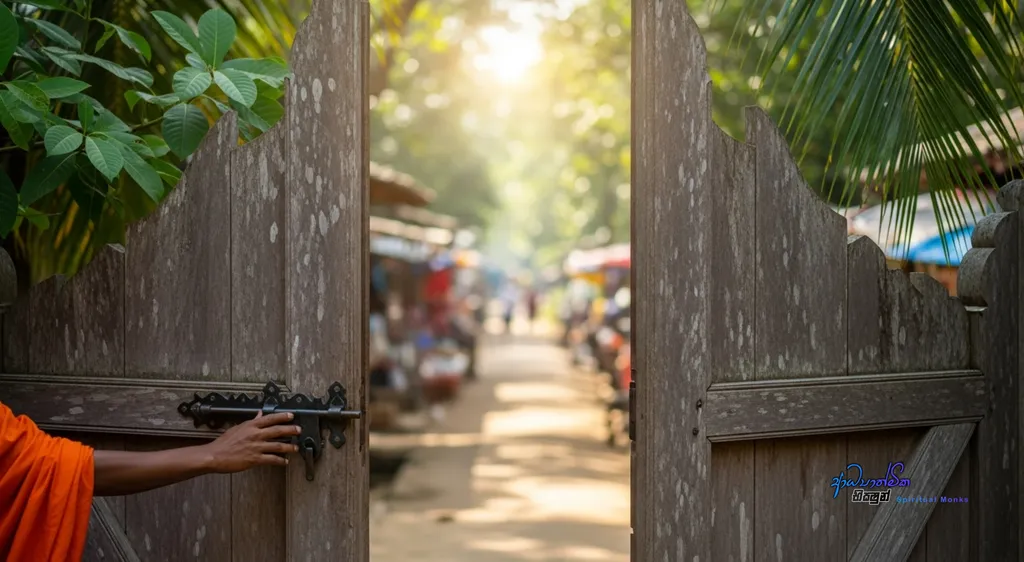
No matter how deep our solitude, life eventually calls us back into the world. We don’t remain in the same room or the same house forever. A monk in a forest monastery may need to go on a pilgrimage or attend to a necessary task. A layperson living a quiet life will eventually need to engage with family, friends, and society. This re-entry is an unavoidable part of life.
This is the moment for true observation. After being alone, perhaps for days, months, or even years, suddenly re-engaging with society can feel jarring. The world may seem unfamiliar, unsuitable, and you might feel a strong impulse to retreat immediately. This clash is a common experience we have discussed in previous teachings. For those who are new, exploring these articles from the beginning will provide a broader context for these experiences.

The Battle After the Return: When Inner Turmoil Resurfaces
Here is the most subtle and important part. While you are out in the world, you might feel you are handling it well. As a spiritual person, others may even notice a change in you. You might appear calm, composed, and unattached to the sights and sounds around you. You might observe past objects of desire, perhaps even more intense or strange versions of them, and feel no attachment. You might navigate difficult social situations without feeling anger. You feel you have truly progressed.
But the real test begins after you return to your solitude, back to your room, your home, or the monastery. It is then that the mind often begins its battle. The ‘details’ you collected from the outside through your senses, the eye, ear, nose, tongue, and body, begin to stir. The mind starts to process this new information, and the suppressed inner turmoil re-emerges with force.
A desire that was dormant, for instance, an object of lust (rāga), might now replay in your mind again and again. This can become so powerful that it challenges your virtue (sīla), even for one observing celibacy, potentially leading to actions like masturbation. This isn’t limited to sexual desire; it could be greed for a vehicle, land, or any object that was suppressed. Similarly, an interaction that seemed manageable at the time can now erupt as intense anger (dveṣa) when you are alone. The mind, now in isolation, begins to activate these latent tendencies.
A Universal Stage of Practice
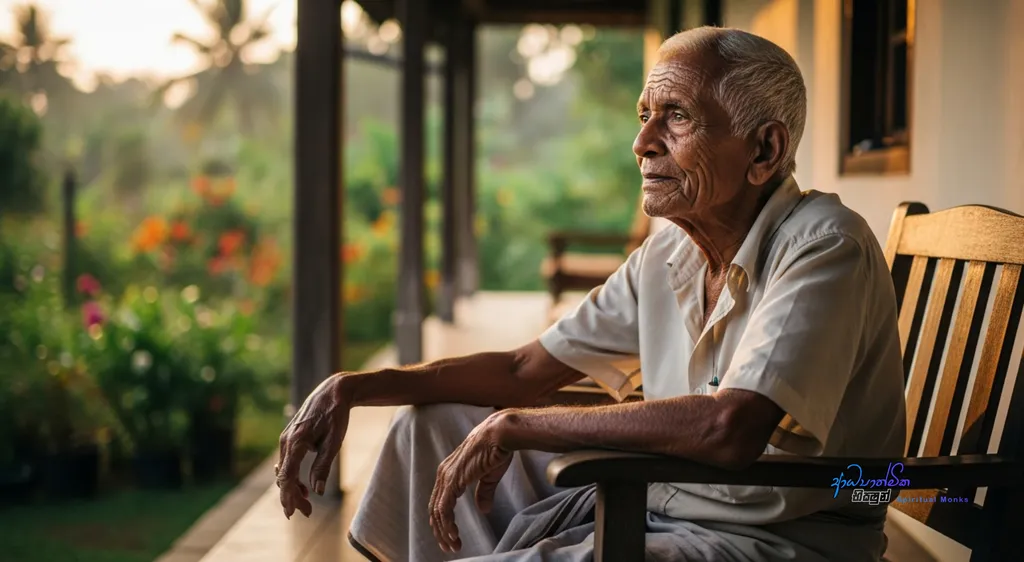
This experience is much like what happens as we age. In our youth, we feel invincible, strong, and unafraid. But when we become old or bedridden, past actions and memories can return to trouble us. In the same way, the experiences gathered from the world, though recent, become part of our past and can rise up to disturb our peace when we are alone again.
This is a critical insight, especially for those in monastic roles. Almost any monk who practices seriously in a forest hermitage has had this experience after returning from a trip to the outside world. It is a guaranteed part of the path, and it is not something to be feared, avoided, or forcefully stopped. Receiving this experience is actually good; it is a necessary event in our spiritual life, common to all practitioners, regardless of gender. It shows us where our work lies.

The Wise Response: Mindfulness in Transition
An experienced practitioner knows this inner turmoil is likely to happen. For a few days after returning, their mind might feel unsettled and agitated from the sense impressions they’ve collected. So, they learn to be mindful during the transition. As they travel back to their solitary place, they are already practicing. They are investigating the sights, sounds, and feelings they gathered, trying to see them clearly and let them go, or at least suppress them consciously, knowing the trouble they can cause.
This mindful approach prevents the mind from getting severely disturbed or from breaking one’s precepts. While the inner turmoil might still cause some mental distress for a few days, the duration is shortened. This is why the Buddha taught the importance of developing mindfulness (sati) and wisdom (paññā) in every moment. When you learn and practice the Four Foundations of Mindfulness (Satipaṭṭhāna) correctly from a qualified teacher, you learn how to handle these transitions skillfully.
So, when you return to your quiet space, watch your mind. What are you clinging to from those few days out? Did an old desire get reignited? Observe this with mindfulness. If you don’t, these forces will pull you back down the ladder of spiritual progress you have so carefully climbed.
Growing Stronger Through Repetition
As you continue your practice of calm and insight meditation (Samatha-Vipassanā), you will inevitably have to go out into the world again. But this time, you are wiser. You know that inner turmoil may arise upon your return, and you are prepared to meet it with equanimity and even happiness, seeing it as an opportunity for practice. Because your understanding and experience have grown, the disturbance that used to last for several days will now be shorter. Your wisdom allows you to process it more quickly.
This is how you systematically develop your spiritual life. The cycle of solitude, engagement, and returning with mindfulness helps you grow stronger.
The True Measure of a Liberated Mind
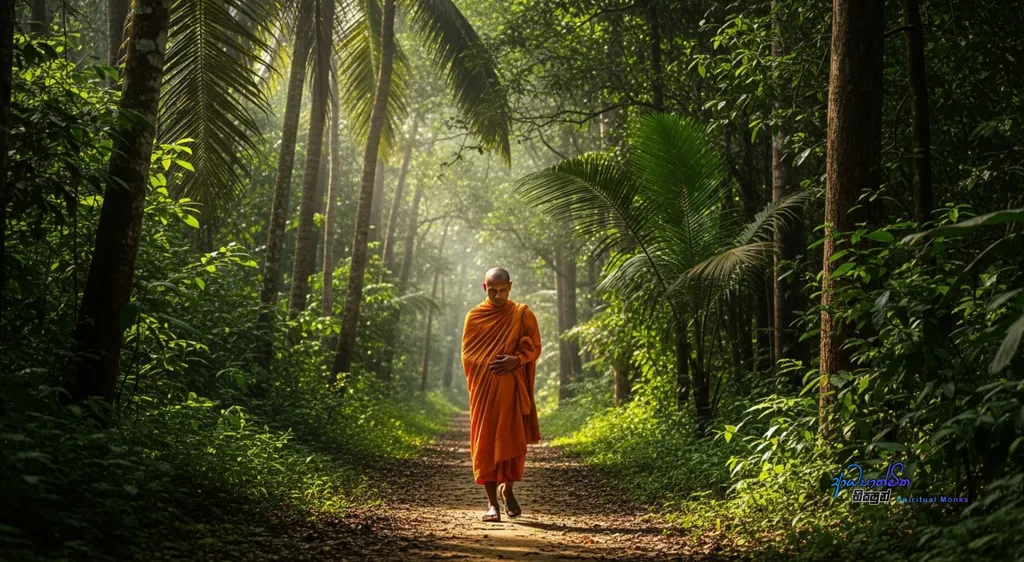
After hearing this, some might decide, ‘I will never go out into society again.’ While remaining in seclusion is not a problem, a truly developed mind should be stable anywhere. A person who has attained liberation, an Arahant, is at peace in the forest and at peace in the city.
This provides a test for ourselves. If someone claims to be enlightened while living in the city but cannot bear the solitude of the forest for long without their mind becoming agitated, they can know for themselves their true state. Likewise, if someone who has trained their mind only in deep seclusion goes into the city and finds their mind agitated after a week, they too can understand that their greed, hatred, and delusion have only been suppressed, not uprooted. The inner turmoil reveals the truth. When alone in the forest, loneliness and an inability to be with oneself can surface. These are the very defilements that show us we are not yet free.
The Importance of Honesty on the Path
This self-awareness is a tool for personal assessment. However, a problem arises when someone realizes they are not enlightened but is unwilling to change the perception they have given to society. Knowingly deceiving others about one’s spiritual attainments is a grave and dangerous action. It is a powerful unwholesome action, or akusala kamma, that harms oneself most of all. In the language you may understand, you are ruining your own journey through the cycle of rebirth (saṃsāra).
The consequence of deceiving others is that in a future human life, when you seek a spiritual teacher, you will be drawn to fakes, charlatans, and those who deceive. Therefore, never try to cheat the world spiritually by claiming an attainment you do not have. Be honest with yourself on your path. A lack of honesty is a wound you inflict upon yourself, with repercussions that echo through lifetimes.
Conclusion: Cultivating a Mind That Can Dwell Anywhere
Through this practical training, strive to study your own mind. When you do, you will develop the ability to live in society or to live in the forest, in solitude, in an empty place, anywhere. You will gain the skill the Buddha spoke of: the ability to dwell and practice effectively in any setting. This is the practical knowledge I wanted to impart to you today. By practicing in this way, you have the potential to completely eradicate the mental defilements and overcome all inner turmoil.
May the power and blessings of the Buddha, Dhamma, and Sangha, the Triple Gem, give you the strength to understand these matters clearly and to act upon them with wisdom.
We invite you to walk this path with us. Read our teachings, and most importantly, apply them practically in your own life. as you practice, questions will naturally arise. Please feel free to share your experiences and questions in the comments below, via email or contact form. I will do my best to offer guidance in future talks based on your progress. For now, begin this practice with an open heart and a mind free from expectation. Cultivate it correctly, and may you find the clarity and peace you seek.
Thank you for joining us. We hope this blog will be of great benefit to your spiritual journey.
May you all be well and happy.
May the blessings of the Triple Gem be with you all!.


