


Categories: Other Meditation Teachings
May the blessings of the Triple Gem be with you all!
In our lives, behind every experience, there can be a sense of disappointment. This is especially true for the painful things we encounter. The end result of these experiences often leaves us feeling sad, disheartened, and weary. This feeling, this deep disenchantment, can be directed toward a thing, a person, or a situation that you once valued. You may find you have no desire to reacquire it, to keep it close, or to associate with it again. Even if you must interact with it, you do so without any joy. This profound sense of being ‘fed up’ is a form of spiritual disillusionment.
When this feeling arises, we begin to feel weary of many things. But what if this experience isn’t an end, but a beginning? This state of mind is actually a gateway, something that can guide us toward a deeper spiritual life.

Disenchantment: The Ancient Catalyst for Awakening
For over 2,500 years, since the time of the Buddha, this very feeling of spiritual disillusionment has been a primary reason for people to change their lives, even to the point of entering monastic life. It’s a powerful force for transformation.
Consider the story of our own Siddhartha Gautama, the Bodhisatta who would become the Buddha. His journey began with a profound sense of disillusionment after witnessing the ‘Four Sights’, an old man, a sick man, a corpse, and a serene ascetic. These encounters created a deep disenchantment with worldly life and set him on a completely different path.
This is why we can say that behind every disillusionment, there is a hidden good, a potential for something better. Throughout history, whether it was a king, a wealthy merchant, or in modern times, a rich businessperson, a poor person, or someone from the middle class, the decision to ordain as a monk often stemmed from this deep feeling. This spiritual disillusionment comes from many different angles.

The Many Faces of Spiritual Disillusionment
This powerful feeling can arise from various sources in our worldly life. You might become disenchanted with a person you associated with. You might find yourself weary of immense wealth and the worldly pleasures it brings, realizing they don’t offer lasting happiness. Conversely, spiritual disillusionment can also come from chasing after worldly pleasures and failing to obtain them, leading to frustration and despair. We have seen both these scenarios in life.
Another common trigger is the sheer monotony of routine. You wake up, go to work, come home, do chores, and the cycle repeats. You might start to wonder, ‘What is this life I’m living? Isn’t there something more?’ This reflection can give rise to a deep sense of dissatisfaction. Our minds are constantly searching for something, and when we cannot find it, this disenchantment grows.
Even dedicated spiritual practitioners can experience this. A meditator might strive for liberation, known as Nibbana, or develop special abilities like the five super-knowledges (pañca-abhiññā), or awaken subtle energies, or progress through meditative states called the Jhanas. When results don’t come, a form of spiritual disillusionment can set in. For these individuals, the answer isn’t to give up, but to use that feeling as fuel to deepen their spiritual life even more.

The Wise and Unwise Responses to Disenchantment
The crucial thing is how we respond to spiritual disillusionment. The feeling itself is a state of mind where things no longer align with our expectations; we can’t derive pleasure from them as we once did, and a sorrowful thought arises. An unwise person, when faced with this, say, after losing a cherished object, immediately starts searching for a replacement. Their instinct is to find a substitute to fill the void. This is the nature of a mind lacking deep wisdom.
But here, we are not talking about academic knowledge or worldly intelligence from passing exams. We are speaking of a much deeper, trans-sensory wisdom, a wisdom that understands the nature of reality, the Dhamma. A person with this wisdom, upon losing something and feeling that initial pang of disillusionment, begins to think differently.
They realize, ‘This principle, this law of nature, applies to everything.’ This universal nature of things, or Dhammatā, becomes clear. The spiritual disillusionment becomes a reason to think, ‘Ah, then I must change my path. Even if I get another object, the same fate awaits it.’ A flicker of true understanding begins to dawn. This is the moment you can use this feeling to ask, ‘So, what should I do now?’

Seeing Reality: The Three Marks of Existence
This feeling of disillusionment can be a powerful tool for your spiritual life because it points directly to the core teachings of the Buddha. In your worldly life, your sensual existence, your marriage, your relationships with parents, children, relatives, and neighbors, or with your possessions like land and vehicles, this feeling of dissatisfaction can arise from anything. The Buddha taught that all of this is a form of stress or suffering. This is explained in the teaching of the Three Marks of Existence, or Tilakkhana.
The three marks are:
- Anicca: Impermanence. The first characteristic teaches us that everything changes.
- Dukkha: Unsatisfactoriness or Suffering. The second characteristic reveals that this very change is itself a form of stress. It’s a fundamental unsatisfactoriness woven into existence.
- Anatta: Not-self. The understanding that there is no permanent, unchanging ‘I’ or ‘soul’ within these changing phenomena.
If you look closely at the Dukkha the Buddha pointed to, you can use that insight to cultivate your spiritual life. The Buddha’s teaching is timeless, or Akalika, because it was valid then, is valid now, and will be valid in the future. The Three Marks of Existence are not limited to a specific era.
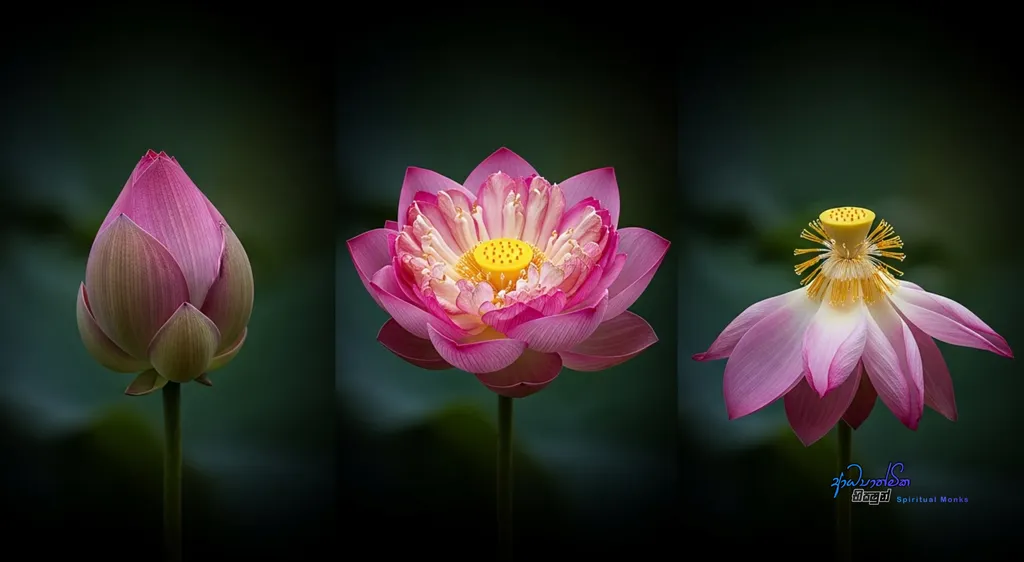
A Call to Self-Reflection
So, take a moment to look at yourself. Why did you turn towards a spiritual life? What motivated you to start meditating or to explore these timeless teachings? Reflect on the reason your mindset shifted. While some may be drawn to these topics out of a long-standing academic or practical interest, many people are guided to the spiritual path precisely because of some form of spiritual disillusionment. They are trying to find answers. This feeling is a truly amazing thing in our lives, and we must learn to use it for our benefit.
Spiritual Disillusionment as a Hidden Blessing
When this disenchantment arises correctly, I see it as a form of past meritorious energy, or punya shakti. It is a blessing that helps to reveal the reality of life, to show us the truth. When we feel this disillusionment, many of us tend to withdraw and become quiet. However, the unwise person remains stuck, thinking, ‘Oh, I’m so tired of this, there’s nothing more for me,’ and they fall into despair. But the wise person uses this state to bring the mind to a better place.
If you don’t handle this feeling correctly, you can spend days, weeks, or even months in a state of disruption, unable to function. It can take a long time to get back on your feet. This is why if you see a friend or relative going through this, offering your help can make a huge difference, helping them recover in a few days instead of being stuck for months.
Many people have shared that they stumbled upon spiritual teachings online at their lowest point, and it helped them to get up, change their lives, and move forward without being stuck in that fallen state for a long time. You too may have had such experiences. With this understanding, we can become independent and help ourselves. If we wisely remove this state of disillusionment from our minds, not by suppressing it but by understanding its message, we can move forward instantly without getting stuck.
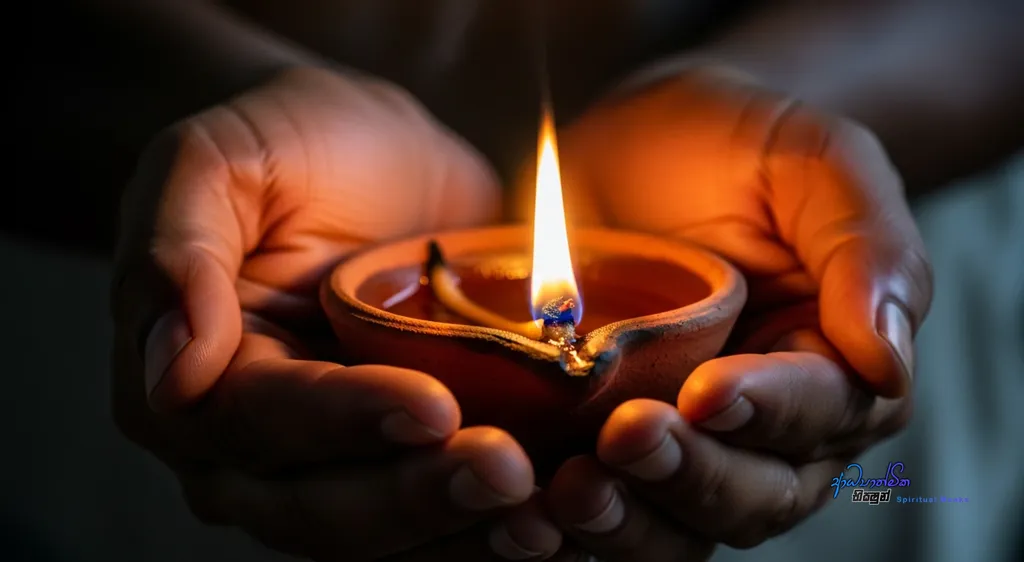
The Path Forward: Practice with Patience
This understanding of our own mental states is invaluable for our spiritual progress. Some people, feeling disillusioned because they haven’t achieved meditation results, ‘I didn’t get a meditative absorption (jhana), I didn’t see a light sign, my third eye didn’t open, my kundalini energy didn’t awaken’, end up abandoning their practice. This is their own mistake. Just as spiritual disillusionment can lead one to the path, it can also, for an unwise person, be a reason to leave it.
Instead of giving up, we should use that feeling to strengthen our practice. The wise approach is to continue with the attitude of ‘I will practice whether I get results or not.’ This mindset makes the journey much easier. If one meditation technique doesn’t seem to work, try others, or better yet, continue the one you are doing with unwavering consistency.
A great understanding will inevitably arise from this perseverance. That very feeling of disappointment can become the reason you finally experience the breakthrough you were seeking, because you move past the thought of disillusionment and engage more deeply in the practice.
If you are wondering how to overcome this state, the key lies in practice. Engage with mindfulness teachings, and apply them practically. Over time, as you train your mind, this feeling will fade, and you will develop immense mental strength. Remember, while spiritual disillusionment can be a gateway to immense good, if we let it linger without understanding it, it can cause us to remain stuck for a long time, both in our worldly and spiritual lives. Use these teachings to help you move forward on your path.

A Final Blessing for Your Journey
As we continue to explore the various thoughts that arise in our minds, may you use teachings like this one to deepen your practical application and advance on your spiritual journey. By the power and blessings of the Buddha, the Dhamma, and the Sangha, the Triple Gem, may you understand these points well and find success.
We invite you to walk this path with us. Read our teachings, and most importantly, apply them practically in your own life. as you practice, questions will naturally arise. Please feel free to share your experiences and questions in the comments below, via email or contact form. I will do my best to offer guidance in future talks based on your progress. For now, begin this practice with an open heart and a mind free from expectation. Cultivate it correctly, and may you find the clarity and peace you seek.
Thank you for joining us. We hope this blog will be of great benefit to your spiritual journey.
May you all be well and happy.
May the blessings of the Triple Gem be with you all!.


