


Categories: Dhyana: Practical Training
May the blessings of the Triple Gem be with you all!
Today, as we continue our journey of spiritual exploration, we delve deeper into a specific series of teachings we have shared recently: the practice of Jhana meditation. This term, Jhana, refers to deep states of meditative absorption. We have previously discussed how to access these states through methods like the ‘Third Eye Practical Meditation Technique,’ and we’ve also offered guidance for those who may not have awakened that particular faculty yet. This article aims to address a subtle but crucial aspect of this practice, one that requires wisdom to navigate correctly.
Wisdom Beyond Education: Understanding Prajñā
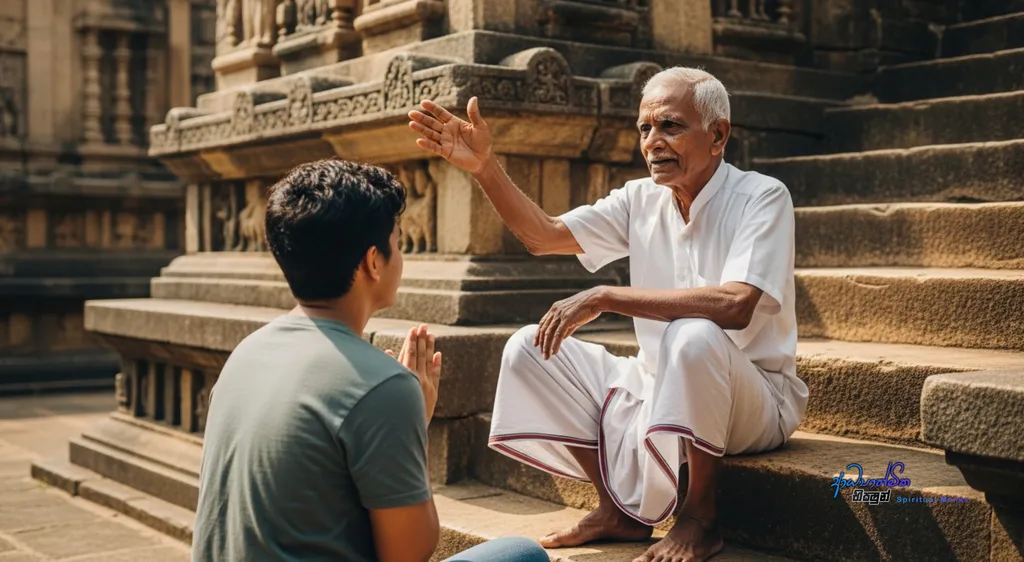
When we speak of navigating the path, it’s important to understand what we mean by wisdom. There is a distinction between worldly knowledge and spiritual wisdom, which in Buddhism is called prajñā. This isn’t about being formally educated or uneducated.
I have met educated people who possess this deep, intuitive prajñā, and I have met uneducated people who are profoundly wise. Likewise, there are educated people who lack this inner wisdom, just as there are uneducated people who do. I have encountered all four of these groups in my life, and this is why I make the distinction. True progress in Jhana meditation relies on this inner prajñā, not on degrees or intellectual theories.
The Pitfall of Forcing: A Common Misunderstanding
The reason this wisdom is so critical is because a common obstacle arises in meditation practice. As we describe the states and signs that can occur on the path, some individuals due to a lack of this discerning wisdom try to forcefully create those experiences.
They try to make things happen, rather than allowing them to unfold naturally. This tendency is not limited to any particular group; it can be found among people of all backgrounds, educated or not, and across different faiths and cultures. It is for these individuals, with great compassion, that I offer this clarification today.
Natural Emergence vs. Artificial Creation in Meditation
Let’s take our ‘Third Eye Practical Meditation Technique’ as an example. The instruction is to first focus on the point between the eyebrows, and then to rest the mind on the meditation subject, or kammaṭṭhāna, of ’emptiness.’ We explain that after some time practicing this, light signals, known as āloka saññā, may begin to appear. Following that, as concentration deepens, mental images, or citta rūpa, can emerge.
I have always emphasized that these phenomena are not things to be forcefully produced or imagined. They must arise naturally and spontaneously as a result of your mind becoming unified and concentrated. They are not artificial creations. For instance, we teach that after these images, you might perceive the ‘sky.’ This should be a direct, vivid experience, like seeing the real blue sky, with or without clouds, right there with your eyes closed. It is not about you artificially imagining a sky in your mind during meditation.
We have repeatedly stated that you should not do this; these are not artificial states to be constructed. To truly grasp this, I encourage you to explore the previous teachings where we detail this point. This will help you let go of wrong views and approach your practice with correct understanding, allowing you to cultivate this path with genuine, practical skill.
Understanding the Second Jhana: Joy That Cannot Be Faked
Now, let’s apply this directly to the topic of our discussion: you cannot force your way into Jhana meditation. You may already have some understanding of what Jhana is a state of profound mental unification, or samādhi from our previous practical talks, so I won’t repeat those basics here. The core question is: what does it mean to ‘force’ a Jhana?
In our ‘Pathway to the Brahma Worlds’ meditation series, we guide you on how to cultivate the first Jhana and what to reflect on. We describe the signs you will feel and experience. However, some people, and I have noticed this tendency particularly, though not exclusively, among some older women, misunderstand this guidance. They seem to have difficulty discerning these states with wisdom.
Please do not take this the wrong way. This is not an attack on all older women; I have simply met more individuals from this group who face this specific challenge. It can happen to anyone, of any age or gender. If you take this personally, you might become discouraged and stop your practice, thinking the monk was criticizing you. That is not the case. My intention is to help you avoid a common pitfall.
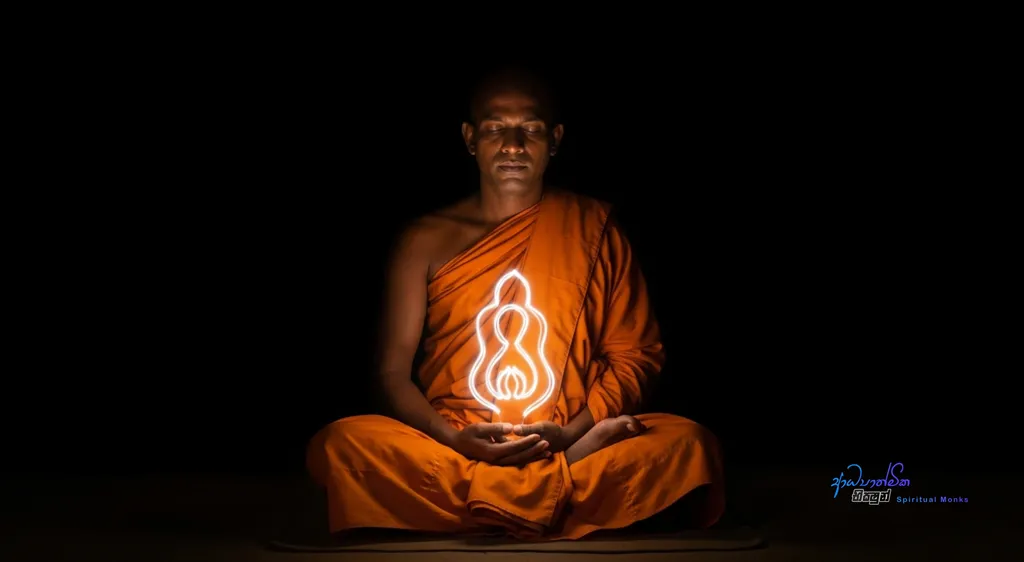
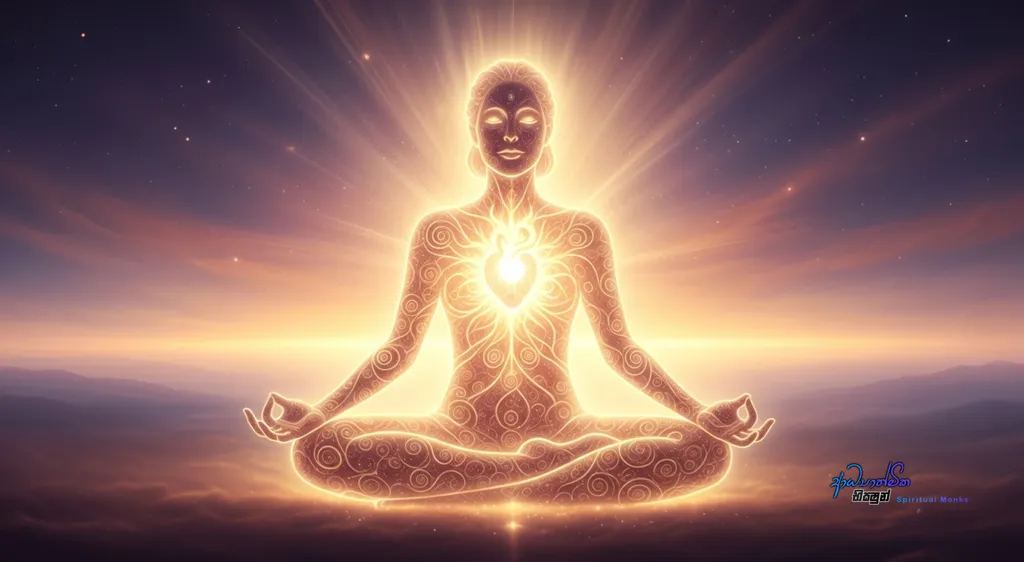
Let’s consider the second Jhana. When it arises, you experience an incredible joy and happiness in Pali, this is called pīti-sukha. Your body might feel solid, like stone. It is a profound bliss, both physical and mental, unlike anything you have ever felt in your life.
For some who have had such experiences, the intensity might be compared to a drug, but this is only an analogy. Drugs are harmful and lead to the body’s decay and death. This meditative joy is wholesome; it supports your well-being and health. Please never turn to such harmful substances. The joy of Jhana meditation is infinitely superior and life-affirming.
This joy must arise naturally. Only when it appears on its own do we give the instruction to reflect on it from the heart, with the inner words, “What amazing happiness this is! What incredible joy this is!” This reflection comes from a place of genuine experience. Can you artificially generate such a state? Never.
Are You Truly in Jhana? A Guide to Self-Verification
Here is where the misunderstanding occurs. A person might not be in the second Jhana at all. Perhaps they are feeling a slight pleasure that can come from ordinary concentration, but it is not the true, immersive second Jhana. Yet, because they have heard the instructions, they begin to mentally repeat, “Joy… joy…” trying to force the feeling to appear.
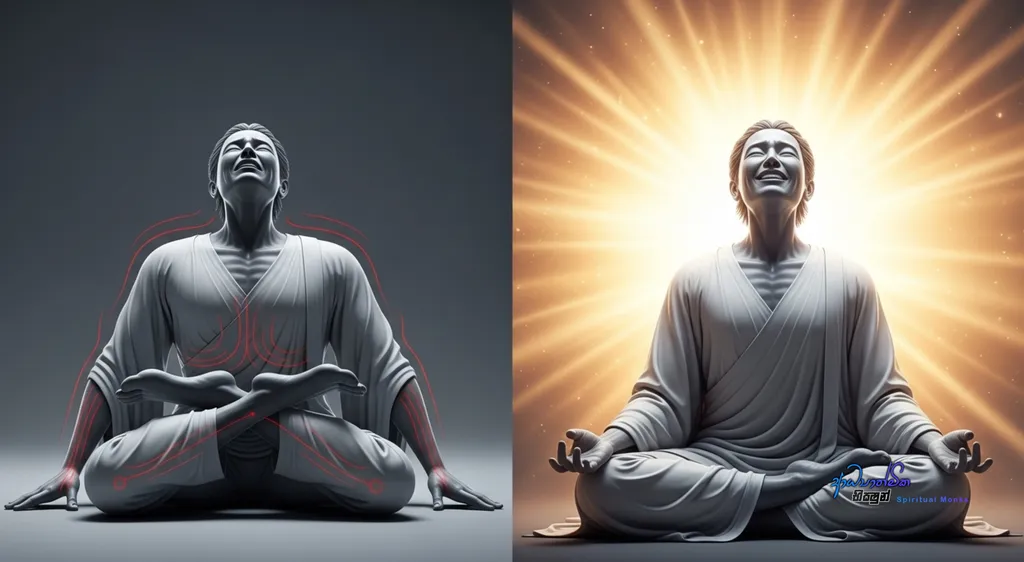
You can know the difference. If you are an older person, or anyone with bodily aches, you know that it’s impossible to feel true bliss while your legs are tingling and your back is aching. If you feel these discomforts, you are still in a preliminary state of concentration, not the second Jhana.
When you are truly abiding in the second Jhana, you do not feel the aches of the physical body. It becomes so light, so suffused with joy, that physical sensations like pain simply do not register. Please understand this distinction clearly. Do not confuse these states.
The Gentle Consequence of Misguided Effort
Now, what happens if you make this mistake? I want to reassure you: you will not cause yourself any serious harm. You will not develop a mental illness or go crazy. You will not suffer a physical disease from being ‘lost’ in your meditation. Based on our direct experience which has been confirmed by countless practitioners who share their experiences in the comments of our teachings the only negative consequence is stagnation.
You simply stay stuck in the same place, not making any progress. It is a waste of your precious time because you have not correctly understood where you truly are on the path. There is no other harm. Those who claim otherwise often lack direct experience themselves. So, please proceed with wisdom and understanding.
Conclusion: Cultivating Mature Wisdom on Your Path
Therefore, you must learn to confirm for yourself, with total honesty: are you truly here? Are you experiencing the physical and mental characteristics I describe? This principle of self-verification applies to every practice, whether it is the form-realm Jhanas (Rūpāvacara), the formless-realm Jhanas (Arūpāvacara), the ‘Third Eye’ method, the ‘Pathway to the Brahma Worlds’ practice, or any other technique you learn from our collection, from another teacher, or on your own. Practice in this practical, honest way.
I believe this explanation is sufficient for anyone, of any age, to understand. Your unripe wisdom, your prajñā, will begin to mature and develop. The core message is this: you cannot forcefully create Jhana meditation states. Understand this deeply and proceed with your practice.
With the empowering strength of the Buddha, the Dhamma, and the Sangha the Triple Gem may you have the wisdom to grasp these points. May this teaching help your own wisdom to ripen and grow.
We invite you to walk this path with us. Read our teachings, and most importantly, apply them practically in your own life. as you practice, questions will naturally arise. Please feel free to share your experiences and questions in the comments section below, via email or contact form. I will do my best to offer guidance in future talks based on your progress. For now, begin this practice with an open heart and a mind free from expectation. Cultivate it correctly, and may you find the clarity and peace you seek.
Thank you for joining us. We hope this blog will be of great benefit to your spiritual journey.
May you all be well and happy.
May the blessings of the Triple Gem be with you all!


