


Categories: Maintaining Mindfulness
May the blessings of the Triple Gem be with you all!
For those of you who follow our spiritual teachings to enrich your practical daily lives, we will explore a powerful and often misunderstood emotion: disillusionment. How can we use this feeling of being let down, this sense of disenchantment, to develop our mindfulness? How can we transform it into a tool for our meditation and our spiritual journey? This is what I hope to clarify for you today.
You are not alone in this; countless people throughout history have found their way to a deeper spiritual life, to meditation, and even to monasticism, precisely because of a profound experience with this feeling of disillusionment.

The Two Paths of Disillusionment: Despair or Awakening?
This feeling of disillusionment can arrive at any time, in countless ways. Consider a common example: a romantic relationship. The pain of a lost love can be so intense that it leads a person to renounce the worldly life entirely and seek ordination.
This happens to both men and women, across all faiths, where some turn toward a religious path after heartbreak. The mind replays memories: how that person changed, their final words, the stark contrast between their past affection and their present coldness. Each memory deepens the sorrow, leading to a powerful sense of disillusionment.
This experience creates a fork in the road. For some, it leads to the conclusion that life is meaningless, pointless, and without purpose. This group is vulnerable and may even consider ending their lives, whether through poisoning or other tragic means. They do this because of an overwhelming sense of spiritual disillusionment.
However, there is another path. This same intense feeling can lead others toward a profound spiritual awakening. It can be the very catalyst that propels them into monastic life or a dedicated meditative practice.

Historical Wisdom: Lessons from the Time of the Buddha
If we look back to the time of the Buddha, we see many stories of people who came to him filled with disillusionment. You may have read these accounts in the Jataka tales or the life stories of the great disciples. The story of Upatissa and Kolita, who would become the Buddha’s chief disciples Sariputta and Moggallana, is a powerful example of how disenchantment with worldly pleasures led them to seek a higher truth.
I won’t detail these stories from the books, as many of you may already be familiar with them from sources like the Dhammapada commentary. I encourage you, regardless of your background or faith, to explore these narratives. They are widely available online and in teachings, and they offer profound insight into the human condition.
The key takeaway is that disillusionment is a turning point. For a person with wisdom, with wholesome qualities cultivated over many lifetimes, what we call kusala,this feeling becomes an immense help. It is a powerful aid for those aspiring to realize Nibbana (liberation) in this very life, for those perfecting their spiritual qualities (paramitas), and for those destined to walk the noble path. For all such individuals, this painful feeling of spiritual disillusionment is not a curse, but a profound blessing that fuels their practice of the Four Foundations of Mindfulness (Satipatthana) and brings them closer to their ultimate goal.

The Many Faces of Disenchantment in Daily Life
This feeling knows no age. An elderly mother or father feels it deeply when their children, whom they nurtured from infancy, neglect them in their old age. They feel a sharp disillusionment when they are not given food or care. Conversely, children can feel it when their parents show favoritism, speaking lovingly to one child while ignoring another. A partner in a relationship feels it when they are not loved or respected.
This continues into marriage, among relatives, and into our professional lives. You might be an honest officer in your workplace, but you see corruption and financial fraud committed by others. This can make you feel disheartened, especially when their actions and the pressure they exert prevent you from doing your job honestly and ethically. This creates a deep sense of disillusionment.
Looking at the wider world, such as the current situation in Sri Lanka, you may see the actions of politicians and presidents and the suffering they cause. When you see people without enough to eat, you can feel a powerful disillusionment with the systems that govern us.
Societal and Personal Setbacks as Catalysts
Disillusionment also arises in the context of faith. When radical, externally-funded organizations insult a country’s main religion, it creates disillusionment among its followers. This is true for any faith; if the beliefs of Catholics, Muslims, or Hindus are attacked, their communities feel this pain.
When there is no proper legal or governmental response to such actions, the feeling of disillusionment deepens. Look at how many sources of spiritual disillusionment exist in our society.
It comes from personal failures too. Failing to get the expected results in an exam, be it O-Levels, A-Levels, or university, can be crushing. As a parent, you feel it when your child, despite all your efforts, doesn’t achieve the results you hoped for. Starting a business that fails to become profitable as you envisioned also brings this profound sense of disenchantment.
The sources are endless. A husband is disillusioned by his wife’s actions. A wife suffers in silence with an alcoholic or unfaithful husband, staying only for the children, her life filled with pain, pressure, and disillusionment. Children are trapped and disheartened by the constant fighting of their parents. Look at how many ways this feeling can arise from what we see and experience in society.
A Wider View: Disenchantment with the Cycle of Existence (Samsara)
Now, let’s extend our view beyond the human world to what Buddhism calls Samsara, the beginning less cycle of birth, death, and rebirth. Consider the animal realm. Do animals live in bliss? No, they live in constant fear. Think of a bird in its nest with eggs or chicks.
The mother and father bird strive tirelessly to protect them. A snake can slither up the tree to devour the eggs or the helpless young. Monkeys and macaques, as we have seen in the forest, will destroy nests, smash eggs, and throw the young to the ground. The behavior of these animals can be terrifying.
The Buddha taught that in this realm, beings are a danger to one another. I have heard some people naively say, “The animal world is better than the human world. I wish I could be reborn as a dog; they have no problems.” But think about the life of a stray dog. It cannot eat when it wants. It cannot speak to ask for food. If it barks, people hit it or chase it away. It has to rummage through garbage, and even then, people will throw stones at it.
Think of how long that dog must go without food. To think this realm of existence is happy or peaceful is the view of an ignorant, foolish person. Reflecting on this, on the animal hell,gives you a true understanding and a reason for disenchantment. This is the nature of things. This very insight becomes a reason to think,“I must escape this cycle of Samsara as quickly as possible.”

Beyond the Veil: Understanding Suffering in Other Realms
I have only shown you a small glimpse of the animal realm. I encourage you to study the lives of other animals. You can explore this through documentaries or videos online. See for yourself how terrifying their existence truly is.
For a person whose inner vision, sometimes called the ‘third eye,’ has awakened, it is possible to perceive worlds unseen by the physical eye. In a previous practical program, I spoke about the world of non-human beings and how to direct the mind to perceive it. The ghost realm, or preta loka, is one of the four woeful states of existence. If one were to direct their mind to see it, they would understand the immense hunger, thirst, and pain these beings endure.
I have explained this before and won’t repeat it in detail, but you can learn more by listening to those teachings and reading scriptures like the Petavatthu (Stories of the Departed) and Vimanavatthu (Stories of the Celestial Mansions) from the Tripitaka. Great beings like the Buddha and Ven. Moggallana have taught these truths.
This gives you an understanding of your own journey through Samsara and the fact that you too have fallen into such states. This knowledge, along with the understanding of your current worldly suffering, helps you grasp the pervasive nature of spiritual disillusionment.

The Wise Response: Using Disillusionment as Spiritual Fuel
So, the key is to look at all this. But you don’t have to live with this feeling of disillusionment forever. We must use this feeling to shorten our journey through Samsara, not lengthen it. We must use it as a powerful tool to practice meditation correctly, developing both tranquility (Samatha) and insight (Vipassana).
As I mentioned at the beginning, some people with a weak or immature mindset, faced with disillusionment from a relationship, will destroy their lives. They forget their parents and siblings. They turn to drugs or alcohol. We have seen people get into intentional accidents out of an inability to bear the pain, ending up paralyzed.
Some end their own lives. If your disillusionment leads you down this path, it is utterly fruitless. In simple terms, you are messing up your journey through Samsara, because taking your own life is a deeply unwholesome action, an act of negative kamma.
A Practical Guide: Turning Inward When the World Fails You
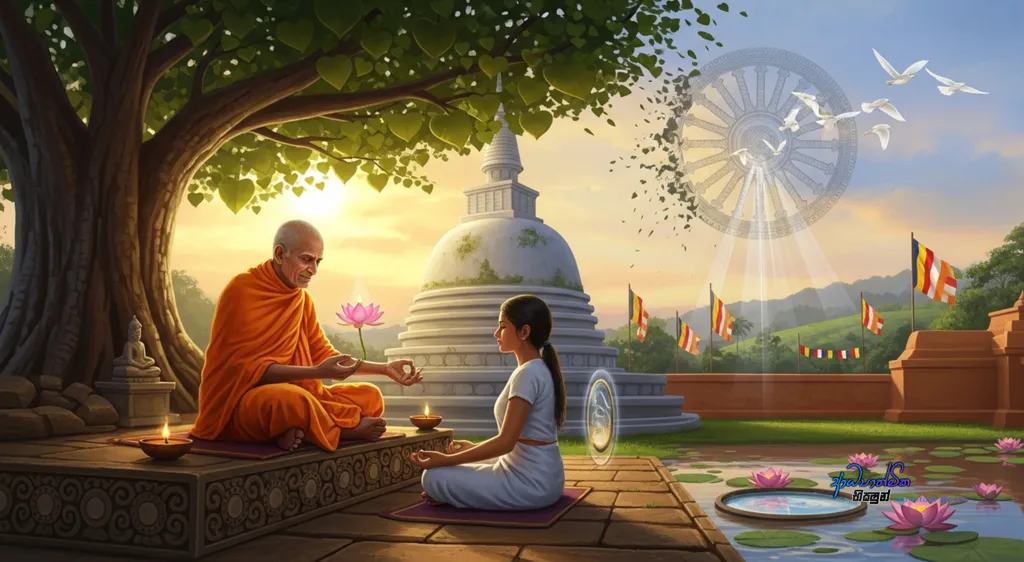
Instead, this is what you must do. If you experience such disillusionment, or if you know others, friends, relatives, family members,who do, guide them towards the Dhamma. Given the current economic situation, people are struggling to survive. They live with immense disillusionment, pain, and anger, especially towards politicians. For people living like this, what a profound disillusionment they must feel.
Your task, for those who are receptive, is to help them. You cannot force this on everyone; many will prefer to clash with the world. But if we realize we cannot win by fighting externally, especially against powerful systems, we must change our own path. We must change our practice.
We must turn inward, to our meditation, to our spiritual side. We must recognize, “This is the nature of the world, the nature of society. This situation has destroyed my mental peace and freedom.It has given me headaches, migraines, and made me dependent on medicine.” If this is happening to you, you must use your disillusionment to turn even more deeply towards meditation.
Use it to establish mindfulness. Turn toward insight practice and the cultivation of sati-sampajañña (mindfulness with clear comprehension). Guide your friends and other disheartened people as best you can. Listen to more Dhamma talks. Many teachers explain the practical application of these teachings. Let this guide you to a truly practical path.
From Stagnation to Growth: Improving Both Worldly and Spiritual Life
So, look at your various disillusionments one by one. A wise person can grasp the essence of this teaching from the title alone. Look at your disillusionment with mindfulness. Do not let it become a stagnant pool you are stuck in forever. I have seen so many people do this.
The disillusionment that comes from society, finances, family, or friends causes them to stagnate, breaks them down mentally, and makes their life a failure. If you started a business, this feeling might make you stop. If your disillusionment leads to the collapse of your worldly life, it is of no use.
However, as a layperson living a worldly life, you should use your disillusionment to improve your worldly life as well. That is an important worldly point. But that alone is not enough. You must also establish mindfulness and look at your own mind. You need to use this feeling of disillusionment to help you develop the mind, to see its nature, its changes, and its activities. That is when your spiritual disillusionment truly helps you cross over Samsara.
The ‘File’ of Disillusionment: A Tool for Renewed Motivation
Because of these various forms of disenchantment, people who never kept the five precepts now do. People who never meditated now practice. People who never made offerings to the Buddha or visited a sacred site like the Ruwanwelisaya stupa are now doing so. Do you see how your disillusionment has guided you toward merit and meditation?
Disillusionment is something that changes our lives, preventing us from stagnating. But please, do not let it become the reason you get stuck. Use it to develop your meditation. Keep the memory of your disillusionment in a separate ‘file’ in your mind. You don’t need to dwell on it constantly. But when your energy for practice wanes, when you don’t feel like meditating or being mindful, when you think, “What is the point of all this?”, open that file. Remind yourself: “This is who I was. This is what happened to me.”
It applies to everything. There are people disillusioned after endless seeking of sensual pleasures with many partners. There are men and women now disenchanted after years of alcohol and drug abuse. There are those who ‘enjoyed’ life to the fullest and now, in their later years, have nothing left to do and no way to die, living in disillusionment.
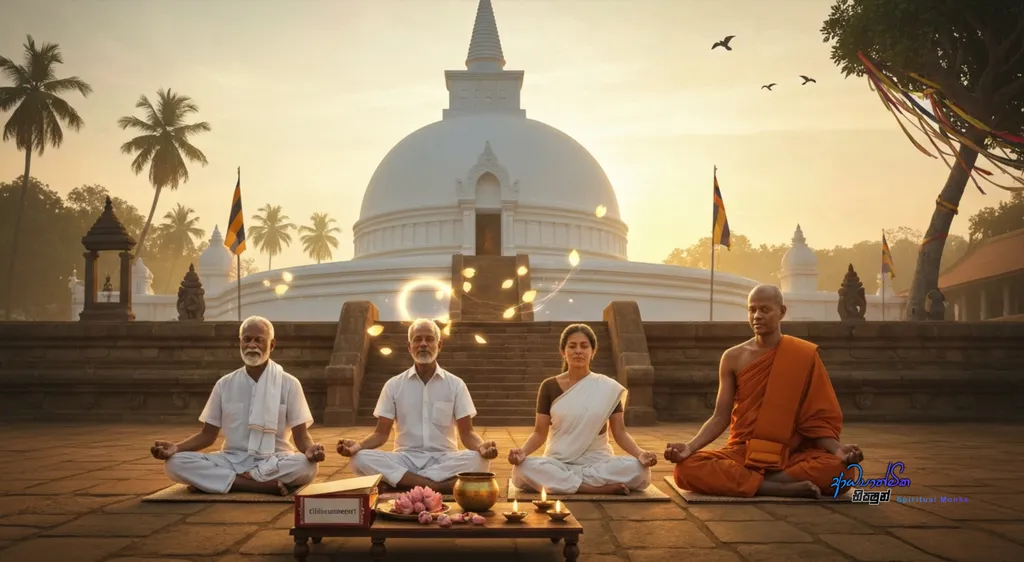
For all of you, this is your opportunity. Whatever your age, it is time to turn towards meditation, to practice sati-sampajañña,to simply watch your mind with mindfulness. If you are new to this teaching, start right now. Watch your mind with awareness. I have explained how to do this clearly in our teaching titled “Silently Watch the Mind.”
Overcoming Spiritual Plateaus: Using Mindfulness on Disillusionment Itself
Use your disillusionment to help you watch your mind, starting today. As you watch, you will see how to move forward systematically. Continue to do this, watching the mind with mindfulness.
This also applies to those already meditating. When you don’t get results in your practice, whether in our tranquility meditations like the ‘third eye’ practice or insight meditation, you can get very disillusioned and sad. Recognize this feeling as a mental defilement (kilesa). Watch it with keen mindfulness.
As you watch, you will begin to see your disillusionment clearly. “Ah, right now there is disillusionment in my mind, there is sadness, pain. Because of this, I don’t feel like practicing any meditation. I don’t feel like going to any other teacher. I feel this way because I am not getting results.”
Do you see how you have become disillusioned even with the spiritual world due to a lack of results? Just watch this. When you look, you will understand. As you keep watching, over time, this very disillusionment becomes a tool to develop your meditation further.
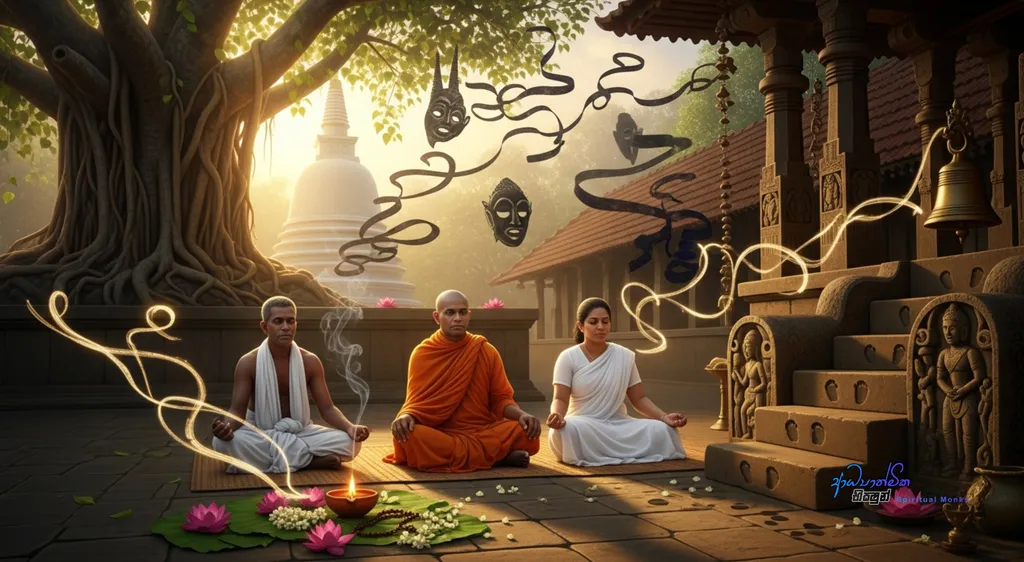
When a feeling of disillusionment arises, you will be able to watch it with mindfulness as it dances before your mind. It performs quite a show. For some, it may even make it impossible to eat or bathe. You may go to work only because you have to, but without any real interest.
When you are in this state, just watch with sharp mindfulness. As you continue to watch, you will realize: “This disillusionment, this sadness, is itself an obstacle to my meditation. Although worldly disillusionment helped bring me to the path, spiritual disillusionment is now becoming a hindrance.” As you watch, you will begin to see the thought arise, persist, and vanish. You will see the energy of that thought and how many days it kept you from your practice.
As you understand this with wisdom, the feeling will lose its power and disappear. Days, weeks, or months later, it will be gone. Then, if disillusionment arises again in the future, it will not have the power to create deep sadness or make you stop your practice. The thought “What is the use of this meditation? There are no results!” will never again be uttered by your mouth or even arise in your mind.
Conclusion: Your Path Forward to Peace and Wisdom
Please, try this practically. You will definitely get results. I remind you again before I conclude: practice with mindfulness. For newcomers, I urge you to explore our teachings on watching the mind and our playlist on establishing mindfulness. By using this method for your worldly problems, exams, work, business, family issues, you will find that after a short time of watching them with mindfulness, they no longer cause you great disillusionment. Your life will return to a state of balance, correctness, and happiness.
In this teaching, I have explained how disillusionment arises in both worldly and spiritual life and how we should face it. If you act according to this advice, you will surely be able to develop and stabilize your spiritual path. I don’t need to explain further; for a wise and intelligent person, you can adapt these teachings and move forward.
Please continue to share your experiences in the comments section to help and inspire others on this path. Your insights are a great help to others. I will now conclude this teaching on identifying disillusionment and developing mindfulness.
May the power and blessings of the Triple Gem,the Buddha, the Dhamma, and the Sangha, help you all to understand these matters well, to use your disillusionment as a tool for practical development, and to move ever forward on the path.
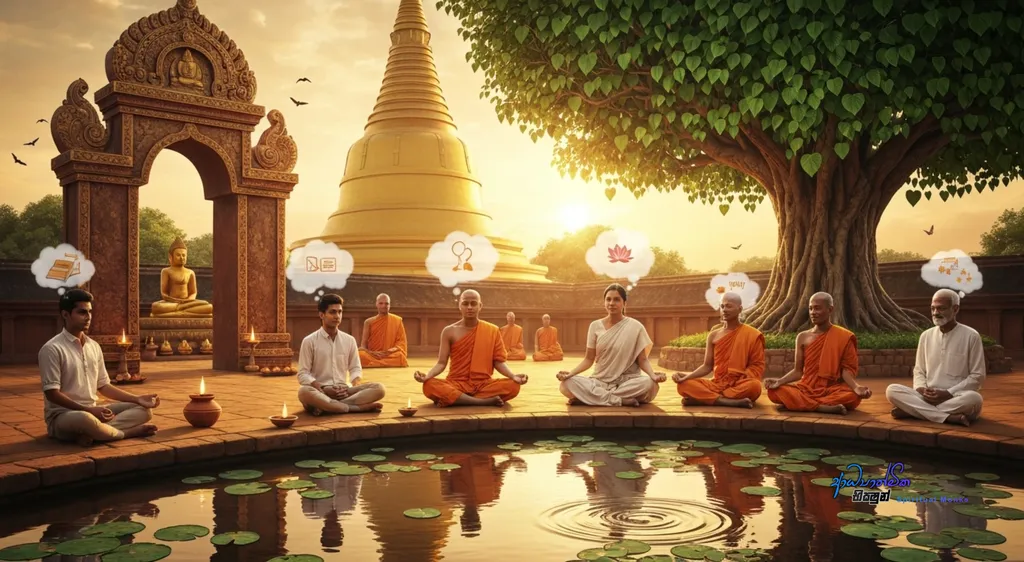
We invite you to walk this path with us. Read our teachings, and most importantly, apply them practically in your own life. as you practice, questions will naturally arise. Please feel free to share your experiences and questions in the comments below, via email or contact form. I will do my best to offer guidance in future talks based on your progress. For now, begin this practice with an open heart and a mind free from expectation. Cultivate it correctly, and may you find the clarity and peace you seek.
Thank you for joining us. We hope this blog will be of great benefit to your spiritual journey.
May you all be well and happy.
May the blessings of the Triple Gem be with you all!.


