


Categories: Dhyana: Practical Training
May the blessings of the Triple Gem be with you all!
Today, as we continue to explore the spiritual life together, we will delve deeper into the practical cultivation of meditative states. This teaching is offered as both gentle advice and a practical guide for those of you who are earnestly training in what are known as the Dhyānas, profound states of meditative absorption. My hope is that you will listen carefully to this guidance and apply it thoughtfully, for it will be a great help in ensuring your spiritual journey proceeds correctly.
The theme of our reflection is, “Practice the Dhyānas one by one, without rushing.” This is not a race. When you begin to practice, perhaps following our teachings on the formless absorptions or the practical path to the Brahma worlds, you must understand that these are not things that can be achieved in a hurry. They must be cultivated one by one, little by little. This requires immense patience in meditation.
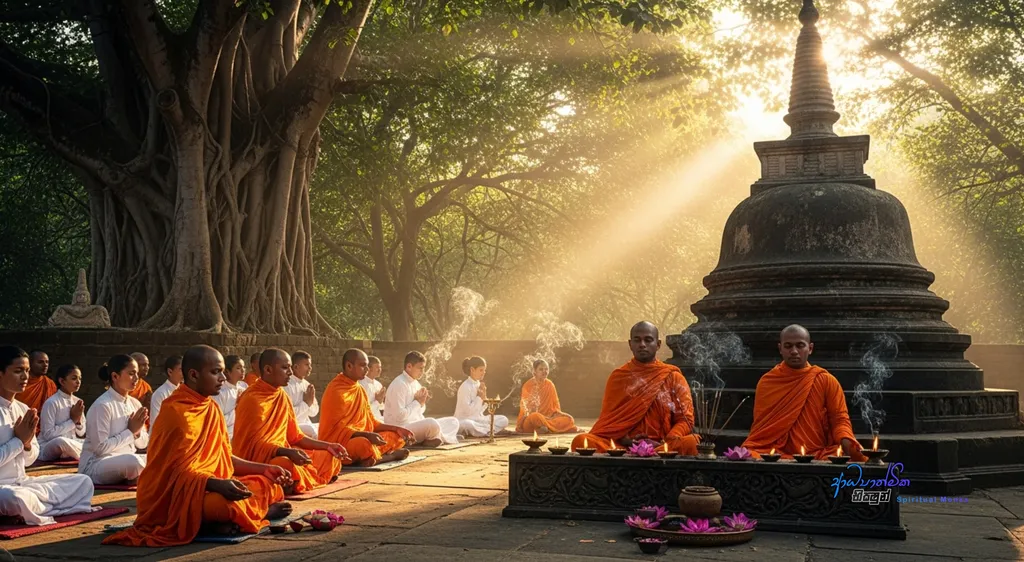
The Dangers of Haste: Why You Shouldn’t Label Your Meditative State
Now, this doesn’t mean that deep experiences can’t happen suddenly for some. The path is relative and unique to each individual. However, a common mistake is to immediately try to judge or label your experience. You might think, ‘Am I in the first formless Dhyāna, the sphere of infinite space, Ākāsānañcāyatana? Or is it the sphere of infinite consciousness, Viññāṇañcāyatana? Or perhaps nothingness, Ākiñcaññāyatana? Or the sphere of neither perception nor non-perception, Nevasaññānāsaññāyatana?’
Please, do not rush to these conclusions. Do not try to force a label onto your experience. There is no need to create extra anxiety by either doubting or blindly believing you are in a specific state. We must avoid this haste. True spiritual practice is an exploration, a personal investigation, not a race to a finish line.
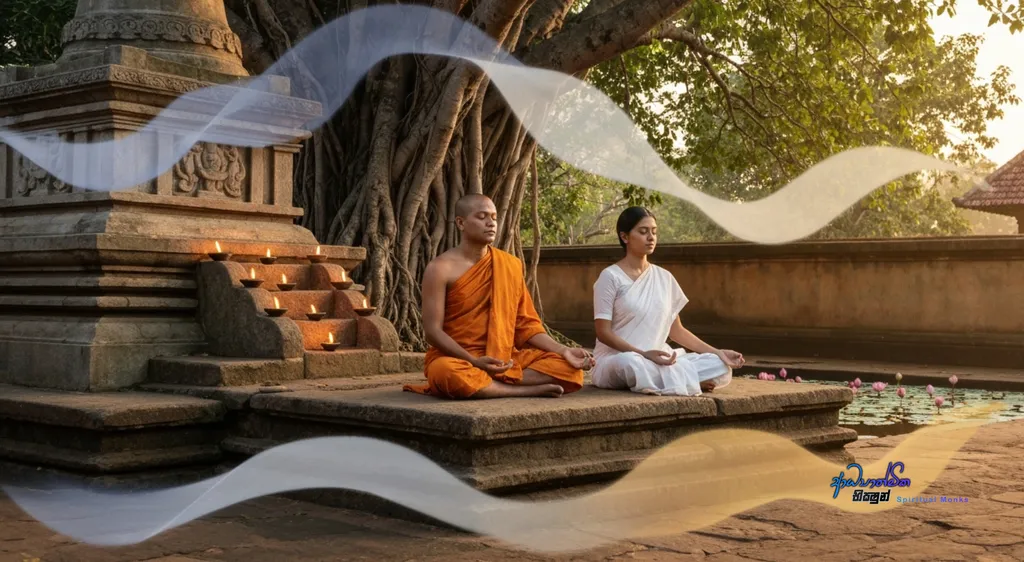
The Middle Path Between Doubt and Blind Belief
As you begin to explore your own mind, you walk a fine line between two pitfalls. The first is doubt. If you start to think, ‘My meditation is wrong,’ you are giving an opening to what we call Mara, the forces that obstruct spiritual progress. Doubt, or Vicikicchā, is one of the ten armies of Mara. It can cause you to abandon your practice altogether.
The second pitfall is blind belief. Even if your teacher tells you something, don’t accept it instantly without investigation. This doesn’t mean you should doubt your teacher, that would be harmful. Instead, adopt a middle path: be neutral. Treat it as a hypothesis to be tested through your own experience.
This is the heart of true investigation, or gaveshanaya. You are a researcher of your own mind, and researchers do not jump to conclusions. This approach, grounded in gentle curiosity and patience in meditation, protects you from harm.
The Inner Signs of Progress: Overcoming the Five Hindrances
So, how do you know you are on the right track? According to the teachings of the Buddha, the state of Dhyāna arises when certain mental obstacles are temporarily overcome. These are known as the Five Hindrances, or Pañca Nīvaraṇa. In the Pali language, they are:
- Kāmacchanda (sensual desire)
- Vyāpāda (ill will or aversion)
- Thīna-middha (sloth and torpor, or sleepiness)
- Uddhacca-kukkucca (restlessness and worry)
- Vicikicchā (skeptical doubt)
When these five are subdued, positive qualities naturally emerge: one-pointedness of mind (ekaggatā), joy (pīti), and blissful ease (sukha). You don’t need to get lost in these technical terms. Simply observe your experience. If you feel these qualities arising clearly and consistently, then you can be confident you are in a state of Dhyāna. Your own direct experience is the ultimate proof.

A Practical Test: Experiencing the Sphere of Infinite Space
Let’s take a practical example from our ‘Third Eye’ meditation program: the first formless Dhyāna, known as Ākāsānañcāyatana, or the sphere of infinite space. When you cultivate this state, you may begin to see the sky in your mind’s eye,sometimes with clouds, sometimes without, but always stretching into boundlessness. As this happens, you might also feel physical sensations. Your body may feel very light, as if it’s floating or rising upwards.
Now, some of these sensations, like floating, can also occur in lighter states of concentration, known as samādhi. The key difference is stability. In samādhi, these feelings are often fleeting and inconsistent. In a trueDhyāna, they are stable and sustained.
Through this careful process of investigation, you can ask yourself: ‘Am I seeing the infinite sky as the venerable sir described? Am I feeling the lightness and floating sensation in my body?’ When you can answer yes, you have found the evidence within yourself. This self-discovery is a reward of your patience in meditation.
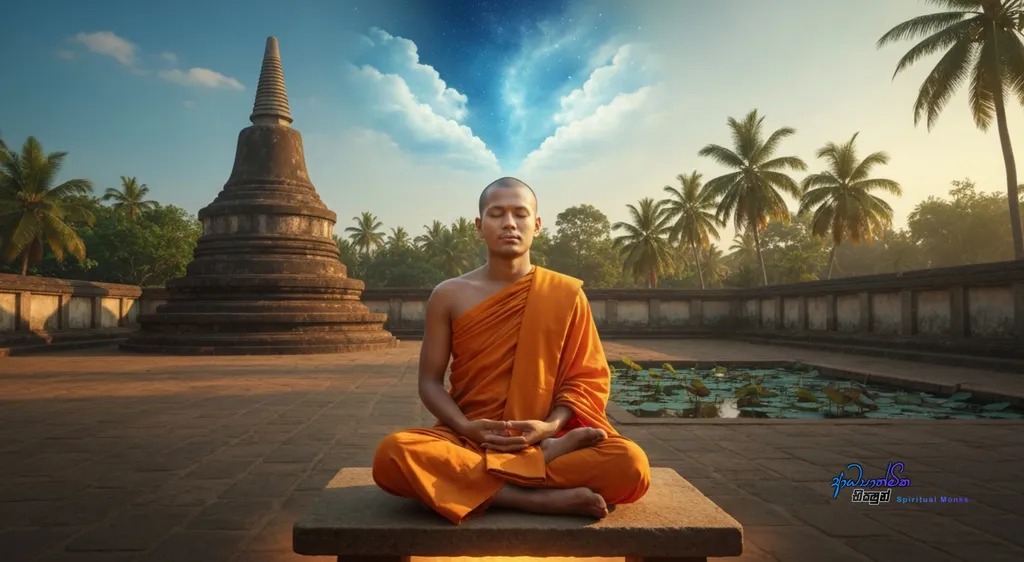
Mastering the Mind: How to Make a Dhyāna Your Own
Once you have touched upon a Dhyāna, the next step is to master it. This is what we call making the state your own, or vashī karagannavā,bringing it under your control. Imagine you are a tough person moving to a new town. You can’t just arrive and be the boss. You first have to walk every street, learn the layout, identify the other tough people, understand their weaknesses, and gradually establish your influence. Only after you know every nook and cranny can you truly run the area.
It is the same with Dhyana. Don’t be in a hurry to move to higher states. First, master the one you are in. Ask yourself: Can I enter this state whenever I wish, simply by closing my eyes, without needing to repeat any words or phrases? A practiced person’s mind goes there automatically.
Can I remain in this state for as long as I decide? If you can stay for an hour, practice resolving to stay for an hour and five minutes, then an hour and ten, gradually extending the time. Can you ‘play’ in this state, controlling it with ease? When you can do this, the Dhyana is yours. For so long, your mind has made you dance to its tune. Now, you are making the mind dance to yours.
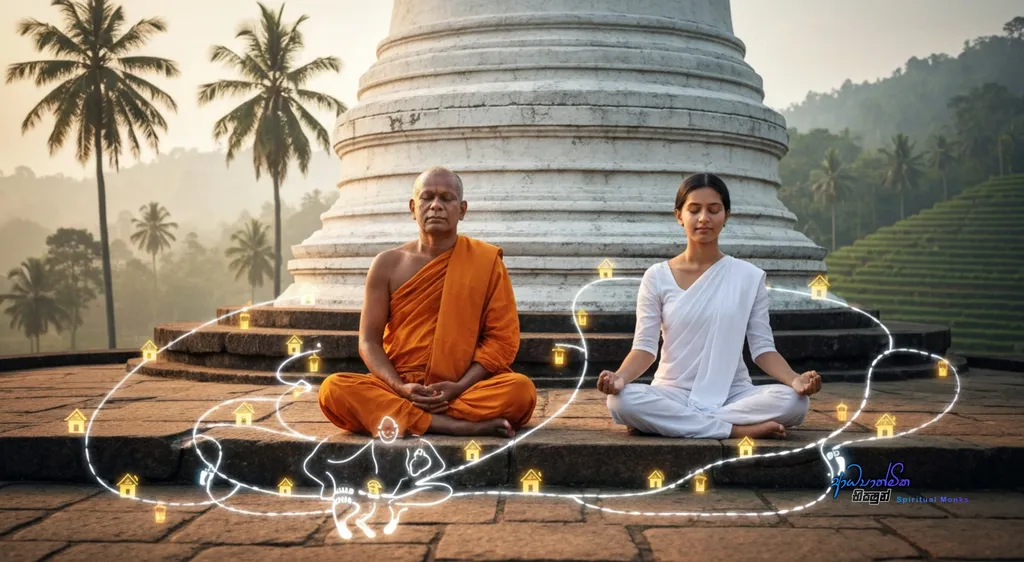
The Unmistakable Signs of True Absorption
If you are struggling to achieve this level of mastery, it is a sign that you have not yet fully established the Dhyāna. Perhaps you are only experiencing its characteristics intermittently, or you are still in a state of deep concentration (samādhi). The definitive sign of a true Dhyāna is the complete absence of worldly thoughts.
A person absorbed in Dhyāna does not think, ‘Oh, I should call my child,’ or worry about their property, their job, their spouse, or their parents. Not even a subtle thought like, ‘I’ve been meditating a long time, I need to sleep,’ or ‘I’d like a cup of tea,’ arises. The bliss of the Dhyāna is so complete that there is no desire to leave it.
If such thoughts do appear, it means you are not yet fully absorbed. You are a practitioner still developing, and that is perfectly fine. It simply means you must continue to practice the first Dhyāna with diligence and patience in meditation. Don’t think about higher states; there is no benefit in that yet. Focus on making the first one solid.
The Step-by-Step Path to Deeper Consciousness
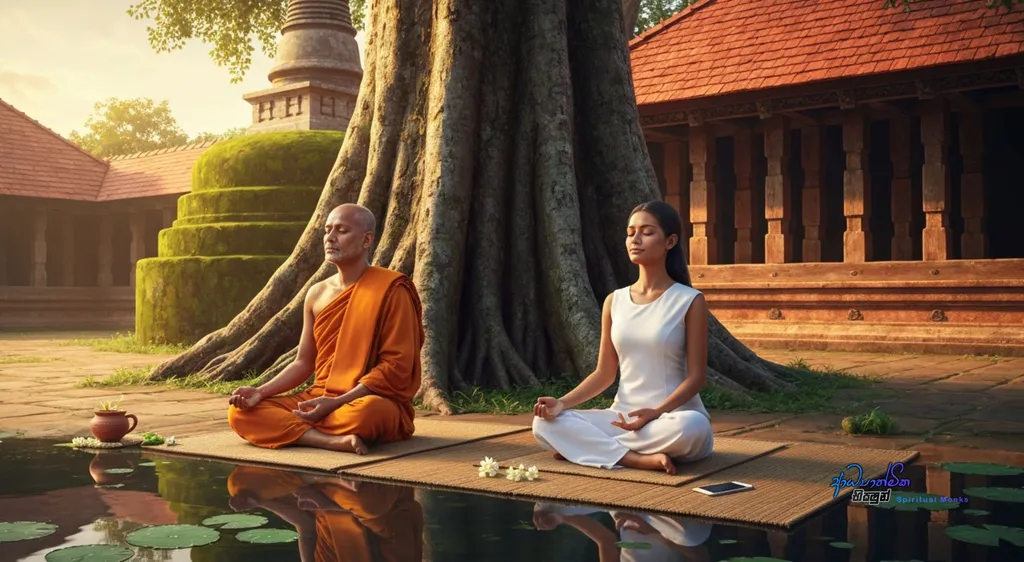
The path forward is methodical and requires great patience in meditation. Even if you don’t yet have access to the ‘Third Eye,’ you can still listen to the teachings on the first, second, third, and fourth Dhyānas to gain knowledge. But in your practice, stay with the first one. It doesn’t matter if it takes three months, six months, or even a year. Master it completely.
You should reach a point where you can enter it anywhere, even while sitting on a bus, just by closing your eyes. You should be able to set a mental resolution. For instance, if you sit to meditate at 4 a.m. and need to get ready for work at 5 a.m., you can resolve, ‘May I be awakened at 5 a.m.’ And precisely at 5 a.m., you will emerge from your meditation. This is not about waking from sleep, but emerging from the meditative posture at a set time. This is a sign of control.
Once the first Dhyāna is fully mastered and under your control, the characteristics of the second will begin to arise naturally, on their own. Then, and only then, do you shift your focus. You master the second in the same way, then the third, and then the fourth. For some, after spending a long time in the fourth Dhyāna, the ‘Third Eye’ may awaken.
Then you can proceed to the formless Dhyānas, mastering each one in turn, all the way to the eighth. This is the path. If you follow this, you will surely achieve genuine Dhyāna. If not, you are still a practitioner developing concentration, which is a vital and necessary stage. The Buddha taught that the mind must be trained constantly, whether for absorption or for insight. So, keep practicing.
Conclusion: A Blessing for Your Practice
I believe these explanations are sufficient for now. Should it be necessary, I will offer further teachings to help you analyze this subject of Dhyāna from different perspectives. For today, we will conclude our discussion here.
May the power and blessings of the Buddha, the Dhamma, and the Sangha, the Triple Gem, be with you. May you be able to grasp these matters well, understand them with wisdom, and act upon them skillfully. With this blessing, I conclude this teaching.
We invite you to walk this path with us. Read our teachings, and most importantly, apply them practically in your own life. as you practice, questions will naturally arise. Please feel free to share your experiences and questions in the comments below, via email or contact form. I will do my best to offer guidance in future talks based on your progress. For now, begin this practice with an open heart and a mind free from expectation. Cultivate it correctly, and may you find the clarity and peace you seek.
Thank you for joining us. We hope this blog will be of great benefit to your spiritual journey.
May you all be well and happy.
May the blessings of the Triple Gem be with you all!.


