


Categories: Maintaining Mindfulness
May the blessings of the Triple Gem be with you all!
Today, we explore a deeply personal and often painful aspect of our spiritual journey: the burden of regret. This feeling, this tendency to dwell on our past actions, can become a significant obstacle, preventing us from moving forward in our daily lives and, most importantly, in our spiritual development. Our goal here is to understand why we experience this and, more practically, how we can face it with wisdom and compassion.
Life presents us with countless experiences. As human beings, we navigate a world of unexpected challenges and encounters. Some of these memories are joyful, things we are happy to recall. But many are experiences we wish we could forget actions or words that now cause us pain and lead to this feeling of profound remorse. This is a powerful step in overcoming regret: acknowledging its presence in our lives.
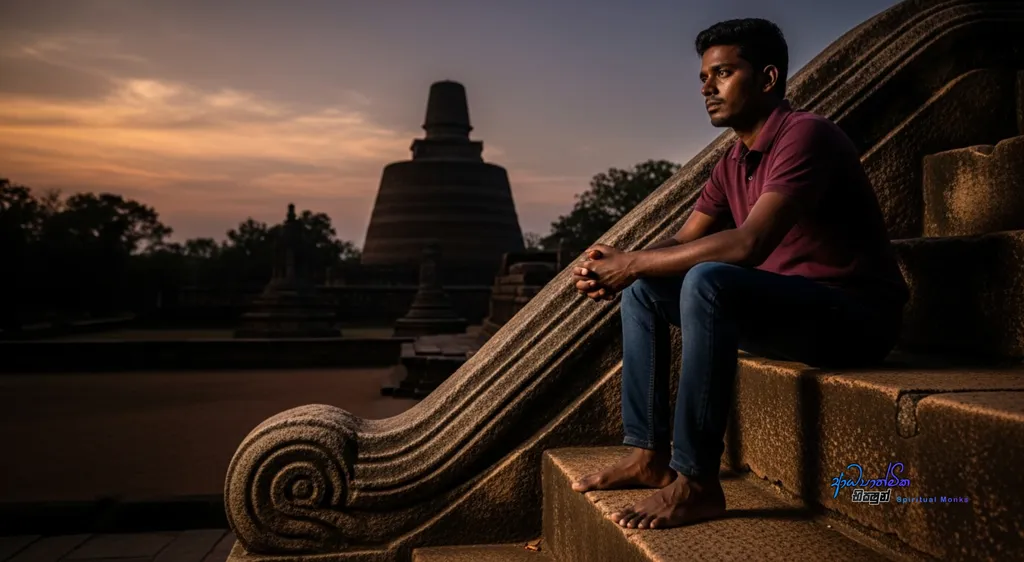
The Many Seeds of Remorse: Where Does Regret Come From?
Regret can stem from countless sources, often starting from a young age. It can be triggered by economic hardship, conflicts with our parents, or disagreements with siblings and relatives. It can arise from problems at our workplace or difficulties in our romantic relationships. Whether in a university, a school, or within our own family as a husband or wife, life provides fertile ground for actions that later haunt us.
In moments of sudden anger, we may have spoken harsh words. Some of us may have caused physical harm to another, engaged in fights, or even been responsible for another’s death. From our mouths, words have escaped that we wish we could take back. In essence, many of these actions are breaches of what Buddhists call the Five Precepts the foundational ethical guidelines to abstain from killing, stealing, sexual misconduct, lying, and intoxication.
When these actions come to light, they can bring a deep sense of shame, causing those closest to us to become disillusioned and distance themselves. You might even be in a situation right now where a relationship has been severed because of something you did.
Perhaps you betrayed a loving partner by having an affair, and the discovery has left you drowning in remorse. Or maybe you spoke a cruel word to your parents, the kindest people you know, and that word now echoes in your mind. It could be a mistake made against a good friend, whether intentional or not. These are the seeds from which the thorny plant of regret grows, and understanding these roots is the first step in overcoming regret.
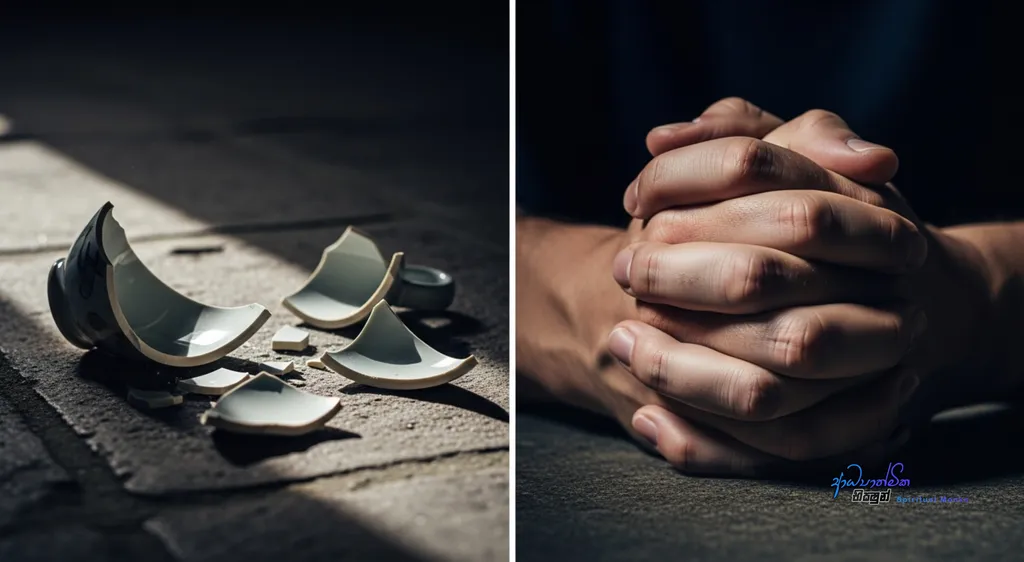
The Awakening of Conscience: Why Regret Hits Hardest When We Try to Change
Interestingly, the weight of our past mistakes often becomes heaviest on the very day we decide to become better people. When we feel the urge to correct our faults and walk a more righteous path, the memories of our past wrongdoings surge forward with immense force.
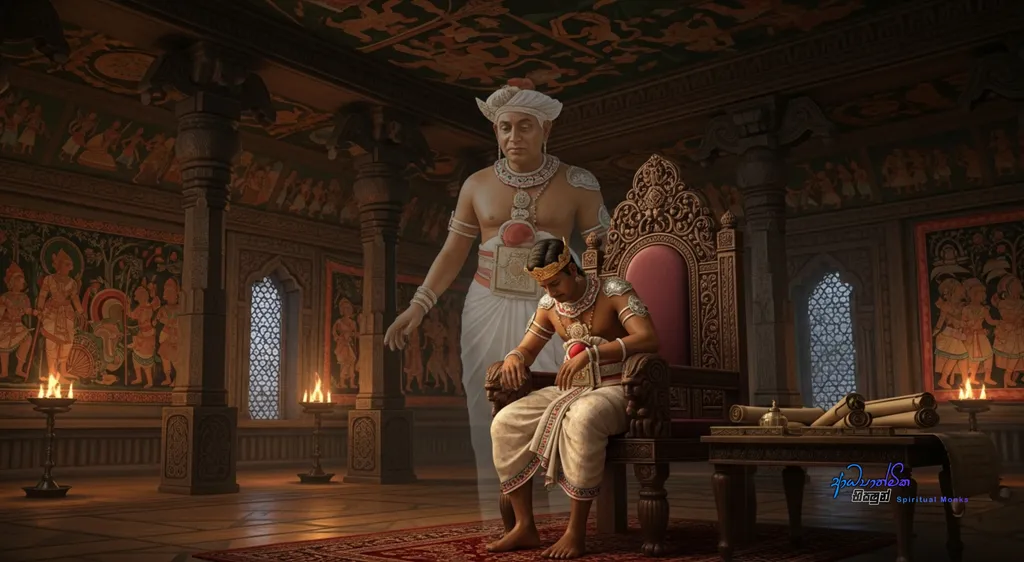
We see a powerful example of this in Buddhist history with King Ajatasattu. You may have heard how he tortured his own father, King Bimbisara, which ultimately led to his father’s death. After committing this terrible act, Ajatasattu was consumed by profound regret. To alleviate this suffering and find a path to redemption, he sought refuge in the Buddha’s teachings and became the primary royal sponsor for the First Buddhist Council. His story teaches us that the desire to change often awakens the ghosts of our past.
As long as you are engaged in unskillful actions perhaps obstructing someone’s education or causing them harm you may not feel any remorse or even recognize the fault in your actions. Your mind is clouded. But one day, perhaps when you are older and closer to death, you will inevitably look back and think, ‘I did such things.’ That is the day when overcoming regret becomes a critical necessity.
The Unsettled Past: How Unresolved Actions Haunt Our Final Moments
During our youth, we are often too busy to feel the full weight of our mistakes. The world is full of sensual pleasures and distractions that keep our minds occupied. We don’t pause to reflect. But a day will come when you feel helpless, perhaps on your deathbed. In that moment of vulnerability, the past will rush in.
Consider those who take the lives of other beings butchers who slaughter cattle or chickens, or fishermen. For years, perhaps up to the age of 50, while their bodies are strong, they continue their work. But once they are old and confined to a bed, their mind begins to replay these actions, one by one. They may be unable to even speak of their remorse, suffering silently with the memories. In these final moments, some may even see visions of beings from unseen realms or glimpses of their past and future lives.
In the Buddhist teachings, specifically in the Abhidhamma (the higher philosophical texts), this is described in relation to the final thought-moment before death, which is influenced by one of three things: Kamma (a past intentional action), Kamma Nimitta (a symbol of that action, like seeing a weapon), or Gati Nimitta (a sign of the destination of rebirth). You can explore these terms to understand this process more deeply. This shows how our actions, if left unresolved, create the conditions for our future suffering, making the work of overcoming regret so vital.

The Self-Inflicted Wound: How the Mind Uses Regret to Weaken Us
This is why we must be so careful. Our fun should never come at the cost of another’s well-being, not even through a hurtful word or a malicious thought, because it will become a cause for our own regret. There are so many people today living with this burden, having harmed their parents, partners, children, colleagues, or even the natural environment. I have met countless individuals who regret actions and words directed at the Triple Gem the Buddha, the Dhamma (his teachings), and the Sangha (the community of monks and nuns).
The mind has a powerful tendency: it latches onto whatever thought can weaken you the most and begins to torment you with it. It forces you to relive the memory, trapping you in a cycle of pain, fatigue, sorrow, and despair. This process doesn’t shorten our journey through Samsara (the cycle of birth and death); it only extends it. The mind does this because its habit is to perpetuate its own existence by clinging to the actions the kamma we have accumulated in this life and throughout our past.

The Enemy Within: Regret as an Obstacle in Meditation
This inner turmoil often intensifies when you begin to meditate. Whether you are practicing Samatha (calmness meditation) or Vipassana (insight meditation), the path to liberation, these thoughts of regret can become a formidable enemy. They surface to sabotage your practice. The mind whispers, ‘Remember what you did to them? Remember how you behaved?’ It tries to knock you off the path, to make you mentally collapse.
These memories can manifest as headaches or a deep sense of laziness, making you want to abandon your practice and just sleep. It’s similar to the pain of a breakup, where you might lie in bed all day because the emotional agony is too much. These thoughts of regret can have the same paralyzing effect, whether they are about a relationship or any other past mistake. They can appear at the beginning of your meditation journey or even after you have been practicing for some time. This is a battle, and regret is one of the enemies you must face. Overcoming regret is a crucial part of this inner war.

The Ultimate Weapon: Realizing the Past is Truly Past
So, how do we practically engage with this enemy? The only weapon we need is mindfulness. You have made mistakes. We all have. Through body, speech, and mind, you have done things you are not proud of. Perhaps your mind tells you to call the person you wronged and apologize, suggesting that only then will you find peace.
Going and apologizing is not necessarily a problem. However, the mind is tricky. After you apologize, it might then taunt you, saying, ‘See? You were brought low. You were made to feel ashamed.’ For others, who are too proud to apologize, the mind finds other ways to torment.
But here is the most important realization, the central point for your practice: All of those events are over.
Think of the great enlightened saint Angulimala. Before he became a monk, he was a murderer. But the Buddha pointed out to him that those actions were committed *before* he entered the noble path. From the day he became a monk, he never harmed another being again. This is the key insight for you as well.
From the day you commit to this right path, from the day you begin to practice meditation and cultivate mindfulness, you are a new person. Your past actions, whether they happened yesterday or years ago, are finished. Every word I am speaking right now belongs to the past the moment it is spoken. In the same way, all of your past experiences are gone.
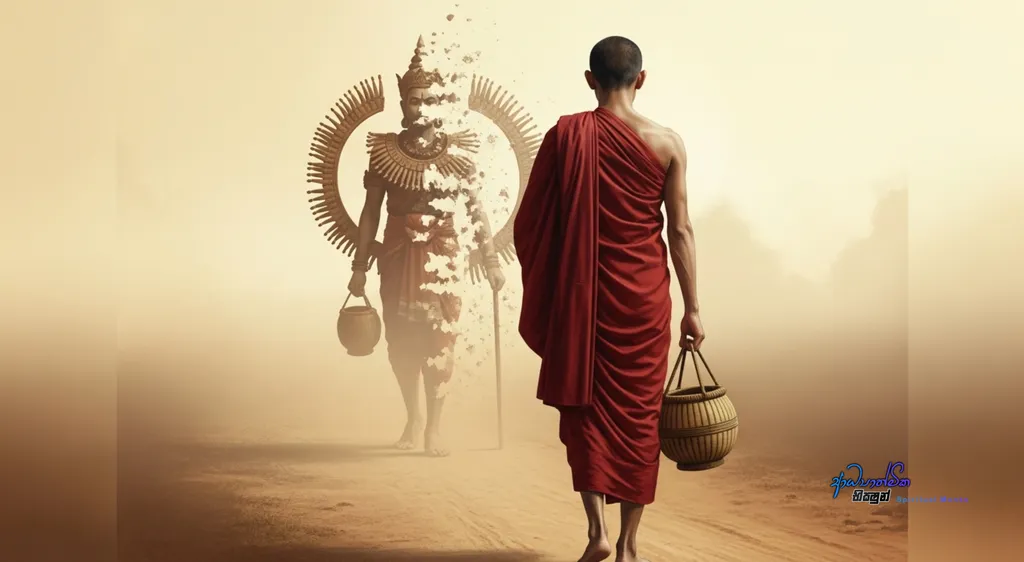
The Practical Path: How to Use Mindfulness for Overcoming Regret
Therefore, there is no benefit in dwelling on past killings or other unskillful deeds. If you keep your mind fixed on them, that is what will likely arise at the moment of death, leading to an unfortunate rebirth in a lower realm of suffering. However, if you can decide from this moment on, ‘Okay, I made mistakes. They are in the past. There is no need to regret them now. In the present, I will not do such things, and I am resolved not to do them in the future,’ you change your destiny.
With this resolution, you can begin the practice. As we have taught in our mindfulness series, especially in the teaching on ‘Silently Watching the Mind,’ you must look at these recurring thoughts with pure awareness. When the thought of regret arises to torment you, simply watch it. Don’t engage with it. Don’t fight it. Just observe it.
When you do this, you will see a profound change. The thoughts that used to derail your meditation, scatter your mind, and make you give up will lose their power. The headaches will fade. The mental exhaustion will lift. You will be able to do your work with focus. If regret previously stole your appetite, you will find you can eat again, simply to nourish the body. Gradually, systematically, you will reclaim your happiness.
You will be able to experience the joy of being present, 24 hours a day. This practice of Sati Sampajañña (mindfulness and clear comprehension) will clear the path, allowing you to engage in your formal meditation practices with renewed strength and clarity. The liberation that comes from destroying a mental defilement a kilesa like regret is a freedom you can experience for yourself, right here and now.
Conclusion: A Path to Certain Freedom and Lasting Peace
Try this practice and see for yourself. Your experience is valuable, so consider sharing your insights, as it can be a great strength for others on their own practical journey. The results are certain. I say this not with 100% certainty, but with 1000% certainty that you will find relief. This is based on the results we have seen in those we have personally guided, and the immeasurable results we have experienced ourselves.
Move forward with this practice and experience the practical comfort, the mental freedom, and the peace that comes from abandoning this defilement. Enjoy the liberation that is your own to claim.
I will now conclude this teaching on the question, ‘Are you regretting the things you have done in life?’
May the powerful blessings of the Triple Gem the Buddha, the Dhamma, and the Sangha give you the strength to accomplish this practice correctly.
We invite you to walk this path with us. Read our teachings, and most importantly, apply them practically in your own life. as you practice, questions will naturally arise. Please feel free to share your experiences and questions in the comments below, via email or contact form. I will do my best to offer guidance in future talks based on your progress. For now, begin this practice with an open heart and a mind free from expectation. Cultivate it correctly, and may you find the clarity and peace you seek.
Thank you for joining us. We hope this blog will be of great benefit to your spiritual journey.
May you all be well and happy.
May the blessings of the Triple Gem be with you all!.


