


Categories: Cosmic & Kundalini Energy
May the blessings of the Triple Gem be with you all!
Today, for those of you exploring the spiritual life in a practical way, we wish to share some understanding about a topic many are curious about: the energy known as Kundalini Shakti. We want to offer insights from our own practical experience, viewing it as a facet of concentration meditation. This exploration of Kundalini energy, or universal energy, may serve as a helpful guide in your own practical journey. We decided to share this knowledge in the hope that it may support you in some way.
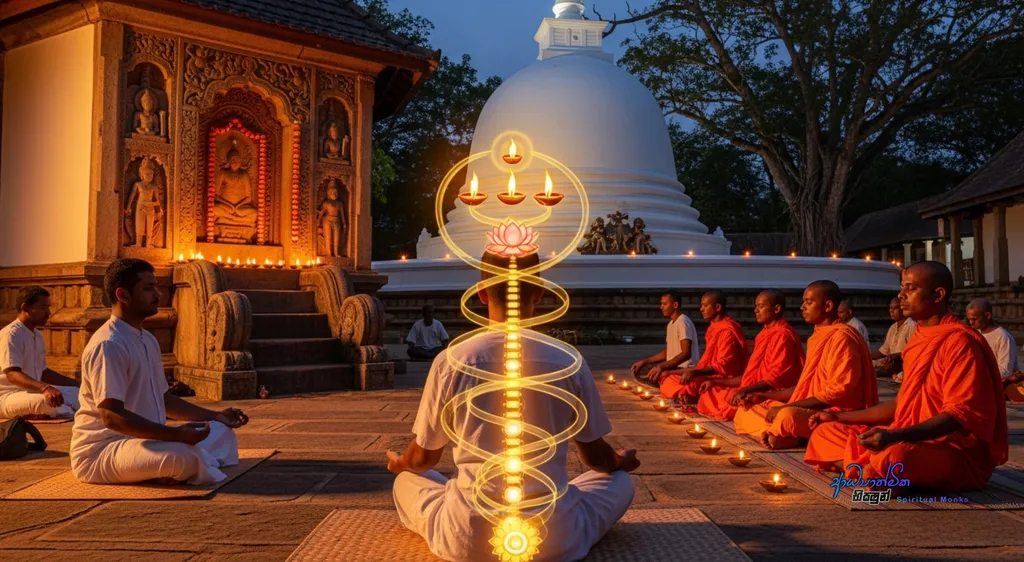
What are Kundalini and the Seven Chakras in a Buddhist Context?
You may know that the experience of Kundalini Awakening involves the activation of seven stages or centers of energy, which are awakened by those practicing certain forms of concentration meditation. In Buddhism, this is understood within the framework of Samatha bhāvanā, or calm-abiding meditation. These seven centers, or chakras, hold various capabilities.
This process of awakening is not exclusive to one tradition. It has been a part of meditative practices in India, followed by ancient sages (rishis), for generations. Whether you follow a Buddhist path of Samatha meditation or another ancient or modern system, these seven chakras can be awakened. If you have explored our previous teachings on whether concepts like universal energy, Kundalini, or the ‘third eye’ are mentioned in Buddhism, you will already have some foundation for this.
It is crucial to understand that these chakras are not physical circles within our material body. You cannot find them with a scalpel. However, for someone whose ‘third eye’ is awakened,what we call dibba-cakkhu, or the divine eye, it is possible to perceive these energy centers. Such a person can observe the extent to which the chakras of a meditating yogi have been awakened. This perception occurs not in the physical body, but in what is known as the astral body or the body of light (kirana kaya).
The seven chakras you may have heard of are: Mūlādhāra (Root), Svādhiṣṭhāna (Sacral), Maṇipūra (Solar Plexus), Anāhata (Heart), Viśuddha (Throat), Ājñā (Third Eye), and Sahasrāra (Crown). A person with an awakened third eye can, with intention, see which of these are active in another person. To discuss this in detail would be a separate topic, but this brief overview is necessary to understand how the voice of a genuine teacher can influence this process.
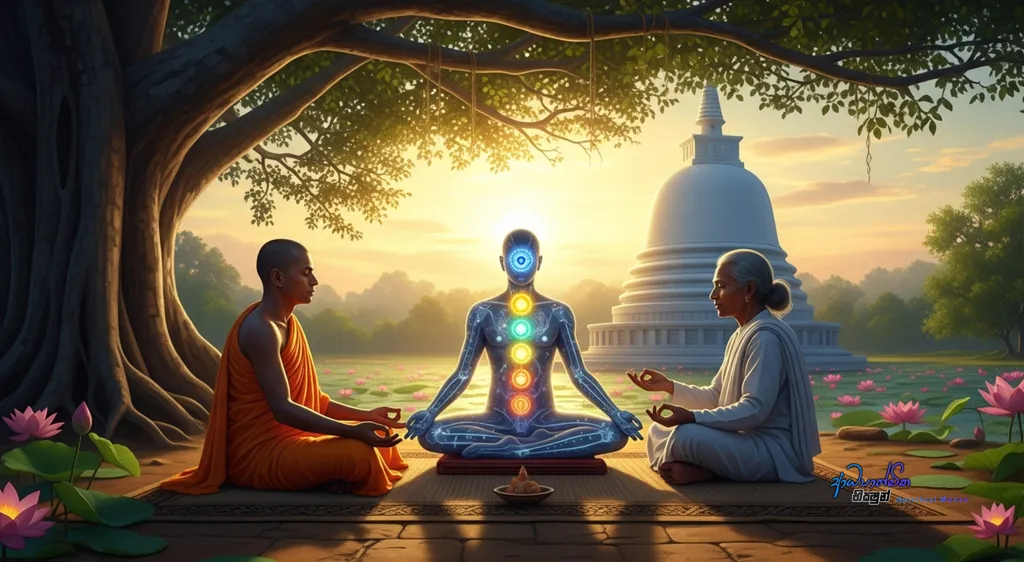
The Essential Qualities of a Genuine Spiritual Teacher
So, what defines a ‘genuine teacher’ whose presence can facilitate such a powerful spiritual event? A true teacher must possess profound qualities such as Mettā (loving-kindness) and Karuṇā (compassion). They must live a life of high ethical standards, which we call Sīla. Crucially, this teacher must not be someone who chases after sensual pleasures or is driven by the pursuit of money. Their character should be strong, their decisions direct, and their personality unshakable.
When such a person develops their spiritual practice, especially through concentration meditation, these abilities naturally arise, supported by their accumulated merit (pañña). Think of great beings like a Mahā Bodhisatta,one who aspires to Buddhahood. Bodhisattas, future Buddhas, and their chief disciples in a Buddha’s era possess immense spiritual stature.
This capacity for great spiritual attainment, whether as a layperson or monastic aiming for Nibbāna (liberation), is built upon the foundation of virtues perfected over countless lifetimes, the ten perfections (pāramitā), especially those related to meditation. The awakening of these energies and the ability to be influenced by a teacher’s voice are fruits of this deep, long-term cultivation.
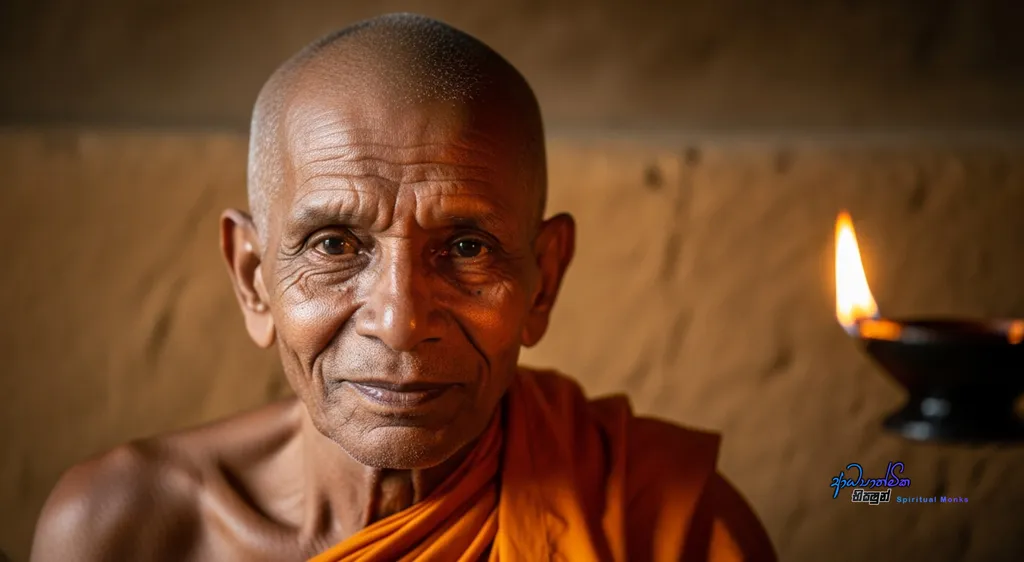
How a Teacher’s Voice Triggers a Kundalini Awakening
Teachers who have mastered the Kundalini energy, or even those who have awakened a significant number of chakras (three, four, five, or more), can have this effect. Naturally, a teacher with all seven chakras awakened possesses a more potent spiritual energy than one with four or five.
This is something we know from direct experience. The potency of a teacher with all seven chakras active in their astral body and a developed mind is immense. This power stems from the perfections (pāramitā) we mentioned, as well as their unwavering ethical conduct, strong character, and directness of speech.
For a person who is spiritually receptive, the voice of such a genuine teacher is often sufficient to begin the process of a Kundalini Awakening. Sim, ply hearing their voice can trigger the activation of the chakras. But does this happen to everyone? No, it does not. This phenomenon is not limited by gender, race, religion, or age. It happens to those, male or female, who have practiced meditation in their past lives. If such a person comes into the presence of a true teacher, an awakening can occur.
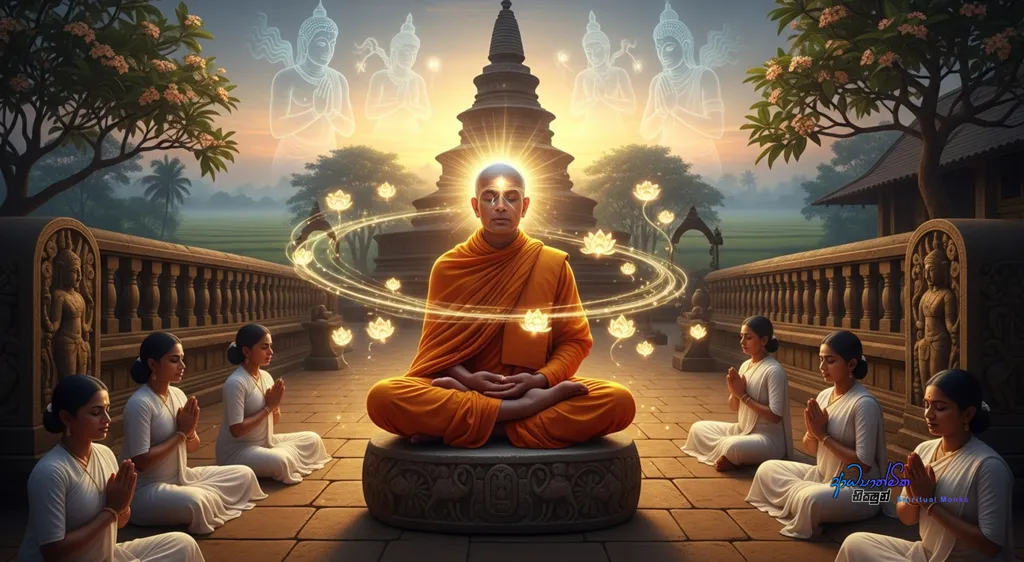
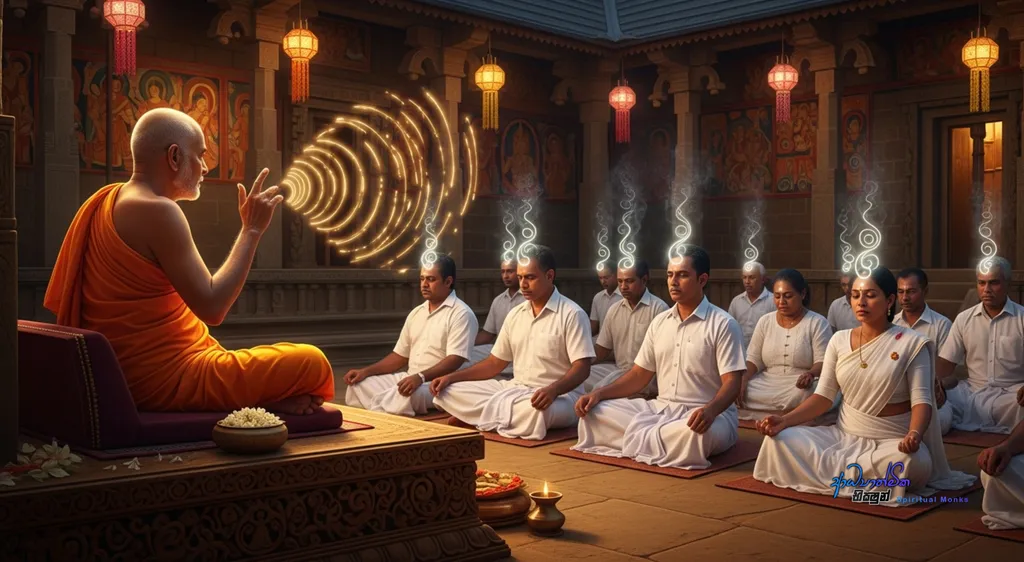
Imagine a monk whose chakras are awakened. He might be giving a teaching not about chakras, but about the realms of hell or heaven. As he speaks, a man or woman in the audience who has past meditative experience may begin to feel something. The strength, density, and spiritual power embedded in the teacher’s words create a vibration. This wave of energy travels from the teacher’s voice, enters the listener’s ear, and permeates their body, initiating a profound internal shift.
The Physical and Mental Signs of Chakra Activation
What kind of changes can occur? The body begins to align itself for a deeper spiritual life. The blood circulation might quicken. If you suffer from high blood pressure, it might suddenly decrease. Your mind might abruptly enter a state of deep concentration, or Samādhi. You might feel a pressure in the middle of your forehead, the location of the Ājñā chakra, or ‘third eye’. As you listen to the teacher’s voice, your mind might feel like it has gone completely blank or empty.
For others, the sensation begins at the crown of the head, the Sahasrāra chakra, feeling like a pressure, as if someone is pressing down with their thumb. There are many other sensations I may not mention here, but they are all relevant.
However, the most common initial experience is felt at the base of the spine, the location of the Mūlādhāra chakra. When the voice of a teacher who is accomplished in ethics (Sīla), concentration (Samādhi), and has developed their perfections (pāramitā) reaches you, the sound waves touch the nerve system at the base of your spine.
This is similar to what people try to achieve by listening to specific sound frequencies or chants like ‘Om’ on YouTube to awaken their chakras. Each chakra, from Mūlādhāra to Sahasrāra, has corresponding sound vibrations. These sounds, discovered by ancient sages with highly developed minds, have been replicated with musical instruments to help induce meditative states. A true teacher’s voice accomplishes this naturally and far more effectively.
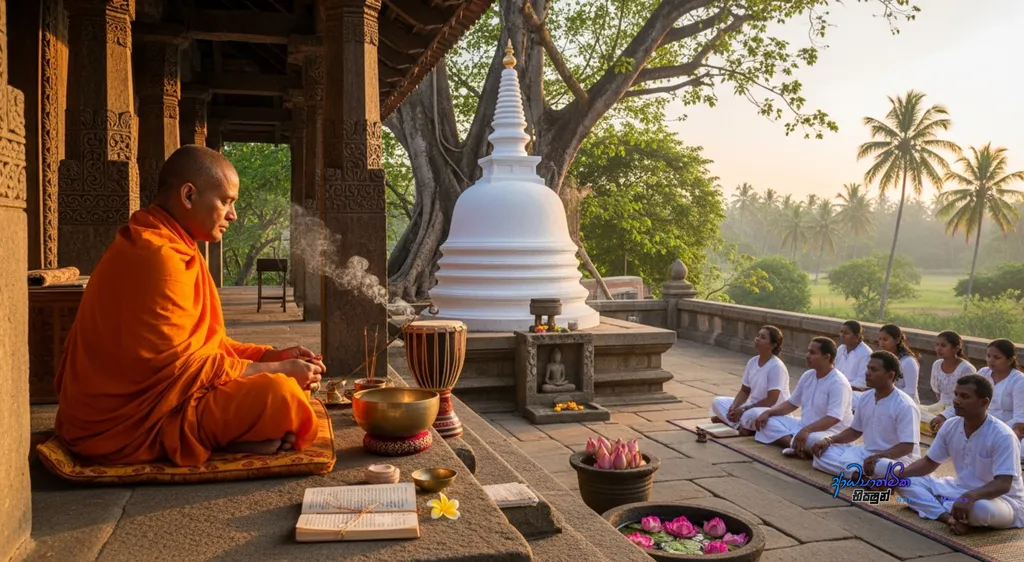
A Call to Practice: Understanding the Message
This experience can happen anywhere. A teacher could be speaking to you on the phone, you might overhear their voice by chance, or you could be sitting next to them on a bus. As you converse, their energy begins to interact with your Mūlādhāra chakra. You might feel a pressure, a tightness, or a sensation of being held down at the very base of your spine, sometimes extending to the left and right sides.
Simultaneously, some may feel a cool sensation rising up the spine, like a wave of refreshment traveling all the way to the crown of the head. For some, it reaches the crown (Sahasrāra); for others, the forehead (Ājñā), the throat (Viśuddha), or somewhere in between. Some even feel it like a serpent uncoiling and rising upwards.
This experience is a profound sign: it means you are a suitable person to develop your spiritual life. It is an indication that you have practiced meditation in your past lives and possess the necessary karmic merit from a concentration perspective.
This means you are ready. You are a candidate to attain deep meditative states (jhānas), awaken the seven chakras, or develop the five higher knowledges (pañca-abhiññā), which include the divine eye, divine ear, knowledge of past lives, reading others’ minds, and psychic powers. This is why you feel the energy from a true teacher so tangibly.
A Sign, Not a Destination: The Danger of Spiritual Stagnation
Herein lies a great danger. Many people, lacking understanding, experience this and get stuck. They latch onto the sensation,the coolness, the pressure,and spend their time endlessly seeking out teachers to ask about it. They search and search, but remain stuck, like being mired in mud, never moving forward.
This is due to ignorance, especially when the path forward is explained so clearly. The next step is not to fixate on the feeling. The feeling is simply a green light. It’s your first day of school, your admission into first grade, facilitated naturally by the teacher’s presence.
The correct action is to ask that teacher for guidance or follow their teachings, developing your practice step-by-step. Whether you practice with a book, with a guide, or by following our teachings here, the task is to move forward. You must establish yourself in ethical conduct (Sīla) and diligently develop your meditation. The experience of a Kundalini Awakening is a message telling you that you are suitable to develop these energies.
But if you ignore it, if you don’t apply yourself practically, that energy will eventually subside and go dormant again. This has happened to countless people. They get scared by their family’s disapproval, or they listen to misguided societal ideas and fears about Kundalini, and they lose the precious opportunity. Do not fall into this trap.

The Unparalleled Power of a Buddha’s Voice
The power of a genuine teacher comes from their merit and perfected virtues (pāramitā). This power resonates with your own past-life practice, and this combination is what causes the awakening. This energy can even be transmitted by highly spiritual celestial beings like Brahmas or devas. In the human realm, it is present in sages (rishis), fully enlightened ones (Arahants), stream-enterers (those who have attained the first stage of enlightenment), Paccekabuddhas (solitary Buddhas), and of course, fully enlightened Buddhas.
In the presence of such a teacher, your meditation seems to grow effortlessly. You may find yourself naturally entering deep states of concentration (jhāna). The third eye may open without struggle. Psychic abilities may arise. Your mind becomes calm and collected on its own. If you are burdened with a thousand problems, simply hearing their voice can make all those thoughts vanish, bringing a profound sense of relief and emptiness to the mind.
Now, if the voice of a sincere teacher can do this, imagine what the voice of a Buddha could do. The experience of hearing a Buddha teach the Dhamma is this, magnified to an infinite, indescribable degree.
A Buddha’s power is the culmination of immeasurable ethical conduct, boundless concentration, limitless wisdom, and the complete perfection of all ten pāramitā. If a contemporary teacher’s effect feels powerful, understand that this is due to their own level of purity and attainment. We are but a grain of sand compared to the Mount Everest that is a Buddha.
Your Path Forward: From Energy to Liberation
The qualities of the teacher’s voice itself, its resonance, beauty, and sweetness, all play a role. This is why the thirty-two marks of a great man, described in scriptures like the Lakkhaṇa Sutta, are mentioned in relation to a Buddha; these qualities are the result of perfected virtues. Such a voice has the power to initiate a Kundalini Awakening in anyone who is ready.
If you have had such an experience, we encourage you to share it in the comments, so that others may benefit from your insight. If you have felt this, start your meditation practice today. Whatever teacher helped facilitate this, use that momentum to cultivate your practice. You can develop the ‘third eye’ meditation, or other concentration practices, and make great progress, all thanks to the initial push and natural energy you received.
This is also why you often see Buddha statues depicted in various hand gestures, or mudras. These mudras are not merely artistic; they also channel and transmit spiritual energy. Waves of energy can flow from the fingers of a deeply concentrated teacher, reaching the listener and arranging their mind for deep listening.
The listener becomes captivated, able to absorb the teaching with full attention. Their mind enters a state of peace, freedom, and stillness, similar to the first jhāna, where hindrances like sensual desire, ill will, and confusion are temporarily suppressed.
Beyond Phenomena: The Ultimate Goal of Practice
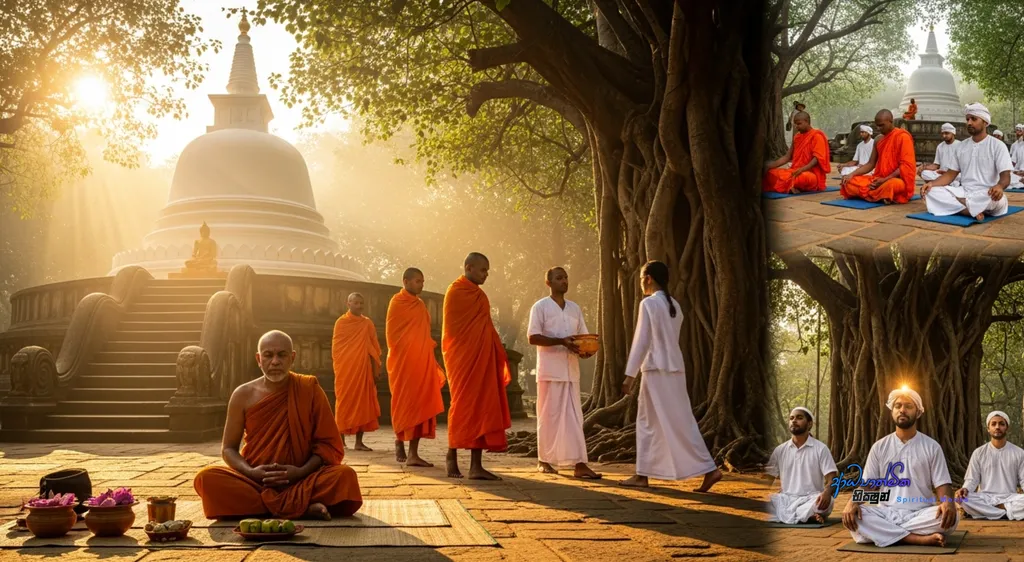
So, reflect: if a good teacher can have this effect, what must be the impact of an Arahant, a Paccekabuddha, or a Supreme Buddha? To be able to realize Nibbāna in the presence of a Buddha, we too must have made preparations. We must have our own foundation in meditation. While other meritorious deeds like giving (dāna) are important, meditation is indispensable. One must have practiced the path of giving, ethics, and meditation (dāna, sīla, bhāvanā) throughout the cycle of rebirths.
The Buddha himself declared that as long as the Four Foundations of Mindfulness (Satipaṭṭhāna) are practiced, the world will not be empty of enlightened beings. We encourage you to read about these practices in the scriptures. If you are not someone aspiring to a specific high position in a future Buddha’s dispensation, you should strive to realize Nibbāna in this very life. That effort itself becomes a perfection (pāramitā) that will aid you in the future.
To this end, we teach the path of insight, or Vipassanā, through our series on maintaining mindfulness, even if we don’t always use the technical term. It is this practice that leads to true liberation. Alongside the concentration practices we discuss, it is vital to cultivate insight. Understand these energies, but do not stop there.
This power to awaken others through voice does not belong to every teacher; it belongs only to the truly genuine ones, as described earlier, those who are sincere, compassionate, and not filled with jealousy or ill will towards others. It is a natural quality for great Bodhisattas and for true human beings who have reduced their ego and live like modern-day sages.
Conclusion: The Union of Teacher’s Grace and Student’s Effort
You cannot know for certain if you have perfected these virtues or practiced meditation in past lives. The only way to find out is to engage in the practice now. No psychic, astrologer, or spiritualist can give you the definitive answer. A true teacher will only tell you one thing: ‘Practice, and you will see for yourself.’ You must become practical.
So many people contact me asking, ‘Can I develop in meditation?’ How can I answer that for you? Do not fall into that trap of seeking external validation. Anyone can develop in meditation if they are sincere. The voice of a true teacher, imbued with loving-kindness, compassion, and the power of their perfections, can awaken your third eye or other spiritual abilities, but only if you have the corresponding past-life merit. The teacher’s power and your past practice must come together.
This is why it is useless to try and force a Kundalini Awakening, even with our help. If you have not done the past work, or if you approach meditation with ulterior motives, as we have warned against in other teachings, nothing will happen. You will not even achieve a calm mind, let alone the sensations at the base of your spine. Please understand this clearly.
I have repeated these points to deepen your understanding and to help you guide others who may have these experiences. I believe this teaching has provided a great deal of clarity. I will conclude this discussion on how the voice of a true teacher can awaken Kundalini energy. May the power of the Buddha, Dhamma, and Sangha, the Triple Gem, bless you to grasp these points, understand them deeply, and apply them practically in your life.

We invite you to walk this path with us. Read our teachings, and most importantly, apply them practically in your own life. as you practice, questions will naturally arise. Please feel free to share your experiences and questions in the comments below, via email or contact form. I will do my best to offer guidance in future talks based on your progress. For now, begin this practice with an open heart and a mind free from expectation. Cultivate it correctly, and may you find the clarity and peace you seek. Thank you for joining us. We hope this blog will be of great benefit to your spiritual journey.
May you all be well and happy.
May the blessings of the Triple Gem be with you all!


