


Categories: Third Eye: Practical Meditation
May the blessings of the Triple Gem be with you all!
Today, in our spiritual exploration, I wish to explain a practice from the ‘Practical Third Eye Meditations’ series. This particular technique is focused on the concept you may have seen, called Ākāsa anantā, which means ‘Infinite Space.’ I will guide you on how to practice this meditation through the Third Eye.
Before we begin, it’s essential to clarify a few key points. This specific Third Eye Meditation is intended only for those whose Third Eye is already opened or activated. At a minimum, it is for those who perceive light signals (āloka saññā), or for those who can see the ‘sky‘ within their meditation as we have previously discussed. Only individuals at this stage of practice can truly engage with this technique effectively.
Many who have followed our teachings have successfully awakened their Third Eye, and it is for you that these instructions are most relevant. For those whose Third Eye is not yet open, this article will serve as a practical teaching, a source of knowledge for the future. You may find it difficult to practice directly at this moment, and that is perfectly alright.
There is no harm in trying, but please understand that this method is most suitable, most fitting, and easiest for those whose Third Eye is open, who see the inner sky, perceive light signals, or see the various preliminary forms and images that we’ve discussed appear before the Third Eye fully opens. It’s for these individuals that the practice is most accessible and potent.
Please try to understand these prerequisites. Those of you who are not yet at this stage, please do not let any feelings of sadness or discouragement arise in your heart. Such feelings hinder the development of meditation. As I have mentioned before, continue with the foundational practices we have outlined. This teaching remains valuable for everyone, whether your Third Eye is open or not. Anyone can try, but the ease and success will be greatest for those with the aforementioned experiences. I trust you now understand who is best equipped to undertake this specific Third Eye Meditation practice.
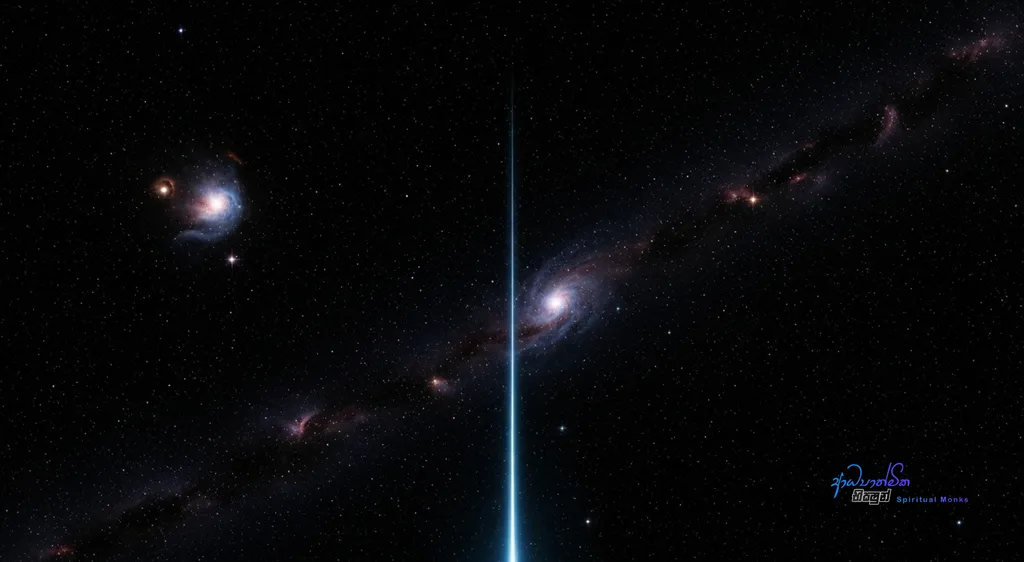
Understanding Ākāsa Anantā: The Nature of Infinite Space
Now, before we begin the practice, I must explain what Ākāsa anantā truly means. It is important to grasp the essence of this phrase. You may have never heard these words before. So, what is it?
Ākāsa is another word for the sky or space. In our previous practical sessions, we used the word ‘sky’ (ahasa) as a meditation object, a concept for mental contemplation in concentration meditation (samatha bhāvanā). Here, Ākāsa refers to that very same thing. The word is slightly different, but the object of meditation is the same.
Next, what does anantā mean?
Most people understand the meaning of ‘infinite.’ It signifies a vast quantity, something immeasurable, a countless or limitless amount. This is the essence of anantā.
So, when we put them together, Ākāsa anantā simply means ‘the sky is vast’ or ‘space is vast.’ It points to an expanse so large it cannot be fully seen or comprehended. This is the meaning we contemplate and cultivate in this Third Eye Meditation.
A Journey Inward: The Path to Meditative Absorption (Jhana)
Previously, when I guided you through Third Eye Meditation practices, the goal was often to enable you to see different places. I taught you how to visit Sri Pada (Adam’s Peak), Ruwanwelisaya, Sigiriya, or even sites in India. However, today’s practice of Ākāsa anantā is not about looking at any external place at all. We are not training the mind to see a location.
This practice is a path toward a state of deep meditative absorption, known in Buddhism as Dhyāna (or Jhana). We are using the Third Eye to access a profound state of mind. This is why the practice is especially suited for those with an awakened Third Eye, who see the inner sky, light signals, or preliminary images. For them, this is a special gift, like a bonus on their spiritual journey. It is, in a way, the fruit of past merit (pin).
Please, do not think that if you cannot do this, you lack merit. That’s not what I mean. It is simply one path among many. Some people must struggle in their meditation to achieve results. Others can attain the same results with ease and comfort, without hardship. We must put aside judgments about whether the path is difficult or easy and simply walk it with a balanced, middle way. This practice is one of those more direct paths to Dhyāna.
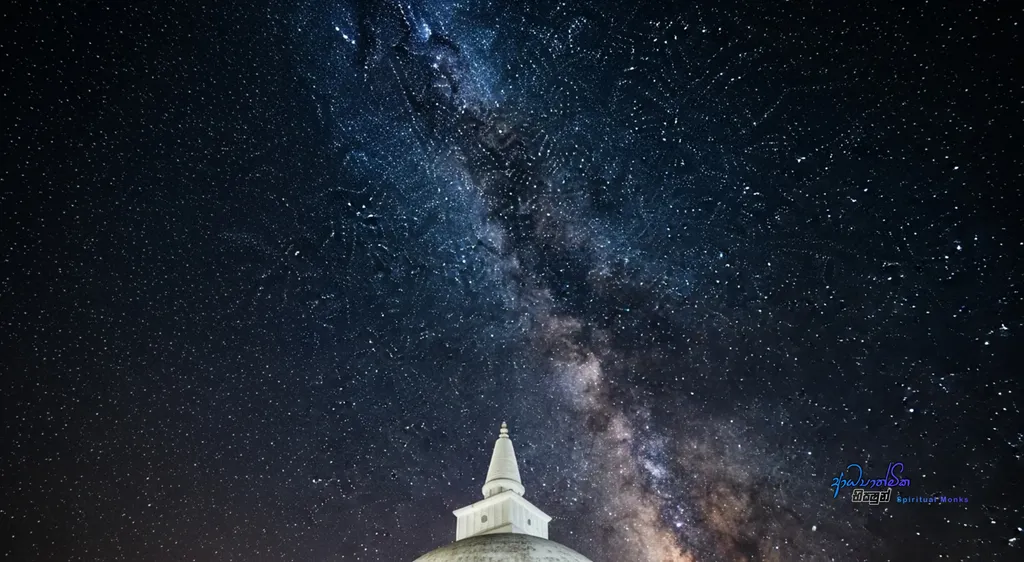
How to Practice the Infinite Space Meditation
Now, I will explain the practical steps for those of you with an opened Third Eye and the preliminary signs we discussed. First, find your usual meditation spot, be it in your room, before your home shrine, or in a quiet place by a river or in a forest. Sit down comfortably.
For those of you whose Third Eye is open, you already know that as soon as you close your eyes, you can go anywhere you wish just by thinking of it. You may recall how we began by contemplating the ‘sky’ to travel to places like Ruwanwelisaya. The sky is also the foundational starting point for entering this Dhyāna.
Once you are seated and have closed your eyes, you will begin to perceive something. For those with an open Third Eye, you might see your surroundings, your room, or various images of sacred places, nature, or the universe. For others, you may only see light signals, perhaps large patches of light or small dots. You will inevitably see some kind of visual forms related to your state of mind.
Here is the practice: instead of contemplating ‘sky’ as we did before, you will now begin to mentally repeat the phrase ‘Ākāsa anantā.’ Do it just as you did with the previous meditation object.
- Mentally recite, ‘Ākāsa anantā.’
- Pause for two or three seconds, remaining relaxed.
- Then, mentally recite again, ‘Ākāsa anantā.’
Continue this at a moderate pace, not too fast, not too slow. Be calm and steady.
In this Third Eye Meditation, our primary focus is on the Ākāsa, the space itself. Though various other images or lights may appear, you must look at all of them and continue to contemplate, ‘Ākāsa anantā.’ For example, you may be seeing light signals, but not the sky. Or you might see the sky along with other images. Someone else might see only the sky. Regardless of what you see, look at it and continue your contemplation: ‘Ākāsa anantā.’ Keep looking at the sky (or the visual field) and repeating the phrase.
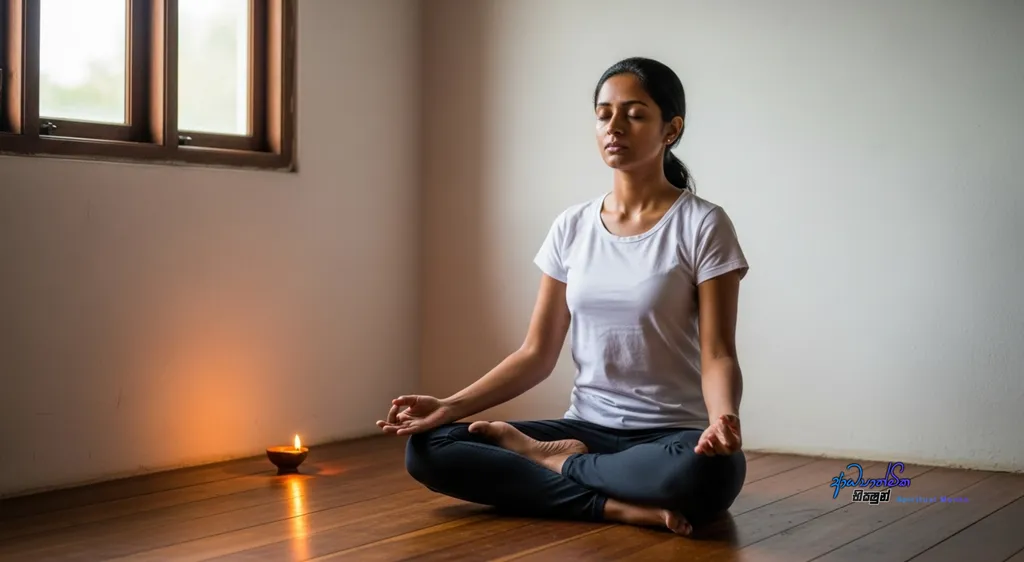
Experiencing Boundlessness: Sensations and Benefits
As you continue this practice, looking at the space and contemplating its infinite nature, the perception of the sky may begin to change. It might seem small at first, but as you repeat ‘anantā’ (infinite), it can begin to appear vast and immense. You will start to realize within your own mind, ‘This space is truly enormous, unimaginably large.’ Let this understanding dawn on you. Affirm this truth until it penetrates your mind, your intelligence, your wisdom (paññā). Focus your mind by looking directly at that space.
During this Third Eye Meditation, other images might appear, perhaps you’ll see Ruwanwelisaya or other sacred places. No matter what image arises, do not give it importance. Do not get distracted by looking at them. Our meditation object, our focus, is ‘Ākāsa anantā.’ We give priority only to that. Ignore everything else, because we are aiming for a state of Dhyāna.
As you deepen in this practice, you may begin to notice certain physical and mental sensations. Do not anticipate them, but be aware they can occur:
- A feeling of floating or weightlessness.
- A strange, pleasant coolness in the body.
- External sounds may seem to fade away.
- A sense of mental peace and comfort you have never felt before.
- The body feeling very light, or even feeling as if the body is not there at all.
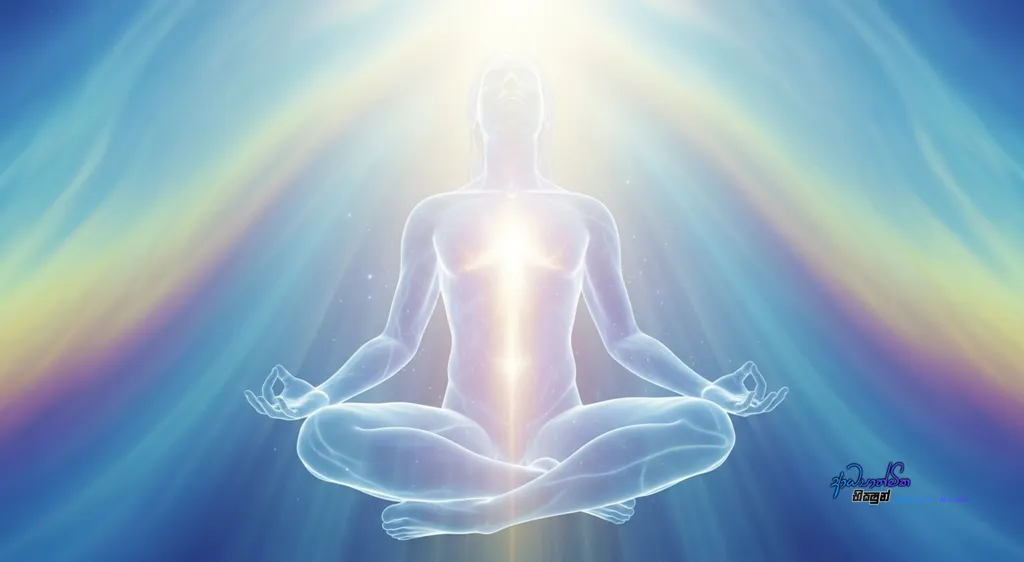
These are just a few examples; you might experience other things as well. Just let them happen without expectation.
The benefits of this Dhyāna are profound. The neural pathways in your brain can open up. Your memory will improve significantly, which is very helpful for students. If you are dealing with problems, you will find they are forgotten. Those suffering from intense mental pressure or stress will find relief. Conditions like migraines and various types of headaches can also be alleviated and may even disappear. Practice this correctly, and you can attain these results.
Your Path Forward
Please undertake this practice without any fear or anxiety. Do not make it a burden. Approach this Third Eye Meditation with a light and relaxed mind, and you will be able to develop it successfully. You may experience all the physical and mental phenomena I mentioned, and even things I have not mentioned. Based on your experiences and the feedback you provide, I will explain how to proceed to further stages of Dhyāna and detail the next practical steps in future teachings.
For today, we will conclude this teaching on the practical Third Eye Meditation of Ākāsa anantā. By the power of the Triple Gem and with my blessings, may you all be able to practice this meditation with wisdom, intelligence, and your own innate knowledge. May you proceed with enthusiasm and without agitation. May you be able to continue this practice regularly and successfully.
We invite you to walk this path with us. Read our teachings, and most importantly, apply them practically in your own life. as you practice, questions will naturally arise. Please feel free to share your experiences and questions in the comments below, via email or contact form. I will do my best to offer guidance in future talks based on your progress. For now, begin this practice with an open heart and a mind free from expectation. Cultivate it correctly, and may you find the clarity and peace you seek.
Thank you for joining us. We hope this blog will be of great benefit to your spiritual journey.
May you all be well and happy.


