


Categories: Teachings on Mara
May the blessings of the Triple Gem be with you all!
Today, through our spiritual teachings, I want to explore a topic that is a critical, yet often unseen, problem for many on the spiritual path: how your own knowledge in meditation can become your greatest enemy. This might sound strange. We spend so much time seeking knowledge, so how can it be a hindrance?
This is a question that arises for almost everyone who meditates, whether you are practicing Samatha (calm-abiding meditation to develop concentration) or Vipassanā (insight meditation to see the true nature of reality).
Some of you may be struggling with this without even knowing it. Some might be completely unaware, while others feel stuck, trapped by something they can’t quite name. This is a very peculiar thing, an unusual story, and we must look at it seriously. The reason I use such a strong word as ‘enemy’ or ‘Mara’ (a Buddhist term for a tempter or obstacle) is because if you fall into this trap, it will completely ruin your meditation. It will corrupt your practice, make it stagnant, and trap you in one place. It is a truly destructive force. You might wonder, ‘How can knowledge be a Mara? Why would you call it that?‘
Let’s explore this together. I encourage you to read this teaching carefully from beginning to end and hold onto its essence. What you learn here will be valuable for your entire journey, whether you are aiming for the ultimate peace of Nibbāna (liberation) or developing deep states of concentration like the jhānas, psychic abilities, or working with universal energy. This teaching is a great help for all paths, so please absorb it well and put it into practice.
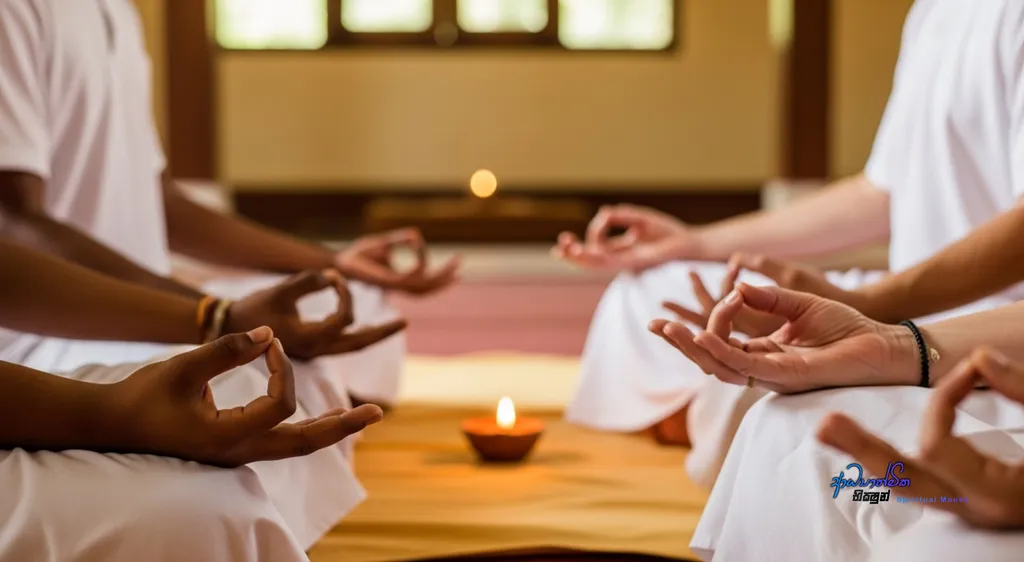
Understanding the ‘Knowledge’ That Hinders Your Practice
First, let’s be clear about what we mean by ‘knowledge.’ In society, we often admire the ‘educated’ those who have read many books, passed exams, and earned degrees. Someone might read the entire Tipiṭaka (the Buddhist canon), the commentaries (Aṭuvā), the sub-commentaries (Tīkā), and all the great Buddhist historical texts like the Mahāvamsa or the Pūjāvaliya. They might have studied the works of esteemed monks like Rerukane Chandawimala Thero or listened to countless talks by teachers like S.N. Goenka. This isn’t limited to books; it includes every Dhamma talk you’ve ever listened to, whether on YouTube, Google, or in person even the very teachings you are reading now.
This accumulation of information from external sources makes a person educated, but being educated is not the same as having wisdom or true understanding (paññā). Wisdom can arise independently, through direct experience and self-discovery. The problem begins when we bring this vast library of theoretical, book-based knowledge in meditation. While reading these texts is wonderful for gaining a conceptual understanding of the Buddha’s teachings and history, there is a hidden harm it can cause to your practical meditation. It becomes the very ‘Mara’ that stalls your progress.

The Anatomy of a Trap: How Knowledge Becomes Your ‘Mara’
So, how does this happen? Imagine someone who has read all these books begins to meditate. Let’s say they practice our ‘Third Eye’ meditation, focusing their mind on the point between the eyebrows and cultivating the perception of ‘emptiness‘ (his) or ‘space‘ (āhasa). As they practice, a sign of concentration appears a light (in Pāli, āloka saññā).
The moment this yellow light appears, the mind of the knowledgeable person kicks into gear. Because their mind is so full of information, thoughts arise automatically:
- ‘What is this? What is this thing I’m seeing?’
- ‘In which book did I read about this? Where was it mentioned?’
- ‘Is this what they call the uggaha nimitta (the initial, unstable sign of concentration)?’
- ‘Is this a kasiṇa (a colored disc used as a meditation object)?’
These questions don’t arise at any other time; they appear right in the middle of meditation, at the most crucial moment. The mind starts to analyze, to investigate, to compare the live experience with the theories stored in memory. This intellectual analysis is a cascade of thoughts. And what are thoughts? They are distractions. The purpose of the meditation was to unify the mind, perhaps on the perception of ’emptiness.’ But now, instead of deepening concentration, the mind is busy with a research project. The focus is lost. The light fades. Your progress is halted.
This is the work of Māra. The Buddha taught of five kinds of Māra, and four of them are internal. The most relevant here is Kilesa Māra the defilements appearing as an obstacle. These analytical thoughts are the defilements, the dark clouds that cover the clear sky of your mind. That is why it is so important to maintain mindfulness of your thoughts, to see them as they are without getting swept away.
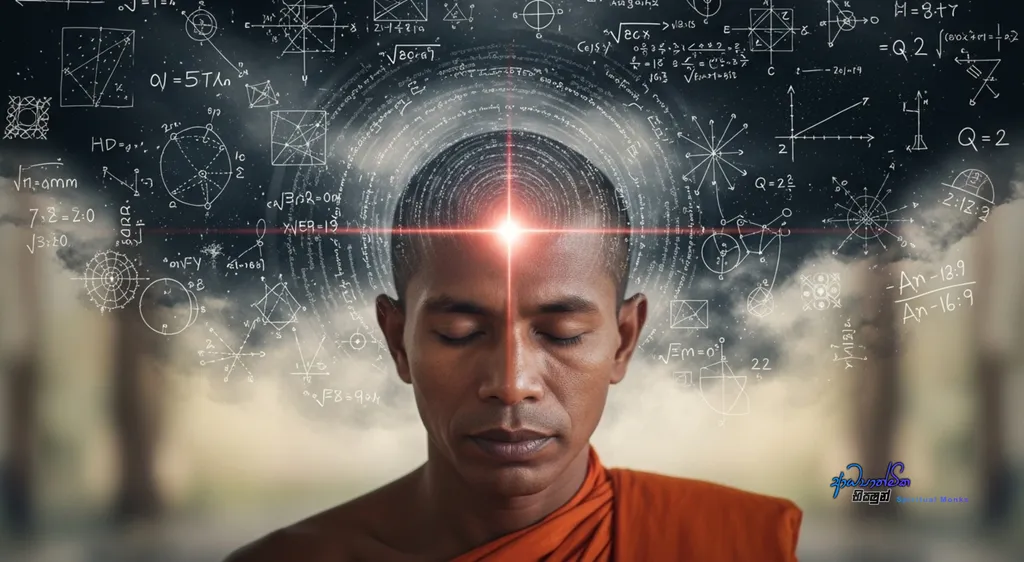
The Danger of ‘Spiritual Checklists’ and Rigid Expectations
There is another, equally destructive way that knowledge in meditation becomes a trap. It creates a rigid expectation, a mental checklist of how your practice should unfold. The meditator believes their experience must perfectly match the description in a book like the Visuddhimagga or the Tipiṭaka. This creates a fixed view, a dogma.
For example, I have told practitioners in our program that the light-sign can appear in any color (yellow, purple, white, or even black) Yet, people will message me, saying, ‘Venerable Sir, I saw a yellow light before, but now it’s purple. Why?’ I constantly repeat that the color doesn’t matter and you shouldn’t investigate why, because there is no ultimate answer that is its nature. But the analytical mind wants to know. It wants the experience to conform to a pre-approved script.
When the actual experience deviates from the theory in the book or a teacher’s lecture, the meditator panics. They think:
- ‘This isn’t what the book said would happen.’
- ‘My teacher didn’t mention this.’
- ‘Am I doing it wrong? Is my path incorrect?’
This fear and doubt are poisonous seeds. They destroy your concentration and can even cause you to abandon the practice altogether. Many people stop meditating for this very reason. They get scared because their journey doesn’t look like the map they memorized. You must remember: the practical experience is often different from the theory. The theory is just a guide, a set of instructions. Think of a new phone. You might read the instruction manual once, but then you use the phone intuitively. You don’t follow the manual step-by-step every single time you want to make a call. Sometimes you discover things not even mentioned in the book. Meditation is the same. The theory is not the territory.

A Personal Story: How I Learned to Let Go of the Books
I can share this teaching so strongly because I fell into this trap myself. In my early years, I read everything. I studied the Tipiṭaka, the commentaries, the Visuddhimagga, Buddhist history, and even the holy books of other religions like the Bible and the Quran. I listened to the talks of many great meditation masters. Then, I began to meditate intensely. When experiences started happening, my mind immediately went to the books. I tried to figure out, ‘Is this the uggaha nimitta? Is it the paṭibhāga nimitta (the stable, counterpart sign)?’ I asked my fellow monks and teachers, but no one could give me a satisfying answer.
I spent so much time questioning and analyzing. In the end, what happened? I lost time. My meditation deteriorated. The light-signs disappeared. I understood then that the very act of investigating the phenomena that arise in meditation is self-sabotage. Anything you see, feel, or sense in meditation you must not try to figure it out. Over time, answers to some things may come naturally, while others may never be answered. And that’s okay. We don’t need to know. This path is about letting go.
Now, I have let all that go. I’ve forgotten the Tipiṭaka in a practical sense. I live like a fool, like a donkey, like an uneducated person who knows nothing. This keeps my mind free and makes it easy to deepen my practice. Of course, if someone offers me alms and I need to give a blessing, I can recall the verses. If someone needs a teaching on insight or calm, I can provide it. But I don’t carry it all in my head. The Buddha taught us to let go of everything. We cannot hold onto our knowledge with one hand and try to meditate with the other. Both hands must be free.
The Ultimate Antidote: Cultivating a Childlike Mind
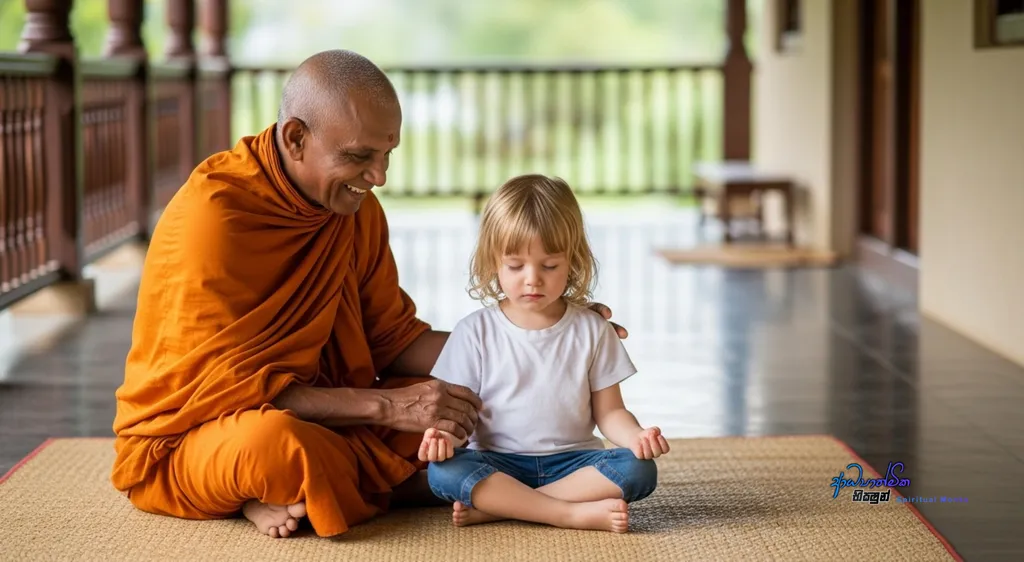
The solution to this problem is to become like a small child. A child knows nothing of these complex theories. They have no expectations or desires. When you give them a simple instruction, they just do it. I have taught many children to meditate, and it is remarkably easy to help them awaken their ‘Third Eye.’
Sometimes in just five minutes, because their minds are so pure and open. They simply trust the teacher and follow the instructions without arguing or analyzing.
But for an adult, especially a highly educated one like a professor, it is very difficult. Their minds are filled with theories, questions, and the need to analyze. You give one instruction, and they ask a thousand questions. Their knowledge in meditation becomes a thick wall. The mind needs to be like that of a child. It needs to be clear of the defilements that we accumulate from society. So, I say this to everyone professors, doctors, engineers, and simple folk alike: when you sit to meditate, become like a child. Be innocent. Be open. Just do the practice.
Navigating the Path: An Analogy of a Journey
To make this clearer, let me offer an analogy. Imagine I give you directions to travel from Colombo to the sacred city of Anuradhapura. I tell you that on the way, you will pass through several towns: Nittambuwa, Warakapola, Kurunegala, Dambulla. My teachings are like these directions.
You don’t need to memorize the names of all the towns. You just get on the bus and go. When you arrive in Kurunegala, you might remember, ‘Ah, the monk said we would pass through Kurunegala. This is it.’ That recognition is enough. Your goal is not to get off the bus and explore Kurunegala. Your destination is Anuradhapura. You simply note the milestone and continue the journey. You don’t stop, you don’t turn back. You just keep going straight.
The things you experience in meditation are like the towns on the way. They are signposts showing you that you are on the right path. They are not the destination. Don’t get stuck analyzing them. Acknowledge them and continue with your practice. Our meditation programs are designed like this journey to take you step-by-step towards your goal without unnecessary detours.

Breaking Free: Are You Trapped in a Pen of Your Own Making?
Here is another way to see it. Imagine you are a cow in a pen. The pen is the rigid framework of your intellectual knowledge all the theories and concepts you’ve learned. You are given food and water inside the pen, so you are comfortable. Your knowledge in meditation is like that food and water the theories from books, the classifications of thoughts from the Abhidhamma (the Buddhist teachings on the nature of mind and matter).
When a light appears in your meditation, you start ‘eating’ your knowledge. You analyze: ‘Is this an asaṅkhārika mind-state or a sasaṅkhārika one? Is this a pleasant feeling or an unpleasant one?’ You are so busy analyzing the food inside your pen that you don’t realize you are trapped. The cow doesn’t know that just beyond the fence lies a vast, open pasture where it can roam freely, finding its own food and water. Freedom is outside the pen of concepts.
By constantly referring back to your knowledge, you are unknowingly building a fence around yourself. You create your own limits. To get out of the pen, you must stop analyzing the food you’ve been given and look for the gate. This is why some realized masters say ‘the Dhamma is not in the Tipiṭaka.’ They don’t mean the books are wrong. They mean that the lived, direct experience of the Dhamma is not found by becoming trapped in the words on the page. The words themselves become the Mara that blocks the path.
The Trap of Spiritual Pride
This tendency to analyze and label can also lead to a subtle form of spiritual pride. Someone might feel a sensation in their spine, a coolness or a pressure, which can be related to the awakening of Kuṇḍalinī energy. I have described these sensations in my teachings. Yet, people will contact me and ask, ‘Venerable Sir, I felt a coolness up my spine. Did my Mūlādhāra cakra awaken?’
Why is it necessary to label it? If I were to say, ‘Yes, your chakra has awakened,’ what would happen? They would cling to that idea. They would develop pride and conceit: ‘My Mūlādhāra chakra is awakened.’ They might not even have stable concentration, but they will carry this concept around like a trophy. This pride becomes a thick veil, and they may even stop meditating earnestly, thinking they have already achieved something great.
They become ‘the man whose chakra is awake.’ This is just another form of being trapped in the pen. This is why, when asked such questions, I don’t give answers that feed the ego. I simply say, ‘Continue your meditation.’ The label is worthless. The experience is what matters, and even that must be let go of.
How to Practice: Putting This Teaching into Action
So, what is the practical solution? It is not to stop reading or learning. The key is how you use that knowledge.
When you sit to meditate, and an experience arises, a light, a feeling of floating, an image and the analytical thoughts begin, you must be mindful. As soon as the thought ‘This isn’t in the books’ or ‘What did my teacher say about this?’ appears, you must recognize it. Say to yourself: ‘Ah, there it is. There is the Mara trying to trap me in a cage. It is trying to cover my mind with a black cloud of thoughts and opinions. I will not be caught.’
In that moment, you become like a lion. You return to your meditation object with renewed focus. You don’t engage with the thoughts. You don’t investigate. You practice what the Buddha taught: Diṭṭhe diṭṭhamattaṁ ‘In the seen, there is only the seen.’ Sute sutamattaṁ ‘In the heard, there is only the heard.’ This means experiencing life directly, without adding a second layer of interpretation, judgment, or analysis. A book is read, and that’s it. A sound is heard, and that’s it. A light is seen in meditation, and that’s it. You simply witness it and continue.
When you do this, there is no fence. There is no cage. Your mind becomes free and light. This practice will not only deepen your meditation but also bring great peace to your daily life. It can even improve your memory and cognitive function, because as the mind becomes less cluttered with useless thoughts, its natural clarity shines through.
Embracing Simplicity for a Deeper Spiritual Life
The essence of this entire teaching is simple: do not use your theoretical knowledge as a weapon against your own meditation. Do not allow your knowledge in meditation to become a prison. Read the books, listen to the talks, but when you sit on the cushion, let it all go. Become an empty cup. Be simple. Be direct.
I don’t mind who you are, a professor with vast knowledge or a young person from another faith who has never read a Buddhist book. In fact, those who know less often progress faster, because they just follow the simple instructions and get on with the journey. They don’t ask unnecessary questions. They just walk the path.
So, I urge you not to come to me asking theoretical questions based on what you have read, trying to match your experience to a definition. Do not ask me, ‘Is this the uggaha nimitta?’ These questions are useless. I am here to help those who are practicing earnestly. Do the practice. When you encounter a milestone, simply be with it. Then continue on your journey. If you can do this, your path will be smooth, and you can avoid the trap of becoming a knowledgeable prisoner. You can be truly free.

We invite you to walk this path with us. Read our teachings, and most importantly, apply them practically in your own life. as you practice, questions will naturally arise. Please feel free to share your experiences and questions in the comments below, via email or contact form. I will do my best to offer guidance in future talks based on your progress. For now, begin this practice with an open heart and a mind free from expectation. Cultivate it correctly, and may you find the clarity and peace you seek.
Thank you for joining us. We hope this blog will be of great benefit to your spiritual journey.
May you all be well and happy.


