


Categories: Lost Your Meditation Spark?
May the blessings of the Triple Gem be with you all!
Through the teachings we share, we aim to help you broaden your mind and develop your wisdom, or what we call Prajñā, on your spiritual journey. We seek to support you in both the calming aspects of your practice, known as Samatha, and in your overall spiritual development.
Today, I want to explore a quality that is absolutely essential for anyone walking this path. I encourage you to read these words carefully, reflect on them, and cultivate this quality within yourself.
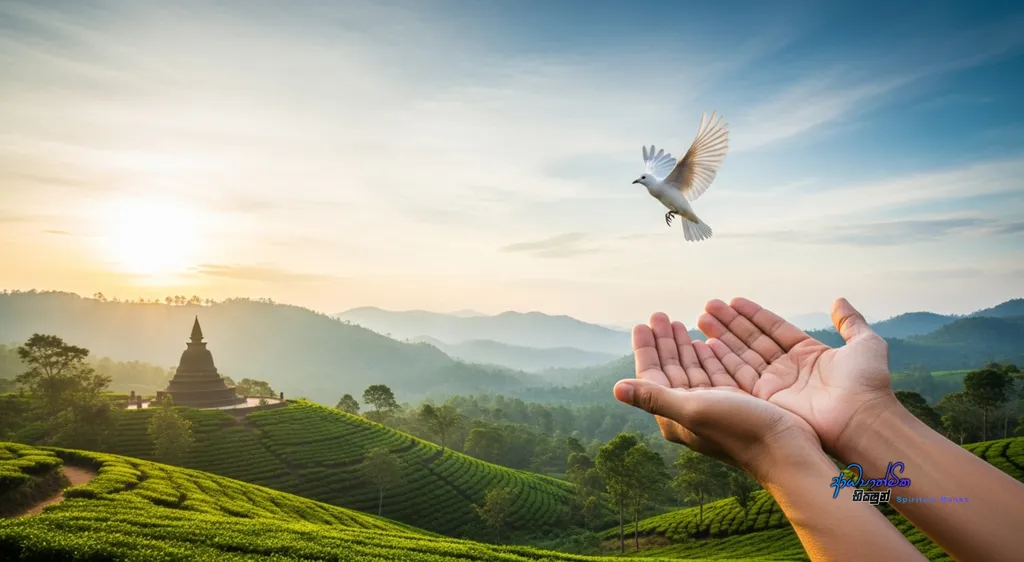
The Paradox of Expectation in Meditation
When you embark on a spiritual life, and especially when you begin to meditate, you might hope for progress or specific outcomes. But the way forward requires a different approach. One of the first things I teach is to train the mind not to expect anything from meditation. This is a core principle.
When we train our minds to release expectations, the desired results often arise naturally, precisely because of that non-attachment. Of course, there are also times when they don’t, and that is also part of the process. But when we are prepared for either outcome, we don’t fall into disappointment, sadness, or frustration.
Why?
Because we have trained the mind to accept both possibilities: ‘I might achieve this,‘ and ‘I might not.‘ By holding this balanced view, we find a place of neutrality. We are no longer shaken by what happens or doesn’t happen. This foundational understanding of patience in meditation is your greatest ally.
Debunking Instant Enlightenment: Truth vs. Deception
A common question for those who are developing their practice is, ‘How long will it take to see results? How long must I meditate?‘ This is where we must be very careful. I have seen misleading things, for example, on platforms like YouTube, with titles like, ‘Awaken Your Third Eye in 30 Seconds.’ These are blatant falsehoods designed to deceive people. Such claims mislead those who are genuinely seeking a spiritual life.
The idea that you can open a ‘Third Eye’ in 30 seconds is relative; for a very rare individual, perhaps it’s possible based on their past cultivation, but it is not the norm for everyone. No one can declare with certainty that a specific result will happen in a set timeframe. We must be honest with people. We must speak the truth.
For one person, an awakening might happen quickly. This is often due to what we call kusala from past lives, not just ‘merit,’ but the wholesome habits and skills practiced and carried over through many lifetimes. The practice itself becomes a wholesome habit. For another person, the journey is different. Progress depends on the individual’s level of development. Understanding this is key to moving forward with ease and developing patience in meditation.

The Folly of Timelines: Why Impatience Guarantees Failure
So, people ask, ‘How long until I experience these things? Spiritual abilities, deep meditative states (Jhānas)?‘ I receive messages and comments, especially from young people, asking these questions. This teaching is a direct answer to them.
Many people start meditating without a deep understanding of the spiritual life, and that’s perfectly fine. The problem arises when you expect instant results, as if something magical will just happen. If you think in a naive, foolish way, like, ‘I will open my Third Eye in three months,‘ or ‘I will achieve this in six months,‘ you set yourself up for failure.
Let me be very clear: if you think this way, you will never awaken a Third Eye, enter a Jhāna, develop any spiritual ability, awaken Kundalini energy, access universal energy, attain the fruits of the path (Magga-phala), or even find simple peace of mind. You will receive nothing. This is a natural law. It’s just how it works.
You cannot force these things. The only way to succeed is to have already cultivated immense patience in meditation as a habit from your deep past, your journey through samsara. If you had that quality, you wouldn’t even be asking ‘how long?’ because you would already know. The impatient questions themselves reveal a lack of this essential foundation. Patience is required for the entire journey.

Letting Go of the Goal: The Art of Effort Without Expectation
Look at those who are advanced on the spiritual path, and you will see immense patience. You can measure a person’s spiritual development by their level of patience. Set aside all other things for a moment, psychic abilities, special experiences. Just look at their patience. It is a powerful indicator of their inner progress. Whether they practice calmness meditation (Samatha) or insight meditation (Vipassanā), patience is cultivated, consciously or unconsciously.
So, when you begin to meditate, whether it’s a Third Eye practice, a practice for reaching higher realms, or any method from any teacher, within or outside of Buddhism, remember this: do not expect results. Instead, be diligent. Continue the practice without stopping. Cultivate patience and give it time. Allow time to do its work.
Do not hope for even the smallest thing from your meditation,not a moment of concentration, not a Jhāna, not the opening of a Third Eye, no psychic powers, no fruits of the path, not even liberation (Nibbana). These are your goals, your direction, but they should not be objects of craving. Holding onto expectations destroys your patience. Imagine you resolve to open your Third Eye in three months. At first, you practice with great enthusiasm.
But fifteen days pass, and nothing has happened except maybe a pressure in your forehead. Your initial joy starts to fade. A month goes by, it’s still the same. Your joy diminishes further. As you approach the three-month mark with no visions or signs, your happiness is completely gone. You were the one who made the rule, and now you are on the verge of abandoning the practice altogether because of it.
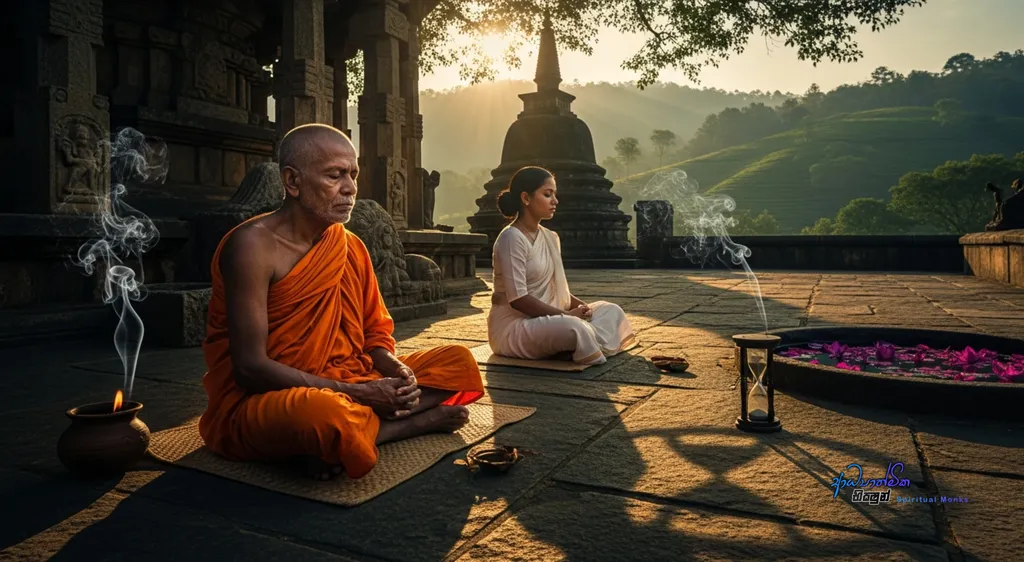
The Power of Neutrality: Finding Freedom in ‘Maybe, Maybe Not’
Why do you do this to yourself?
You create a law ‘I will achieve this by this date‘ without any real basis. You have no patience. The truth is, the Third Eye might open at any moment, or it might not. You might gain a psychic ability, or you might not. You might attain a Jhāna, or you might not. You might realize a fruit of the path, or you might not. You might awaken to Nibbana, or you might not.
If you can stand in this neutral place, this middle ground, then patience in meditation will arise naturally within you. It becomes your training. ‘Let the Third Eye open whenever it wants. It’s the same to me if it opens or not. It’s the same to me if I attain the fruits of the path or not.‘ Those who desperately seek the fruits of the path will never find them. The one who hunts for Nibbana will never grasp it.
It is only the one who walks the path with the right attitude who realizes it. This is what a true teacher who has practiced correctly will tell you.
Similarly, if you crave things like Kundalini or universal energy, if you become too attached to them or expect too much from them, you will never attain them. Even though these might be considered worldly abilities or states of concentration, attaining them requires the mind to become empty and unattached. Your only goal should be to develop spiritually. If you fill your head with other expectations, you will never receive these gifts.
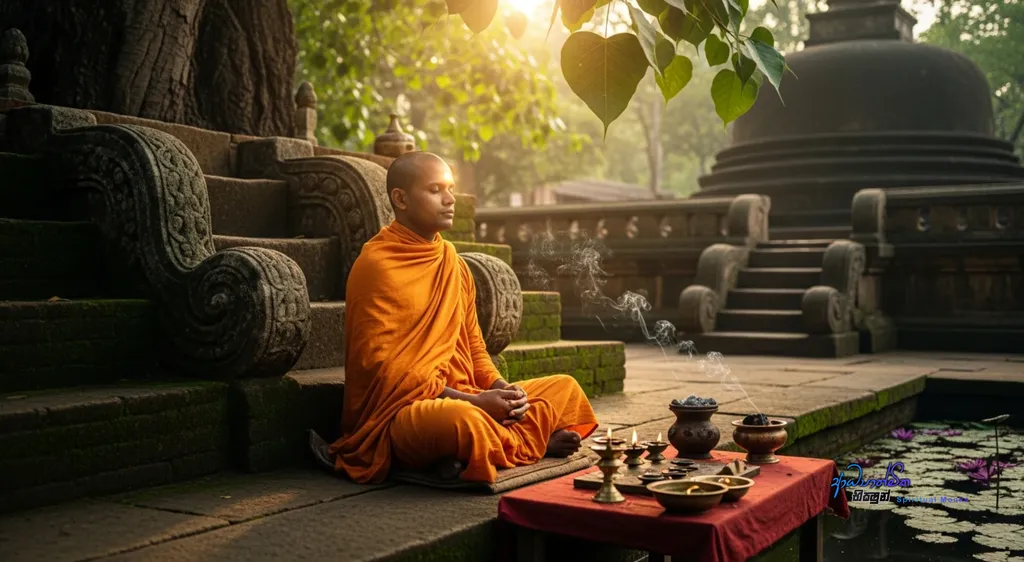
The Unseen Fruit: How Years of Practice Cultivate Profound Patience
Imagine you have to meditate continuously for five years. During these five years, you practice without any expectation, driven only by the love of the practice itself or the simple peace it brings to your mind. You just keep practicing, every single day. You do this without greed or intense desire for psychic powers, path-fruition, Nibbana, or any of those things. You just tell your mind, ‘It’s all the same to me whether I get those damn things or not,‘ and you keep practicing with effort and diligence (viriya).
As you do this, without you even realizing it, the quality of patience grows within you. How can you measure this? Let’s say after three years of practicing without expectation, you haven’t gained any special abilities or entered any Jhānas. You haven’t realized Nibbana. But you have felt a certain comfort, a mental relief. Now, think back. Compare the state of your mind and your defilements three years ago to your mind now.
Look at who you were then and who you are now. You will realize, ‘Wow, I have developed an incredible patience. I have become a remarkably neutral person.‘ You will see for yourself that you have cultivated an amazing equanimity, known as Upekkhā. This understanding will dawn on you from within.
This is what true patience is. It is the unseen fruit of your meditation. And when a person has this patience, the universe will grant them what they are ready for, what they have cultivated in their past. Their wisdom (Prajñā) will expand, their mind will broaden. They learn to look at everything with neutrality and equanimity.
This is what I have tried to teach in various ways in previous discussions, how to see things from a middle path. This patience helps you in your worldly life, too, when you face problems. You are transformed into a person with this unshakable mentality.

Patience as the Path: Recognizing Expectation as a Defilement
So, you see, even if you haven’t realized any psychic powers, Jhānas, Kundalini, or Nibbana, you have gained the qualities necessary to walk the path. These qualities are themselves perfections (pāramitā); they are special things you receive on the journey. You have received them all. Understand this and be happy with yourself. Be happy with your spiritual life. This understanding and training are more than enough.
Think about it. Are you the same person who started meditating back then?
An expectation for something from meditation is a defilement, a mental impurity we call a kilesa. Signs like light should appear naturally, from the force of your past practice. We never teach in our Third Eye meditations to forcefully imagine a light.
That is not a successful method. Expectation is a defilement. We must understand this and realize it practically. Through that very realization, our attachment and expectation will decrease, but will our effort (viriya) decrease? No. This is when you can see your true strength.
The Inevitable Reward of True Patience
The greatest test of patience in meditation is this: can you practice for years with diligence and effort, without any craving or greed for Nibbana, path-fruition, psychic powers, or meditative states, and still remain in a state of mental well-being and happiness?
I can say with certainty that you will absolutely gain mental well-being.
If that is all you have gained after years of meditation, you are an incredibly patient person. You possess astonishing patience. And a person with that patience will inevitably receive something more, perhaps a Jhāna, or some other spiritual gift. I don’t say it will be a psychic power or a specific state, but something will be given, precisely because of that patience.
If you cultivate this quality, many obstacles on your path will vanish, obstacles you can’t even imagine. By practicing with patience, without expectation, you transform yourself into a neutral, equanimous person. This is what is needed to walk the spiritual path.

Practical Advice: How to Cultivate Patience Starting Today
These teachings are for people of all ages, backgrounds, and walks of life. Please try to understand the message I am conveying. We all have these shortcomings. I have people tell me, ‘Venerable Sir, I have meditated on the Third Eye for three months, but I haven’t even seen a glimmer of light.‘ There is nothing I can do about that. You must cultivate patience. There is also no guarantee that everyone’s Third Eye will open. I have spoken in other teachings about the reasons for this and how to manage the disappointment if it arises.
What you need to do is be happy with your practice. You must be content with the level you are at. Cultivate this quality of patience. If you develop it, you will be able to face so many things on your spiritual journey with immense calm. Patience is a powerful tool, a profound help to develop your spiritual life. For one who wishes to realize Nibbana, patience is one of the greatest supports. Build this quality. It must be a permanent part of you.
Observing the Impatient Mind: A Moment-to-Moment Practice
Let me give you a simple way to practice this. Let’s say you are starting your meditation today, even if you have been practicing for years, think of today as the first day. You sit down to meditate as usual. You might resolve to sit for one hour. But even within that hour, some people have subtle expectations: ‘Maybe I’ll get something today,‘ ‘Maybe my Third Eye will open,‘ ‘Maybe I’ll enter a Jhāna.’ They begin their session with this subtle greed or craving (taṇhā) in their heart. Don’t even do that.
If you have resolved to sit for an hour, your only task is to sit for that hour. Maintain your mind with subtlety. From the moment you begin, check your mind. ‘Is my mind expecting something?’ ‘Am I hoping for the Third Eye or some other power?‘ Then ask yourself, ‘Can I be patient? How long can I continue this practice?‘ Listen to see if your mind is whispering, ‘You’ve meditated for three months and gotten nothing. Just give it up, man.‘ Watch for this voice.
By maintaining mindfulness, which we have taught in talks about the mind, you can recognize these thoughts. When you catch your mind saying, ‘You’ve practiced for so long with no results, just quit,‘ you can measure your progress. If you don’t accept that thought, if you can say back to your mind, ‘That’s okay. It doesn’t matter if I don’t have results. I will do the practice. I will not dance to your tune,‘ then you can see how neutral you are, how much equanimity you have, how much patience in meditation you possess. This is the training you must do.
The Universal Law: How All Awakened Beings Mastered Patience
With this patience, even if you stay in the same place for a long time, you will not feel disappointment, sadness, or even excessive joy. You will only feel a profound sense of relief, a neutral, equanimous mental peace. This is true even if you practice diligently every day for an hour, two hours, or forty minutes, and seem to be stuck.
If you can maintain this state, you are at a superior level; you are an advanced person on the spiritual path. In this journey, there are times you may have to stagnate in one place for months, or even years.
The impatient person gives up and runs away, thinking, ‘This damned thing isn’t working for me,‘ and returns to their old life of sensual indulgence. The person with patience, however, makes a resolution: ‘It is the same to me whether I get it or not.‘ They build a powerful mental strength and continue the journey happily, no matter their circumstances.
This is how the Buddha attained Buddhahood. This is how the Arahants attain their liberation. This is how all who gain the fruits of the path, the Jhānas, and psychic abilities succeed, whether they are a sage in the Himalayas or anywhere else. Without patience, you will receive none of this. This is the universal law, the truth.
But for you who has patience, you will be able to attain things you never even imagined. This is also a universal law. Understand this and act accordingly. If you do, even if you get nothing else, you will receive patience, mental peace, equanimity, and neutrality. Trust in this and continue your work. I believe this teaching is sufficient for now.
May the powerful blessings of the Buddha, Dhamma, and Sangha, the Triple Gem, help you all to understand these matters and develop your practice further. May you be able to advance your spiritual life with effort, diligence, enthusiasm, dedication, and patience. May you develop and develop. With that blessing, I conclude this teaching.

We invite you to walk this path with us. Read our teachings, and most importantly, apply them practically in your own life. as you practice, questions will naturally arise. Please feel free to share your experiences and questions in the comments below, via email or contact form. I will do my best to offer guidance in future talks based on your progress. For now, begin this practice with an open heart and a mind free from expectation. Cultivate it correctly, and may you find the clarity and peace you seek.
Thank you for joining us. We hope this blog will be of great benefit to your spiritual journey.
May you all be well and happy.
May the blessings of the Triple Gem be with you all!


