


Categories: Other Meditation Teachings
May the blessings of the Triple Gem be with you all!
Welcome. This reflection is for those of you who have started a spiritual journey and are actively exploring its depths. As we engage in our spiritual life through practical application, a very distinct characteristic begins to emerge. Today, I hope to shed some light on this experience. Why Spiritual Practice Leads to Solitude?
After we begin a spiritual life, whether through a tranquility-focused practice like Samatha or an insight-focused one like Vipassanā, and continue it over time, our minds naturally settle into a state of profound calm. A deep sense of happiness and tranquility arises within us.
This happens naturally because we are engaged in a practical training of the mind. Because of this hands-on practice and the resulting transformation in our consciousness, we start to understand certain things about our lives in a new way.

A New Perception: How Spiritual Practice Reveals the Minds of Others
One of the first things we begin to grasp is the very functioning of our own mind. As you start to understand your mind, or sitha as it’s known in the teachings, you also begin to understand the society around you in relation to your own mental state. You see the world and the people in it with a new clarity.
You develop the ability to perceive the mental states of those around you your family, your community. You can see how their minds align with your own level of development. More than that, as you advance spiritually, you can even recognize individuals whose minds are more developed than yours.
Take a moment to reflect on this. Has this happened to you? Think back on what I’ve just described and see if it resonates with your own experience.
Let’s use an analogy. Imagine spiritual development is on a scale from 1 to 100, and your mind has reached the level of 50%. From this vantage point, you can clearly understand the people in your life who are at a lower level say, less than 50% whether they are practicing spirituality or not. You understand what they are like. At the same time, you can also recognize those who are at a higher level, perhaps 60% or 70%. This ability to perceive these different levels is a distinct gift that comes with developing your spiritual life.
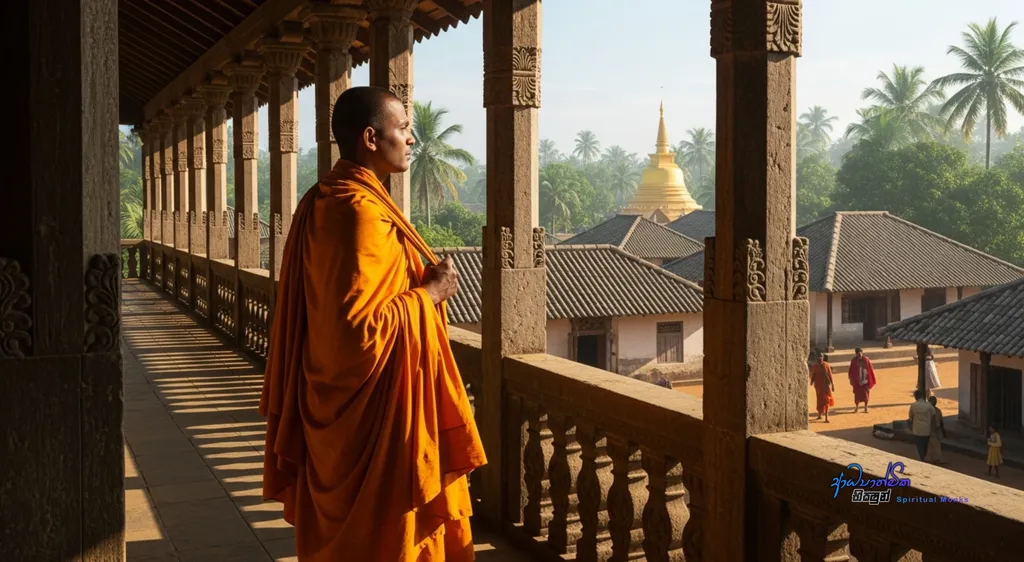
Discerning Virtue from Flaw – In Yourself and Others
This journey of exploration, especially for one who watches the mind with mindfulness as the Buddha taught, allows you to identify your own faults and shortcomings. The Buddha’s method, whether called mindfulness or Vipassanā (insight), centers on observing the mind with wisdom. By following this path, you see your own unskillful tendencies.
As you recognize your own flaws, you also start to see them in others. You can perceive the mental states of your parents, your spouse, your siblings, and your friends. You can discern whether they are stronger in virtue, mentally more resilient, or more advanced in their thinking than you are.
This clarity extends to everyone: your colleagues at work, fellow students at university, neighbors, and acquaintances. You gain a remarkable ability to gauge the character of everyone you meet.
As you engage in this practical spiritual life, your own unwholesome traits what we call akusala, or unskillful actions rooted in greed, hatred, and delusion begin to fade away. As they disappear, your good qualities, your virtues (gunadharma), start to shine.
You are transformed into a better person. This change happens because you are observing your own mind with mindfulness, distinguishing between good thoughts and bad thoughts, skillful (kusala) and unskillful (akusala) mind-states, and practically applying tranquility meditation. Through this, you are exploring and understanding yourself.
The Uncomfortable Clarity of a Mindful Heart
A direct consequence of this inner work is that you begin to see the shortcomings of those around you with startling clarity. You see the mistakes made by your parents, your children, your siblings, your spouse, your friends, your relatives, your colleagues. You see both their faults and their virtues.
Why does this happen?
Because you have trained yourself to watch your own mind with mindfulness, just as the Buddha taught. You’ve become accustomed to identifying your own thoughts wholesome or unwholesome, thoughts of merit (pin) or thoughts of demerit (paw). Because you can recognize any thought that arises, you awaken to a new reality.
Until now, you have lived in this world without true mindfulness. But as a practitioner, your mind starts to see these things, one by one.
When you see the unwholesome qualities in those you associate with, a shift occurs. Let’s say you are around someone with few virtues, who engages in sinful acts. They might not break the five precepts in a major way that is, they may not commit acts that lead to legal punishment in society, like murder.
However, they might be consumed by jealousy. They might envy someone’s promotion and actively try to prevent it. They gossip; they lie constantly. You begin to see these flaws, like envy and slander. These may not be crimes under the law, but you see their unskillfulness clearly.

The Challenge of Useless Talk and Fading Connections
When you associate with people who have these minor flaws, you’ll notice they constantly talk about others. Their speech is what the Buddha called samphappalāpa useless, frivolous chatter that benefits neither the speaker nor the listener. Men and women alike engage in this, at work, in villages, and even in their homes. Some women seem to exist only to pry into the affairs of others. There are characters who wander from house to house, their sole purpose to talk about and investigate other people’s lives.
Ironically, some of these same people may even observe the precepts (sil) on the full moon Poya day, perhaps even on all four Poya days of the month. But because they lack a practical application of the Dhamma, they continue to gossip.
These are people who cause trouble for others, who inflict mental anguish. As you explore your spiritual life, you will constantly see these flawed individuals, wherever you go on the bus, in a car, walking through town, even at the temple. It doesn’t matter if they are a layperson or clergy, even a monk. You begin to see the shortcomings in everyone. You don’t need to associate with them for long to see it.

The Natural Pull Towards Spiritual Solitude
Whether you started your spiritual journey through our teachings, with another teacher, or on your own, after practicing for a while, you will start to see the flaws even in the friends you’ve known for a long time. You see them because you are exploring yourself.
When this happens, after a short time, a thought will arise in your mind: ‘There is no point in associating with these people.‘ You feel there is nothing to gain from them. ‘It’s useless to talk with them.‘ If they talk, it’s about others. If they talk, it’s a lie or slander. It’s something that mentally brings another person down or is rooted in jealousy. This is all they talk about. They are always looking to cause some kind of harm to society, to a family, to parents, to children, to a spouse, to friends either worldly harm or mental harm. This is all they think about, all they talk about. Nothing beyond that.
Your mind, which we imagined is at 50%, sees that their minds are at a very low frequency maybe 5%, 10%, or even 1% or 2% because they are not on a spiritual path. Therefore, you begin to think, ‘These people are not suitable for me to associate with. I must distance myself from them.‘ Talking with them starts to feel like a headache.
This is something you realize as you begin to meditate and watch your mind. You decide, ‘I should only talk to them when it is absolutely necessary. I shouldn’t engage in unnecessary conversation.‘ If you get a phone call from such a person, it feels like a burden. A feeling of aversion arises to such an extent that you don’t even feel like answering their call.
You start to feel the number of people you can associate with in society dwindling. Your friends become fewer, because most of them are of this nature. Your relatives are the same. You feel like withdrawing from everyone and being alone.

Discovering a Deeper Joy: The Bliss That Only Solitude Can Offer
Sometimes you feel like going to a forest to meditate. You yearn to be alone in a sacred place near a stupa (cheitya), under a Bodhi tree, at a temple, or in a forest monastery. Even at home, being alone in solitude feels like a wonderful relief. This is what you begin to feel as you lead a spiritual life.
Even I prefer to be in solitude. There is an amazing peace in it. This peace whether it’s the bliss of meditative absorption known as jhāna sukha, or simply profound mental wellness is a supreme comfort. You realize from your own experience that you cannot find this level of peace anywhere else in the world, not even in the highest sensual pleasures this world has to offer, like music shows, nightclubs, or parties.
Perhaps you sought happiness in married life, but you find that even marriage doesn’t provide this kind of mental peace. Even raising children might bring temporary joy, but not this profound, solitary bliss. Your mindset shifts, and you begin to feel these things.
However, as I have mentioned in previous teachings, you may be someone who is bound by responsibilities. If you are trapped by these duties to your spouse, parents, children, relatives, or your job you may find it difficult to engage in these practices while carrying that mental state. We have advised in past articles that if you are bound by responsibilities you cannot escape, you should continue to meditate and apply these principles practically.
When the right time comes, when you are able to be free, then seek solitude and independence. But until then, this particular mental state and desire for spiritual solitude will be present within you.

Navigating Social Life with a Transformed Mind
Many people have told me that when they are on this spiritual path, they no longer feel like talking to others. They feel a pull to be alone, and being alone feels like an incredible relief. You could be in a dense jungle with wild animals, and protecting yourself while being alone day and night, even for years, would feel like a wonderful peace. Someone else might think, ‘What a hardship! That would be awful!‘ Or a person might live alone for years in a secluded house in a big city like Colombo, and for the spiritual practitioner, that solitude is a profound comfort.
Another thing you’ll notice is that if you go to a party or a social gathering, you won’t feel like staying for long. You might have to be there for a specific reason your job, your education, or because of relatives and friends. You stay for as long as is necessary for that reason, but you have no desire to linger beyond that.
Some reading this might think, ‘But isn’t that a form of aversion or conflict?‘ No, it is not a conflict. It’s not about running away. It is born from understanding the true nature of the world. You can remain there as long as needed, but you withdraw when it’s no longer essential. If you have a purpose there, or a task to complete, you stay.
That’s all.

The Noble ‘Selfishness’: Why the Path to Liberation is a Personal Journey
Someone might call this selfishness. But the Buddha said that if you want to reach Nibbāna the ultimate liberation you absolutely must be ‘selfish‘ in this way. Otherwise, you cannot make this journey. I have often heard people say, ‘We will attain Nibbana with a whole crowd of people.‘
This is complete and utter nonsense. You cannot realize Nibbana like that. Yes, a group can go to listen to a Buddha if one has appeared in the world, but the practice of this path can never be done as a group, by committee. You must be ‘selfish‘ to make your journey. Otherwise, it is impossible. That is a topic that requires its own explanation, but for now, please understand this small part.
Based on today’s topic, you should now understand why, on this spiritual journey, you feel less inclined to talk, why you want to be in solitude, and why you feel like being alone. You no longer feel like spending hours on the phone with friends you used to chat with, especially if the talk is meaningless. The desire for spiritual solitude becomes that strong, and it feels like a deep relief. With it comes the desire to meditate. This is a special characteristic that you feel when living a spiritual life.

A Call to Courage and a Final Blessing
This experience is something that anyone on this path will feel. Therefore, do not be afraid of it at all. Many foolish, ignorant people have left me comments and messages saying things like, ‘Oh no, I started meditating and now I’ve lost all my friends!‘ This is simply their foolishness. It’s their lack of wisdom. If you are going to lose friends, then don’t meditate. Then you can keep your friends. Stay with them forever and then die. That’s all there is to it. Don’t bother meditating. That is all I have to say about that.
If you want to meditate, then do it. If you don’t, then don’t. If you’re afraid of losing friends, then stay aside. From this very situation, you can understand whether you are caught by Māra the personification of delusion and death or whether you have begun to understand Māra. You can see whether you have understood your own mind, or if you are still attached to the worldly realm of friends and sensual pleasures.
Some people have ‘sinful friends‘ (pāpa mitta), friends who do nothing but dig pits for others and engage in all sorts of vile deeds. Because they are afraid of losing these friends, they give up their meditation practice. People have told me about this. I hope you will not be so foolish and that you will continue on your journey. This is why I offer these teachings.
I trust you have understood today’s topic from all angles. I hope you have grasped what this experience means. Please be sure to share your own experiences in the comments. This will be a great help to others. As I always say in my teachings, it helps another person understand and realize, ‘There are others like me.‘ This gives them great mental strength to continue the journey. So please, be sure to share what you have gone through.
Today, I will conclude this talk on the theme of ‘not feeling like talking and wanting to be alone.‘ May the power and blessings of the Triple Gem the Buddha, the Dhamma, and the Sangha give you the strength to understand these spiritual characteristics, to continue your practice, and to move forward on this path.

We invite you to walk this path with us. Read our teachings, and most importantly, apply them practically in your own life. as you practice, questions will naturally arise. Please feel free to share your experiences and questions in the comments below, via email or contact form. I will do my best to offer guidance in future talks based on your progress. For now, begin this practice with an open heart and a mind free from expectation. Cultivate it correctly, and may you find the clarity and peace you seek.
Thank you for joining us. We hope this blog will be of great benefit to your spiritual journey.
May you all be well and happy.
May the blessings of the Triple Gem be with you all!


