


Categories: Other Meditation Teachings
May the blessings of the Triple Gem be with you all!
On this sacred Vesak Poya day, a day that marks the birth, enlightenment, and final passing away of the Supreme Buddha, it is a special time to explore a question that lies deep within the heart of many spiritual seekers: How do you identify your own unique spiritual path, your aspirational Bodhi, or awakening? Many have asked this very question, wondering if they have a specific purpose carried over from past lives.
This blessed day, a day that marks a new year for our spiritual development, is the perfect time to seek an answer. This is an auspicious day to begin or deepen your spiritual activities, a day of immense value, chosen by the Buddhas themselves for these pivotal life events. For over 2,500 years, we have celebrated this day with offerings and, more importantly, with practice. It is with the aspiration that you too will walk this noble journey that we offer these teachings, to help you develop your inner, spiritual life.

Understanding the Three Paths of Awakening (Bodhi)
You may have often heard monks giving blessings, wishing that you may attain one of the three types of Bodhi. But what are these three paths? In simple terms, they are the three ways one can reach Nibbāna, the ultimate liberation from suffering. They are:
- Sāvaka Bodhi: The Awakening of a Disciple. This is the path to becoming an Arahant, a fully enlightened disciple of a Supreme Buddha.
- Pacceka Bodhi: The Awakening of a Silent Buddha. This is the path of one who attains enlightenment on their own but does not establish a dispensation to teach the path to others on a mass scale.
- Sammāsambuddha Bodhi: The Awakening of a Supreme Buddha. This is the path of one who rediscovers the lost path to liberation and teaches it to the world, turning the wheel of the Dhamma.
Each of these paths requires the cultivation of perfections, known as pāramitā, over countless lifetimes in samsāra, the long cycle of birth and death. The journey to Buddhahood requires the most extensive period of selfless service and cultivation of these virtues. The paths of a Pacceka Buddha and a great disciple, like the chief disciples Sāriputta and Moggallāna, also require immense dedication over a very long time.
The Challenge: We Don’t Know Our Spiritual Path
The truth is, most of us do not know where we are on our journey. Have we been cultivating perfections? Did we begin an aspirational spiritual path in a previous life? Modern technology cannot give us these answers. The only way to find out is through developing our inner, spiritual dimension. It is by studying the mind and cultivating our spiritual life that these answers can be revealed. Let us begin by exploring the highest aspiration: the path of a Supreme Buddha.

The Unique Role of a Supreme Buddha
Without the arising of a Buddha in the world, we would never learn the true nature of reality. We would never hear of the Three Characteristics of Existence, known as the Tilakkhana:
- Anicca (Impermanence)
- Dukkha (Unsatisfactoriness or Stress)
- Anatta (Not-self)
Before the Buddha, practices like meditation and morality existed. Concentration meditation, or samatha bhāvanā, was known. But insight meditation, vipassanā bhāvanā, which leads to liberation, is taught only by a Buddha. They also teach profound doctrines like Dependent Origination (Paṭiccasamuppāda) and the deep psychological teachings of the Abhidhamma. To reach this state, a being must perfect the ten pāramitā, such as generosity, morality, renunciation, and patience, over an immeasurable period, accumulating the necessary wisdom or ‘data’ for full enlightenment.
This is not a small undertaking. To understand its depth, you can explore the Jātaka stories from the Tipiṭaka and commentaries, or read books like “Pāramitā Prakaranaya” by the venerable Rerukāne Chandawimala Mahā Nāyaka Thero. This knowledge will help you recognize the signs within yourself as you develop spiritually.
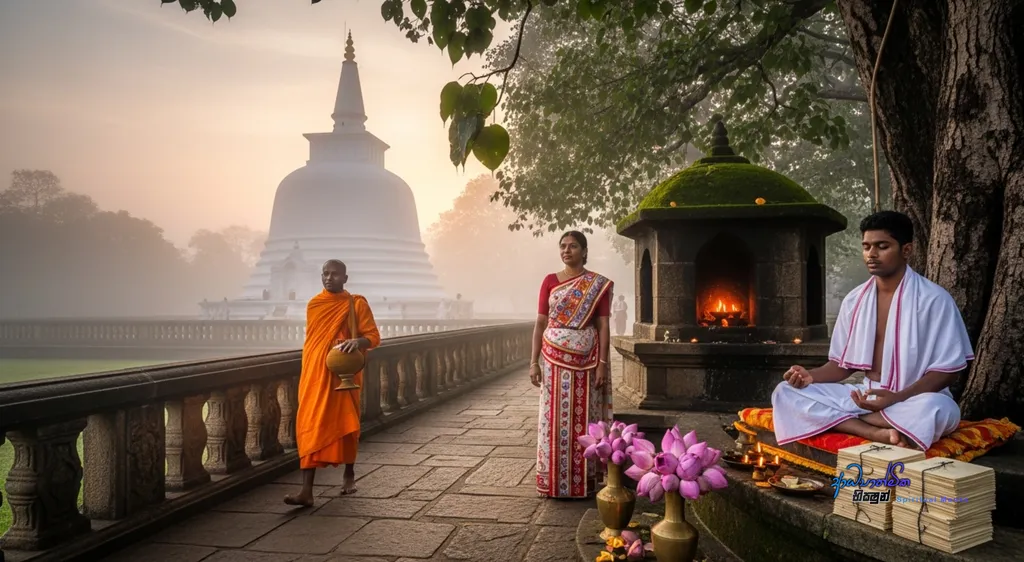
How to Discover Your Aspirational Path: A Practical Guide
It takes time to realize if you are cultivating such perfections. To begin this journey of discovery, there is a clear process you can follow:
Signs of a Future Buddha: Listening to Your Heart and the Universe
If you have indeed been aspiring for Buddhahood, perhaps for many lifetimes, certain signs may begin to manifest. If you have a doubt, “Am I a Mahā Bodhisatta (a great being aspiring to Buddhahood)?”, these clues can help confirm it.
The Sign of Profound Joy
When you perform an act of great help, and someone, perhaps an elderly devotee, spontaneously blesses you with the words, “May you become a Buddha!” pay close attention to your inner reaction. If you feel an extraordinary, natural, and profound sense of lightness, joy, and freedom that seems to make your body and mind soar, this is a powerful indicator. This feeling must arise naturally; you cannot ask for it. It is a deep, tranquil happiness, a feeling of being uplifted. This inner resonance is a sign that your spiritual path is Buddhahood.
The Sign of Spontaneous Blessings
Another sign is the spontaneous arising of a particular thought when helping others. You might find your mind naturally forming the aspiration, “By the power of my accumulated perfections, may this person be well! May they find happiness!” This is not a forced thought but an organic impulse. Sometimes, this heartfelt wish can have a tangible, healing effect. For instance, if you make such an aspiration for someone who is ill, and they genuinely recover, take this as a sign that you are on the spiritual path of a Supreme Buddha. From that point on, you can consciously dedicate all your meritorious deeds to the fulfillment of that noble goal.
The Unseen Allies on Your Spiritual Journey
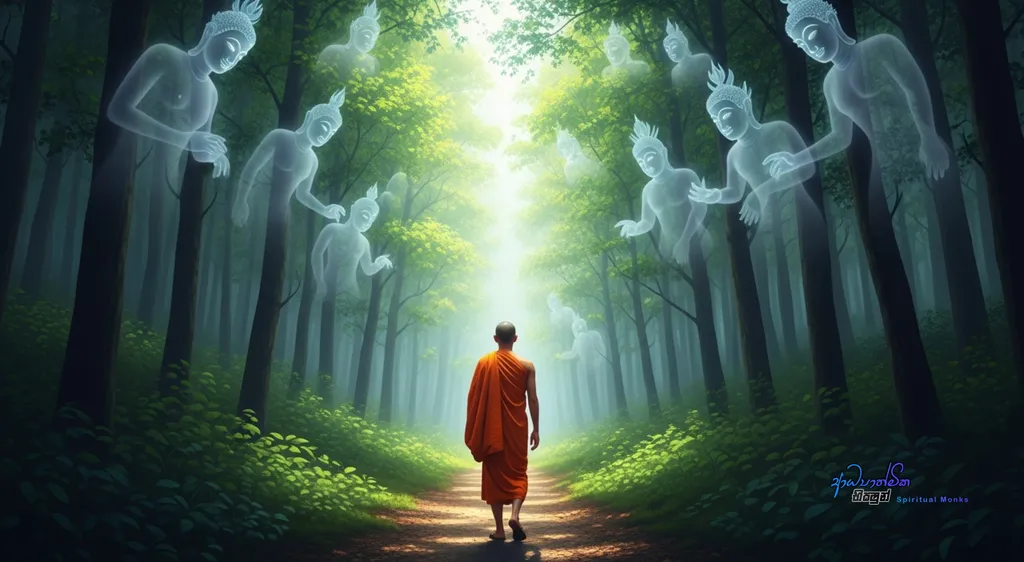
When you are on the spiritual path of a future Buddha, you are not alone. Unseen, righteous beings. like gods (devas), brahmas, and noble spirits from the yaksha and nāga realms, are drawn to support you. These benevolent forces will help you on your journey. When a Mahā Bodhisatta is born in the human world, these beings are aware of their mission and provide unseen protection and guidance, sending the right messages to their mind to help them gather the necessary perfections.
If such a person tries to move too far into a purely worldly life, these forces may gently intervene, creating circumstances that steer them back toward the spiritual path, perhaps even towards monastic life. They create opportunities for the Bodhisatta to perform selfless service and accumulate merit.
A Mahā Bodhisatta is naturally honest and virtuous, and their life becomes a vehicle for selfless service. The age at which one realizes this can vary greatly. Some may know from a young age, while others may only discover it in middle or old age. The closer one is to completing the perfections, the earlier in life this realization tends to dawn.

Recognizing the Path of a Silent Buddha or a Great Disciple
The method for identifying the other two paths, that of a Pacceka Buddha (Silent Buddha) or a Sāvaka (Disciple), is exactly the same. You must practice morality, cultivate concentration, perform devotional acts, and make a strong, sincere aspiration to know your spiritual path. In time, hints and signs will come to you, perhaps through another person or with the help of unseen beings.
Furthermore, as your spiritual faculties develop through meditation, you may gain abilities like the Divine Eye (Dibba-cakkhu). With a calm and concentrated mind, you can make the aspiration,“May my true aspirational path be revealed to me.” If you are on the path to Buddhahood, you might see an image of a Buddha. If you are on the path of a Pacceka Buddha, you may see imagery related to that. If you are to be a great disciple, you might see yourself attaining liberation in the presence of a Buddha. It is important not to jump to conclusions. If you have doubts, repeat this process several times with a clear mind to confirm the experience.
The Path of Liberation in This Lifetime
What if your destiny is to attain Nibbāna in this very life by achieving the four stages of enlightenment? You can recognize this as well. When you practice insight meditation (vipassanā), such as the Four Foundations of Mindfulness (Satipaṭṭhāna), you will feel your mind developing. You will sense tangible progress on the path. This inner knowing confirms that you have the capacity for liberation here and now.
Conversely, if a person who has made a long-term aspiration for Buddhahood or a high disciple position attempts to practice insight meditation with the goal of immediate liberation, their mind will not develop in the same way towards the fruits of the path. This very lack of progress can be a sign that their spiritual path is a different, longer one. The mind is not yet ripe for final liberation because it is committed to another great task.
Navigating Obstacles: Understanding Kamma and Rebirth
There are certain powerful obstacles that can block spiritual progress in this life. One is the performance of one of the five heinous actions (pañcānantariya kamma), such as killing one’s father, which King Ajātasattu did. Despite listening to the Buddha, he could not attain enlightenment in that life. Another example is Devadatta, who, after paying for his heavy negative actions in a state of suffering, will eventually become a Pacceka Buddha named Aṭṭhissara due to his past merit. The law of kamma is precise and unchangeable.
Another factor is one’s birth. According to the Abhidhamma, being born with a three-rooted consciousness (tihetuka patisandhi), a mind rooted in non-greed, non-hatred, and non-delusion, is extremely conducive to attaining enlightenment in this life.
Those born with a two-rooted consciousness may find it difficult and may be more inclined to meritorious deeds and making aspirations for the future. I encourage you to read books on Abhidhamma or explore online resources to understand this concept more deeply. Even with a three-rooted rebirth, attainment is not guaranteed, but it provides a powerful foundation.

What If You Receive No Sign? The Freedom to Choose Your Spiritual Path
Perhaps you have practiced for months, or even a year or two, and have not received any clear sign. This likely means you have not made a strong, specific aspiration in previous lives. This is not a cause for despair; rather, it is a moment of freedom. It means you have the power to choose your spiritual path now.
From this day forward, you can select one of the three paths of Bodhi and begin your journey. After every meritorious act, observing the precepts, chanting, meditating, giving alms, you can make the aspiration: “May the merit of this action support my journey toward Supreme Buddhahood!” (or Pacceka Buddhahood, or Arahantship).
As you consistently follow this path, nature and the unseen benevolent forces will begin to align to support your new aspiration. In the beginning, you may not notice their help, but over time, you will come to understand the support you are receiving.
The Inner Joy of a Confirmed Spiritual Path
The day you truly confirm your aspirational spiritual path in your heart and mind, you will experience a profound sense of freedom and joy. Your mind will be filled with bliss. As you continue to act in accordance with your chosen Bodhi, this joy and happiness will only grow, making your body and mind feel uplifted. This feeling becomes your guidepost. It tells you, “This is my path. This is how I must cultivate my perfections.”
With this certainty, you can navigate the ups and downs of life with remarkable resilience. If your worldly affairs fail, you will not be crushed like an ordinary person. You will rise again quickly, with a strange sense of joy even in the midst of failure. For a Mahā Bodhisatta especially, whose life is dedicated to the welfare of others, this inner peace is unshakable. Their journey is fueled by boundless compassion (karuṇā) and loving-kindness (mettā) for all beings, which transforms the immense fatigue of the long journey through samsāra into a blissful, joyous mission.

Beware the Tempter: Overcoming Māra’s Obstacles
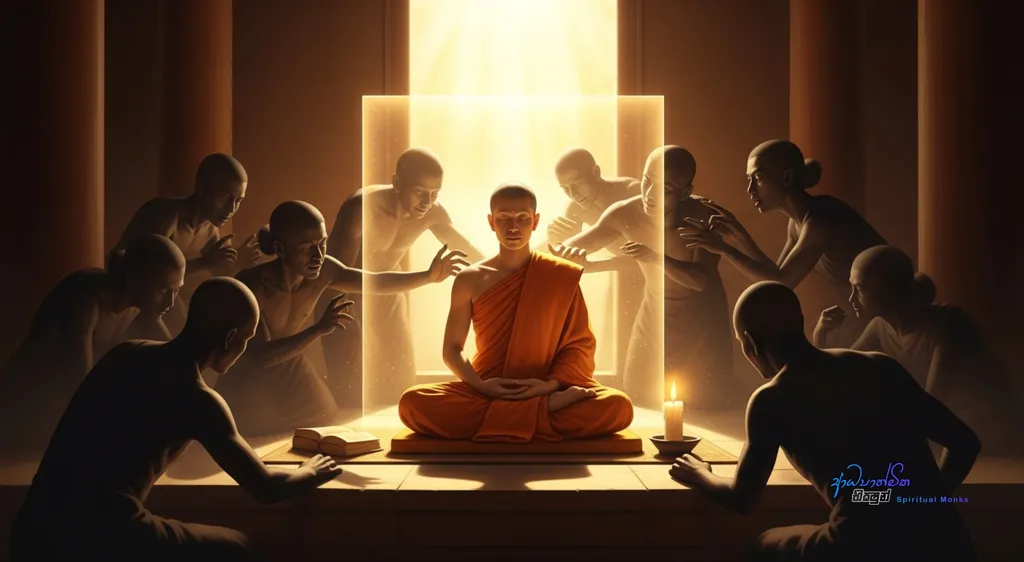
Remember that on any spiritual path, especially one with a high aspiration, there will be obstacles. The force known as Māra, the tempter, and his followers actively try to hinder spiritual progress. Even the Bodhisatta who would become our Buddha faced interference. Māra’s party will create problems, in your family, your finances, your health, to discourage you from collecting perfections and to make you give up on your spiritual path. This is their nature.
The way to overcome these obstacles is with equanimity (upekkhā) and loving-kindness. Do not fight them with anger. Instead, frequently make a strong aspiration: “By the power of my perfections, may these obstructive forces be unable to harm me.” When you feel these hindrances, repeat this determination. You will feel the obstacles dissolve, and you can continue your journey forward.
Wisdom for the Journey: Crucial Considerations
As you walk your spiritual path, it is vital to proceed with wisdom.
- On Relationships: Many young people get caught in romantic ideas, seeking a partner like Yasodharā or Prince Siddhartha. This can be a trap. The path of a Bodhisatta is one of renunciation. Yasodharā’s greatness was her strength to endure separation and support the Bodhisatta’s quest. Be prepared for such challenges, as family life is inherently uncertain. True support on this spiritual path means encouraging renunciation, not clinging.
- On Gender: The Buddha taught in the Aṅguttara Nikāya that certain positions are only attained by men: a Supreme Buddha, a Pacceka Buddha, the king of gods (Sakka), Māra, and the ruler of the underworld (Yama). A woman aspiring to Buddhahood or Pacceka-hood must first aspire to be reborn as a man. The path to Arahantship (Sāvaka Bodhi), however, is open to people of all genders.
- On Companions and Deception: As you progress, you will naturally meet your spiritual companions from past lives. However, be mindful that agents of Māra may also appear in disguise. Use wisdom to discern true friends. Furthermore, never falsely claim to be on one of these paths for personal gain, such as to attract a partner. This is a deceitful act that creates negative kamma.
- On Practice vs. Aspiration: Some may tell you that aspirations are useless. This is false for long-term goals. However, for those who wish to attain Nibbāna in this life, aspiration alone is not enough. You must engage in the practical training of insight meditation. The path requires both aspiration and dedicated effort.
Your Spiritual Path Begins Today: A Life of Purpose and Joy
On this auspicious Vesak day, take these teachings to heart and begin your exploration. As you identify and walk your chosen spiritual path, you will find that your spiritual life deepens and develops. Your worldly life will become more successful, and you will face challenges with a resilient heart. Your character will naturally transform, replacing negative habits with wholesome ones like diligence, patience, and compassion. You will find that you can live until your last breath with a heart full of joy and peace.
Some of this guidance comes from direct spiritual experience and may not be found in books. The truth of it can be realized and confirmed through your own dedicated practice. I encourage you to commit to your spiritual practices: cultivate morality, develop concentration through meditation, study the Dhamma, and live a righteous life. Continuously dedicate all your efforts to your chosen Bodhi until your very last moment.
With the power of the Buddha, Dhamma, and Sangha, may you understand these matters clearly and be able to put them into practice.
We invite you to walk this path with us. Read our teachings, and most importantly, apply them practically in your own life. as you practice, questions will naturally arise. Please feel free to share your experiences and questions in the comments below, via email or contact form. I will do my best to offer guidance in future talks based on your progress. For now, begin this practice with an open heart and a mind free from expectation. Cultivate it correctly, and may you find the clarity and peace you seek.
Thank you for joining us. We hope this blog will be of great benefit to your spiritual journey.
May you all be well and happy.
May the blessings of the Triple Gem be with you all!.


