


Categories: Other Meditation Teachings
May the blessings of the Triple Gem be with you all!
Today, for all of you who have joined us to explore the spiritual life, I wish to share some reflections on the profound importance of maintaining a daily spiritual practice. As we journey along this path, it’s natural to encounter various obstacles and difficulties. This is especially true if you are living a lay life, engaged with the world.
The reasons are clear: you have work, duties, and a general busyness that fills your days. If you are married, there are the challenges of partnership. If you have children, there are their concerns, and sometimes, even the concerns of grandchildren. Problems can arise from relatives, neighbors, social circles, and even your workplace. We have often noted that obstacles are a part of this journey, and it’s important to understand this from the outset.
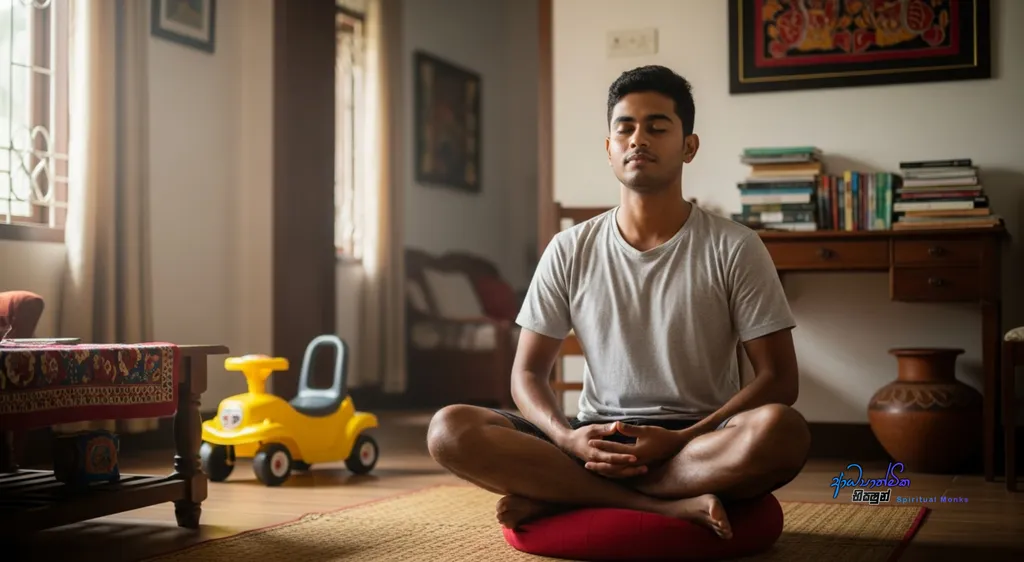
The Illusion of Control and the Certainty of Change
In our ordinary lives, we work continuously until we grow old. Someone in public service might work until retirement around age 60, while those in the private sector might work even longer. We must do these things to live; if we don’t work, no one will simply provide us with food and drink. This is the reality of lay life.
The situation is different for a monastic. People see a monk or nun living a life of virtue, developing concentration, and striving for spiritual attainment. For years, people offer them alms, not only to gain merit a wholesome, intentional action known as kamma but also to support their journey. It’s a way of saying, ‘Please walk this path, even if we cannot.’ This tradition of support has existed for ages and cannot be changed. For the one who receives it, this is a result of their own ‘merit-energy.’ But a layperson does not receive such support consistently. You must work hard, facing all the duties I mentioned before.
Now, I want you to consider something. Imagine you have all these responsibilities, with plans stretching 30 years into the future. You have duties to your children, your spouse, your parents. But what if, while driving down the road, you are in a car accident and your life ends? Have you ever stopped to think about who would carry on with all those responsibilities after you are gone?
The Unpredictable Nature of Life and the Resilience of a World Without You
Death doesn’t only come through accidents. A natural disaster could strike. Your house could be swept away in a landslide or a flood. If you live near the coast, a tsunami could surge ashore. You could be caught in a cyclone or your home could collapse into a sinkhole. Have you considered what happens to your duties and responsibilities if your life is lost in such an event? Who will teach your children, provide for your spouse, or care for your aging parents? Have you thought about this?
It’s not just natural disasters. An enemy could harm you, perhaps with a knife or a firearm. You could be the victim of black magic or curses there are many unseen ways harm can come to us. Your life could be taken. Right now, you might be a teenager, a young adult, or middle-aged, perhaps between 40 and 50, or 60 and 70. You could be from any country, any religion. You could be on an airplane that crashes we see such news more frequently these days. If your life ends so suddenly, have you thought about who will serve your family or your workplace? How will things proceed?
The crucial thing to remember is this: you have seen these things happen to others. A neighbor, a family member, a friend, a colleague, or someone in your village has likely faced such a sudden end. But have you noticed that after the initial grief, the families of the deceased find a way to live on? They find some strategy to manage.
When hunger strikes, people will find something to eat. Even if it’s not a delicious meal, they might eat the root of a tree or its leaves to survive. When you are desperately hungry, you search the house for even a single biscuit. People are driven to survive.
Of course, they grieve for the one who passed. They feel the sadness and the absence, knowing that if that person were still here, things would be different. But they don’t spend the rest of their lives just lamenting. You have seen it in society: the parents, the children, the spouse they somehow carry on until their own death.
There is a fundamental truth here for you to understand. And that truth is: ‘It is right for me to fulfill my responsibilities while I am here. But if I am not here, it is not a problem for the world. They will somehow manage and move forward.’ A way will emerge for them to continue. This is the nature of the world, of this universe. This is true for human beings and even for animals. Everyone is subject to this reality of carrying on.
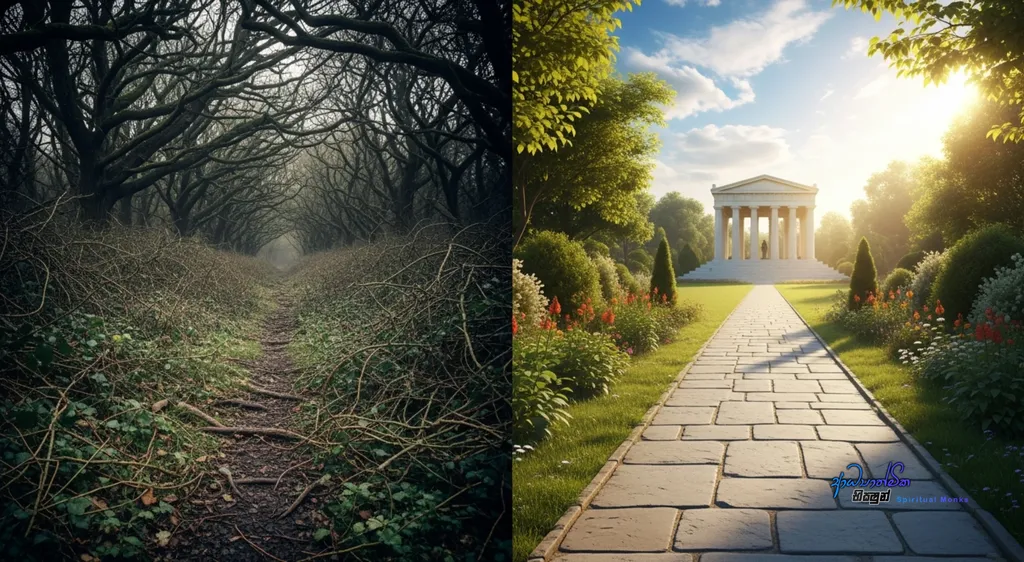
The Great Excuse: “I Don’t Have Time”
This brings me to the core point I want to clarify. As we try to develop our spirituality and cultivate our minds, we face all these obstacles. Sometimes the difficulties become so intense that it feels impossible to continue our daily spiritual practice. This is when many people, just as they start to meditate or perform meritorious deeds, say the classic phrase: ‘I just don’t have time.’ ‘I don’t have time to offer flowers and light a lamp at home. I don’t have time to chant or recite suttas. I don’t have time for tranquility meditation (Samatha) or insight meditation (Vipassanā).’
When you say you have no time, I ask you to question yourself: who are you justifying this to? Are you making your case to Māra the personification of death and the forces that bind us to suffering? Are you justifying yourself to your own mortality? Because telling me you have no time is pointless.
Telling another monk, the whole monastic community, or even a wise spiritual friend is useless. Why? Because if that sudden accident I mentioned earlier were to happen, what would you say then? Would you challenge death, saying, ‘Not now, I still have time, I have too much to do, I can’t die yet’? You know very well you cannot do that.
Prioritizing the Soul: Why Your Spiritual Life Comes First
Therefore, you must remember this: once you begin a spiritual life, you must give your daily spiritual practice the highest priority. We simply cannot know at which moment death will arrive. When Māra comes for you, he doesn’t care that you have children to marry off and provide dowries for.
He doesn’t care that your wife is helpless without you. None of that matters to him. He will take your life through a natural disaster, an accident, or an enemy and carry you away. You can be caught in the noose of death at any moment. So when you try to justify your lack of practice, you are only sabotaging your own journey through samsāra, the endless cycle of rebirth.
You see this with some elderly people who say, ‘Oh, but I have to look after my daughter’s children.’ They justify their neglect of practice. Please, remember this is a powerful unwholesome action (akusala). Do not prepare to make such excuses. You must accumulate the merit you need for your own journey, both through material offerings (āmisa pūjā) and through the practice of meditation both tranquility and insight. We cannot guess when or where death will occur, so hold this truth firmly in your mind and resolve to continue your training without interruption.
The Ultimate Equalizer: Facing Death with a Trained Mind
It doesn’t matter how many duties you have, what position you hold, what promotions you receive, how educated or uneducated you are, how rich or poor you are, or how many people you have in your social circle. None of this is relevant to death. It can snatch your life away at any moment. As someone who follows these teachings and engages in practical training, once you start to train your mind, your external situation ceases to be an excuse.
Whether you are a university student, a schoolchild, a private sector employee; married or unmarried; with or without children; caring for parents; living abroad; Catholic, Muslim, Hindu, or Tamil none of these identities, nationalities, or religions should be an obstacle. Don’t worry about your age, whether you are young, middle-aged, or elderly. It doesn’t matter if you are sick in bed, in a wheelchair, or using crutches. Don’t even think about those things.
Your death can come at any moment. You must be ready to face it. Remind yourself again and again that when the call comes, you must go. The Buddha taught a meditation called Mindfulness of Death, or Maranānussati, to help us reflect on this very reality. A person who is truly mindful of this will not waste a single second. They will pave their own path to liberation from samsāra.
While Maranānussati alone may not lead to the full realization of Nibbāna (liberation), it lays the essential foundation. With that understanding, a person is naturally guided toward the Four Foundations of Mindfulness (Satipaṭṭhāna). So, whether you are already practicing Mindfulness of Death or are inspired to begin, hold this thought: ‘My life can stop at any time. Therefore, I will continuously follow the teachings of the Buddha as found in the Tripitaka and guided by the monks. No matter how busy my day is, I will set aside an hour or two for my daily spiritual practice of meditation and chanting.’
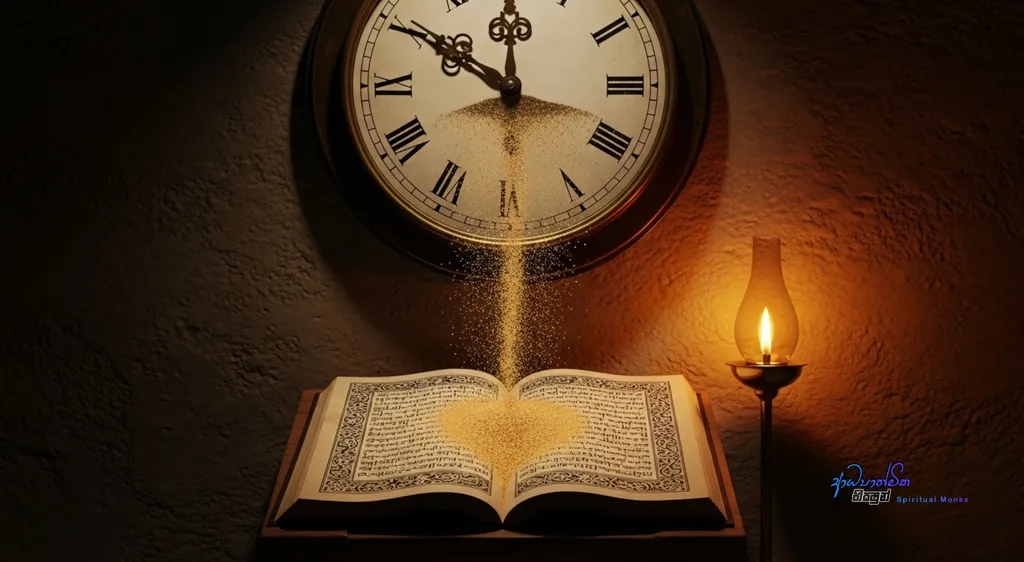
A Blueprint for Balance: Your Daily Spiritual Practice
In our spiritual community, we have provided a daily schedule to guide your practice. It starts from the early morning with offerings to the Buddha (Buddha Pūjā), followed by loving-kindness meditation (Mettā Bhāvanā) and tranquility meditation (Samatha Bhāvanā).
Our series on mindfulness guides you in practicing the Four Foundations of Mindfulness (Satipaṭṭhāna) and clear comprehension (Sati-sampajañña). Alongside this, you fulfill your daily duties: go to work, pursue your education, care for your parents, spouse, and children, and serve your relatives, friends, and community. We have often said that you must become skilled at balancing these two aspects of life, skillfully ‘slipping through Māra’s ear.’
If you are new to these teachings, we always recommend that you start from the very first talk and proceed in order. This way, you will understand everything systematically, find answers to all your questions, and learn how to handle the challenges that arise during practice. For those who have been practicing with us for some time, our constant reminder is this: no matter your daily duties, set aside time for your practice, either in the morning, at night, or both. Use the middle of the day for your worldly activities. As you continue this daily spiritual practice, your mind, which is not yet stable, will begin to settle. A day will come when it finds its stability.
The Danger of a Single Missed Day
What happens if you miss a day? If you are extremely busy, have to travel unexpectedly, or must attend to a sudden emergency, and you miss your meditation, make sure you do it the next day. But if you miss one day, and then you don’t do it the next day either, be warned: this spiritual path will slip away from you. It will vanish from your life. That is when Māra will ‘take his shot.’ He will reset you back to a state where you have to start your training all over again. Remember this. Therefore, the most essential thing is to complete your spiritual tasks just as you complete your worldly tasks.
Do it today. Do it tomorrow. Do not let it slip away. Use the time you’ve allocated for practice for that purpose alone. Don’t waste it scrolling through your phone, on Facebook, or other social media. Don’t waste time on calls with others. Do the designated work at the designated time. Afterwards, if you need to look up information or gain knowledge, there is no problem with using social media then.

Commitment or Procrastination: The Choice that Defines Your Journey
You must commit to this training. Otherwise, remember that you are not in a position to ordain as a monk or nun. You are bound by responsibilities. If you are a woman, for example, the opportunity to ordain might not come for another 30 or 40 years, and by then, your life may already be over due to its inherent uncertainty.
Perhaps you have no desire to ordain and wish to practice as a layperson. If you keep procrastinating, you are ensuring your own destruction in the journey of samsāra. You are only lengthening your journey and losing the opportunity to shorten it.
Therefore, you must trust in the spiritual path and dedicate a proper amount of time to it daily. You must train continuously. When you do this, you live a balanced life balancing your lay life with your spiritual life, and fulfilling all your worldly duties and responsibilities. You become a complete layperson.
Navigating Obstacles: Seen and Unseen
But again, I must emphasize: if you miss even one day of your routine your morning chants, Buddha pūjā, Mettā meditation, or Samatha practice make sure to do it the next day. If you miss two or three days, laziness will set in, and the practice is likely to be abandoned. Know that there are influences from unseen worlds. There is Māra. There are also unwholesome, non-human beings who may try to obstruct you if they reside in your home.
It’s not just unseen forces. Your own family your spouse, siblings, children, or parents if they hold wrong views (micchā-diṭṭhi), they may also try to stop you. They will support you in ways that cause you to neglect your practice. Friends and acquaintances can also give you wrong ideas, telling you not to do these things, based on their own unwholesome karma and mistaken beliefs. Do not fall to their level. Do not give them or, to put it simply, Māra the opportunity. You must walk your own path.
The Fruits of a Virtuous and Consistent Practice
If you train continuously, you will begin to see results from the path of insight we teach. I get calls from students who have practiced for a day or two and expect results. When I ask how long they’ve been training, they say, ‘One or two days. I’ve only been following the teachings for a week.’ We tell them not to have such expectations. You cannot get results from anything in a day or two unless you are a person with immense merit and have practiced extensively in past lives.
So, do not become someone who expects instant results. There is no meaning in that. If you practice continuously, you will absolutely receive the fruits of insight. When you practice our methods of tranquility meditation, you will gain results along that path.
When you perform offerings and chantings, you will begin to accumulate merit and receive the protection you need. When you practice something like loving-kindness meditation, you will receive protection from enemies and other dangers, as described in the Buddha’s Mettānisamsa Sutta, which lists eleven benefits of Mettā. When you live a virtuous life, observing the Five Precepts or even more, like the Eight or Ten Precepts, you receive protection from that virtue.
Remember, for a person who lives a righteous life, the universe and nature itself will bless and protect them. You will receive help from right-viewing deities (devas) and celestial beings (brahmās), and even from supportive non-human entities. You will gain the support of wholesome spiritual friends (kalyāṇa-mitta) in society.
You will start to meet good, virtuous people, and the cunning and deceitful will begin to distance themselves from you. Live this way. If you practice consistently, you will experience a change in your mind and in the people you associate with. You will experience many wonderful things.
Your Practice, Your Time: Practical Guidance for Daily Life
Do not allow your spirituality to be extinguished from within you. Do not destroy it yourself, and do not let anyone else destroy it for you not your wife, your husband, your children, your parents, your friends, or your colleagues. Do not let any reason cause you to abandon your daily spiritual practice.
On the matter of timing, many people ask if it’s okay to perform chants and offerings to the Buddha late at night, even at midnight or 1 AM. Remember this: while specific times might be allocated for certain deities, you can worship the Buddha at any time. You can chant and perform your rituals whenever you are able. People also ask if there is a specific time for meditation.
The answer is no, though we have mentioned that the night and early morning are particularly suitable. You can meditate at any time. You can undertake the precepts on any day, resolving to keep them yourself. If you break one, re-establish your resolve. Take the Five, Eight, or Ten Precepts and make a firm determination to protect them. If it breaks, renew it and start again. This is how you should live a virtuous life daily. You will become a good, righteous person, and as I said, the universe will bless and protect you.
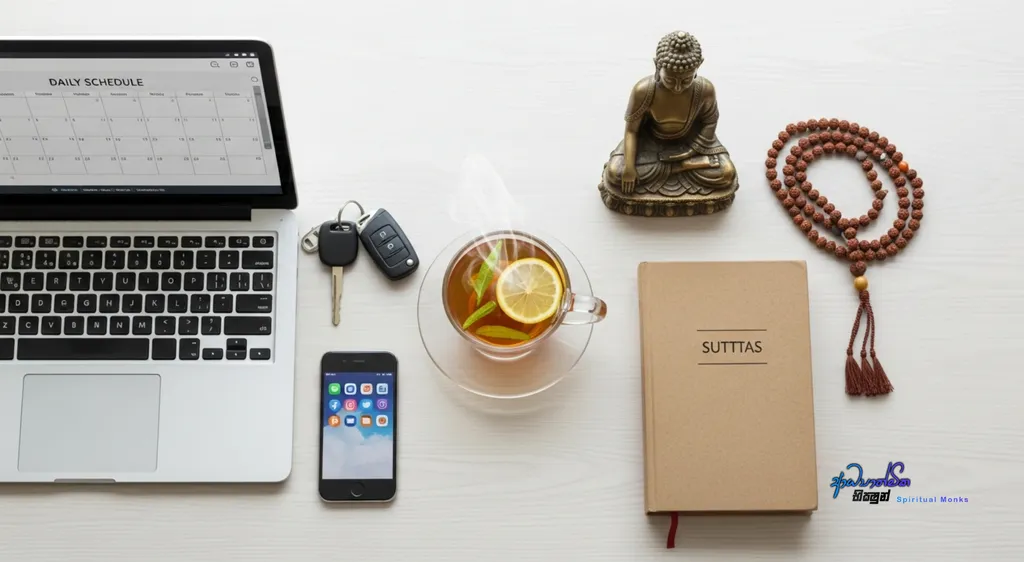
A Final Plea: Your Liberation is in Your Hands
I will state the consequences one more time: if you miss even one day, you are destroying your own life, your own journey through samsāra. You risk rebirth in the four lower realms (apāya), which include:
- The hell realms (Niraya)
- The animal realm (Tiracchāna Yoni)
- The realm of hungry ghosts (Peta Loka)
- The realm of titans or demons (Asura Loka)
To avoid this fate, you must undertake this journey with strong determination. I have taken considerable time to explain these matters out of compassion. The Buddha taught these things out of his great compassion, a quality that he alone possessed perfectly. After reading this, please make a firm resolution to practice continuously. ‘If my death comes at any moment, no one can save me.’ No god or celestial being can save you from going to hell or the animal realm. You can only be saved by what you yourself have done. Remember that not even your parents can save you from your kamma.
Do not give an opportunity for such a rebirth to arise. Shorten your journey through samsāra and develop your spiritual life. Do not let anyone else decide your destiny. Be stubborn, and walk your path, all while fulfilling your duties and responsibilities to your loved ones. Make that unshakable resolution.
I will now conclude this teaching on the importance of daily meditation. May the power and blessings of the Triple Gem the Buddha, the Dhamma, and the Sangha give you the strength to take these words to heart and act upon them.

We invite you to walk this path with us. Read our teachings, and most importantly, apply them practically in your own life. as you practice, questions will naturally arise. Please feel free to share your experiences and questions in the comments below, via email or contact form. I will do my best to offer guidance in future talks based on your progress. For now, begin this practice with an open heart and a mind free from expectation. Cultivate it correctly, and may you find the clarity and peace you seek.
Thank you for joining us. We hope this blog will be of great benefit to your spiritual journey.
May you all be well and happy.
May the blessings of the Triple Gem be with you all!.


