


Categories: Maintaining Mindfulness
May the blessings of the Triple Gem be with you all!
Today, through our spiritual teachings, I wish to clarify a crucial point for those of you on a spiritual path: do not be in a hurry to achieve perfect, unbroken mindfulness. Many of you have heard me speak repeatedly about the importance of practicing mindfulness, which we call Sihiya in the Pali language.
I have offered teachings on how to cultivate it for the development of calm-abiding meditation (Samatha) and explained its profound significance. These discussions have inspired many to begin the practice of observing the mind.
However, a common question I receive is, “Venerable Sir, I cannot maintain mindfulness continuously. It’s impossible to keep it going without a break.” And my answer is: that is absolutely true. You cannot maintain unbroken mindfulness from the very start. This is the nature of the mind, and it is the first truth we must accept. Without understanding this, we cannot proceed on this path.
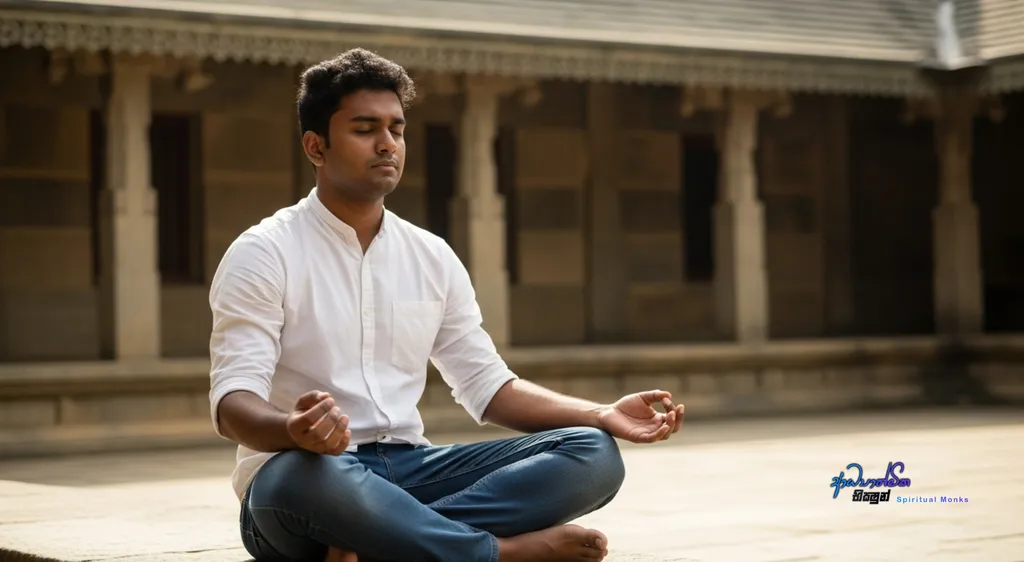
From Mindlessness to Awareness: A Great Step Forward
Let’s reflect for a moment. Before you even heard the word ‘mindfulness‘ or began this practice, in what state were you living? You were living in a state of complete mindlessness, or asihiya. It was as if you were caught in an illusion, not just any illusion, but a very real and powerful one. You were dwelling in a world of unawareness.
Now, at least, you have gained a small insight. You have realized, “I cannot tame my mind easily; I cannot make it one-pointed; I cannot even maintain mindfulness continuously.” This small piece of awareness is a monumental achievement! Did you have this understanding before? You may not have even known you possessed a ‘mind’ in this way.
Perhaps you knew of it through childhood Dhamma school, being born into a Buddhist culture, or reading books. But for someone from another background, who hasn’t encountered these teachings, the concept of a mind separate from the brain might be foreign. Some Western doctors even propose that the mind doesn’t exist and that the brain governs everything.
Through practicing mindfulness as taught by the Buddha, you have now understood that there is a mind, there are thoughts, and that you cannot control them at will. You see that the mind changes constantly. Is that realization not enough for now? It is a great thing to have understood this much, because for so long, you didn’t even grasp that. This shows us how long we have been living in mindlessness.
If we consider the Buddha’s teachings on the cycle of rebirth, known as Samsara, we have spent countless lifetimes in this state of unawareness. Realizing this helps you see just how much of your daily life, your work, your interactions, have been conducted like a blind person, without true sight. This very understanding is enough to bring you back to mindfulness and provides the foundation to sustain it.

The Self-Made Prison: The Danger of Rigid Rules
As you continue practicing mindfulness, you will face many questions and challenges. This is certain, and I am here to provide answers through these teachings. It is wonderful that you send your questions, and I will always address them for the benefit of all.
Here is a major hurdle many of you create for yourselves, often without realizing it. When you begin practicing mindfulness, there is an incredible urgency, a desperate need to maintain it continuously. You set a rule for yourself, a fixed view (drishti), a frame, a limitation: “My mind must remain mindful at all times.”
Who imposes this rule? You do. We do it to ourselves. And what happens next? You can never tame your mind. This rule becomes an obstacle. This applies just as much to those of you practicing concentrating the mind between the eyebrows, as taught in our ‘Third Eye‘ practical meditation series. Once this rigid command is in place, the mind cannot be calmed. Let’s see what happens.
A person, man or woman, having listened to these teachings, decides to start practicing mindfulness. They are washing clothes, cooking, or working at their job, trying to stay mindful. Suddenly, the mind jumps away. What do they do? They try to drag it back by force. They try to hold it down, to clench it, to prevent it from wandering. They hold it with great effort and strain.
Think about it. We cannot even hold a person or an animal against their will. That being would not like it. In the same way, the mind does not like to be tamed by force. It does not want to be held captive. We must understand this. The mind cannot be subdued with violence or aggression. This is a truth we must comprehend one hundred percent. This is what we call wisdom and understanding through investigating the mind.

Understanding, Not Force: The True Path to a Calm Mind
So, if someone thinks, “I must concentrate my mind; my mind must become one-pointed,” and they try to achieve this by force, whether through calm-abiding meditation (Samatha) or insight meditation (Vipassana) they are engaged in a falsehood. It is an impossible task that will never succeed. Please remember this fundamental principle: The mind is tamed through understanding it. The mind is controlled through understanding it.
You cannot start meditating with the goal of “controlling the mind” and expect to succeed. Whether you practice the ‘Third Eye’ method, the ‘Brahmaloka’ method, or the Buddha’s own method of insight through practicing mindfulness, it will not work if your starting point is force.
This is a vital point that many people get tangled in. By understanding this, you begin to dissolve your mental defilements (kilesa). Your good and bad thoughts fade away, and you move toward the state the Buddha called (Nibbana) liberation. This foundational understanding also makes it easier to develop other concentration-based practices, like those involving Kundalini or universal energy, because you are working with the mind’s nature, not against it.

The Gentle Way: Finding Freedom Through Equanimity
Many people fall into the trap of setting laws for themselves in all forms of meditation and then suffer because of it. Think of the suffering you create when you tell yourself, “My mind must be mindful for 24 hours straight.” You make yourself weary of the very practice that should bring you peace.
You set the law, and then you suffer, you cry, and you become discouraged. Why do this? This journey can be taken with lightness and freedom. The methods taught by the Buddha are simple and liberating. Do not make them difficult.
This is a journey that must be walked with honesty. You cannot acquire spiritual qualities the way you acquire things in the material world, with money or by gritting your teeth and working hard. You cannot obtain the fruits of practicing mindfulness instantly. Your mind must become equanimous, or Upekkha, which means balanced and neutral. If a person’s mind can become equanimous, if they can pass that test even for a day, nature itself will grant them the reward.
Another weakness is sitting deadlines: “My meditation must succeed in one month, two months, three months.” Progress is relative to each individual. But people impose these limits, rules, and constitutions upon their own minds.
This inevitably leads to disappointment and disillusionment, causing them to abandon the spiritual path and fall back into their old, habitual lives. Never, at any moment, impose a law on your mind. If you do, your journey stops there. Both your calm-abiding (Samatha) and insight (Vipassana) practices will come to a halt.

A Practical Guide: How to Practice Mindfulness Gently
Now you can begin to see the nature of your mind and its shape, its personality, its cunning character. You are learning that there is a technique, a system, for taming it. The first part of that technique is what I have shared: we must never, ever use force. We must not impose rules.
With this understanding, you can begin to pay attention to your mind, starting from this very moment as you read this. Remain attentive to your mind. When your attention breaks, simply see it: “Ah, now my mind has slipped away, it has broken from the focus.” And after it has wandered, notice its return: “Now it was mindless. Now it has returned to mindfulness.” Do not get agitated. Do not think, “Darn it, my mind wandered away again!” Do not fall into a state of disappointment or despair. If you do, the mind will seize upon that very frustration and use it as a counter-attack, making you lose the practice.
Instead, recognize, “Ah, this is simply the nature of the mind. My task is to understand the mind, not to forcibly tame it. The final result comes from understanding it more and more, until it naturally comes under my influence.” This is how we achieve victory on this path. To walk the path of freedom, you cannot start by tying yourself up with rules.
Freedom means no laws, no constitutions, no rigid frames or views. To get to such a place, we must first break the rules we have set for ourselves. The first rigid view to abandon is this one I have pointed out. Let it go.
The journey is meant to be walked in freedom. Like a bee that takes nectar from a flower without harming it, we must be skillful. Do not try to crush the flower of your mind. If you do, it will strike back and it will sting you. You will be defeated, caught by the temper within your own mind (Mara). With this new, free attitude, you can practice mindfulness anytime, anywhere: riding the bus, talking to someone, eating, bathing, caring for your children, parents, or spouse. It becomes a simple, free, and natural act. This is the only way the journey can be made.

Your Path Forward: A Journey of Freedom
I believe these points are more than enough for you to grasp this essential matter. There is no benefit in repeating the same things over and over. If needed in the future, I will explain it in an even more relaxed way. For now, understand these points deeply and let us continue this journey in a practical way. With this, I will conclude today’s teaching on why you should not be in a hurry to achieve perfect mindfulness.
May the power and blessings of the Buddha, Dhamma, and Sangha the Triple Gem help you to understand this matter clearly. May you gain the wisdom to change your attitude and cultivate mindfulness peacefully, simply, and freely, without any rush.
We invite you to walk this path with us. Read our teachings, and most importantly, apply them practically in your own life. as you practice, questions will naturally arise. Please feel free to share your experiences and questions in the comments below, via email or contact form. I will do my best to offer guidance in future talks based on your progress. For now, begin this practice with an open heart and a mind free from expectation. Cultivate it correctly, and may you find the clarity and peace you seek.
Thank you for joining us. We hope this blog will be of great benefit to your spiritual journey.
May you all be well and happy.
May the blessings of the Triple Gem be with you all!


