


Categories: Other Meditation Teachings
May the blessings of the Triple Gem be with you all!
Today, I wish to explore a deeply important question with you: where is true spiritual development found? We often speak about spirituality, and it is crucial to gain a proper understanding of it. Through these teachings, we hope you receive the message of where to find this inner quality. The most important thing to realize is that true spiritual development is an event that takes place within your own mind.

The Illusions of the Material World
We often make the mistake of searching for this inner peace in the external world. We might seek it from other people, but they cannot give it to us. Some believe spiritual solace can be found in entertainment, a play, a movie, or a TV show. Others look for it in the excitement of a nightclub, a party, or a vacation. We might think that the things of this world, both living and non-living, things of high or low value, or even money, can grant us this spiritual development. If you believe this, it is a form of ignorance, a misunderstanding.
In today’s society, some who are considered ‘posh’ or wealthy, and this does not apply to everyone, believe that eating, drinking, and being merry, and then attaching themselves to a powerful monk to perform a meritorious deed, constitutes spiritual life. They might listen to a sermon and feel happy in that moment, and mistake that fleeting feeling for genuine spiritual development. They are trapped within this limited view.
When Life’s Hardships Reveal the Truth
But remember this: if one day your wealth is harmed, if your comfortable position is damaged, on that day you will experience for yourself whether you truly have any spiritual development or not. If a natural disaster strikes, you will understand. When you lose someone you love, or when your possessions are lost, you will see the truth clearly.
Therefore, never think that spiritual development exists outside of you, perhaps with a monk who gives excellent sermons. You may think that by serving him, spending money for him, and supporting him, your own spirituality will grow. This is not how it works. This teaching is not to say that you should stop making offerings or helping monks. We clarify this because the very nature of spiritual development is so often misunderstood.
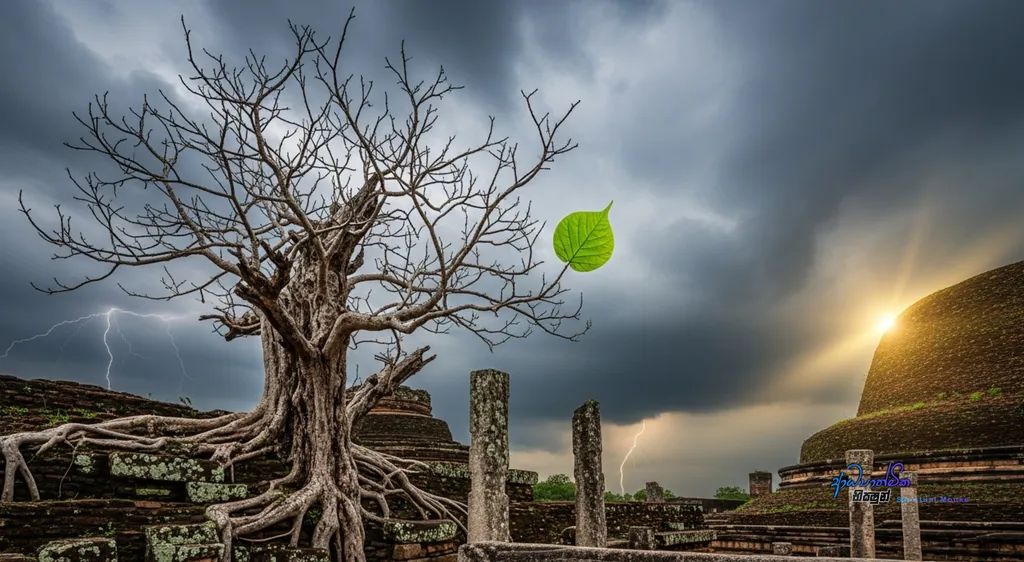
The Inner Sanctuary vs. The Outer World
If we can understand the nature of our own mind, we are on the right path. No matter how many material offerings—what we call āmisa pūjā, we make, whether we are rich or poor, even if we perform great deeds at a sacred place like the Ruwanweli Maha Seya, we do acquire merit. This merit, or puñña, is beneficial. However, your spiritual development might only grow during the moment of that offering. After you leave the sacred grounds, your mind slowly begins to become tarnished again. Reflect on this: is your spiritual development truly growing, or is it becoming defiled again?
Once you re-engage with society, interact with different people, and scroll through social media on your smartphone for two or three hours, your spiritual purity starts to erode. Your mind becomes polluted with various sensual desires and hateful political thoughts. In this way, you yourself destroy your own spiritual development. Remember what I said at the beginning: spirituality is an activity within our own mind.
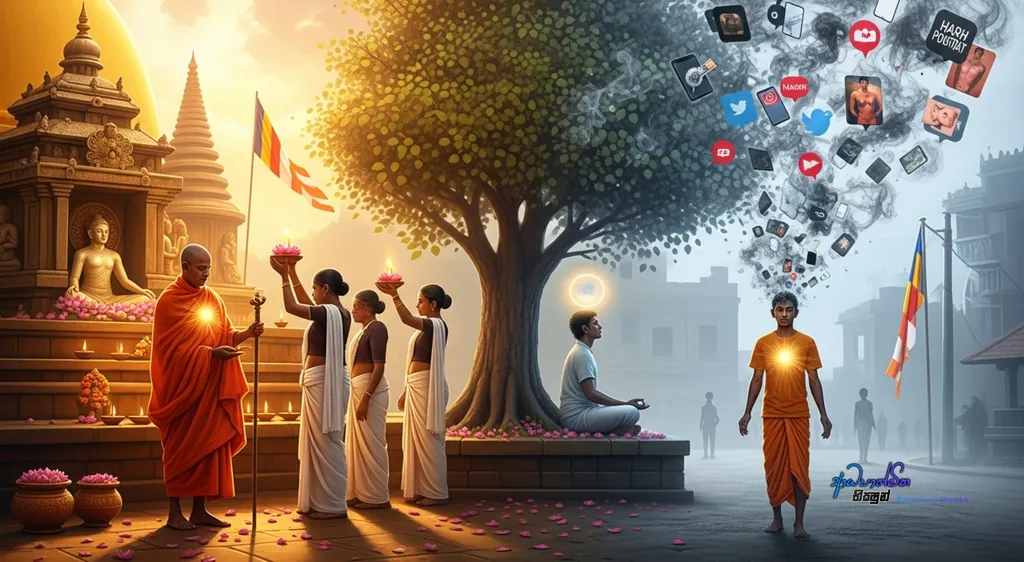
The Ultimate Laboratory: Your Own Mind
We must cultivate this spiritual quality from within ourselves. The Buddha constantly emphasized this point, which is captured in the Pali phrase paccattaṃ veditabbo viññūhi, ‘to be realized by the wise for themselves.’ The Dhamma, the truth, is within you.
If you want to understand all the trees and plants in nature, or the seven billion people on this earth, you don’t need to meet every single person or examine every single plant. If you want to understand the cosmos, you don’t do it by examining outer space. To grasp the truth of these things, you must turn toward your own spirituality. You must train yourself to look inside your own mind. When you practice looking into the mind, you gain understanding of your consciousness, or viññāṇa. You begin to understand yourself. Through this ability, you develop your mental level. This is what we call spiritual development.

The Tools for Inner Cultivation
How do we train the mind? We do so according to the Buddha’s teachings, using frameworks like the Four Foundations of Mindfulness (Sati paṭṭhāna), the path of insight meditation (Vipassanā), or simply by cultivating continuous awareness (sati-sampajañña). There are also other methods, such as concentration practices (Samatha bhāvanā), including the ‘Third Eye’ practical meditation or the ‘Brahma World’ practical meditation. There are various meditative absorptions (Jhāna) and many other concentration techniques. It is by using these tools that we must foster our spiritual development. There is no other way.
No matter how much we try to appear spiritual to society, if we are not doing this inner work, what we have is a false or deluded spirituality. Many people live this way.
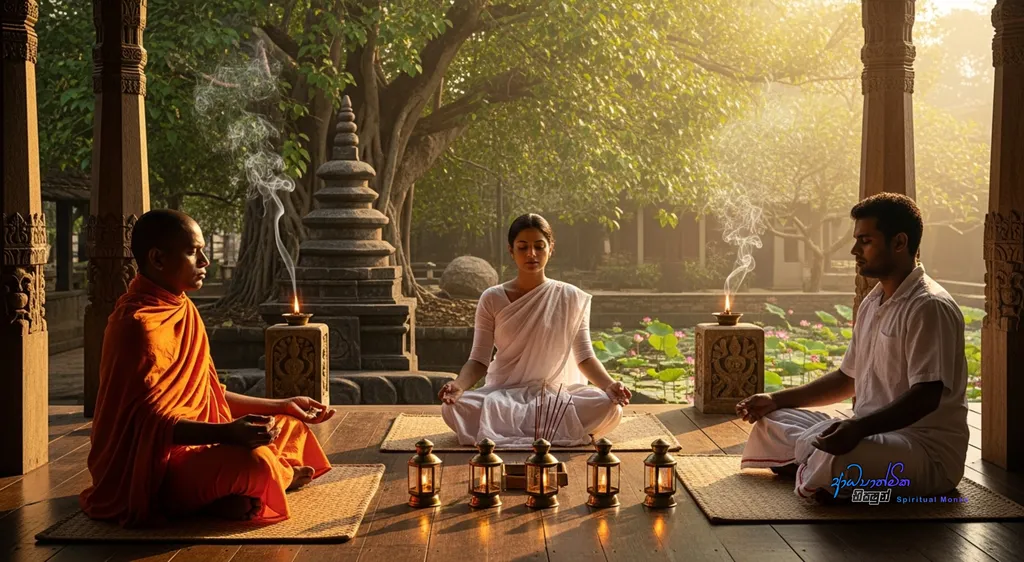
The Emptiness of Words Without Practice
This is why I said earlier, no matter how many sermons you listen to from a certain monk, if you do not practice what he teaches, you have no true spiritual development within you. Remember this. Even if you were in the presence of the Buddha himself, or his chief disciples Sariputta and Moggallana, or the eighty great disciples, it would be of no use if you do not cultivate yourself. At that point, you have completely failed. You do not know spiritual development; you only know the words.
I have met many people, especially young people, who have memorized the words of monks who speak about the mind on YouTube. They can repeat the teachings perfectly. But when a problem arises, when they face a breakdown, the spiritual quality described by those words is not there within them. This is the crucial point to understand. It is then that their eyes are opened, and they realize, ‘I don’t have this quality in me.
That’s why I broke down mentally.’ Some people begin to cultivate themselves from that point on. Others, out of arrogance, are unwilling to show their vulnerability and continue without changing, offering more definitions to mask their emptiness. This is the society we live in now.
A Path for Everyone: Spiritual Development in Lay and Monastic Life
To experience spiritual development most profoundly, one should ideally enter the ordained life. As a monk (bhikkhu), one must live correctly, not just drifting along aimlessly in robes. One needs to lead a correct spiritual life to truly experience its depths.
However, this does not mean it’s impossible in lay life. I say this every day because laypeople often get discouraged. They say, ‘We can’t do it, we need to leave lay life, but we have attachments, responsibilities, and duties we cannot abandon.’ We have seen them become sad and regretful. So we always remind you: it is possible to even attain sainthood, to become an Arahant, in lay life.
The only difference is that one does not remain in lay life after full liberation. Entering monastic life becomes a natural law. Why? Because there is no reason to stay. If you take a stone and wish for it to float, it will not; it will sink. In the same way, one who has destroyed all mental defilements (kilesa) has no reason to remain in a household. They very quickly enter the ordained role.
Yet, there have been many laypeople who have attained stages of the path and nurtured their spiritual development. Whether in lay life or monastic life, everyone has a mind, thoughts, consciousness. As you reach certain levels of understanding, your role in the world may naturally change. As we understand the reality of the world more and more, we feel the urge to withdraw from those roles.
Think about when we were children. We loved our toys. But as we grew up, we realized they were meaningless. Do you still keep those toys and play with them? No. You have matured to a higher mental level and moved on to other things. It is the same with the path. As you reach the mental levels of the path, Sotāpanna (Stream-enterer), Sakadāgāmī (Once-returner), Anāgāmī (Non-returner), and Arahatta (the fully enlightened one), you no longer linger on the primitive things that ordinary worldlings do.
Your way of thinking changes. Your role in life changes. So, if you are in lay life, your mind will naturally incline toward the ordained life. Do not be discouraged by this. I say again, do not waste time worrying about your current role or your duties. Instead, focus on cultivating your spiritual development right where you are.
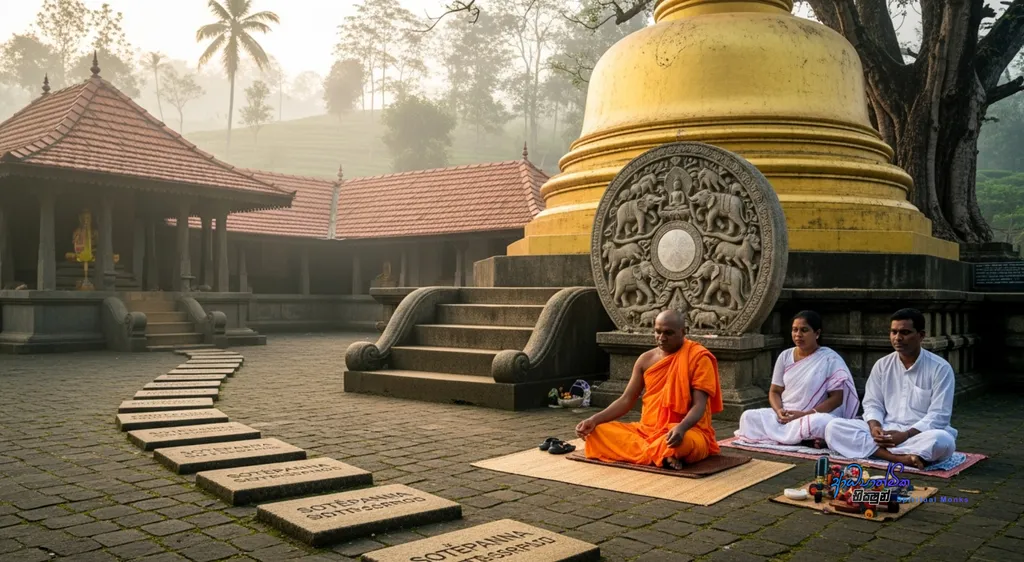
The Ladder of Progress: From Ritual to Realization
So, the point I want to emphasize is that spiritual development is within your mind. If a monk is currently teaching you how to develop and train the mind, you must practice those things. Do not limit yourself to just listening to words or sermons. Listen to the teachings, learn about the events from the Buddha’s time and the things he taught.
You must listen to them. But again, if a monk teaches you how to train the mind, that is something you must absolutely practice. Remember, it is a teaching that helps elevate your mental level, to lift you up through spiritual development.
As you practice, you will begin to understand for yourself whether what is being taught is truly about training the mind or not. In our own work, we have taught how to train the mind from various perspectives, how to think, and the way one should think. We have explained all these things.

Step 1: The Foundation of Giving (Dāna)
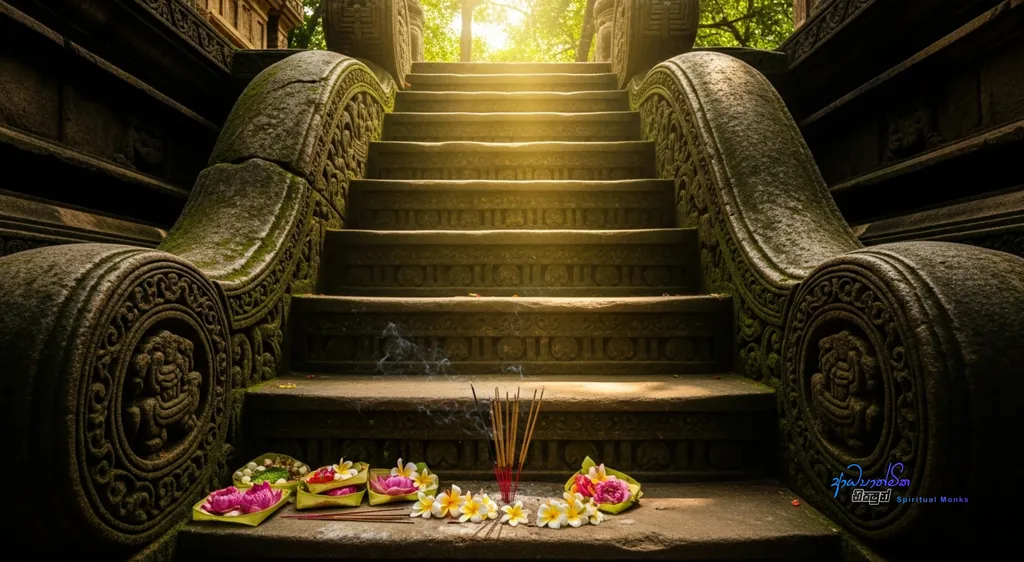
Never think that offering flowers and lamps, these material offerings (āmisa pūjā), are the culmination of spiritual development. Do not think it is the highest place. It is the most primary, fundamental stage. It is like collecting fuel for our journey through saṃsāra, the cycle of birth and death. Just as a vehicle needs fuel, we gather the merit (puñña) needed for the journey. The Buddha did teach that laypeople need merit, as you can read in the Tipiṭaka.
But this is a very basic place. So, do not limit yourself to offering robes or flowers, or to various acts of giving. Do not remain stuck at the level of material offerings. This is the starting point for your spiritual development, not the highest place. The Buddha never taught us to remain there.
Step 2: The Discipline of Virtue (Sīla)
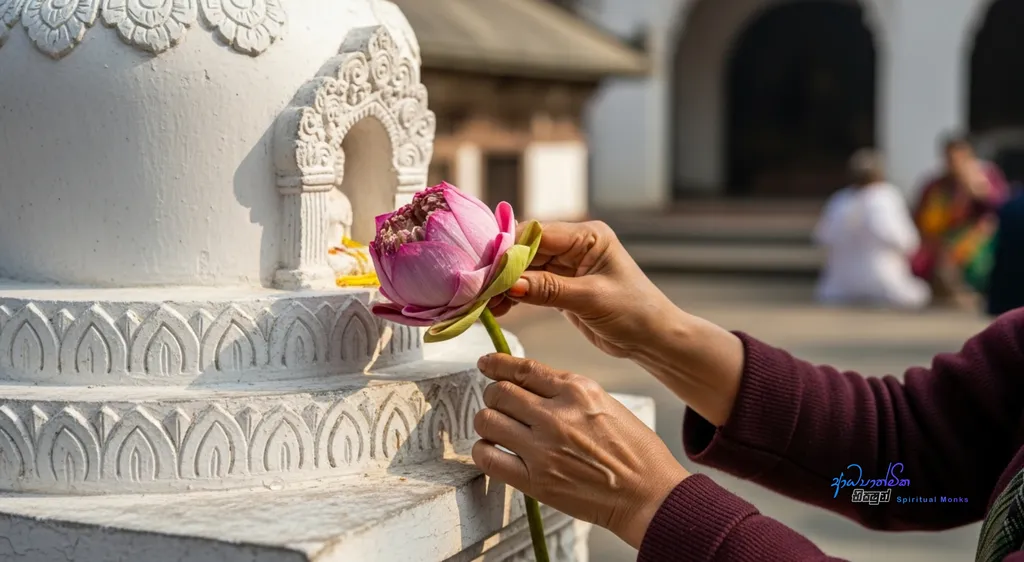
Moving beyond that, a person might protect their ethical conduct (Sīla), such as the Five Precepts, Ten Precepts, or Eight Precepts on special days. It’s possible to maintain even higher levels of virtue. A person might then think, ‘I have surpassed that initial stage and come to a higher level.’
They might think, ‘I am observing the precepts, I am leading a celibate life as a layperson,’ or ‘I am living a celibate life as a monk,’ and believe, ‘I am at the pinnacle of spiritual development.’ They can fall into the delusion and arrogance of thinking this is the highest place.
Remember, whether you have taken the higher ordination for monks, the ten precepts for novices, or the five precepts for laypeople, just by holding onto that, you have not reached the peak of spiritual development. It is certainly a step up from the primary level of material offerings, a higher stage. But if you only observe precepts on the full moon days, it is just a certain level, not the complete one. It is an important step, but it is not the end.
Step 3: The Power of Concentration (Samādhi)
Moving beyond virtue, some people may reach a state of mental concentration (Samādhi) and think that this is the fullness of spiritual development. Yes, it is a form of spiritual progress, an advancement for you. But you must remember that it is not the complete and final stage.
There is a possibility that you could go wrong here too. You could suffer a mental collapse, and that concentration, that virtue, and even the merit from your past offerings could disappear. You could decline and fall back into an unvirtuous life. So, remember that this too is just another level, another step, not the complete destination.
Many people can achieve concentration. Even someone who practices our ‘Third Eye’ practical meditation method, by focusing on the middle of the forehead and practicing empty signs, can attain a level of concentration. Similarly, practicing the ‘Brahma World’ meditation method can lead to concentration. There are many other concentration practices taught through our work and elsewhere. When you practice them, a state of mental unification arises.
But remember, this is not the ultimate level of spiritual development. Do not resolve to stay only at this stage. You have come to this step, and there is some spiritual development within you. Now, you must make the resolve to go beyond it. This is a firm determination that all of you, young and old, regardless of race, caste, or religion, must cultivate.

Step 4: The Heights of Meditative Absorption (Jhāna) & Special Knowledges (Abhiññā)
Beyond concentration, as the mind develops further, there are other aspects. Having surpassed material offerings, not stopping at virtue, and moving beyond concentration, the next stage is the attainment of meditative absorptions (Jhāna) and supernormal powers (Abhiññā). When a person reaches these levels, attaining a Jhāna, awakening the ‘third eye’, gaining some measure of the divine eye (dibbacakkhu), or the ability to read others’ minds, they can be deceived into thinking this is the highest spiritual attainment. Do not be limited here either. This is not the highest level.
However, you must remember that it is a far more powerful and higher level than the previous three stages we discussed. It is a much higher place than most other people in society will reach. But do not stop here. If you stop here, you could one day decline and fall back. Therefore, the highest place is the final one I have to mention.
The Final Goal: The Unshakeable Peace of Nibbāna
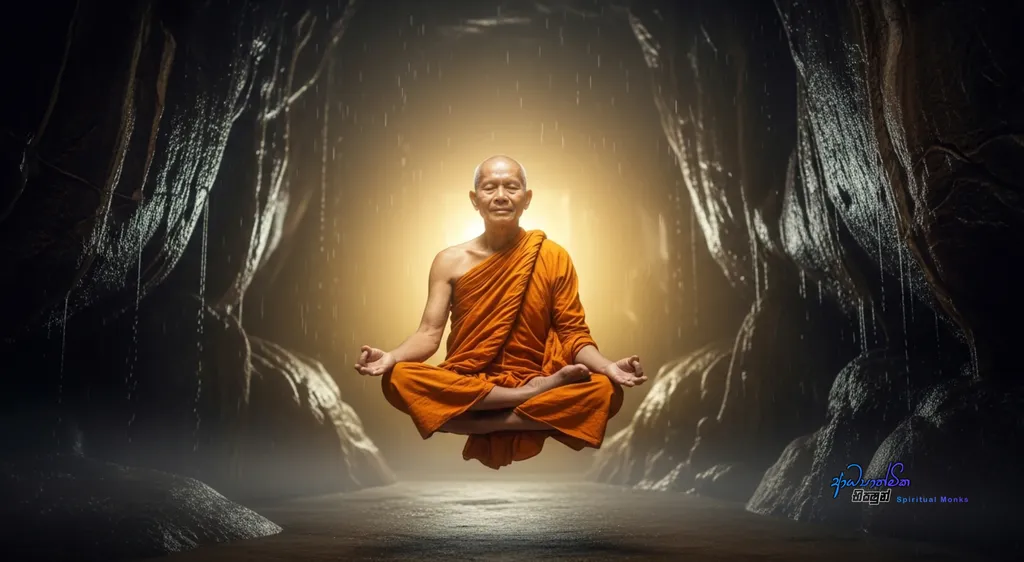
The ultimate destination is Nibbāna (Nirvana). This is the highest level of spiritual development that exists. There is no higher level anywhere in this universe, in this world. Within this, we can point to four stages that lead to it: Sotāpanna (Stream-enterer), Sakadāgāmī (Once-returner), Anāgāmī (Non-returner), and Arahatta (the Worthy One). These are the subsequent levels of the path, with the supreme goal being Nibbāna. Within this realization, there are distinctions like Buddhahood, the state of a Paccekabuddha (a silent Buddha), and Arahantship. They are different variations, but they all realize the same Nibbāna.
When one reaches this ultimate attainment, they may or may not possess the special powers mentioned before. A liberated one might have all eight jhānas, or seven, six, five, or four. In terms of supernormal powers (pañca-abhiññā), they might have all five, or four, three, two, or one. But upon arriving at the state of Nibbāna, this is the highest level. From here, there is no falling back. This is the true and final goal of all spiritual development.

We invite you to walk this path with us. Read our teachings, and most importantly, apply them practically in your own life. as you practice, questions will naturally arise. Please feel free to share your experiences and questions in the comments below, via email or contact form. I will do my best to offer guidance in future talks based on your progress. For now, begin this practice with an open heart and a mind free from expectation. Cultivate it correctly, and may you find the clarity and peace you seek.
Thank you for joining us. We hope this blog will be of great benefit to your spiritual journey.
May you all be well and happy.
May the blessings of the Triple Gem be with you all!.


