


Categories: Other Meditation Teachings
May the blessings of the Triple Gem be with you all!
Welcome. In our ongoing exploration of the spiritual life, we aim to provide insights from the Dhamma, the Buddha’s teachings, that are practical and relevant for you today. It feels like our duty to clarify these profound topics in a way that fits our modern world. Today, we will explore a crucial distinction: the difference between true spirituality and what can be called “sensual spirituality.” First, let’s understand what true spirituality really means.
What is True Spirituality? An Inner Exploration
True spirituality is the deep, intimate study of your own mind and the events that unfold within it. This goes far beyond books. Many people are mistaken, believing that reading a book about meditation or a sacred text is spirituality itself. That is not quite right. Those books contain the experiences of someone who is advanced on the path; they offer knowledge, a map, but they are not the journey itself. The knowledge is helpful, but it is not the same as the direct, personal experience of true spirituality.
Our purpose here is to focus on this practical dimension. We don’t limit ourselves to books; we always emphasize something you can practice. Without practice, you cannot achieve results. Yet, there are many in this world who only look at these teachings superficially, from a distance, and then criticize without any personal experience. This was true in the past, is true today, and will be true in the future. We can only point this out as a form of ignorance.
The Priceless Peace That Cannot Be Bought
When we look deeply into this path, we see that true spirituality is a practical study of our own mind. A core element of this word, “spiritual,” is peace, a deep sense of mental well-being and tranquility. It’s vital to remember that where there is indulgence in sensual pleasure, or kāma, the craving for satisfaction through the five senses, there is no true spirituality. If a person is consumed by gratifying the eyes, ears, nose, tongue, and body, we must question whether genuine spirituality can coexist there.
However, we must also be careful not to judge everything by external appearances. Within true spirituality, a transformation begins in the mind. You know this journey begins with practices like meditation, or bhāvanā, which is simply the cultivation of the mind.
As we move forward on this path, we encounter different aspects of our own consciousness. The result of this exploration is mental comfort, a peace that cannot be bought. You can spend a fortune on gold or other valuables, but the lightness and freedom that arise in the mind cannot be purchased with money. You know this well.

The Hallmarks of a Truly Spiritual Person
This inner state, which no worldly wealth can buy, is the essence of true spirituality. It arises as the mind becomes more and more pure. No matter how many words we use to describe it, the experience itself cannot be confined to words, books, or debates. It brings a marvelous sense of peace. Those who have found it are often quiet and live with profound contentment. They strive to live their entire lives in happiness and freedom, without clinging to anything. They make an effort not to get attached to any particular feeling, nor to push anything away.

Two Paths to Inner Peace: Suppression and Eradication
This inner peace can be experienced in two main ways, which correspond to two types of meditation:
1. Eradicating the Defilements: This is the ultimate path, where mental impurities are completely destroyed. This corresponds to Insight Meditation, or Vipassanā Bhāvanā.
2. Suppressing the Defilements: This is a path where mental impurities are temporarily subdued, leading to deep states of calm. This corresponds to Concentration Meditation, or Samatha Bhāvanā.
It is entirely possible to experience this peace to a certain extent while living a lay life. You might be married or single, with children and grandchildren, living a life full of worldly activities. Even so, you have the ability to taste this true spirituality to some degree.
From Lay Life to Deeper Practice
However, to go further, we must eventually move away from a life of sensual indulgence, or kāmabhogī. This means relinquishing the constant need to please the senses, both physically and mentally. At a certain point, the path requires one to either live a celibate life as a layperson or to enter the monastic life. It is then that the fullest measure of this peace can be experienced.
Even as you read this, if you are new to these ideas, try a small experiment. Close your eyes for a moment. Just watch your mind, or perhaps focus on the space between your eyebrows. Let a minute or two pass. In those few seconds, notice if you experience any mental comfort. This is the place to check for yourself: is there peace in my mind, or not? This simple test shows that true spirituality is found within you. It is in your own mind. To attain this peace, the defilements, the mental impurities known as kilesas like greed (rāga), hatred (dosa), and delusion (moha), must either be suppressed or completely destroyed.

The Four Stages of Awakening on the Path to Liberation
According to the Buddha’s teachings, the supramundane path of eradicating defilements leads to four stages of Awakening, known as the Four Path-Fruits (magga-phala):
- Sotāpanna (Stream-enterer): One who has entered the stream to Nibbāna.
- Sakadāgāmī (Once-returner): One who will be reborn in the human world only one more time.
- Anāgāmī (Non-returner): One who will not be reborn in the sensual realms.
- Arahant (The Worthy One): One who is fully liberated and has extinguished all defilements.
The first three of these stages can be attained while living a lay life. An Arahant, however, even if they attain this state in lay clothes, will not remain in the household life. They will invariably enter the monastic order. This is a dhammatā, a natural law. It is something that happens automatically.
Spiritual Attainment and Worldly Life
Let’s look at how these stages relate to worldly life. A Stream-enterer (Sotāpanna) experiences a profound spiritual peace, yet they may still engage in and enjoy sensual pleasures. The Dhamma teaches that they naturally uphold the Five Precepts perfectly, without struggle. While you might find it difficult to keep the precepts, for a Stream-enterer, it is as easy and natural as breathing. This is because their mind is stabilized at a certain level of purity.
The Once-returner (Sakadāgāmī) also lives a sensual life but gratifies the senses even less than a Stream-enterer. The Non-returner (Anāgāmī) has completely eradicated sensual desire (kāma-rāga) and ill-will (paṭigha). They are only subject to more subtle fetters like conceit (māna) and craving for existence in the fine-material or immaterial realms (rūpa–rāga, arūpa-rāga). Such individuals can and do live in the lay world.
In the Buddha’s time, it is said that out of seventy million people in the city of Sāvatthī, fifty million were path-attainers. They lived lay lives, but they had reached different levels of mental purity and reduced their journey through saṃsāra, the cycle of rebirth.
The Ultimate Peace of Nibbāna: Realized Within
Arahants, Paccekabuddhas (Silent Buddhas), and fully enlightened Buddhas have traveled to the very highest point of this supramundane path. They experience the ultimate mental peace, the indescribable bliss known as Nibbāna. They do not engage in any sensual indulgence because all defilements have been utterly destroyed. This peace is something we can barely imagine. And it is attained entirely from within. The Buddha repeatedly taught, “Paccattaṃ veditabbo viññūhi,” which means, “To be realized by the wise, each for themselves.” You must see it for yourself, from within yourself. Trying to see yourself through others is impossible.
Now, reflect on this: to attain these fruits of the path, did anyone spend money? Did they acquire these states by spending on worldly valuables? No. Such mental peace and these stages of awakening cannot be bought. They must be cultivated and realized through one’s own practical efforts.
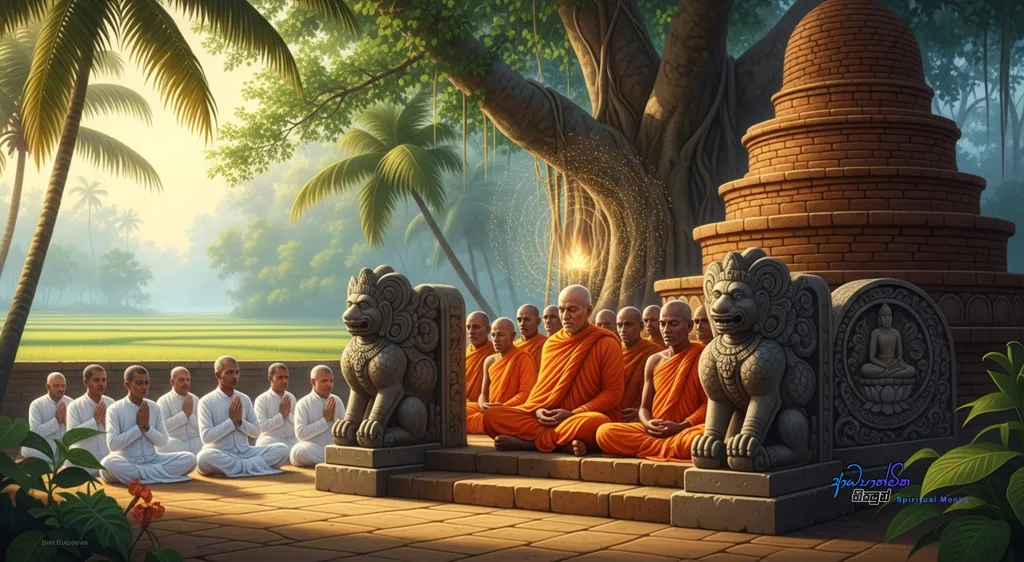
The Path of Calm: Attaining Meditative States (Jhāna)
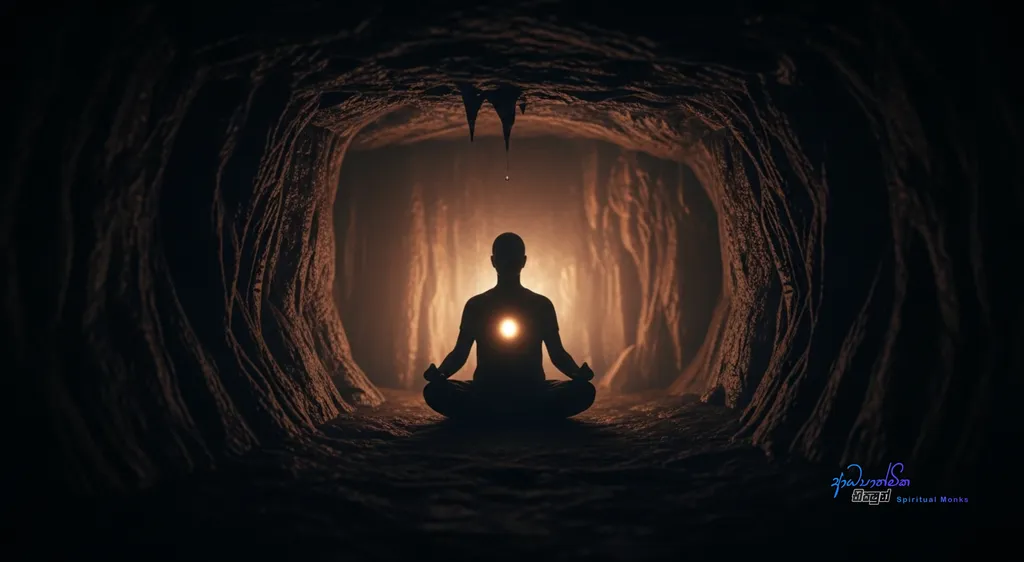
The other path is the suppression of defilements through concentration meditation (Samatha Bhāvanā), which can lead to deep meditative states called Jhāna. This also brings profound mental peace. Like the path of insight, this peace can only be gained if you practice it yourself. We have shared teachings on how to practically cultivate these states. Again, I repeat, this bliss is not something you can buy with money. It is developed from within.
For someone leading a celibate life, these states are quite accessible. For those living a life with sensual pleasures, attachments, and responsibilities, they can be reached to a certain degree. We have often clarified this in our teachings. Of course, if one enters a monastic role, these states can be developed very quickly and easily.
The Danger of Judging Others Spiritually by Their Possessions
Please do not misunderstand the nature of true spirituality. The purpose of this clarification is to show that it can never be acquired through money or external means. This brings us to a critical point: judging others spiritually based on external appearances. For example, imagine an Arahant visits your home for a teaching.
In today’s Sri Lankan society, one might arrive in a luxury Prado SUV, and another might arrive in a three-wheeler (tuk-tuk). Someone might think, “How can this be an Arahant? He came in a Prado!” This is a wrong conclusion. Another might see the monk in the three-wheeler and think, “Ah, he must be a real Arahant because he used a simple vehicle.”
If you try to measure another person’s spirituality by such external factors, you are making a grave mistake. It is a fault in your view, a lack of understanding of the Dhamma, and a lack of practical experience with your own mind. You are making a decision based on trivial matters. If the Buddha were here today, he could arrive in a Prado, a three-wheeler, or he could walk. In all three cases, he would still be the Buddha. Remember that.

Beyond Appearances: Kamma, Speech, and True Virtue
However, there is a nuance. If someone seems to be allergic to simplicity and is only attached to comfort and luxury, then there might be a question about their spirituality. But we cannot be absolutely sure. We can only know by associating with them over time. A person’s past kamma, their intentional actions and their results, cannot be stopped. If they are destined to receive offerings and comforts due to past generosity, they will receive them, even the highest luxuries in the world.
No one can prevent that. It is not good to be jealous of this. We feel envy because we don’t have those things, and we criticize them. This only creates negative consequences for ourselves. We must be mindful of that.
Similarly, you cannot judge a spiritual teacher by their style of speaking. Someone could be an Arahant, but you cannot conclude from their words or gestures whether they are enlightened or not. They may speak with animated hand movements or with perfect stillness. We cannot know their inner state from this. The only way to find out is to listen to their teachings, practice what they say, and associate with them over time to see if they possess the qualities they teach.
Misconceptions and False Standards of Holiness
Many people have mistaken ideas. Some think that if you become an Arahant, you can’t even wear sandals. This is a false view. Anyone can wear sandals. We have seen people decide that monks who use a traditional palm-leaf fan are the truly virtuous ones, while those who use a modern umbrella are not. People might think this, but the monks themselves do not.
If an Arahant today used a modern umbrella, you, with your external judgment, might decide he is not enlightened, even though he has reached the highest mental development. You do not have the ability to make such a judgment.

Beware the Trap of Sensual Spirituality
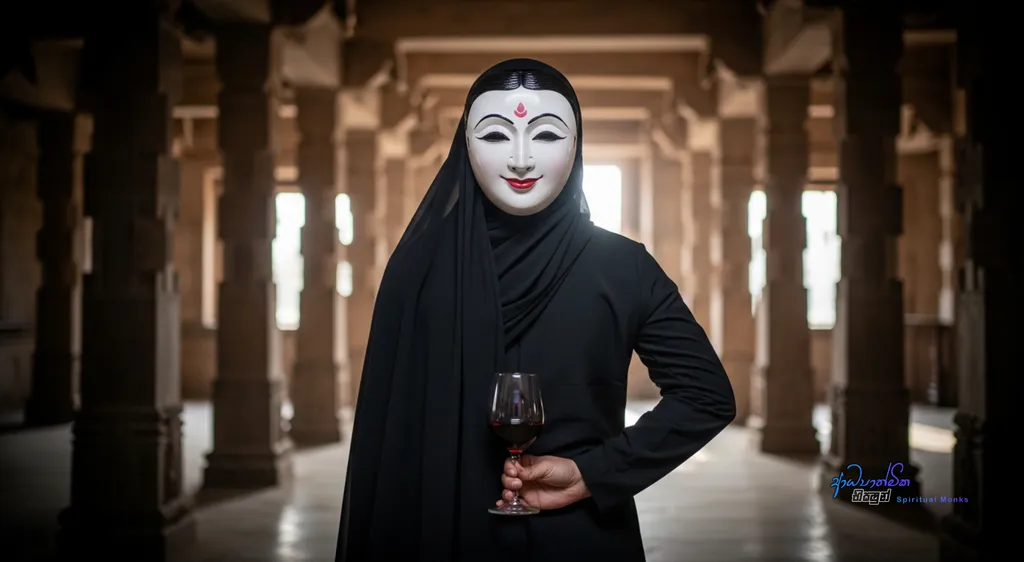
Now we must discuss another crucial topic: “sensual spirituality.” This is a counterfeit path we must learn to recognize. It involves deceiving people by showing a false face of spirituality. Such individuals, whether in monastic robes or lay clothes, may secretly indulge in sexual activity, alcohol, and other sensory pleasures. They might pretend to meditate for five minutes to keep up appearances. They may have gathered some knowledge from university or books, patching together bits and pieces of information they’ve picked up from here and there.
They live a life of criticism, eating and drinking and having fun, all while knowing a few things about the mind. They present this lifestyle as true spirituality. This is a time of Māra, the embodiment of temptation, and these are his followers. Do not be deceived by them.
Modern Deceptions: Drugs, Sex, and False Spiritual Paths
Today, for instance, some people use substances like cannabis and then attempt to meditate, claiming the resulting state is spiritual. The moment you hear this, you know it is wrong. This is a false, sensual spirituality. Another example is people who meditate for five or ten minutes and then lead a life of excessive sexual indulgence, far beyond that of an ordinary layperson.
We have heard of and know of groups, for example, who have concluded that to awaken the Kuṇḍalinī energy, one must engage in sexual activity. These are lay groups, found in various places in Sri Lanka, who practice concentration meditation.
It is true that in the early stages of concentration practice, some people feel as if their defilements are stirred up. What is really happening is that by looking at their own mind, they are beginning to see the greed and lust that were always there but previously hidden. Mistaking this for a sign that their energy is increasing, they are wrongly taught that they must join with another meditating partner, a man or a woman, to have sex and awaken the Kuṇḍalinī.
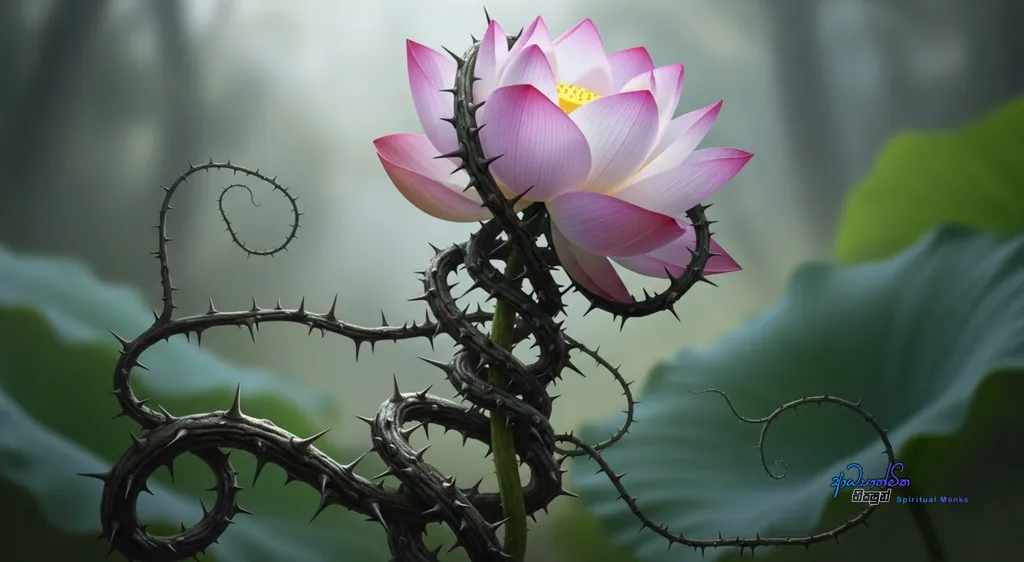
Teachers who give such wrong advice, claiming that lust is necessary for spiritual awakening, are promoting a sensual spirituality. This is nothing but a strategy to indulge in sensual pleasure by deceiving others, a trick to fool both men and women. We have constantly stated that in true spirituality, there is no place for sexuality, greed, hatred, or delusion. We either suppress these things or we destroy them entirely.
Recognizing the True Path and Helping Others
So do not fall for this. It is not the correct path. These are people from Māra’s side who have come into the human world, perhaps wearing the Buddha’s robes, perhaps not, and try to teach from a place of mere knowledge, with no practical training or genuine experience. Do not get caught by such people.
As I explain this, you might even be reminded of certain videos or teachings you have seen on social media. Understand this clearly: this is not something to be deceived by. And if you see someone else caught in such a trap, you should try to help them get free.
From all these points, you can see that we all hold various opinions and ideas. That is why we can never measure another’s true spirituality from the outside. As I have explained, true spirituality is a state of mind, a development of our own heart. If someone comes to you and claims to have attained a certain stage of the path, we can neither say they are lying nor can we confirm it. It is difficult to judge from the outside. Only by associating with them for a long time can we come to a decision about their claimed spirituality.

Conclusion: Embracing True Spirituality with Wisdom
I hope you now have a clearer idea of what true spirituality is and how it differs from sensual spirituality. The purpose of this teaching was to show you authentic spirituality and give you a framework for how to view it correctly. Do not confuse the two.
As we conclude this teaching, I bless you that with the power of the Triple Gem, the Buddha, the Dhamma, and the Sangha, you may be able to understand these matters well and act accordingly.
We invite you to walk this path with us. Read our teachings, and most importantly, apply them practically in your own life. as you practice, questions will naturally arise. Please feel free to share your experiences and questions in the comments below, via email or contact form. I will do my best to offer guidance in future talks based on your progress. For now, begin this practice with an open heart and a mind free from expectation. Cultivate it correctly, and may you find the clarity and peace you seek.
Thank you for joining us. We hope this blog will be of great benefit to your spiritual journey.
May you all be well and happy.
May the blessings of the Triple Gem be with you all!.


