


Categories: Be Happy 24 hours
May the blessings of the Triple Gem be with you all!
Today, in our series of teachings on developing mindfulness, I wish to explore a specific outcome of this powerful training: how the simple act of being mindful brings our own mind under our control. Many of you who follow our spiritual teachings are on this journey, and it’s important to understand how this process unfolds.
When you begin to cultivate mindfulness, a profound change occurs. You start to see the thoughts that populate your mind from many different angles. In the beginning, this means you will notice the more challenging aspects of your inner world. You will see thoughts of lust or craving, which in Buddhism we call rāga. You will see thoughts rooted in anger and ill-will, known as dvesha.
You will notice thoughts of envy and jealousy, or irisiya. These are what we call unwholesome roots, the unskillful thoughts that we often act upon without even realizing it. Alongside these, you will also begin to see the beautiful thoughts that exist within you. You will notice thoughts of generosity, thoughts of loving-kindness, or mettā, and the spontaneous wish to help another person. You will see moments where you feel genuine joy at another’s success, free from envy. These are wholesome thoughts, the skillful states that incline the mind toward goodness.
This initial stage of mindfulness practice is about seeing this entire spectrum. The act of seeing is made possible by mindfulness, or what we call Sati. The act of recognizing and understanding what these thoughts are, ‘this is jealousy,’ ‘this is kindness’, is born from clear comprehension and wisdom, known as Prajñā.
It is this combination of mindfulness and wisdom that allows us to finally see what has been inside us all along. Think about it: for so long, we may have lived without ever knowing that our mind was like this, a mixture of a ‘garbage heap’ and a garden. We acted from these states, controlled by them, without any awareness. This is the first powerful step that the Buddha’s teaching on the Four Foundations of Mindfulness, the Satipaṭṭhāna, helps us take.
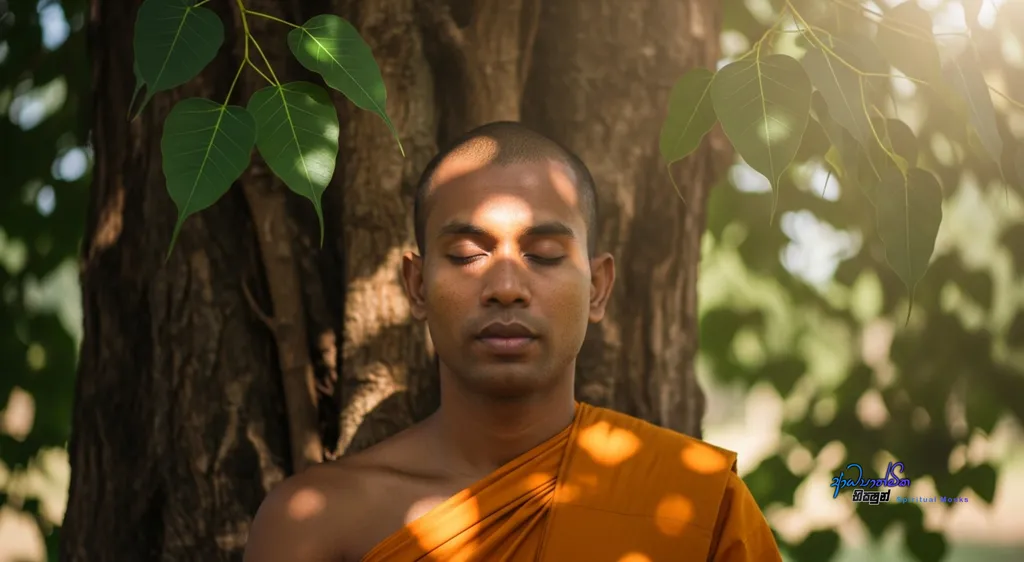
From Jealousy to Wisdom: A Practical Guide to Transforming Difficult Emotions
So how does this awareness translate into control? Let’s take a very real example: jealousy. Imagine a friend, a family member, or a colleague is succeeding. You see them achieving a higher position or gaining recognition. For many years, perhaps, your automatic reaction has been a pang of jealousy. This feeling might have driven you to speak ill of them or even take subtle actions to hinder their progress. You may have felt trapped by this reaction, wishing you could stop it but feeling powerless.
Now, with mindfulness practice, something different can happen. The thought of jealousy arises, but this time, you see it. You recognize it: ‘Ah, here is a jealous thought.’ You can observe the old habit of the mind as it suggests ways to undermine the other person. Your mind might whisper, ‘Do this to stop them,’ or ‘Say this to darken their future.’ But because you are watching, you are no longer swept away. You now have the power to just observe these suggestions without acting on them.
This is the moment you begin to reclaim control. Instead of jealousy controlling you, you are now managing the thought of jealousy. Perhaps in the past, you would have acted on it physically. Now, with mindfulness practice, maybe you only go as far as speaking about it to someone else, fueled by the anger that accompanies jealousy. Even this is progress! You have restrained the physical action. You have limited the harm. Look at the peace that comes from this alone. This shows the practical power of the Buddha’s teachings. By applying them, you can achieve this state. It is not impossible.
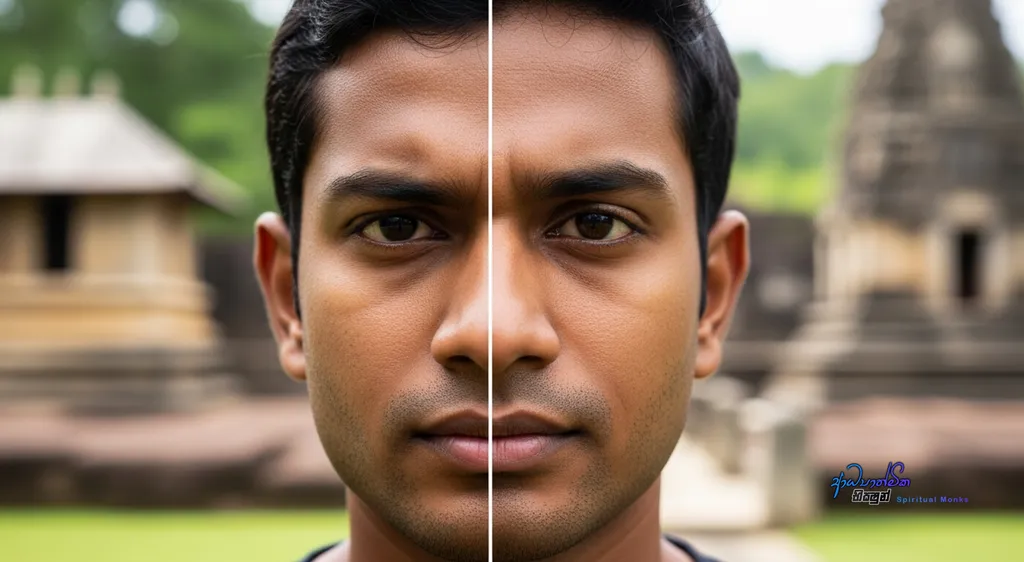
The Universal Mind: How Self-Awareness Leads to Compassion
A beautiful insight arises from this practice: when you begin to understand yourself, you begin to understand everyone else. You realize that the patterns in your mind, the greed, the anger, the kindness, the generosity, are the same patterns that exist in all human beings. The specific details might differ, the intensity might vary, but the fundamental nature is the same. You can see for yourself that other people’s minds work in a similar way. This profound realization helps you develop genuine empathy and compassion.
This is the path laid out by all Buddhas who have appeared in the world. It is a path of self-discovery that leads to understanding the world. By seeing your own mind clearly, you start to control it. For so long, the thought of jealousy was your master; it controlled your actions. Now, you are in charge. And even if you slip up and get caught by the thought, the mindfulness practice ensures that you are aware of it. You know, ‘I was caught by that thought, and I acted on it verbally and physically.’ This very awareness is a beautiful and liberating part of the training.
Those who have engaged in this practice know how practical and deeply satisfying it is. The Buddha’s teaching is not theoretical; it is something you can use to truly eliminate these painful states from your mind, bringing an incredible sense of peace.
The Joy of Giving: Choosing Generosity Over Greed
Now, let’s look at how mindfulness practice works with a wholesome thought, using the example of generosity. Imagine you are about to eat your lunch. You open the container and at that very moment, you see a hungry child looking on. Immediately, a conflict may arise in your mind. One part of you says, ‘Don’t give it away. If you do, you’ll have nothing to eat.’ Selfish thoughts might appear, justifying this stance: ‘I have this food because of my good past actions, my merit. They don’t have it because of their lack of merit.’ Your mind is caught in a state of hesitation. One side pulls you to give, the other pulls you to keep it.
Without mindfulness, you might not even notice this internal battle. But as someone engaged in mindfulness practice, you see these conflicting thoughts clearly. You can watch the mind as it presents all its reasons not to give: ‘I’ll be hungry,’ ‘I won’t be able to work this afternoon.’ You see the greedy thought, which we call lobha, trying to take control. But you also see the wholesome impulse to give.
With this clarity, you have a choice. You can look at the hungry child and consciously decide, ‘Yes, I received this due to my past merits, and now I want to create more merit by giving.’ Through careful mindfulness practice, you can skillfully subdue the selfish thoughts. Recognizing them with wisdom, you allow the wholesome thoughts of generosity to come forward.
Then, you can act. You can close the container, walk over to the child, and with kind words, offer them the meal. ‘Here, please have this for your lunch today.’ In that moment of giving, you will feel an immense joy, a profound peace. You are not only performing a physical act of charity but also engaging in a deep mental cultivation. You have just won a victory over greed.

Understanding Kamma: The Natural Law of Cause and Effect
This act of giving creates powerful results. According to the law of action, or Kamma, wholesome deeds bring about wholesome consequences. This is a natural law of the universe. Whether you believe in Kamma or not, the principle functions. For those who have confidence in it, the positive results are often experienced more strongly, but even for those who don’t, the law still applies.
This law governs the workings of the world, from the living to the non-living. It is the principle behind the arising of wealth and poverty, beauty and ugliness. All Buddhas come into the world to teach this fundamental truth, which cannot be measured or debunked by technology or any external device.
After giving the meal, you can look at your own mind. You might feel a wave of incredible peace. You might see your mind rejoicing in the good deed. But you might also see other thoughts arise, such as, ‘Now you have no lunch, you’re going to be hungry.’ With mindfulness practice, you can simply watch these thoughts too, without being disturbed. You have already made the wholesome choice. By continuing to observe the positive feelings and reinforcing the joy of your generous act, you strengthen the wholesome qualities in your mind.
And who knows? As a result of your good deed, you might receive an even better meal later that day. Or you may not. But the fruit of that good action, according to the law of Kamma, is certain to ripen for you at some point in the future. We have seen this for ourselves; it is an observable, experiential truth. This is what the Buddha meant by paccattaṃ veditabbo viññūhi, the Dhamma is to be experienced personally by the wise.
A Universal Path to Inner Freedom
This mindfulness practice is a practical training that is available to everyone. It does not matter what your religion, race, or age is. You do not need to get entangled in labels or divisions. This is an inner training that is not visible to the outside world. When you practice, you are simply examining your own mind. By doing so, you will certainly see your mind change. When your mind changes, your life changes.
This is the control and training we have been exploring in our talks. By slowly and persistently practicing these techniques, you build up your own spiritual perfections, your pāramitā. The calmness meditation, or Samatha, and the insight meditation, or Vipassanā, that we teach are all supported by this foundational mindfulness practice. It helps you to focus the mind, to control it, and to bring it to a state of one-pointedness. We encourage you to undertake this training. By understanding and working with your mind in this way, you can bring it completely under your own guidance.
I hope you have understood how you can bring your mind under your control through this path. May you all be able to practice in this way and bring your own mind into your service.

We invite you to walk this path with us. Read our teachings, and most importantly, apply them practically in your own life. as you practice, questions will naturally arise. Please feel free to share your experiences and questions in the comments below, via email or contact form. I will do my best to offer guidance in future talks based on your progress. For now, begin this practice with an open heart and a mind free from expectation. Cultivate it correctly, and may you find the clarity and peace you seek.
Thank you for joining us. We hope this blog will be of great benefit to your spiritual journey.
May you all be well and happy.
May the blessings of the Triple Gem be with you all!.


