


Categories: Cosmic Messengers
May the blessings of the Triple Gem be with you all!
Welcome. In our shared spiritual exploration, many of you who are practically engaged in the spiritual life often ask about a term we frequently discuss: Pāramitā. You hear this word and wonder, “Venerable Sir, how can we bring forth these Pāramitā within ourselves?” It is a beautiful and important question that touches the heart of the path.
Because this is such a common point of curiosity, I felt it would be beneficial to offer a detailed reflection that everyone can benefit from. Let us explore together what these spiritual perfections truly are and how they shape our journey.
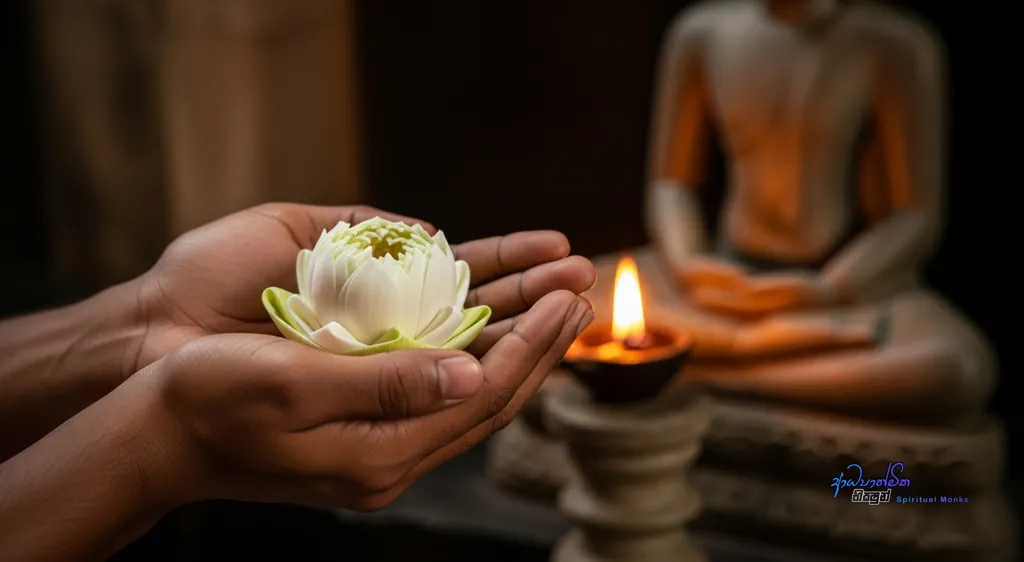
Understanding Spiritual Perfections (Pāramitā): Habits of the Heart
Simply put, Pāramitā are the wholesome qualities and virtues we have practiced and perfected throughout the long journey of saṃsāra, the cycle of rebirth. Any good, skillful action you practice repeatedly becomes a powerful habit that you carry with you through lifetimes. These cultivated wholesome habits are what we call spiritual perfections.
This principle, however, works for both good and bad. If someone consistently engages in harmful acts, like taking life, that too can become a deep-seated habit carried across lifetimes. Similarly, habitual lying creates its own karmic consequences and can become an ingrained tendency. The story of Devadatta, the Buddha’s cousin, illustrates this perfectly.
His deep-seated animosity towards the Buddha was a pattern that followed him through many lives, a story you can explore in the Jātaka tales, the stories of the Buddha’s past births. These texts reveal how deeply our habits, both positive and negative, are woven into the fabric of our existence.
However, we reserve the beautiful word Pāramitā exclusively for the wholesome side of this equation. It is not used for negative tendencies like hatred or dishonesty. Instead, it refers to the virtuous actions we perform with our body, speech, and mind, the skillful deeds, or kusala kamma, that lead to our growth and purification.

The Two Paths of Practice: Material Offerings and Inner Cultivation
These wholesome actions that build our spiritual perfections can be broadly understood in two categories:
1. Material Offerings (Āmisa Pūjā): This includes all the external acts of generosity and reverence. Think of offering flowers, light, incense, or participating in a Kaṭhina ceremony (offering robes to the monastic community). It also includes making offerings to sacred sites like the great stupas, helping the poor, supporting orphanages and elder homes, and feeding animals. These are all acts of giving that fall under this category of practice.
2. The Practice of the Teachings (Paṭipatti Pūjā): This is the internal cultivation. At its heart is bhāvanā, or meditation. This involves training the mind, whether through developing tranquility (samatha) or cultivating direct insight (vipassanā). This path of inner work is considered the highest form of offering.
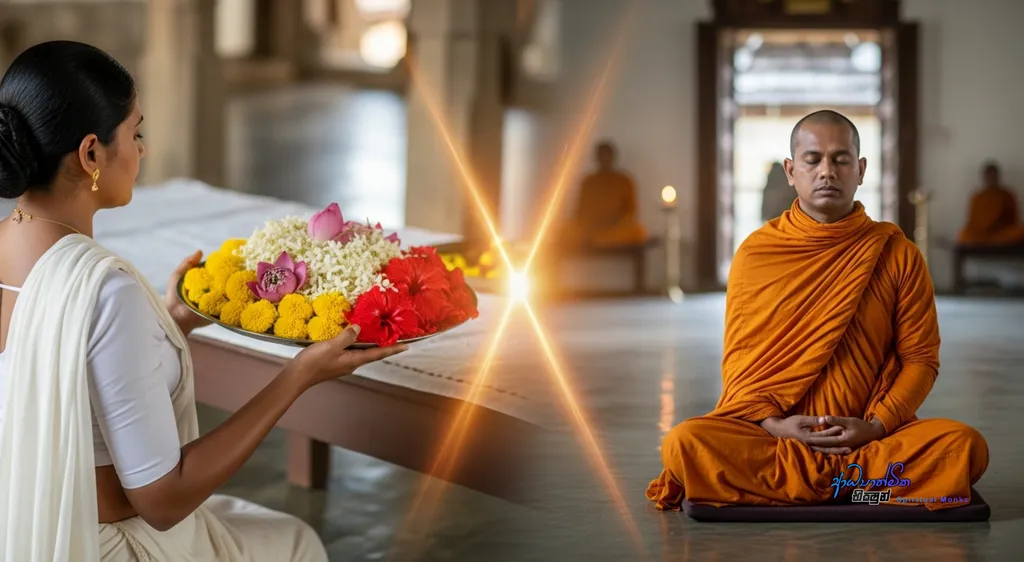
The Grand Aspiration: Fulfilling Perfections for Enlightenment
Across lifetimes, beings cultivate these spiritual perfections with a specific aspiration in mind. This aspiration is usually for one of the three types of enlightenment, or Bodhi: the supreme enlightenment of a Buddha (Sammāsambuddha), the enlightenment of a Silent Buddha (Paccekabuddha), or the enlightenment of a liberated disciple (Arahant). Depending on their goal, they will cultivate the necessary perfections life after life.
To gain a deeper sense of this process, you can read the Jātaka stories or study texts like the ‘Pāramitā Prakaraṇa’ by the venerable Sri Lankan scholar, Rerukane Chandawimala Maha Thero. These texts offer profound insight into how these spiritual perfections are fulfilled over immense periods.
It is crucial to understand that sudden enlightenment, such as attaining the state of an Arahant simply by hearing the Buddha’s words, does not happen from material offerings alone. Many people today believe that generosity by itself is enough, but this is a misunderstanding.
When we look at the past lives of those who attained liberation, we see they did not limit themselves to material offerings. They also engaged deeply in the practice of the teachings, they meditated, cultivated insight, and developed tranquility.

The Power of a Single Moment: The Story of Cūḷapanthaka
There is a well-known story that beautifully illustrates this. It concerns the venerable Cūḷapanthaka. He struggled to memorize even a single verse. The Buddha, seeing his potential, gave him a clean, white piece of cloth and a simple phrase to contemplate: “Rajoharaṇaṃ,” meaning “taking on impurity.”
As Cūḷapanthaka sat rubbing the cloth, he watched it grow dull and stained from the dust and sweat of his hands. At that moment, a profound insight arose. This was made possible by a past life. In a previous existence, he had been a king. One day, while riding his royal elephant under the hot sun, he used a white cloth to wipe the sweat from his forehead.
As he did, he noticed the pristine cloth becoming stained and soiled. In that moment, he reflected, “Everything is of a nature to change, to fade away.” This brief, powerful contemplation of impermanence, or Anicca, planted a seed.
That single moment of insight was a potent spiritual perfection. The Buddha taught that even a brief reflection on impermanence brings immense merit, more so than making a grand offering to the entire monastic community. Because of that past cultivation, the Buddha knew that the simple act of cleaning the cloth would reawaken Cūḷapanthaka’s dormant wisdom and lead him to full liberation, to Nibbāna. The Buddha saw his past karmic habits and gave him the exact practice needed to unlock his spiritual perfections.

The Secret Ingredient: Mindfulness in Every Wholesome Act
The Buddha gives teachings tailored to each individual’s karmic background and their unique spiritual perfections. What works for one may not work for another. While some advanced disciples can see past lives to an extent, only a Buddha can see with perfect clarity what each being has practiced and what specific key will unlock their path to freedom.
This brings us to a vital point for our own practice. It is not enough to simply perform acts of generosity. We must perform them with mindfulness, or sati. So often, when people make an offering, their mind is elsewhere; they are acting without awareness.
From the simple act of lighting a lamp at home, to chanting, meditating, or even feeding an animal, every single act should be done with full attention. Be present. Watch your own mind as you act. When you practice in this way, you create a beautiful balance between the material and the mental, ensuring both paths of practice go hand-in-hand.
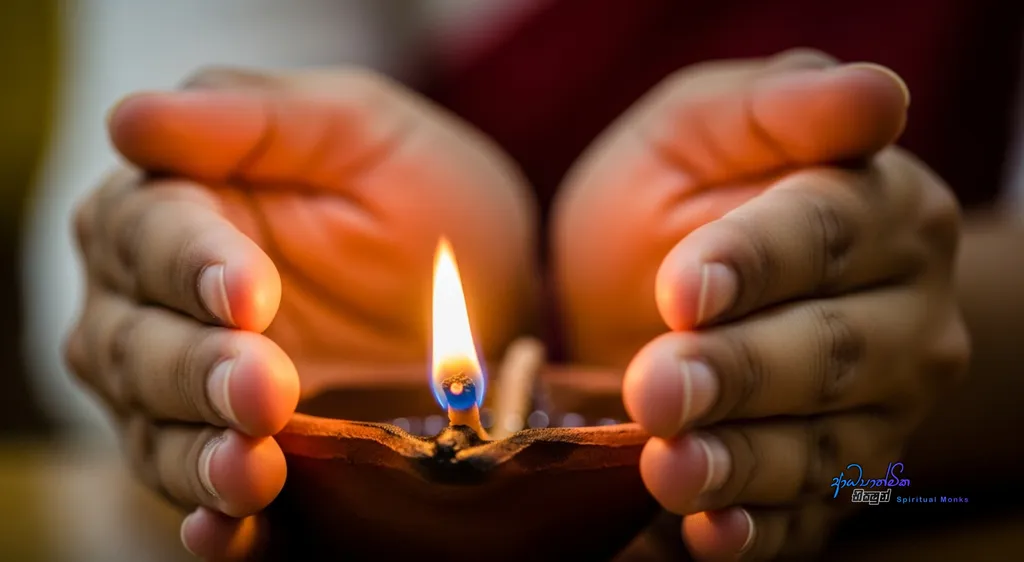
How to Awaken Your Latent Spiritual Perfections
So, how do you know if you have cultivated these spiritual perfections? People often worry about this, wondering if they are on the right path. My advice is this: do not waste your precious time and energy trying to find out. Do not seek answers from clairvoyants or mystics. Instead, dedicate yourself to creating the causes for your spiritual perfections to blossom right here, right now.
Remember, the teachings of the Gotama Buddha are still alive. The Four Foundations of Mindfulness (Sattipatthāna), the eighty-four thousand teachings of the Dhamma, and the entire Tipitaka are still available to us. Liberation is possible for you in this very life. The Buddha declared that as long as the Four Foundations of Mindfulness are practiced, the world will not be empty of Arahants.
Of course, some may have aspirations for a future time, to attain enlightenment in a future Buddha’s dispensation, to become a chief disciple, or even to become a Buddha’s parent. These are all valid aspirations, but know that they involve an incredibly long and arduous journey through saṃsāra, filled with immense challenges.
We do not tell anyone to abandon their path, nor do we force them onto another. It is a personal choice. But never forget the precious opportunity that lies before you right now.

A Practical Method to Uncover Your True Aspiration
Sealing Your Intention: Dedicating Your Merits to Your Goal
When, through this consistent practice, you receive a clear answer, when you understand whether your path is towards Arahantship in this very life, or towards Buddhahood, or another noble goal, then your aspiration is identified.
From that day forward, you can seal your intention. After every single act of merit, be it through generosity (āmisa), virtue (sīla), or practice (paṭipatti), you make a specific dedication. You can resolve: “May this act become a spiritual perfection that fuels my aspiration for Buddhahood.” Or, “May this merit support my journey to become a chief disciple of a future Buddha.” Or, “May this wholesome action be a cause for me to attain Nibbāna in this Gotama Buddha’s dispensation.”
People aspire to many different noble goals: to be a Paccekabuddha, to be a parent of a Buddha, to be a chief attendant. Others wish for no specific title but simply aspire to realize Nibbāna while a Buddha is alive in the world, hearing the teaching directly from his lips. The paths are diverse, and we cannot force anyone.
But I will say again: the opportunity in this lifetime is immeasurably precious. The teachings are here. The path is clear. You have the ability to attain the fruits of the path right now.

Conclusion: Cultivating Virtue Awakens Your Perfections
I trust this reflection has been helpful and does not need further extension. The core message is clear and understandable to anyone, regardless of their background. When you diligently cultivate virtue (guṇadharma), your dormant spiritual perfections (Pāramitā) will naturally awaken and emerge.
May the power of the Triple Gem, the Buddha, the Dhamma, and the Sangha, help you to understand these points well and act with wisdom and clarity. May you have the ability to walk your path with intelligence and insight.
We invite you to walk this path with us. Read our teachings, and most importantly, apply them practically in your own life. as you practice, questions will naturally arise. Please feel free to share your experiences and questions in the comments below, via email or contact form. I will do my best to offer guidance in future talks based on your progress. For now, begin this practice with an open heart and a mind free from expectation. Cultivate it correctly, and may you find the clarity and peace you seek.
Thank you for joining us. We hope this blog will be of great benefit to your spiritual journey.
May you all be well and happy.
May the blessings of the Triple Gem be with you all!


