


Categories: Other Meditation Teachings
May the blessings of the Triple Gem be with you all!
Today, as we continue our exploration of the spiritual life, we will address a very important and sensitive question that has been sent to us. This question comes from those who are practically exploring their spiritual journey while grappling with a significant challenge in their lives. The topic, as you might have seen, concerns substance use, and the questions come primarily from individuals who are currently using drugs.
They ask: Is it appropriate to practice meditation while under the influence of a substance? When the effects of a drug are active and you feel that altered state, is it a good time to try and meditate? This is a serious question, and I hope to provide a clear, concise answer without a lengthy explanation.

The Direct Answer: Why Meditation and Addiction Don’t Mix
To address this directly, let’s consider the wide range of substances people use. In today’s world, this includes drugs known by names like ‘ice’, as well as the plant cannabis (ganja), which some view as a medicine while others use it as a intoxicant. It can also include traditional Ayurvedic or Hela vedakam (traditional Sri Lankan medicine) preparations, such as certain medicinal pills, that are sometimes misused to induce intoxication.
Many substances, even medicinal ones, can become intoxicants if taken in excess. Think of simple things like kithul (fishtail palm) treacle; if consumed in very large quantities, it can have an intoxicating effect. There is a proper dose for our bodies, and when we exceed it, we become intoxicated. This applies to various injectable drugs and many other substances as well. Given this, the question arises from those who are addicted: is it wise to meditate in such a state?
I have already given this answer to those who asked me personally, and I will share it with all of you now: No, it is not appropriate to practice meditation while under the influence of any intoxicant.
The Stark Reality: The Harm of Artificial States
As you surely know, substances are harmful to our bodies. They can destroy our nervous system and ravage our physical health, leading to malnutrition and severe weight loss. The body, deprived of essential nutrients and fed a poison, begins to break down. No matter how long our natural lifespan might have been, substance use can lead to a premature death and severe mental distortions.
Even in powerful countries like America, there are entire cities or regions where people who use certain drugs wander around in a ‘zombie-like’ state. You may have seen this on the internet people walking aimlessly, completely unaware of what they are doing or saying, having lost all mindfulness. The negative consequences are immense, and this is a truth we must understand and hold onto. Someone with this understanding would never choose to become addicted to such things.
The Root of Craving: Chasing a Fleeting High
I have previously given a teaching on how the bliss of deep meditation, known as Jhana, is far superior to any pleasure from drugs. The primary reason most people fall into substance abuse is because they are drawn to the pleasure or escape it seems to offer. This craving for a pleasant sensation leads to addiction.
This addiction then creates a destructive cycle. They must find money every day. When the money runs out, they may resort to stealing money or objects, selling them just to fund their habit. We see this tragedy spreading throughout the world, including Sri Lanka, affecting men and women of all ages. It is a true crisis.
A Purer Bliss: Finding Lasting Joy in Jhana Meditation
However, if someone caught in this cycle of addiction begins to turn towards meditation, it is a very good and commendable thing. In my other teaching, I explained that the true, lasting happiness you are seeking already exists within your own mind. You can access it by developing the mind and achieving deep states of meditative calm, known as Jhana.
Rather than destroying yourself with artificial substances, I encourage you to cultivate your mind. This not only brings a profound sense of well-being but also adds something truly valuable to your journey through life and death, known as Samsara.
You can explore that teaching, gain understanding from our practical talks, and engage in practices like the ones we guide. As the joy you experience in meditation grows, you will find that your need for substances naturally begins to fall away. But this requires your own sincere effort and interest; without it, this change cannot happen.
The Practical Path: When and How to Meditate
Let’s return to the core question of this brief talk. At no time should you ever attempt to meditate while you are intoxicated. There is simply no point. To put it clearly, at that moment, you are under the power of the drug. Its effect might last for three hours, or six hours, or some other duration. During that time, you cannot gain any spiritual benefit or develop your spiritual life through meditation.
You must understand this. You will be unable to concentrate the mind or even pay proper attention to it. You cannot arrive at a correct understanding of the mind because the chemical power of the substance you have introduced into your body is overwhelming. Your mind and even your senses are pulled by the force of the drug, like a magnet. While this is happening, you cannot gather your focus or cultivate your mind in a spiritual direction. The mind is drawn towards the physical intoxication.
Now, trying to remain mindful while intoxicated, instead of being completely lost in a stupor, is not wrong. There is no harm in that attempt. You have already harmed your body by taking the substance; trying to bring a little awareness to the situation won’t make it worse. But for formal meditation practice, it is fruitless.
People have called and asked me, ‘Venerable Sir, is it good to meditate after smoking cannabis?’ To be honest, it makes me want to laugh. There is no result in meditating after using cannabis or any other intoxicant, whether it’s drugs or alcohol.
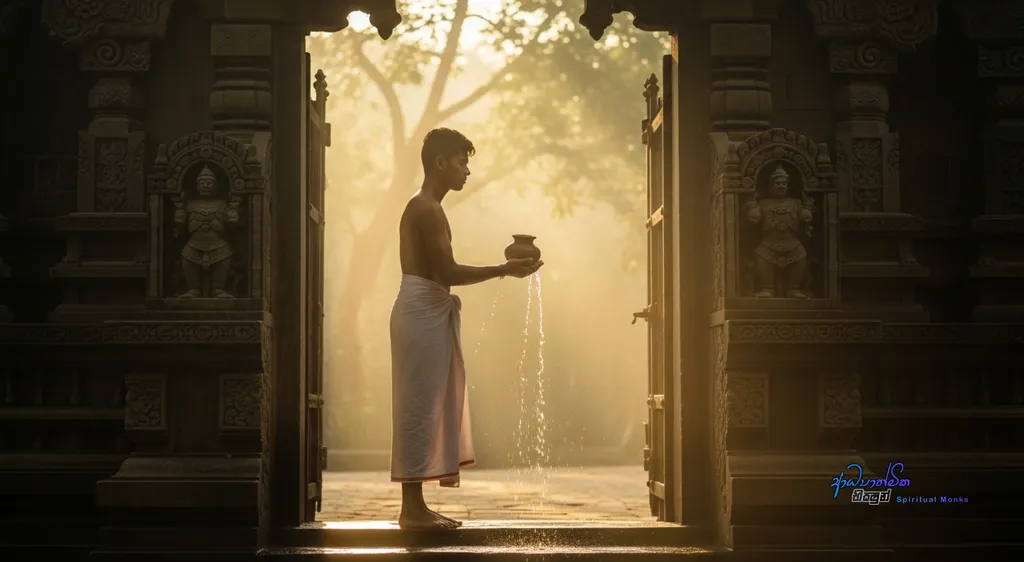
A Final Word of Caution and Blessing
Instead, practice meditation during the times you are sober. That is when you can achieve results. As I mentioned, an intoxicant’s effect lasts for a certain period two, three, or six hours. Wait for that effect to completely wear off. Then, take a bath, purify yourself, and sit for meditation. If, through your practice, something begins to emerge from within your mind perhaps due to past good actions, or kusala it could be a factor of deep meditation (a Jhananga), a state of calm, a spiritual ability, or simply a deep sense of well-being.
If you taste this, you will naturally start to make the effort to let go of drugs and remove them from your life. You will be motivated to develop your meditation practice further. Please try to balance your life in this way.
However, please do not misunderstand this teaching. People with different mindsets are reading this. At no point am I encouraging or condoning the use of drugs. We would never tell anyone to use a substance. Even using a drug just once can lead to a lifetime of addiction and self-destruction. This is not like alcohol, which is also unskillful; hard drugs are incredibly and immediately addictive.
Their power comes from the artificial mental ‘freedom’ they provide. That strange feeling takes over, problems seem to disappear, you feel like you’re in another world, and your mind might even feel artificially focused. This ‘pleasure’ is achieved by chemically altering your nervous system. Using these artificial things inevitably makes the body sick and shortens its lifespan.
I don’t wish to extend this explanation further. I believe the answer to your question has been provided. Therefore, I will conclude here.
May the power and blessings of the Buddha, the Dhamma, and the Sangha the Triple Gem be with you all. For anyone struggling with addiction, may spirituality draw close to your life, and may you find the strength for substances to fade away from you. With this blessing, I conclude today’s teaching.
We invite you to walk this path with us. Read our teachings, and most importantly, apply them practically in your own life. as you practice, questions will naturally arise. Please feel free to share your experiences and questions in the comments below, via email or contact form. I will do my best to offer guidance in future talks based on your progress. For now, begin this practice with an open heart and a mind free from expectation. Cultivate it correctly, and may you find the clarity and peace you seek.
Thank you for joining us. We hope this blog will be of great benefit to your spiritual journey.
May you all be well and happy.
May the blessings of the Triple Gem be with you all!


