


Categories: Be Happy 24 hours
May the blessings of the Triple Gem be with you all!
Welcome. In our ongoing exploration of the spiritual life, we focus on a path of self-discovery, a way of exploring your own mind through the practice of mindfulness. This is the very method the Buddha taught over 2,500 years ago, a practical path that we have trained in and now share with you. When we begin to systematically cultivate mindfulness, or what is called Sati in the Pali language, we start to understand the many different things that exist within our own minds. This act of direct knowing is the very essence of wisdom.
This wisdom, or Paññā, is not the knowledge you gain from books, nor is it information you learn from another person. It isn’t even what you might absorb just by listening to this teaching. All of that is merely knowledge. Wisdom arises when you take that knowledge and apply it practically, experiencing its truth for yourself. True wisdom is the act of verifying and understanding the mind through your own direct observation. This is the foundation of our journey, a deeper way of understanding the mind that we have touched on before and will now explore more fully.
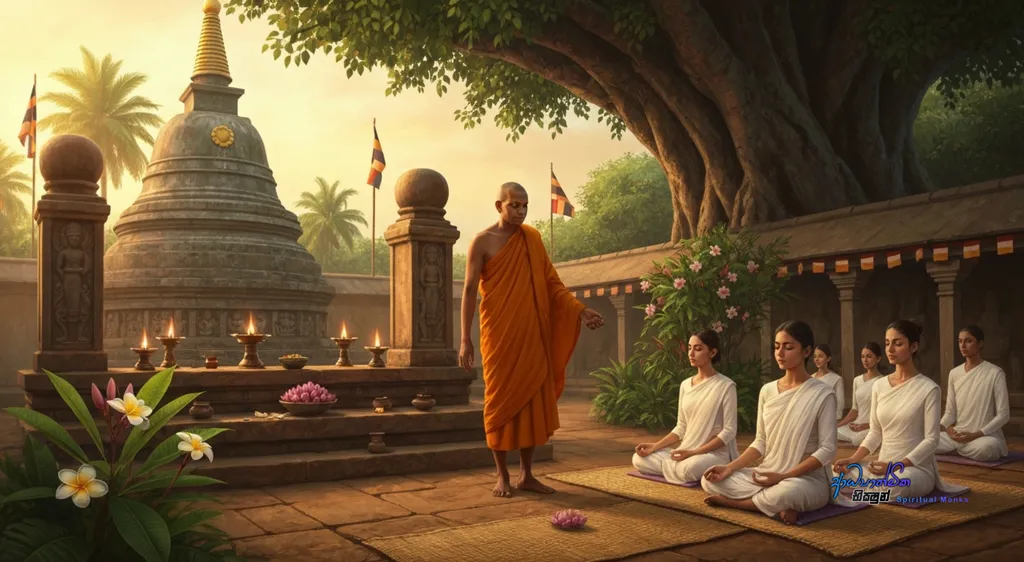
Mindfulness: The Key to Seeing Attachment and Aversion
The one thing that helps us explore and study our mind is mindfulness, or Sati. Without mindfulness, we can never investigate the mind or recognize its true nature. Mindfulness is our primary tool. This is why the Buddha often spoke of Sati-Sampajañña, linking mindfulness with clear comprehension.
Where there is mindfulness, wisdom can arise. Wisdom helps us correctly identify what mindfulness observes. While mindfulness helps us catch or see our mental states, wisdom helps us understand them correctly. This partnership is essential for our progress, helping us take the next step forward on our spiritual path.
As you continue this training, you begin to recognize yourself, or more simply, the nature of your own mind. You will see that the mind is almost always caught in a dance of what we call attachment and aversion. The Buddha taught us about this dynamic: aleema (clinging) and gäteema (conflict).
This can also be understood as greed or lust (Rāga and Lobha) on one side, and hatred or ill-will (Dvesha) on the other. You can call it desire and anger. Through the practice of mindfulness, you have likely already seen these forces at play within your own consciousness. Recognizing this is the first step.

The Inner Source of Happiness and Sorrow
Today, I want to show you another fundamental nature of the mind, something you have surely encountered in your practice: the constant presence of sorrow and happiness. You may have realized that sorrow, or what we call Dukkha, a deep sense of stress or unsatisfactoriness, arises within you as a thought. Likewise, happiness is also a thought that arises within you. Both are born inside you.
From the beginning of this endless cycle of rebirth, we have used our five senses, the eye, ear, nose, tongue, and body, to experience this sorrow and happiness. We gather information from the world around us: from our family, society, and modern technology like social media. All this data enters through the five sense doors and travels to the mind. Then, we experience it mentally.
Consider this: you are watching a story about your favorite actors on YouTube or television. Your eyes are pleased by their appearance and actions. Your ears are pleased by their voices and the things they say. You experience a kind of happiness in that moment. But where do you feel all of this? It is all felt in your mind. It is your mind that is doing the enjoying.
The Mind and the Body: A Lesson from a Lifeless Form
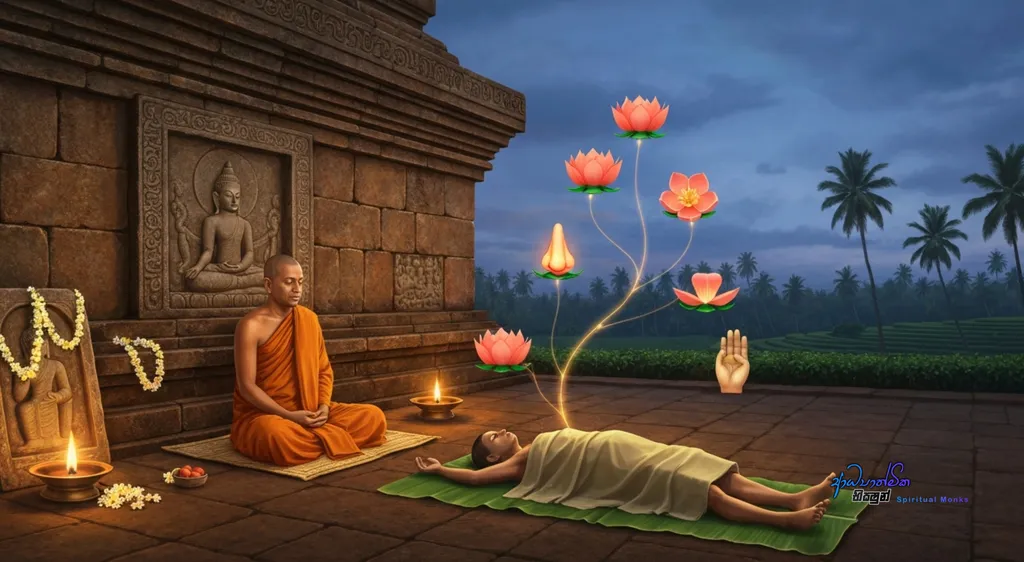
Now, let’s look at a powerful example. A dead body still possesses the five sense organs: eyes, ears, a nose, a tongue, and a body. But if you show that same television program to a corpse, can it experience anything? No, it cannot. Why? Because the mind, consciousness, or what we call Viññāṇa, has departed from that body. It can no longer experience pleasure or pain.
Imagine for a moment that your mind could be placed into that body. You would immediately begin to experience the world through its five senses. This shows how crucial these sense doors are; they are how we perceive the world and gather all its data. Even for those with a sensory impairment, like someone who is blind or deaf, the mind still functions, and attachment and aversion still arise through the remaining senses.
If you touch a dead body or even strike it, does it feel pain? No. This is because the mind is gone. This simple observation helps you understand that there is something *inside* that receives all the data, something that feels and understands. This makes it clear that we are not just our physical bodies. All experience is for the mind. Understanding the mind is realizing this fundamental truth.
The Great Illusion: Believing Happiness Is ‘Out There’
This brings us to a crucial point: we are caught in a kind of illusion, a māyā. From the moment we are born, our parents and society teach us to seek experiences externally. We are conditioned to believe that happiness and suffering come from outside, from other people, from objects, from situations both living and non-living.
We don’t realize that while the trigger may be external, the experience itself is purely internal. This is the illusion: believing that the world is something to be enjoyed *out there*, through the senses, when in fact, the enjoyment happens *in here*, in the mind.
When you practice mindfulness for some time, you begin to see through this. The truth of what I have been explaining becomes your own practical, lived experience. You realize, “All this time, I thought I was enjoying things and people, but the experience was always happening within my own mind.” This is a profound shift in perspective.
You begin understanding the mind is where everything happens. You see that you have always been dependent on others for your happiness and sorrow, but now you can see that it’s not truly caused by them. It is caused by your own mind.

From Illusion to Liberation: Planning a Future Without Clinging
This is the very understanding the Buddha awakened to 2,500 years ago. For the one who understands this truth at the deepest, most ultimate level, the state of Nibbāna, liberation, is realized. In one sense, you could say that the deepening of this understanding *is* the realization of Nibbāna. It can be explained in many ways, but this is one aspect of the path.
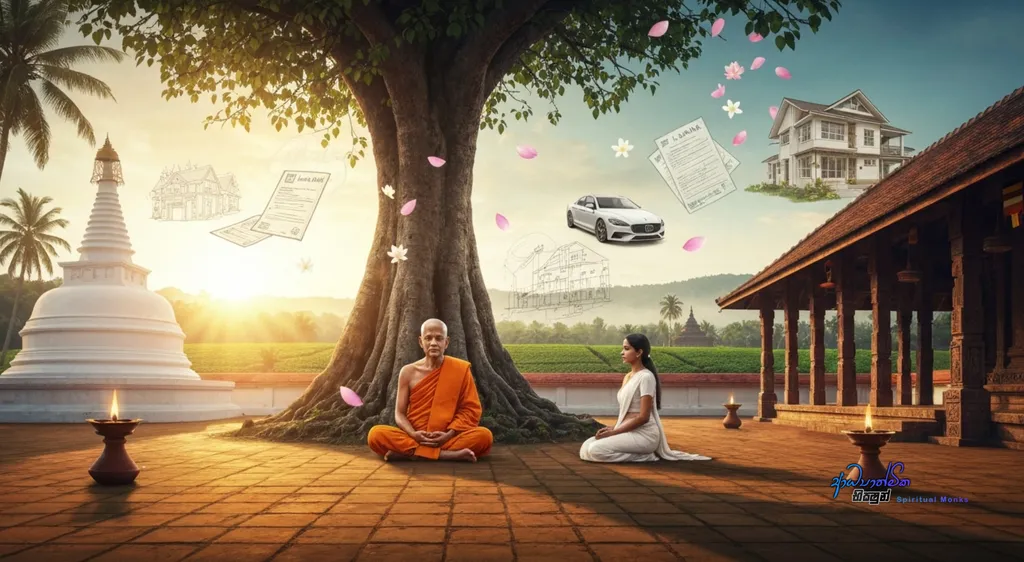
So, explore your mind. As you do, you will see every attachment, every aversion, every memory you cling to from the past, and every plan you project into the future. For example, you see a beautiful car or a lovely house. Though you don’t own it, you lie in bed later planning: “I will buy a car just like that. I’ll get it in this color.
I’ll take out a loan.” You take the pleasure from that initial sight and project it into an elaborate future plan. You do the same with a house, planning the roof, the garden, the second floor. You are holding onto a feeling and trying to recreate it in the future.
The Art of Mindful Planning vs. Obsessive Thinking
Now, it’s important to understand this doesn’t mean we shouldn’t make plans. The key is to plan our future without attachment or aversion. Those who practice mindfulness know how to do this. A person who is truly established in mindfulness does not constantly obsess over their plans.
They don’t think about them while showering or eating. They set aside a short, specific time, perhaps just five minutes, to make the plan. Then, they file it away in a corner of their mind, neutrally, without clinging or resisting. They can pull it out when needed.
However, most people today plan with attachment or aversion. They are constantly consumed by their thoughts: “How will I build my house? I’ll do this, I’ll do that.” This thought follows them everywhere, at their job, with their family, while driving, eating, or bathing. They can’t find peace because they are clinging to the plan. This is another way we create our own reality in the mind, by projecting into the future. Understanding the mind allows us to see this process and choose a more peaceful way.
Finding Noble Silence and Inner Contentment
As you continue to practice mindfulness, your engagement with the external world naturally changes. You stop seeking constant stimulation from outside and begin to generate contentment from within. You realize there is a hidden freedom, a happiness and peace, right here inside your mind.
This realization motivates you to practice more diligently. Gradually, you let go of the habit of trying to *find* happiness in the external world. You become content with less (alpecchata), you feel more free, and your speech becomes more concise. You speak only when necessary.
You naturally move away from the ‘thirty-two types of worldly talk’ the Buddha advised against. He taught that if you have nothing to say, you should discuss the Dhamma (the teachings). And if there is no one to discuss the Dhamma with, you should abide in Āriya Tuṇhībhāvaya, or Noble Silence.
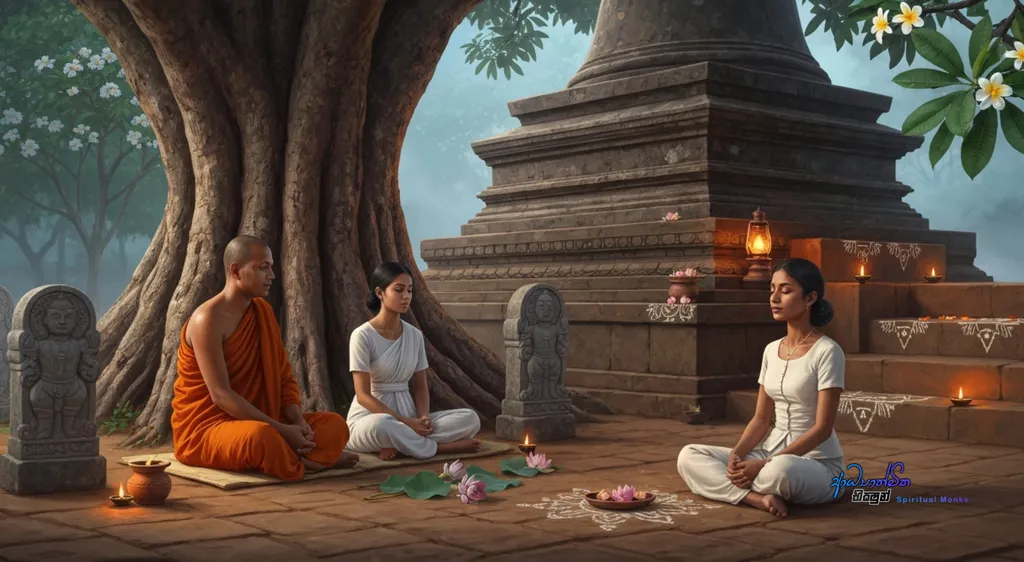
This is not a forced silence that some people adopt like a rule. Many people, both lay and monastic, may force themselves to be quiet or only talk about the Dhamma. But for someone practicing mindfulness, this silence comes naturally. It isn’t forced; it’s a result of inner realization.
You will find yourself drawn to practical teachings and to those who practice them. When there is no one to talk to, you will be content to sit in silence, watching your mind with mindfulness and wisdom. This is the peace the Buddha spoke of.
The Outer Radiance of an Inner Transformation
This inner transformation has outer effects. You lose interest in meaningless news or political drama; you see it as useless and false. You may use social media less, or if you do, you quickly tire of it. You will feel that it’s better to watch your mind or develop your meditation practice. This isn’t a mental illness or a disease; it is the sign of realization. Your desire for external engagement lessens.
This doesn’t mean you behave strangely, like a ghost or someone possessed. A mindful person eats the food necessary for the body, without excess. They live happily. To outsiders, they appear normal and well. But they notice something different: this person doesn’t talk much, but when they do, their words flow freely and peacefully. Others can see their freedom in their face and demeanor. They are not puffed up with anger or resentment. Because of their understanding of the mind’s thoughts, their wisdom shines through.
Even your blood begins to purify. Whether your skin is fair, tan, or dark, a new radiance will appear that others can see. This happens because your thoughts are pure. A mind that is calm and at ease leads to a purer body. This is a gradual, natural process. Your task is simply to realize this for yourself.
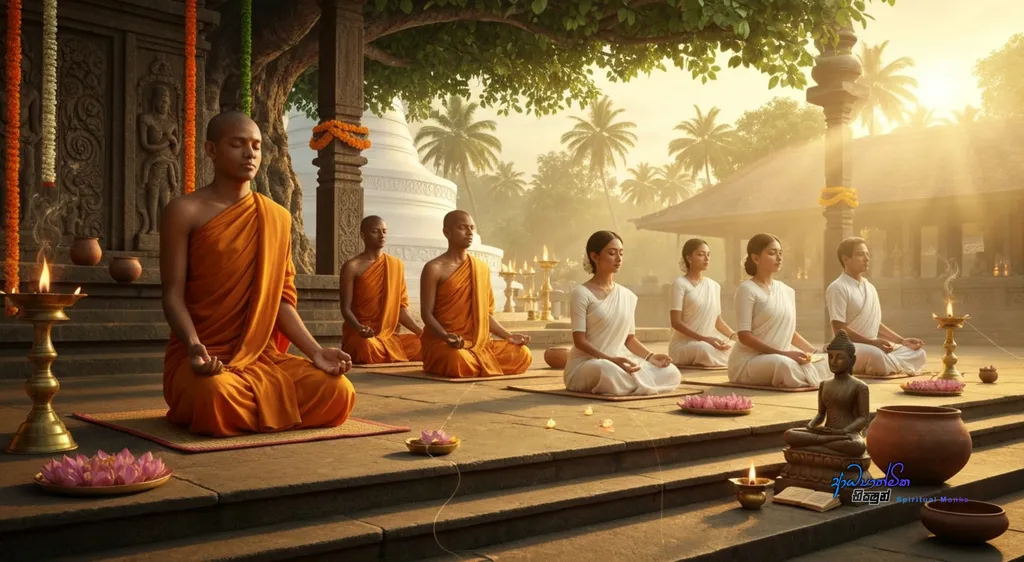
A Lifelong Path to Realizing the Freedom Within
There are already those who have realized these truths. Imagine the results if we were to continue this practice for our entire lives, until the very moment of death. Imagine the happiness and peace that the enlightened ones, the Buddhas, Pacceka Buddhas, and Arahants, must have experienced. As you reflect this way, you will be inspired to seek the freedom within your own mind more and more.
For now, it is enough to have understood this part of the path. You see how we arrive here, realizing that all experiences of happiness and sorrow are felt within the mind. As you continue to practice, this will become your direct, personal realization. You will discover the freedom hidden within you. We will continue to explore what lies beyond this stage in future teachings.
For now, continue to develop your mindfulness with this understanding. Let today’s topic be your guide: the realization that both sorrow and happiness exist and are experienced only in your own mind. May the power and blessings of the Buddha, Dhamma, and Sangha, the Triple Gem, help you to realize the happiness and freedom within your own mind. May you develop mindfulness, increase your wisdom, and realize the truth for yourself.
Final Blessing
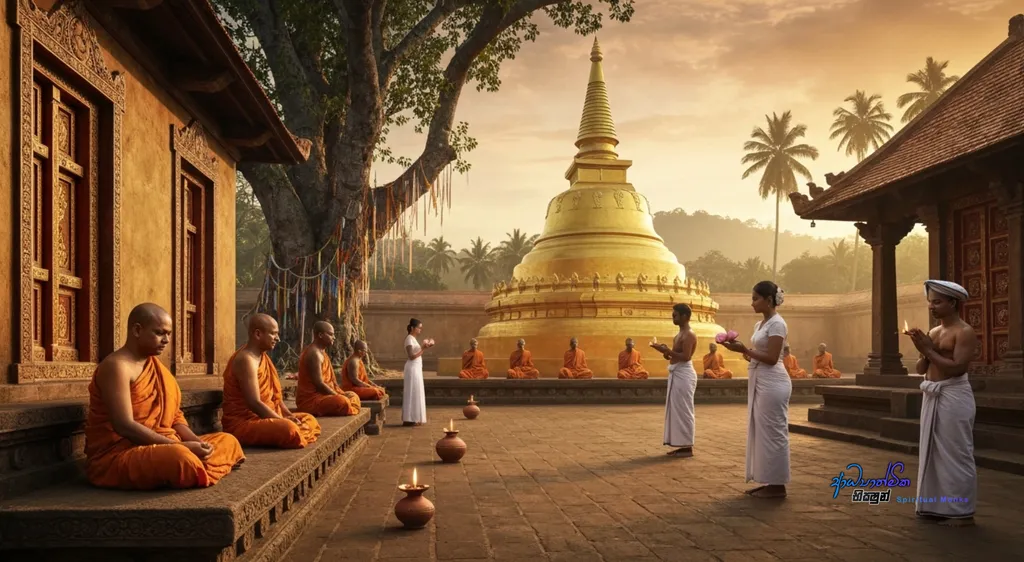
We invite you to walk this path with us. Read our teachings, and most importantly, apply them practically in your own life. as you practice, questions will naturally arise. Please feel free to share your experiences and questions in the comments below, via email or contact form. I will do my best to offer guidance in future talks based on your progress. For now, begin this practice with an open heart and a mind free from expectation. Cultivate it correctly, and may you find the clarity and peace you seek.
Thank you for joining us. We hope this blog will be of great benefit to your spiritual journey.
May you all be well and happy.
May the blessings of the Triple Gem be with you all!


