


Categories: Be Happy 24 hours
May the blessings of the Triple Gem be with you all!
Today, through our spiritual exploration, we hope to offer you a practical understanding of how to increase love within your own mind through correct training. This teaching is designed to help you realize a profound truth: the love you may have been expecting from someone else already exists in a far greater measure within your own life.
As you read this teaching, the most important step is to apply it practically. We begin with a simple observation. From the moment we are born into this human existence, we seek one thing above all: love.

The Universal Hunger: Our Lifelong Search for External Love
From our earliest days, we expect love from our mother, unconditionally, until we reach a certain age, and often, well into adulthood. Then, we look to our father for his love and affection. We might also have siblings, and some of us expect a great deal of love from them, while others may not.
The key takeaway from these experiences is this: from the day we left our mother’s womb, we have been conditioned to expect love from an external source. As we grow and mature, this expectation doesn’t disappear; it simply changes its target. We begin seeking a certain happiness and peace from another person, and this is what we commonly call ‘love.’ We see it this way because we have not yet looked beyond it.
Is It Love or Craving? A Buddhist Perspective
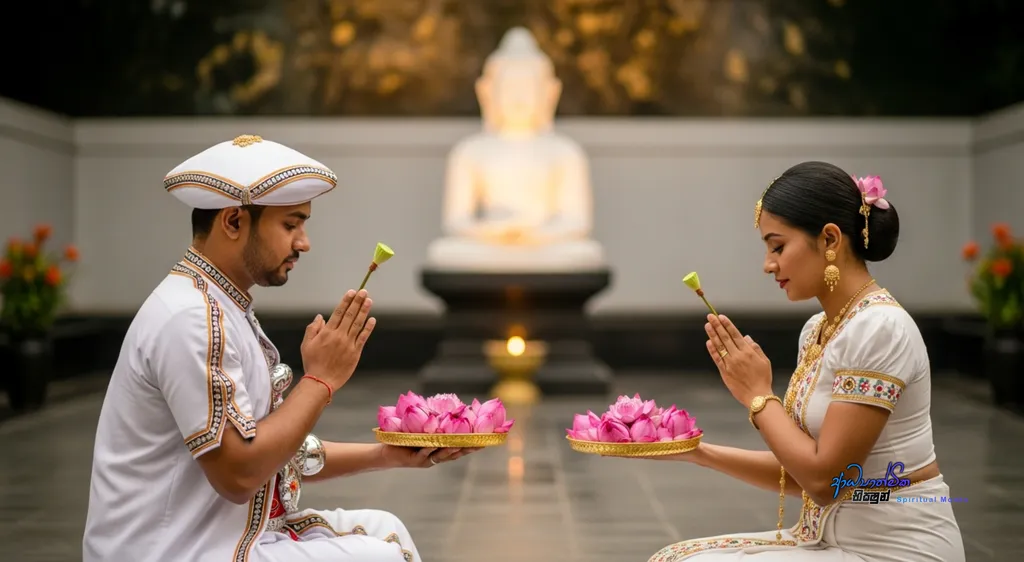
From one perspective, the Buddha’s teachings would identify this constant seeking as a form of craving, which in Pali is called tanhā. It can also be seen as desire or even greed (lōbha). As ordinary worldlings (puthujjana), driven by unexamined impulses, we continuously look for this fulfillment outside ourselves.
As we reach an age of understanding, influenced by society and technology, we are conditioned to expect love from a romantic partner. This happens to both men and women, and it knows no age limit. Biologically, hormonal changes during puberty activate these feelings, and we begin seeking a different kind of love beyond what we expected from family. This is a familiar path that often leads to marriage.
The Social Facade: Unhappiness Hidden Behind Perfect Pictures
If we look at society, we see many outcomes. Some people enter marriage and live happily until death. Others remain in unhappy marriages, preserving them for the sake of social status, reputation, or self-respect. Some choose to divorce and live alone, while others move from one marriage to another. All of this points to a fundamental pattern: our minds are expecting something from others, using our senses as tools.
You have likely realized this by now. And because of this expectation, we create suffering. Think about your own life. Do you always get exactly what you expect from your partner? If you expect 100% of something, you will most likely receive a lower percentage, perhaps 80%, 60%, or even 99.9%. It is that small, missing portion that our mind latches onto, creating a feeling of ‘this is not enough.’ This gap is a source of profound dissatisfaction, a universal experience of stress that Buddhism calls Dukkha.

The Cycle of Suffering and the Fear of Loss
This continuous expectation of love, which we can also call craving, attachment, or passion (rāga), leads to immense suffering. We experience mental and physical pain. Sometimes we don’t end up with the person we thought we wanted. Other times, we marry them only to discover they are not who we imagined them to be, a truth that only becomes clear after living closely together.
Many people live lives of quiet desperation, posting happy selfies on social media while suffering internally. They may be trapped in a marriage with someone they dislike, enduring a lifetime of misery. We can never judge a person’s happiness from a photograph; often, what we see is a facade. In contrast, those who live with genuine honesty may feel no need to display their lives at all.
Furthermore, this attachment brings fear, the fear that the person we love will be lost to us. We become afraid of losing all the things we hold dear. It’s crucial to look at this reality clearly.
The Turning Point: The Only Way Out is In
If you are reading this, you come from one of many backgrounds, nationalities, and religions. Ask yourself honestly: based on your life experience, is what I am saying true? Has expecting things from others brought you more problems or more peace?
While some may live untroubled lives, they are a minority. The majority of people experience turmoil, which is why divorce rates are so high. The root cause of all these challenges, the arguments, the heartache, the stress, is one thing: expecting something from others.
So, can we solve this by not expecting anything? Many believe that external love is essential to survive until death. But the truth is, for a spiritually developed person, one who explores their own mind, worldly comforts are not necessary. For an untrained mind, however, the absence of external love can create immense pressure, leading to mental illness or, to put it simply, ‘going crazy.’ A spiritual shift can prevent this.
Throughout this teaching, the central point is that we are conditioned to expect everything, love, material objects, affection, from outside ourselves. This expectation leads to sorrow, pain, and exhaustion. You may have experienced this already. If you have, this moment can be a turning point, a chance to turn your life around and step into the light.

Have You Forgotten Someone? Learning to Truly Love Yourself
Our mind always seeks to be happy, to experience pleasure. People often say, ‘I just want to have fun and be happy.’ This is the nature of the untrained mind, though the intensity varies from person to person. But here is the mistake we make: we believe happiness comes from expecting things from others. This blinds us to our own lives.
The solution is to turn your attention toward your spiritual development, toward your own mind. Ask yourself: is there more peace in mentally holding on to someone, or in mentally letting them go? The more we are attached to beings, objects, and worldly things, the more we suffer. If we can let go with our minds, without expecting anything, it becomes a great help in developing our mental clarity.
So, if your mind is constantly expecting love, especially if you have been hurt before, it’s time to ask a new question. In all your searching, did you ever stop to see if this love exists within you? The truth is, it does. You love others. You expect love in return. But have you ever truly, consciously, loved yourself?
You already love yourself instinctually. In a life-threatening emergency, you would save yourself first. But this is different. This is about loving yourself with deep understanding. The day you begin to truly love yourself is the day you stop expecting love, affection, and happiness from others. The reason you are still looking outside is because you haven’t truly looked inside and offered that love to yourself.
Love Wisely: How to Practice Without Abandoning Your Commitments
To begin this practice, I recommend exploring teachings on mindfulness, specifically, how to ‘silently watch the mind.’ As you start observing your mind, you will begin to understand whether true peace lies in being attached to another person or in discovering your own nature through this investigation.
Many feel they need someone else to be their ‘strength.’ This feeling comes from a lack of understanding of one’s own mind. As you explore yourself, your mental strength will grow. This strength comes from understanding, and understanding deepens that strength.
At this point, you will see clearly: which love is more genuine? The love you gave to others, or the love you are now giving yourself? Once you realize, through mindfulness (sati), that love and life reside within you first, and you begin to cultivate that self-love, something remarkable happens. No matter how much love comes from the outside, it will not move you. You will no longer even feel the need to ‘love’ others in the conventional, attached way, because you have understood the nature of life.
A crucial piece of advice: if you are married or in a relationship, do not suddenly change your behavior. Do not show your partner that your love for them is different. Continue to perform your duties and responsibilities, perhaps even better than before. They do not need to know that you now see their love as a ‘false’ or conditional thing.
This is not a deceptive act to facilitate an affair or fulfill some other selfish desire. This is a sincere effort to understand the ultimate reality of life, to attain peace, or Nibbana. You are fulfilling your worldly obligations while doing the inner work.
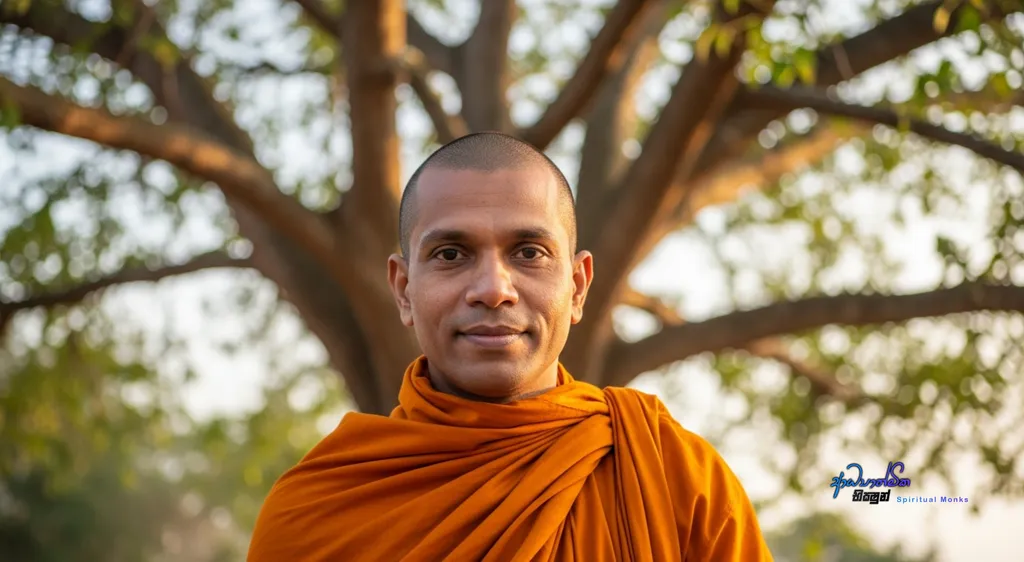
The Priceless Love You Can Never Lose
As you practice, watch the love and affection you receive from your partner with keen mindfulness. You will begin to feel, more clearly than ever, ‘Their love feels insufficient; I can’t even feel it anymore.’ But this realization will not cause you to abandon them.
You will continue to live your life with them, with your family and children, but with a crucial difference. You are moving away from the worldling’s view, seeing with wisdom and right attention (yonisomanasikāra).
As you sustain this mindfulness, you will realize that being with yourself brings true peace. This peace is the real love. It is not a mysterious thing. True love is the state of being unattached to anything. This is the peace you were seeking from others all along. Some people romanticize love as a meditation; here, you experience a transcendent peace. Your mind seeks this calm.
Unlike worldly love, which can grow stale like eating the same food every day, this inner love is different. The love you have for yourself, when cultivated with awareness, is a constant, unchanging love. It is pure peace. The more you recognize this peace, the more you will be drawn to it. Worldly attachments will begin to break and fall away in the mind. As peace grows from within, your desire to explore your own mind will increase, and your expectation from others will vanish.

Building Resilience for Life’s Inevitable Challenges
If you are young and not yet in a relationship, this teaching is a powerful foundation. If you begin a relationship, do it with this mindfulness. Love yourself while you show love to them. Fulfill your duties, but not as a cover for another attachment. Do it as an expression of your own self-love. Then, observe with mindfulness: where is the true peace? Is it in the relationship, having children, building a beautiful house, and living like everyone else? Or is it in the quiet contentment you find within?
When you are grounded in this practice, you build incredible mental strength. If that person leaves you, you will be able to bear it. Your mind will be strong enough that you will not consider self-harm, suicide, or turning to drugs or alcohol to numb the pain. Why? Because you love yourself.
You understand the truth: this person could leave me at any time. Their life could end. But you fulfill your responsibilities anyway. With this understanding from the very beginning, if they are unfaithful or the relationship ends, your mind will have the strength to endure. You will not fall into a weak, pathetic state of mind, because you have been training yourself all along.
This is the practical path taught by the Buddha. By applying it, you can increase your own love without expecting it from others. And as you increase your love for yourself, remember this: your mental strength will grow to an unimaginable degree. This growth depends on your practical effort. Trust in this process.
Your Path to Unshakeable Self-Love
I trust that you understand the message of this teaching. Use the guidance on mindfulness and the development of your spiritual life to realize this state for yourself. You have the ability to see whether the words I have shared are true or false through your own direct experience.
I will conclude the teaching for today. By the power of the Triple Gem, the Buddha, the Dhamma, and the Sangha, may you be able to understand with mindfulness and clarity whether the love of others or the love for yourself is more valuable, more true. With this blessing, I end this teaching.
We invite you to walk this path with us. Read our teachings, and most importantly, apply them practically in your own life. as you practice, questions will naturally arise. Please feel free to share your experiences and questions in the comments below, via email or contact form. I will do my best to offer guidance in future talks based on your progress. For now, begin this practice with an open heart and a mind free from expectation. Cultivate it correctly, and may you find the clarity and peace you seek.
Thank you for joining us. We hope this blog will be of great benefit to your spiritual journey.
May you all be well and happy.
May the blessings of the Triple Gem be with you all!


