


Categories: Cosmic Messengers
May the blessings of the Triple Gem be with you all!
Today, we explore a crucial topic for those of you connected to our spiritual teachings, under the theme of the “Universal Representative.” This term refers to those who are on a unique journey, fulfilling what are known in Buddhism as pāramitā, the perfections or virtues cultivated over many lifetimes. You are developing your spiritual qualities for a process that is meant to unfold in the future. These teachings are intended to provide clarity on that journey.
It is essential to remember that what we share are not predictions or prophecies. As we have mentioned before, these discussions are especially for those treading a different kind of path through the cycle of existence, known as samsara, with the ultimate aim of realizing Nibbāna, or liberation, and ending the cycle entirely. This path of spiritual patience is for those who strive to reach that final peace.
The Growing Spiritual Transformation
Across Sri Lanka, and indeed the world, a great number of people are undergoing a spiritual transformation. They are listening to Dhamma talks, leading righteous lives, upholding their virtue (sīla), and developing mental calm (samādhi) through tranquility and insight meditation (samatha-vipassanā).
While reading this, you might question whether you are a “universal representative” or not. This uncertainty is not a problem. Whether you identify with this term or not, the message we are sharing today is valuable for your journey. The core principles discussed here will benefit anyone committed to a spiritual path.
The Danger of Creating a Future in Your Mind
On the spiritual path, we often emphasize that it is unwise to hold strong expectations about the future. It is not helpful to create vivid mental pictures of what is to come or to design a specific outcome for your spiritual life in your mind. This is an unsuitable practice.
Similarly, under this theme of the universal representative, we advise you: do not attach yourself to expectations about the future of a country or its spiritual landscape. Do not hope for specific events to happen. It is crucial to let go of such thoughts entirely and remove them from your mind. Why is this so important? Because many people dream about the future, building hopes in their minds.
This attachment makes them weak in the present moment. They lack the strength and, most importantly, the spiritual patience to face current realities. We have observed people asking, “How long will this take? How much longer must we wait?” They express this frustration, wondering if change will ever come, questioning the entire process.

Embracing Uncertainty with an Equanimous Heart
I have constantly reminded you that future events may or may not happen. Do not make this a problem for yourself or a pressure on your mind. If something is destined to occur in the coming years, it will happen. If it is not meant to be, it will not. Our spiritual teachings always aim to guide you toward becoming a neutral, balanced person, someone who cultivates upekkhā, or equanimity.
When you achieve this state, whether a future event happens or not becomes irrelevant to your inner peace. Your mind settles in the middle, thinking, “It is the same to me whether it happens or not.” This is the state we must cultivate. This is the outcome we hope for.
Because of a lack of this spiritual patience, many who identify as universal representatives cannot even wait for their time to come. They may not know with 100% certainty what is supposed to happen, what their role is, or what their future holds. We have always advised: do not even try to find out. The moment you start searching and clinging, those things may not manifest. The key is to let go of these matters from your mind. You must lose interest in them, arriving at a neutral place where you neither believe nor disbelieve. Avoid extremes, as falling into extremism increases the probability of failure.
True Freedom: Letting Go of Roles and Timelines
When you become a neutral person, you stop trying to find out who you are or what you are supposed to do in the future. You live in freedom. Think about the sense of urgency you feel even in your daily life. Some people hear prophecies, and we have told you not to listen to such things, and internalize them, believing they are destined for a specific role. They then live in a state of incredible hurry, waiting impatiently for it to happen. You must understand that this very hurry, this restlessness, this lack of spiritual patience ensures that what is meant to happen, will not.
Your restlessness might mean you have been deceived, or that you are not meant for such a role at all. This is why I urge you to completely discard this mindset. Do not allow it to take root in your mind. It is utterly unsuitable. Whether you have heard things online, from individuals, or through any other source, the result is often the same: an astonishing rush for these events to be fulfilled.

The Illusion of Grand Identities
For example, some people have taken on identities of extraordinary characters from ancient history, such as Ravana, Sita, or Mandodari. Believing they are these figures, they develop a tremendous sense of urgency. They think, “I must receive my power. I don’t have it now, but it must come quickly.” They try various methods to gain this power, rushing to accomplish things that are meant to unfold over many years.
Now, put those specific characters aside. Even without them, a general feeling can arise that a change must happen in the country or the world. Given the current political climate and the threats to our nation, religion, and culture, it is natural for such thoughts to arise. It is normal. However, we have observed a tendency to expect good things to happen far too quickly. This is the part of you that must change.
We teach that when you help someone or give a gift (an act of dāna), you should not even expect a “thank you” or a “bless you” in return. Why? Because in this world, we rarely receive as much as we give. That is the nature of life. Reflect on your own past. The things you never expected are often what happened most, while many things you planned for did not yield the results you hoped for and may have failed.

Cultivating Patience in the Present Moment
Just like that, if you have created mental images about the future of your country or motherland, do not mentally suffer over them. Don’t fall into despair thinking, “Why isn’t this happening faster? What is this karma? Why am I not getting my power?” Do not live in a fantasy world of daydreams.
If you do, this agitation will bleed into your present life. Whether you are working a job, doing household chores, or are a student, you will lose your ability to be patient. Your restlessness will grow because you are mentally living years in the future, trying to force an outcome. So, the point we must make is this: do not, under any circumstances, become agitated or restless. You must spend your time with spiritual patience and composure. These matters must be released from your mind.
A Spiritual Awakening, Not an Abandonment of Duty
This is not to discourage you or to destroy your love for your country, nation, or religion. Rather, this is a spiritual awakening. We are guiding you to become a person with a correct and balanced mentality. This teaching provides understanding on this matter. When you cultivate your mind in this way, distinctions of gender, race, caste, or religion fade. This is the Buddhist path, the teaching of truth. Even if you belong to another religion, you might find yourself drawn to protect this truth.
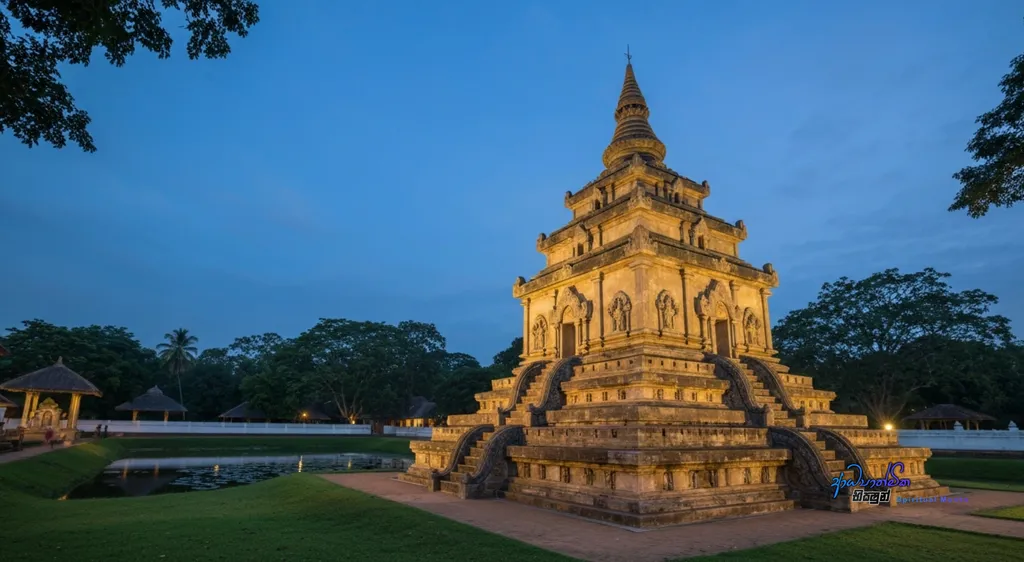
However, you must remember that there is a time and place for everything. These are things that happen slowly, naturally. We must allow them space to unfold. The Buddha’s determination (adhiṭṭhāna) is said to remain active for five thousand years.
To support and protect this determination, divine beings from celestial realms, the devas and brahmas, are also at work. They protect this island of Lanka and strive to preserve the Buddha’s teachings for the future. It is because of this protection that people are still able to offer alms, practice virtues, and train in meditation. It is why you have the opportunity to hear these spiritual teachings and live a spiritual life.
Integrate Your Practice with Daily Life
Therefore, the point to understand is this: live your life as you always have. Uphold the five precepts (pañcasīla) or any higher virtues you practice. Engage in acts of generosity and service while continuing your spiritual activities. At the same time, fulfill your worldly duties and responsibilities.
If you have a family, be a good husband or wife, care for your children, parents, and relatives. Perform your job honestly and diligently. As you carry on with these duties, it is not a problem to hold a thought that some event may occur in the future. The key is not to become restless or impatient about it. All you need is awareness, not agitation.
Finding Patience When Patience Runs Out
Some say that after being patient for so long, they get tired of it. They wonder what karma requires them to be patient beyond that point. It is precisely at that moment, when you feel you can’t be patient anymore, that you must practice patience. That is the most crucial point.
That is where spiritual patience is most needed. When you succeed, the distressing thoughts will vanish. The affliction will be pacified and subdued. After that, it won’t bother you at all. Nature itself will bring you into alignment, even if you resist. Remember, nature will cultivate that patience within you naturally.
You have already spent years with various expectations about the future, only to be disappointed when they were not fulfilled. We have met people who became disheartened, gave up, and moved on to other topics and paths. This is natural. This is the way of the Dhamma.
The Silent Power of a True Representative
Always try to understand the process of nature and the messages it sends us. If you can adopt the mindset of, “Nature is telling me something, and I must correct myself accordingly,” your journey will become very free. Through this topic of the universal representative, we have highlighted the changes happening in your life and how to manage them. By reflecting on these teachings, you can decide for yourself if you are on such a path.
The message I wanted to deliver today, a “universal message,” is that you must cultivate these two qualities: non-attachment and profound spiritual patience. These are principles found throughout the Buddha’s teachings in the Tipiṭaka. If you master these two qualities, you will have the ability to determine from within whether you are a universal representative.
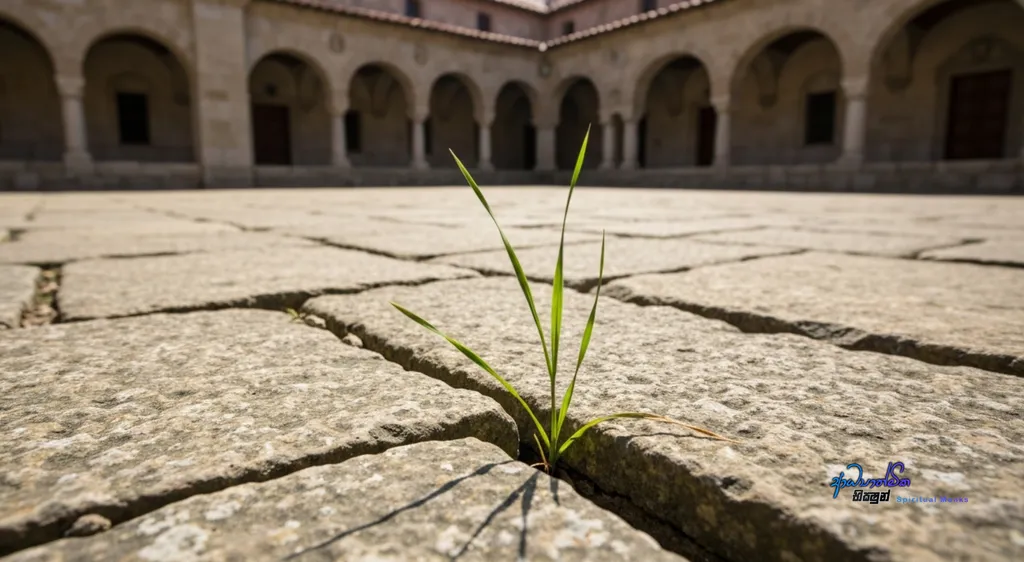
You know that those who make the most noise often have the least substance. The one who is silent, however, may hold unimaginable depth and knowledge. Nature is like that. And that is what you are being guided to become. You should become a silent person, not someone who boasts, “I am this, I am that.” You must become so quiet and humble that others cannot even guess who you are.
If you can reach that state, you are demonstrating the true quality of a universal representative without saying a word. You will meet your true self in that silence. Time and nature will reveal the truth of what we have been discussing. There is a practicality in this, and you can use these teachings to engage with it.
I do not intend to extend this talk further today. We will provide more teachings on this topic when the time is right. For today, I will conclude here.
May the power and blessings of the Buddha, Dhamma, and Sangha, the Triple Gem, give you the ability to understand these matters clearly and act accordingly.

We invite you to walk this path with us. Read our teachings, and most importantly, apply them practically in your own life. as you practice, questions will naturally arise. Please feel free to share your experiences and questions in the comments below, via email or contact form. I will do my best to offer guidance in future talks based on your progress. For now, begin this practice with an open heart and a mind free from expectation. Cultivate it correctly, and may you find the clarity and peace you seek.
Thank you for joining us. We hope this blog will be of great benefit to your spiritual journey.
May you all be well and happy.
May the blessings of the Triple Gem be with you all!.


