


Categories: Other Meditation Teachings
May the blessings of the Triple Gem be with you all!
Today, as we gather in this space of reflection, we address a question that many who walk a spiritual path eventually ask: Is the ultimate goal, the fruit of the Buddha’s teachings, available to everyone? You may have heard it described in different ways, seeing Nibbana, attaining liberation, or realizing the Four Noble Truths. These all point to the same profound outcome of dedicated practice. Many of you have asked if this state is truly accessible to all.
To begin, let’s consider the sheer scale of existence. On our Earth, there are nearly eight billion human beings. Alongside us live countless beings in the animal realm. Buddhist teachings also speak of realms we cannot see, such as the worlds of spirits and deities, and even other world systems with their own heavens and hells. Faced with this immensity, it’s easy to feel lost. However, the path begins not by trying to perceive the unseen, but by focusing on what is right here.
If you trust in the principle of intentional action and its results, known as Kamma, then the existence of these other realms makes sense. But for now, let’s simply consider the worlds we know: the human and animal realms. Within this vast tapestry of life, you are one person, perhaps living in Sri Lanka among its 21 million people, or perhaps elsewhere in the world. The journey begins with you.
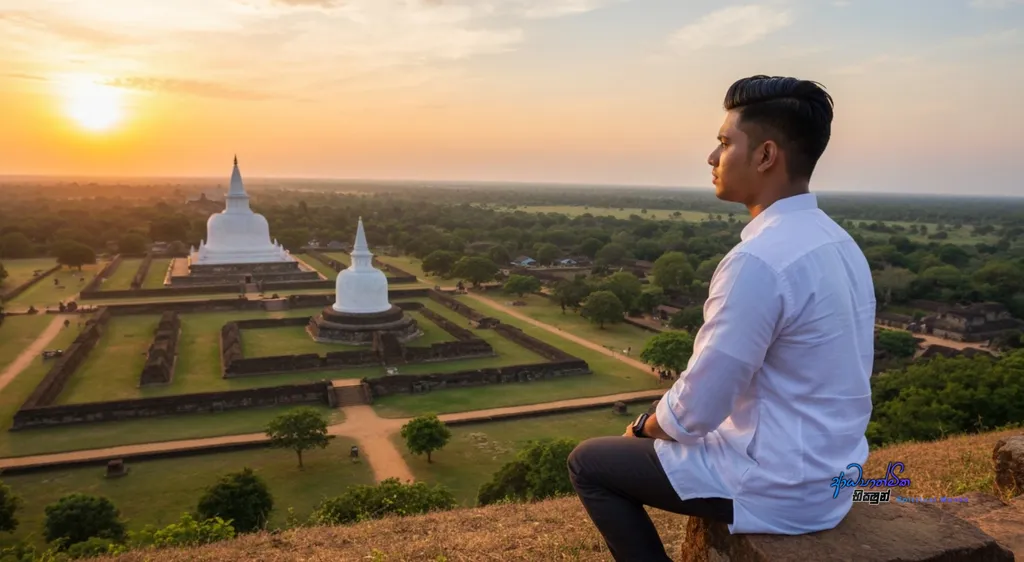
Why Do We Seek an End to Suffering?
The first step is to ask yourself a very personal question: ‘Have I ever truly felt the desire to be free from this cycle of birth and death, this endless wandering known as Samsara?’ The answer to this reveals much about where you are on your path.
Sometimes, our spiritual urgency is sparked by our external circumstances. In Sri Lanka, for example, many people experience disillusionment due to political instability and economic hardship. They might see the material progress in places like Singapore or Dubai and feel a deep frustration or sadness about their own situation. This feeling of discontent can lead people down one of two roads.
Some may seek a better life abroad. Others, however, turn inward. They begin to see that even after decades of struggle, the external world remains unstable. This profound weariness can become a powerful catalyst, inspiring them to explore the Buddha’s teachings on the path to true, lasting peace. People from all walks of life, even those once deeply involved in politics, have found their way to the Dhamma through this kind of disillusionment.
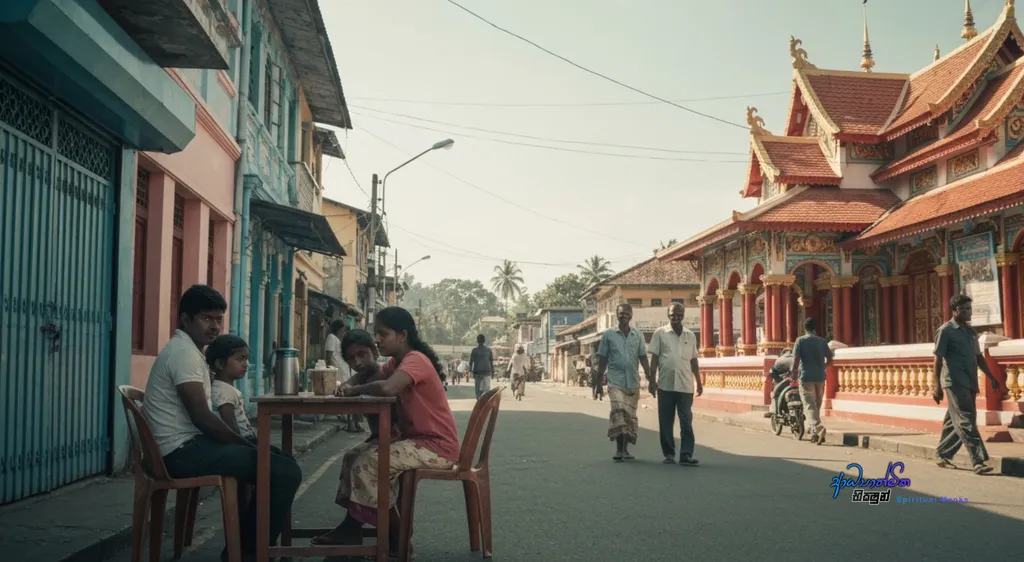
Recognizing Life’s Inherent Stress: The First Noble Truth
This feeling of dissatisfaction is not unique to one country or situation; it is a universal human experience. In Buddhism, this is called Dukkha. It’s not just overt pain, but a deep, pervasive sense of stress and unsatisfactoriness that touches every part of our lives. Consider these common experiences:
- Social Life: We all face both praise and blame. No one is immune to criticism and slander; even the fully enlightened Buddha was criticized. Understanding this is the nature of the world helps us cultivate equanimity.
- Daily Dangers: We live with the risk of accidents, violence, theft, and countless other dangers.
- Financial Burdens: Many know the stress of being in debt and the anxiety of being unable to pay it back.
- Family Troubles: Life within the family unit can be a source of deep pain. Gossip can destroy relationships, a spouse’s infidelity can break a home, children can go astray, and addiction to alcohol or gambling can bring ruin. Conflicts arise between in-laws, siblings, and even parents and children over things like property.
- Workplace Pressure: Our jobs can become a source of immense stress, yet we feel trapped, unable to leave for fear of losing our livelihood.
When we are crushed by the weight of these problems, from work pressure to family arguments to financial woes, a moment of clarity can arise. We suddenly remember the Buddha’s words and realize, ‘He was right. Everything I cling to for happiness eventually brings me suffering.’ It is in these moments that the genuine desire to attain Nirvana can truly awaken.
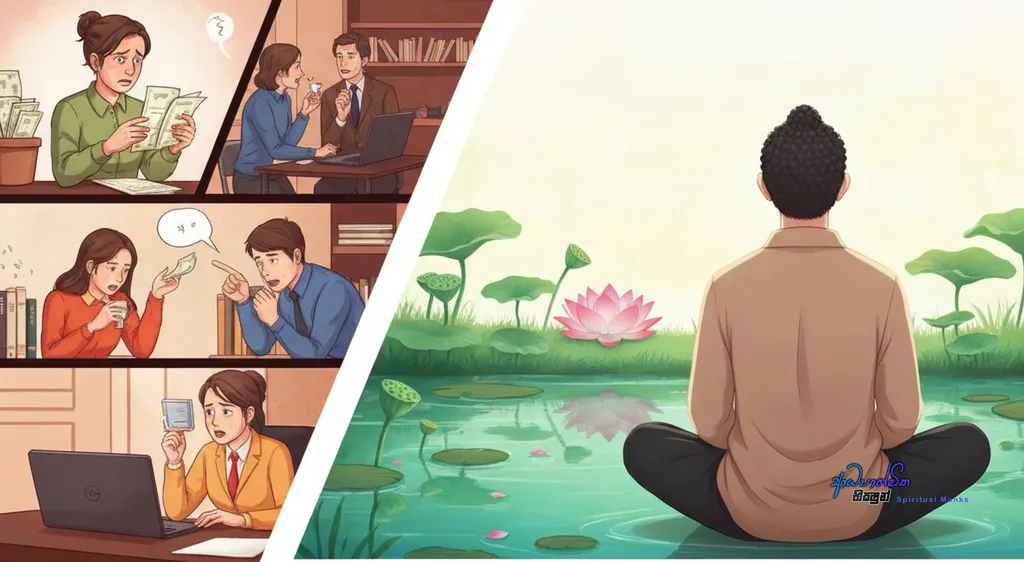
The Fleeting Wish for Freedom: A Spiritual Paradox
The blessing of being in a place like Sri Lanka, where the Buddha’s teachings have been preserved for over 2,500 years, is that a path out of this suffering is known. But here we encounter a paradox. Is our desire to attain Nirvana constant, or does it come and go?
Imagine you are in a desperate situation. Let’s say you are ten thousand dollars in debt, and the pressure is unbearable. Your health is failing, your family is in need, and you see no way out. In that moment of intense Dukkha, you might sit before a Buddha statue, light a lamp, and pray with all your heart, ‘May I be free from this suffering! May I quickly attain Nirvana!’
Now, imagine that at that very moment, a kind person learns of your plight and gives you the exact amount you need. The debt is cleared. The problem is solved. What happens to your mind? The intense desire to attain Nirvana vanishes. The Buddha is forgotten. Suddenly, your mind is filled with thoughts of how to use the money, how to solve your worldly problems, and how to finally have some fun.
This reveals a profound truth about our minds. Our spiritual aspirations are often as temporary as our suffering. This is the nature of Anicca, or impermanence. The Buddha taught that all things change, our sorrow, our joy, our very thoughts. The mind that longed for liberation when in pain is not the same mind that seeks worldly pleasure when happy.
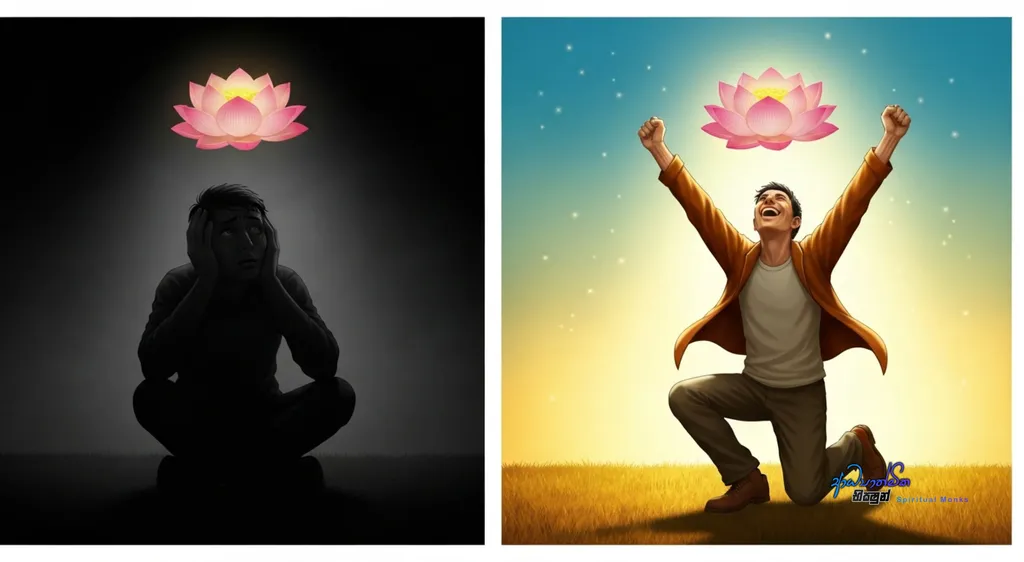
The Heart’s True Desire: Are We Really Ready for Nirvana?
This brings us to an honest, and perhaps uncomfortable, question: do we truly want to attain Nirvana? Many people say they do, but their actions reveal a different story. There is a tale of an old woman praying fervently at a Bodhi tree, crying out about her endless problems and wishing for the peace of Nirvana.
A mischievous mason, working nearby and hearing her pleas, called out in a deep voice, ‘Your wish is granted! Prepare for Nirvana now!’ The woman, thinking a deity had spoken, panicked. ‘No, no, not yet!’ she cried, ‘I still have grandchildren to look after! There are so many things left to do!’ and she ran away.
If we are truly honest with ourselves, many of us are like this woman. We desire freedom only when we are in pain. When life is good, we want to enjoy it. Most people today are drawn to earning money, enjoying modern technology, and displaying their status and success.
There is nothing inherently wrong with this, but it is not the mindset that leads to liberation in this lifetime. Therefore, not everyone is truly ready to attain Nirvana. However, there is a minority who, having understood both the pain of suffering and the fleeting nature of happiness, are genuinely committed to the Buddhist path to liberation.
Beyond Wishing: The Necessity of Spiritual Practice
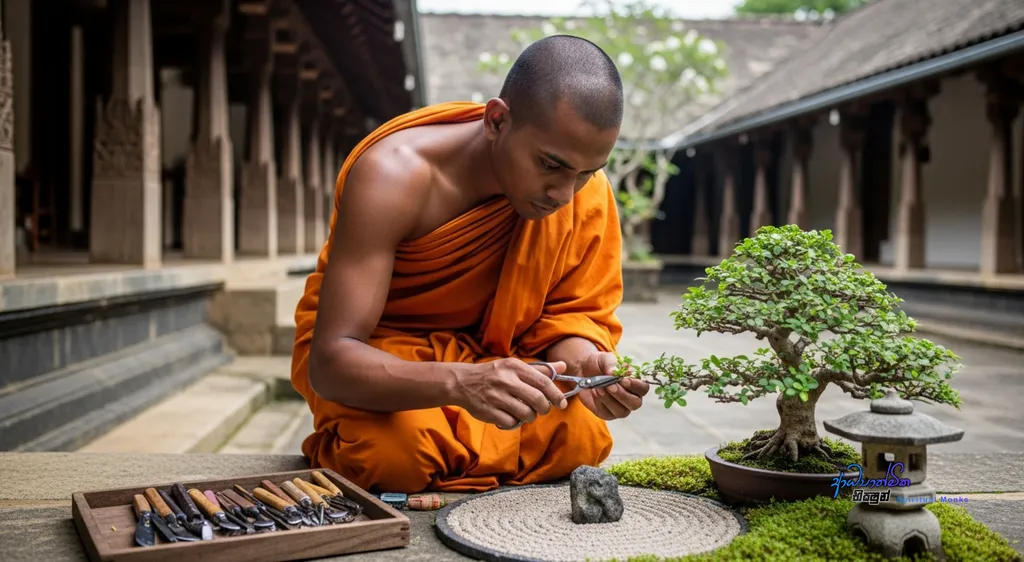
So, how does one move from a temporary wish to a firm commitment? The answer lies in practice. Simply wishing or praying for Nirvana, no matter how sincere, is not enough. The Buddha made this very clear with an analogy: a hen may lay her eggs, but if she only wishes for chicks to hatch without sitting on the eggs to provide warmth, nothing will happen. The wish is the starting point, an aspiration or resolve (adhitthana). But it must be followed by practical, sustained effort.
This is why the Buddha taught a practical path: The Noble Eightfold Path, the Four Noble Truths, and the Four Foundations of Mindfulness (Satipatthana). Engaging in this spiritual practice, even in this life, creates the causes and conditions for liberation. If you practice now, your journey doesn’t end with this life. Should you meet the teachings of a Buddha in a future life, that past practice will act as a foundation.
The Buddha, seeing your cultivated mind, can guide you swiftly to awakening. Without this foundation of practice, one could meet countless Buddhas and still not be able to end the journey through Samsara. The training is essential.
Intelligence vs. Wisdom: Seeing the World as It Is
In our modern world, we value intelligence, the ability to succeed in technology, business, and worldly affairs. But the quality needed for the Buddhist path to liberation is different; it is wisdom (panna). The great disciples of the Buddha 2,500 years ago, like Sariputta and Moggallana, were not just intelligent; they were profoundly wise.
They understood what are known as the Eight Worldly Conditions: gain and loss, fame and disrepute, praise and blame, pleasure and pain. They saw with clarity that these are all impermanent and ultimately unsatisfactory. This wisdom created in them an urgency to find a way out.
A wise person is one who understands that this world, and their own self, is not stable or permanent. Most people, however, live with the underlying assumption that things are stable and will last. To see the truth of impermanence and unsatisfactoriness is the mark of wisdom. If you can cultivate this understanding, then you have the capacity to walk this path to its end.
Conclusion: Embracing the Path of Wisdom
So, does everyone attain Nirvana? The honest answer is no. Not because it is reserved for a chosen few, but because most people have other desires and are not yet ready to undertake the dedicated spiritual practice required. Most are captivated by the highs and lows of the world.
But a small number of people are awake. They possess the mindfulness and wisdom to see life as it truly is. The path forward is to decide which group you want to belong to. The invitation of the Buddha’s teaching is to cultivate the quality of a wise person. Reflect on these truths, see them in your own life, and commit to the practical training that leads to true freedom.
May the power of the Buddha, Dhamma, and Sangha, the Triple Gem, give you the strength and clarity to understand these teachings and put them into practice.
We invite you to walk this path with us. Read our teachings, and most importantly, apply them practically in your own life. as you practice, questions will naturally arise. Please feel free to share your experiences and questions in the comments below, via email or contact form. I will do my best to offer guidance in future talks based on your progress. For now, begin this practice with an open heart and a mind free from expectation. Cultivate it correctly, and may you find the clarity and peace you seek.
Thank you for joining us. We hope this blog will be of great benefit to your spiritual journey.
May you all be well and happy.
May the blessings of the Triple Gem be with you all!.


