


Categories: Lost Your Meditation Spark?
May the blessings of the Triple Gem be with you all!
Today, through these spiritual teachings, I wish to explore a matter of lifelong importance for everyone on a spiritual path. As the title of this article suggests, we will be addressing a very common experience: the loss of interest that can arise while practicing meditation. Whether you are developing calmness, known as Samatha, or insight, known as Vipassana, you may find that your enthusiasm wanes.
A sense of laziness can creep in, your effort diminishes, and your energy fades. This is a natural phenomenon that nearly everyone, including us, has experienced. It is an inherent part of the spiritual journey and a natural characteristic of the mind.
When we commit to developing the mind over a long period, we naturally begin to distance ourselves from the worldly things we once enjoyed. This shift can be unsettling. You might find that you no longer enjoy the same foods, or that trips you once found entertaining now feel empty.
This happens because as you start to experience a deeper spiritual happiness, a sense of peace, a taste of meditative absorption, or a subtle spiritual skill, the ordinary pleasures of worldly life begin to seem less appealing.

Finding Balance: A Spiritual ‘All-Rounder’ in a Lay Life
As this inner shift occurs, you might feel the urge to let go of things you perceive as obstacles. You might think, “What is the use of these friendships? This inner peace is so much more profound.” Any aspect of your ordinary, worldly life that seems to hinder your spiritual progress can feel like a burden you need to shed.
For some, this feeling is so strong that they consider giving up their education. Others may see their family, their spouse, children, or parents, as a hindrance. Your job can feel like an obstacle. These thoughts are a common part of the journey.
However, we must offer this crucial advice: if you are bound by responsibilities, you must continue to fulfill them. If you are not a monastic, if you are not living a life of solitude, you may be a mother, a father, or the sole caregiver for your parents. If you are tied to a responsibility, whether through your job or family, our firm guidance is to continue honoring those commitments while striving to develop your spiritual practice.
You must learn to balance your worldly existence,your life of sensual experience in the ordinary human realm,with your spiritual life, pursuing both with balanced effort.
If you have children, you cannot simply abandon them because you’ve started a spiritual path. You must become more skillful than an ordinary person. You need to become an “all-rounder,” excelling in every area. You must care for your children, your spouse, and your parents; you must secure your job and manage all your duties.
While fulfilling all these responsibilities, you must carve out a space to develop your spiritual life and your meditation practice. This is the path for a dedicated lay practitioner.
Navigating the Plateau: Why Your Meditation Practice Feels Stagnant
At the beginning of your practice, whether it’s the ‘Third Eye’ practical method or the ‘Path to the Brahma Realm’ method, you feel a great deal of interest, effort, and energy. Many people tell me how eagerly they begin, practicing with immense dedication.
When they start experiencing the ‘Universal Spiritual Exercises‘ mentioned in our teachings, they do so with great joy. In these early stages, you are experiencing a new kind of bliss, a spiritual life you have never known before. It is an entirely new experience, completely different from the pleasures of the sensual world you are used to.
But as you continue practicing day after day, a sense of boredom can set in. You begin to feel lazy. Why does this happen? We are dealing with the mind, and sometimes we don’t understand its subtle workings. If we cannot maintain our mindfulness and correctly grasp the nature of our mind and thoughts, our interest fades.
If we can’t perceive our state of mind during meditation and understand where we are in our practice, it becomes boring. Thoughts arise like, “Oh, there’s no flavor in this anymore,” “My meditation isn’t progressing like it used to,” or “I feel like I’m stuck in the same place, stagnating.” These feelings and thoughts are generated by your mind. This is the nature of meditation practice.
Asking the Right Questions: The Art of Wise Inquiry (Yonisomanasikāra)
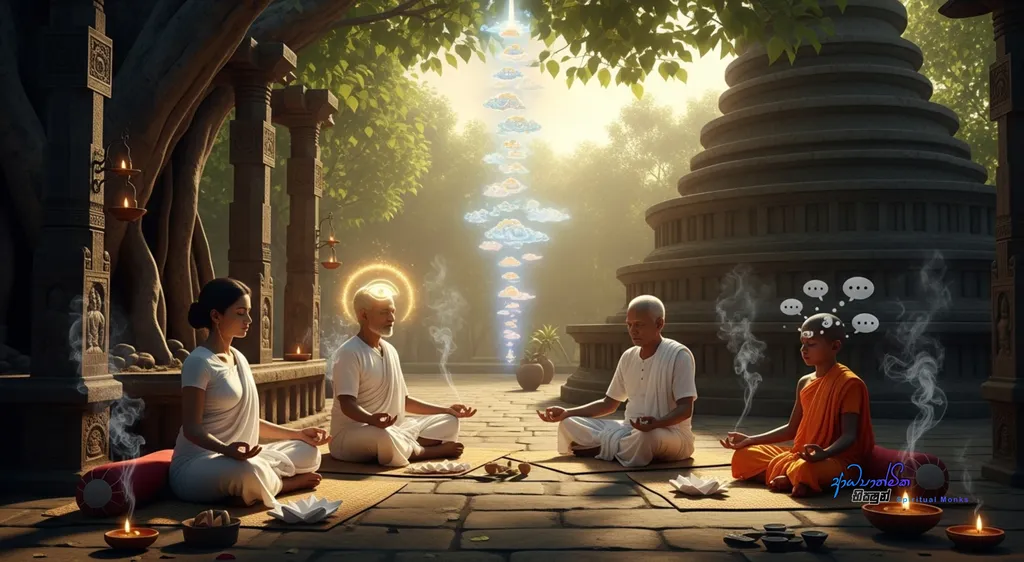
So, when you notice this happening, think to yourself. The Buddha called this kind of correct thinking Yonisomanasikāra, or wise reflection. But let’s put the term aside for a moment. Simply build the question within yourself and ask it of yourself: “Why is this happening to me?” You must ask this with mindfulness, from a place of mental stillness. It is best to ask when your mind is clear.
Don’t think about it with other distracting thoughts; approach it independently, directly, with strength and self-respect. Ask yourself, “Why are you like this?”
You may not get an answer right away. Sometimes the answer comes a couple of days later, or perhaps in a few hours. For some things, the answer may take a week to arrive. At times, the answer arises directly in the mind. At other times, it comes through the practical experience of meditation as you continue your spiritual life.
When you ask the question of yourself in this way, you will eventually be able to understand what is happening.
The Mind’s Resistance: Swimming Against the Current of Habit
One reason we get tired of meditation and our effort decreases is repetition. This can happen even to someone whose Third Eye is awakened. When the same thing happens over and over in meditation, or when we feel we are stuck in the same place, a sense of aversion and disenchantment arises.
Your mind, in a way, starts to distance you from your own practice. It begins to tell you, “Go back and enjoy your lay life, the world of sensual pleasures. Go look at Facebook. Go on WhatsApp and Instagram. Use social media.” Your own mind starts giving you these instructions. It tells you to seek out the tastes, sights, and feelings that once gratified your mind and body. It pulls you back into that state. This is the nature of the mind.
The mind does not easily give us permission to explore and develop it.
Why?
Because what you are trying to do is like swimming upstream. You’ve heard this phrase. To swim against the current of a downward-flowing river is extremely difficult. To prevent this difficult task, various obstacles arise. As you swim upstream, the force of the water makes it hard. Leaves, branches, logs, and stones may come floating down toward you.
You have to overcome all of these to keep moving forward. The feelings of boredom, the sense of being stuck, the thoughts of “Am I stagnating? Is my practice not growing?”, these are like the obstacles and strong waves you face when swimming against the current.

How to Rise from the Ashes: A Practical Guide to Reigniting Your Effort
So, what should we do?
We must recognize these things with mindfulness and wisdom. As I have taught before, there are times in meditation when you will feel tired of it. When those times come, the thing to do is to continue meditating just as you always do. If you know that your effort and energy have diminished, that knowledge itself is enough to help you rise again. Knowing your own shortcoming is the first step to correcting it.
In your ordinary life, if you make a mistake in your business, your job, or your family life, and you realize that this mistake is causing you harm or loss, you don’t let it happen again. You correct the error and move forward, ensuring it doesn’t repeat. It is the same here.
If you feel that your effort is low, that you have become listless and bored, you must think, “Somehow, I have to shake off this dust and rise again. I must break through these cobwebs and, little by little, apply myself to meditation with renewed effort.” For every thought that says, “I’m tired of this,” you must immediately think the opposite: “No, I will do this no matter what.” This is how a Bodhisattva, a being striving for Buddhahood, fulfills their perfections and develops merit on their path.
Harnessing Your Inner Power Through Resolute Determination (Adhiṭṭhāna)
Whenever your mind tells you that your effort and energy are fading, as soon as you recognize it, immediately generate the opposite thought: “No, I will do this no matter what. I will not stop this. I will develop my spiritual practice with effort and diligence.” Make this a firm resolution. This is called Adhiṭṭhāna in Pali, which means a strong determination. By making such resolutions, you can engage in your spiritual practices with renewed vigor.
When your effort feels low, you can also make this resolution: “If I have ever, even with a single thought, helped another being who was striving for enlightenment, for a spiritual attainment, or for a state of deep concentration,if I have ever helped increase their effort and energy,may that meritorious power now help me.” Repeat this resolution.
Make it after paying homage in the morning and evening, before and after meditation, and whenever you are mindful. When your concentration is good, when your wisdom is sharp, or when you are in a meditative state, make the resolution: “May my own effort increase more and more.”
As you make these resolutions again and again, the mental defilements in our minds, known as kales (greed, hatred, and delusion), are gradually suppressed and removed.
As this happens, your resolutions gain power and begin to manifest. This happens systematically, not all at once, because our defilements are strong. The resolutions of a Buddha or an Arahant (a fully enlightened one) are powerful because their minds are free from lust, aversion, and delusion.
Even the resolutions of a sage or hermit whose defilements are only temporarily suppressed are powerful. By protecting the five precepts and living a life of virtue, you too can reduce your defilements and empower your resolutions.
Even if you are not living a celibate life, don’t feel regret. If you are keeping the five precepts, make a resolution based on the power of that virtue for your effort to increase. It will surely increase.
Embracing Impermanence (Anicca) in Your Spiritual Journey
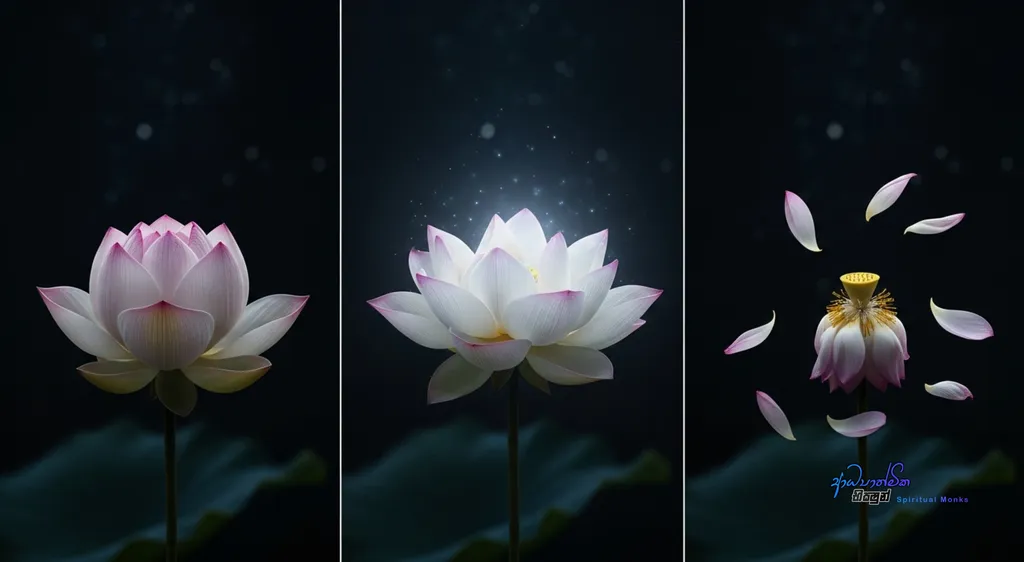
A common expectation in meditation is that every day should be the same as the good days. People think, “The things I felt in the beginning, I should feel again. It should feel the same every day.” But what did the Buddha teach us? He taught that all things are impermanent, a concept known as Annica.
This truth of impermanence applies to your spiritual life as well. It is a universal law that holds true until one attains enlightenment.
Spiritual experiences change. The person whose Third Eye is open today may find it closed tomorrow, perhaps due to their own defilements. You must apply this understanding of impermanence to your spiritual life. Many people contact me saying things like, “In the beginning, my practice was strong, and I had abilities. I saw bright lights, but now I don’t see them.” Or “I used to feel a strong pressure in the middle of my forehead and enter deep concentration, but that doesn’t happen anymore.” They say, “I used to be able to see with the Third Eye,” or “I began to hear divine sounds, but I don’t hear them now.” “My mind used to be so calm,” “The universal spiritual exercises used to happen, but not anymore,” “I used to be able to keep the five precepts perfectly, but now I can’t.”
They keep expecting the experiences from the beginning of their practice. Do not expect this. On this path, there will be times when things collapse. You might remain in that state for days, weeks, or even months. No matter how many times you fall, you must rise again with renewed effort and continue, just as I have explained in this teaching.
Becoming Your Own Teacher: The Path to Spiritual Self-Reliance
Many people have told me that their energy fades when there isn’t a new teaching available. Do not let yourself fall into such a state of dependency. While our teachings are here to help you gain effort, do not become reliant on them for your motivation.
Imagine a time comes when technology fails. Suppose suddenly you can’t access YouTube or the internet. How would you generate your effort then? If you have no teacher, you must become your own teacher.
Ponder this wisely. Train yourself to ask questions of yourself, not just during meditation but at all times. “How can I prepare for such situations?” When you ask, an answer will eventually come. Your mind will get used to it.
At first, when you try to generate thoughts of effort, it feels weak. The tendency to fall back is stronger. But as you do it again and again, over time, your mind gets habituated to generating effort, interest, and diligence. When that happens, you will act on those thoughts automatically.
It becomes an ingrained habit, a positive addiction. When you see a person you despise, a feeling of hatred can arise instantly. When you see a tempting food, the urge to eat it arises instantly.
This is the mind conditioned in a negative way, pulling you deeper into the cycle of suffering. We are now using that same mechanism for the opposite purpose: to generate effort. Eventually, it becomes second nature. The old feelings of laziness and reluctance won’t have the same power. Even if they arise, you won’t collapse. You will be able to remain in your practice.

Awakening Latent Strengths: Your Journey Across Lifetimes
We don’t know for certain whether we have meditated or practiced these things in our past lives. But it is possible, and you should trust in that possibility. In a world of billions of people, if the thought to meditate has arisen in you, whether through our teachings or on your own, it is almost certain you have a connection to this practice from the past.
When you repeatedly generate effort and diligence, you touch upon the meditation and effort that is already stored within your mind-stream from past lives. At some point, that old practice will be ignited. When that happens, your effort will double and triple, and you will begin to meditate with immense energy. This is how past habits are brought to the surface.
Once you understand this, you will realize you don’t need a second person to guide you at all times. You only need a guide to clarify certain points, and over time, even that will become unnecessary. You will gain the ability to walk this path independently. So for now, use these teachings as a support.
If your effort, diligence, and dedication have waned, use these methods to increase them from within. Think about how you studied for exams with such dedication, forgoing sleep. Think of how you face the challenges of your worldly life with immense effort. Apply that same level of energy to this practice.
Conclusion: You Are the Source of Your Own Strength
If you are a layperson with responsibilities, set aside a specific time, as I mentioned at the beginning, and engage in these practices without fail. Strive to be an extraordinary person who can balance everything: your duties, your worldly life, and your spiritual path.
If you are single or a monastic, you may have the opportunity to practice around the clock. But for those with busy lives and responsibilities, this balance is key. Adapt these teachings to your life and continuously renew your effort and energy in meditation.
I believe these points are more than sufficient for you. Trust in yourself. Do not place your trust in a second person. You are the one who must increase your own effort. Even the Buddha could only offer words to inspire effort in his disciples, like the venerable Moggallāna. After that, it was up to them to generate and increase it.
This is true for everyone. We can only help with words and teachings. You yourself must do the work. Read to this teaching again and again. The second time you read, your mind will grasp more. The third time, even more. In this way, you can develop yourself and continue your practice.
If you know someone else whose effort and energy for meditation has diminished, let them explore this teaching. It may help them increase their own. With that, I conclude today’s teaching. By the power of the Triple Gem, the Buddha, the Dhamma, and the Sangha, may you mindfully recognize any lack of effort, and may you generate profound effort and wisdom from within yourselves.
We invite you to walk this path with us. Read our teachings, and most importantly, apply them practically in your own life. as you practice, questions will naturally arise. Please feel free to share your experiences and questions in the comments below, via email or contact form. I will do my best to offer guidance in future talks based on your progress. For now, begin this practice with an open heart and a mind free from expectation. Cultivate it correctly, and may you find the clarity and peace you seek.
Thank you for joining us. We hope this blog will be of great benefit to your spiritual journey.
May you all be well and happy.
May the blessings of the Triple Gem be with you all!


