


Categories: Other Meditation Teachings
May the blessings of the Triple Gem be with you all!
Today, we will explore a profound topic: an ancient, universal system of Sri Lanka’s Ancient Education System that was once part of our heritage. If you read this teaching in its entirety, you will understand what this method can do for you and the incredible transformations it can bring. I invite you not only to read until the end but, more importantly, to begin putting these principles into practice.
As you apply these ancient methods and begin to feel their effects, I encourage you to reflect on what you understand and experience. This practice is not about accumulating more knowledge; its primary purpose is to expand your mind, making it boundless and limitless. It is a path to developing an intelligence that knows no end. This is a journey toward profound wisdom and clarity.
The methods I will share are sequential, and as you explore them one by one, their meaning and power will become clear. This teaching is timeless and has no age limit. It can be practiced by a child as young as four or five, as long as their parents understand how to gently guide them.
By introducing these practices early, you could help raise a child who, by the age of sixteen, possesses a complete and fully developed intelligence. This is the power of this ancient way of learning.
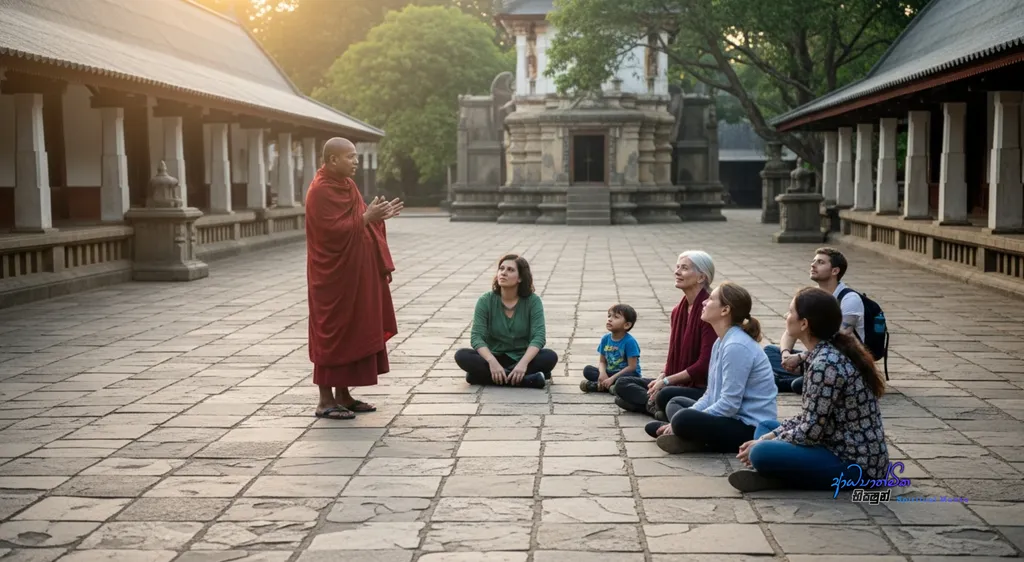
The Modern Trap: An Education That Shrinks the Mind
To understand the value of this ancient system, we must first look at our current one. Today’s dominant model is a rote-learning education system, one that contracts the mind, forcing it into narrow confines. We sometimes refer to this as Mara’s education system.
In Buddhist thought, Mara is not a devil but a symbol for the forces of delusion and confusion that keep us trapped. An education system that promotes competition, jealousy, and memorization without true understanding serves these forces. This system was introduced to Sri Lanka by foreign powers during colonial times, deliberately designed to suppress the natural intelligence of our people.
It has left many unable to critically assess what is happening in their own country or to see the true intentions of their leaders. People are easily deceived because their innate wisdom has been clouded and constrained.
We see the results everywhere: people form attachments and opinions without deep understanding, only to realize their mistake when things go wrong. This is a direct consequence of an education that fails to cultivate true insight. Changing this national system is a monumental task beyond our individual control. That is why I wanted to share this teaching with anyone who might listen, regardless of their age, religion, or nationality. It offers a way for us, and our children, to reclaim our innate intelligence.

The First Teacher: Cultivating Wisdom at Home
In ancient times, parents were the first and most important teachers. Their own wisdom was mature, and they knew how to nurture it in their children using this universal ancient education system. Today, many parents, having been shaped by the modern system themselves, may not feel equipped to pass on this kind of wisdom. Their minds have been conditioned and confined.
However, by practicing these methods themselves, parents can begin to expand their own consciousness and, in turn, guide their children.
As you read on, you will feel the truth of this system. Those with an open mind will understand it immediately. Even if you feel trapped by Mara’s system, I believe the majority will grasp its potential and feel inspired to put it into practice. This is not just another theory; it is a precious, rediscovered spiritual technology from our past, a system that I believe is not widely discussed anywhere else today.
It is vital to understand this foundation before we proceed, as it is key to developing a spiritual life where the mind and wisdom can flourish without limits.
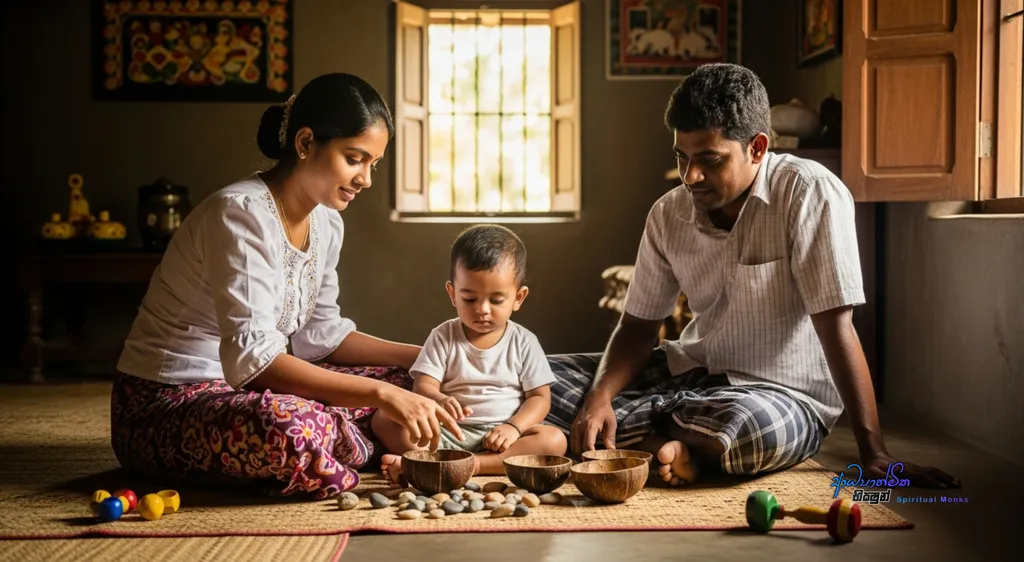
Ancient Education System: It Must Be Your Own Experience
This path is open to everyone. It is meant to be practiced every day, for the rest of your life. Why? Because practicality is everything. Whether it’s the Buddha’s path to liberation, known as Nibbana, or a simple meditation technique, it is worthless if it doesn’t become your own direct experience. If you don’t feel it, if it doesn’t become self-evident (paccattam veditabbo viññūhi), then it has no real value for your growth.
You must feel your mind becoming more refined. You must sense your mind expanding. You must notice your wisdom growing. Without this personal, direct knowing, it remains just an idea. That is why I am taking the time to explain these fundamentals, so you understand the profound potential that awaits.
Practicing this system will bring you a sense of pride in yourself, your heritage, and your spiritual path. You will become a person filled with kindness (Metta), compassion (Karuna), and equanimity (Upekkha). You will learn to love yourself and, from that place, extend that love to others. You will become a complete human being with a boundless, fully realized intelligence. Now, let us explore the steps one by one.
Step 1: Recognizing Good and Bad Within Your Own Mind
The very first step in this ancient education system is this: recognizing the good and the bad within your own mind. This is the foundation for creating an intelligent human being.
This practice can begin from the age of four or five, an age where a child can grasp simple instructions. Parents must be skillful in presenting it at the child’s level. Anyone listening can adapt this, whether for a child, a teenager, or yourself. Start by identifying the wholesome and unwholesome thoughts in the mind.
For a small child, this is simple. Their thoughts are not as complex or intense as an adult’s. You can point out:
- When they feel anger towards their mother, father, or sibling, you can gently say, “That feeling of anger is an unwholesome thought. It is not good to hold onto it.”
- When a child is stubborn or trying to control their parents, you can identify it: “That thought is a stubborn one. It is not helpful.”
- Conversely, when they feel the wish to share their food, help someone, or be kind, you can affirm: “That is a beautiful, wholesome thought.”
Through this daily practice, the child learns to self-identify their mental states. A child might even come to you and say, “Daddy, I felt an angry thought toward you.” In that moment of recognition, they have already established mindfulness and prevented the anger from taking root. This creates a disciplined, self-aware child who is less likely to fight with siblings. They develop a calm and understanding nature from a very young age.
Over time, children may even describe this inner world in their own words, like having an angel and a devil on their shoulders, noticing that the ‘bad one‘ often feels more tempting. This is the first step: teaching them to know their own mind. This practice can also awaken latent positive tendencies from past lives (samsara), accelerating their spiritual growth in this lifetime. Even as adults who missed this early training, we can start now and create this foundation for ourselves and our children.
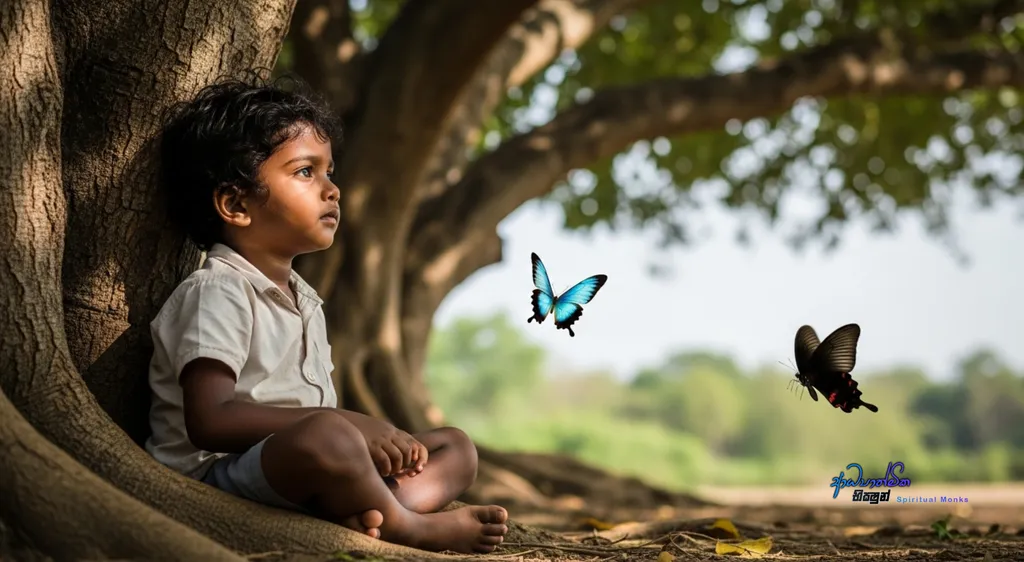
Step 2: Cultivating Respect and Overcoming Jealousy
Once you, or the child, begin to recognize the good and bad within the mind, the second step is to learn how to respect others.
This is taught not as a rigid rule but as a practice of mindfulness. It includes:
- Waiting for someone to finish speaking before you begin. In a debate or argument, you listen fully to their point before making your own. Shouting over each other is meaningless, like two animals bellowing.
- Understanding the traditional customs of showing respect, such as why we bow to elders. These are not empty rituals but expressions of a respectful heart.
The modern, competitive education system actively fosters jealousy. When one student excels, others often feel envy, a feeling that is particularly amplified in some school environments. Tragically, some teachers, lacking this deeper understanding, even encourage this rivalry. But in this ancient system of holistic education, jealousy has no place.
True intelligence expands only as negative states like jealousy shrink. Our ancestors understood this: to broaden the mind, unwholesome thoughts must be diminished.
Therefore, you must guide your child (and yourself) to see another’s success not as a threat, but as an opportunity for shared joy and support. When jealousy arises, identify it as an unwholesome thought. Teach the principle of helping each other rise together.
Today’s world often teaches us to crush others to get ahead, a mindset born from mental pressure. We must replace this with cooperation, harmony, and mutual respect. Everyone is equal; we should help one another succeed. This is a profound shift from the ‘me-first‘ mentality to a ‘we-together‘ consciousness.

Step 3: Learning from Nature, Our Great Teacher
The third pillar of this ancient education system is learning to live in harmony with nature.
Our ancient ancestors had a deep, intuitive connection with the natural world. This education begins by teaching a child about the workings of nature, not just from a textbook, but through direct experience. This goes beyond the subject of ‘environment‘ in school. It is taught slowly, bit by bit, from a very young age.
A mind that has been trained in the first two steps, aware of itself and respectful of others is open and receptive. You can explain:
- How trees and plants grow.
- How the ecosystem functions.
- The interconnectedness of all living things.
Even if a parent isn’t an environmental scientist, they have some knowledge. Share what you know. This process will inspire you to learn more yourself. In ancient times, parents possessed a knowledge of nature equivalent to a modern-day environmentalist. They were the first teachers because they had this profound wisdom. Imagine, then, the knowledge held by the formal teachers and masters of that era! It was immense.
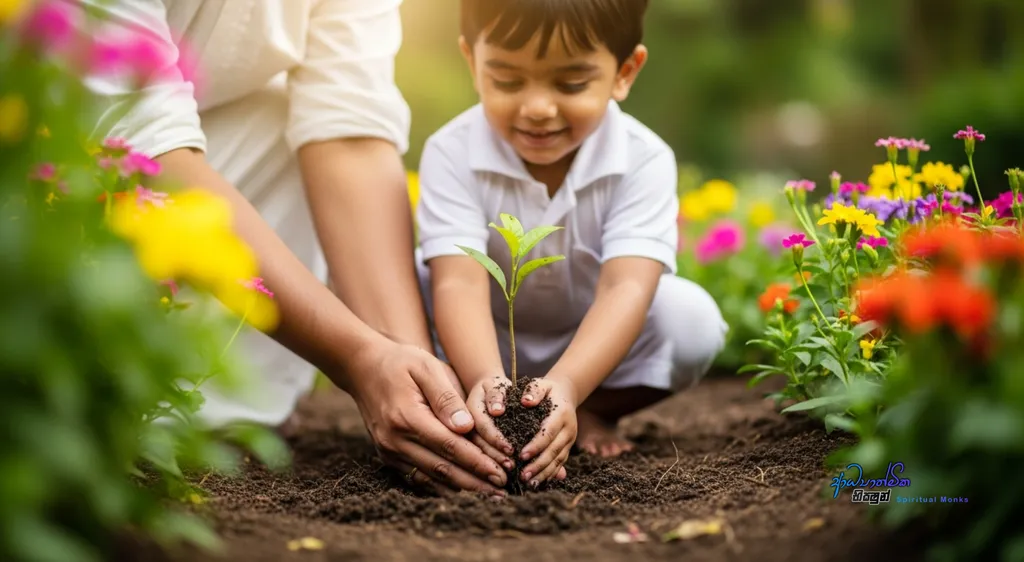
The key is to teach this practically, not as a subject to be memorized. Don’t force them to learn scientific terms. Go outside. Show them the plants in your garden. Let them feel the earth. As you teach, constantly repeat this essential truth: “My child, we live because of these trees. We breathe because of them. Therefore, we must protect them and love them.”
A child who grows up with this understanding develops an innate love for nature. When they encounter others who harm the environment, they will naturally stand up for it, becoming a leader for conservation. This is how we cultivate guardians of the Earth.
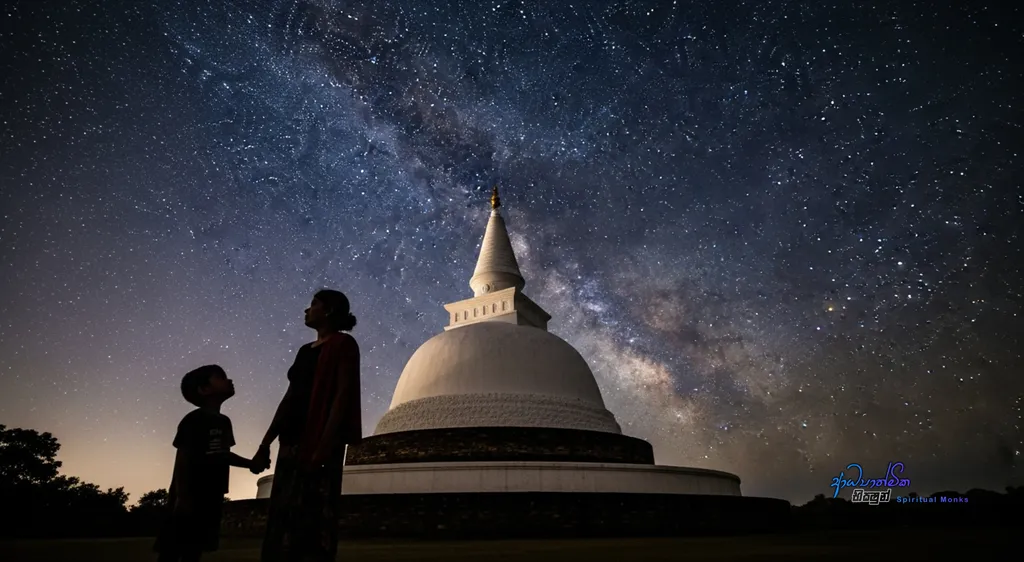
Step 4: Gazing at the Cosmos and Understanding Our Place
The fourth step of this ancient education system is to teach about the universe.
From a young age, children in this system were introduced to the cosmos. Their parents, possessing this knowledge, would explain the universe to them. This is not about complex astrophysics, but about cultivating a sense of wonder and perspective. You can explain, in simple terms:
- The existence of planets, the sun, and the stars.
- Our Earth as a globe within this vast expanse.
- The origins of the universe, drawing from both spiritual teachings (like those of the Buddha) and modern scientific understanding.
- The possibility of life beyond our planet.
It is vital to approach this without falling into extremism. Today, people often get trapped in rigid beliefs: some say only the scientific view of evolution is true and the Buddha’s account is false; others claim the reverse. This leads to conflict. The goal of this education is to cultivate a balanced, non-dogmatic mind.
A child taught in this way will think, “The Buddha’s explanation could be true, or it might not be. The scientific theory could be true, or it might not be.” They remain in a state of open inquiry, free from the need to cling to one view. They are comfortable in the middle path until they can realize the truth for themselves through direct experience.
Use the resources available to you, books, the internet, and the night sky itself. Tell these cosmic stories as you would a fairy tale, without pressure to memorize facts. Go outside at night, look at the stars, and talk about the boundless nature of the universe. This practice instills a profound sense of awe and humility, expanding the child’s mind far beyond their immediate world.
Step 5: Embracing All Beings with Love and Wisdom
The fifth part of this ancient education system is to teach about animals with compassion.
Our environment is filled with countless creatures, from birds to mammals. From a young age, a child should learn about them: what they eat, how they live, and their role in the world. But this teaching must be rooted in love, not fear or aversion. Even with animals that are considered dangerous, like snakes, the lesson is not to hate or kill them.
A parent should explain: “Yes, this snake is venomous. That is its nature, a part of the environment. In Buddhism, we might see this as a result of its past kamma (intentional actions). But we must still protect it. The balance of nature depends on all creatures.”
We teach that if a snake enters our home, we don’t kill it. We find a way to safely capture it and release it back into the wild. In ancient times, even young children had the skill and courage to handle such situations without harm to themselves or the animal. That fearlessness came from understanding, not aggression.
The core lesson is to extend loving-kindness (Metta) to all beings. We must teach children why we don’t hit a stray dog or cat that enters our yard. You can explain, “We gently shoo them away because they might make a mess, but we do it without causing them harm. We can frighten them away without being cruel.” This builds a foundation of profound compassion. A parent who practices this will find their own wisdom growing, enabling them to impart these lessons with greater clarity and love.

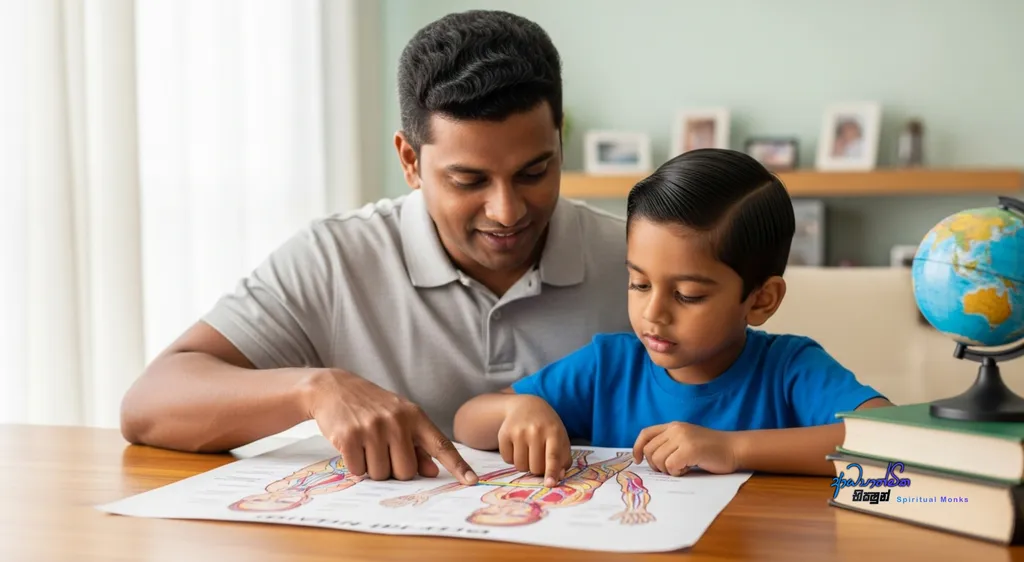
Step 6: Understanding the Body and the Wisdom of Self-Healing
The sixth and final step of this foundational ancient education system is teaching about the human body.
From early childhood, our ancestors taught their children about their own bodies. This wasn’t to the level of a physician, but it was a far deeper understanding than the average person has today. A normal parent in that era had a knowledge of the body comparable to a traditional healer. The actual healers, then, possessed an even more profound level of expertise.
Parents would explain, little by little, the functions of the body, the brain, the nervous system, and other organs. Again, the goal was not rote memorization but a practical, living understanding of how the body works. They even taught basic self-healing. A child would learn which leaves and herbs to use for a small cut or wound. This was a form of self-sufficient education, empowering the individual from a young age.
Can you see how comprehensive and sophisticated this system is?
These six pillars, understanding the mind, respecting others, connecting with nature, comprehending the universe, loving animals, and knowing the body work together to cultivate a complete human being whose intelligence and consciousness are continually expanding.
The Fruit of True Learning: A Complete Human Being
A child raised with this ancient education system becomes a complete individual by the age of sixteen. They possess deep understanding, boundless intelligence, and the ability to explore any subject independently. Their mind is not a repository of memorized facts but a dynamic tool for inquiry.
This is why I presented these six topics as starting points. The real learning happens when you or your child begins to explore them independently. Wisdom and an expanded mind are awakened through self-directed investigation. A sixteen-year-old educated this way might have the maturity and wisdom of a thirty-five or forty-year-old today. Consider Prince Siddhartha, who was ready for marriage at sixteen. This level of maturity was possible because his education nurtured his entire being.
Ancient people were not less intelligent; they were technologically advanced in ways that harmonized with nature, unlike our modern technology that often destroys it. The current education system, with its emphasis on rote learning, actually causes the mind to contract. The ancient system, introduced at a young age when the mind is most receptive, like an unripe fruit that holds the most potent nutrients causes the mind to expand. This is why it is so powerful.
A child nurtured this way becomes an ‘all-rounder‘. They can grasp new techniques, languages, or even complex arts like the ancient martial art of Angampora with incredible speed. When this education is combined with mindfulness practices like meditation, the result is a truly perfected human being.
Do not think this is too much for a child. Our ancestors taught this from age four or five, and the children did not become overwhelmed; they blossomed. An ancient teacher could recognize a child’s past-life tendencies and guide them perfectly.
Imagine the wisdom of a culture with such parents, teachers, and masters. Now, consider our own state. It is time to start practicing.

Your Journey Begins Now
It does not matter what your age is, sixteen, twenty-five, forty, or sixty. You can begin this journey of independent exploration today. As you practice, you will experience shifts in your consciousness. I encourage you to reflect on your journey and share your experiences to help others.
I believe the understanding I have shared today is more than enough to begin. This ancient, universal system of ancient education system can be seen through meditation, and it can be realized through practice. May you engage with these principles, expand your wisdom and intelligence, and make your mind boundless for the benefit of your future.
I will conclude this teaching now, offering a final blessing. May the power of the Buddha, the Dhamma, and the Sangha guide you in this noble endeavor.
We invite you to walk this path with us. Read our teachings, and most importantly, apply them practically in your own life. as you practice, questions will naturally arise. Please feel free to share your experiences and questions in the comments below, via email or contact form. I will do my best to offer guidance in future talks based on your progress. For now, begin this practice with an open heart and a mind free from expectation. Cultivate it correctly, and may you find the clarity and peace you seek.
Thank you for joining us. We hope this blog will be of great benefit to your spiritual journey.
May you all be well and happy.
May the blessings of the Triple Gem be with you all!


