


Categories: Non-human Problems
May the blessings of the Triple Gem be with you all!
Today, we will explore a question that may trouble your heart. We will discuss the nature of righteousness (dhamma) and unrighteousness (adhamma) and, through practical experience, offer a reflection that might help you understand your own path. This exploration may help you see the pattern of your own life, and if you are heading in the right direction, it can affirm your journey. If you find yourself on a mistaken path, perhaps this teaching can help you find your way back.
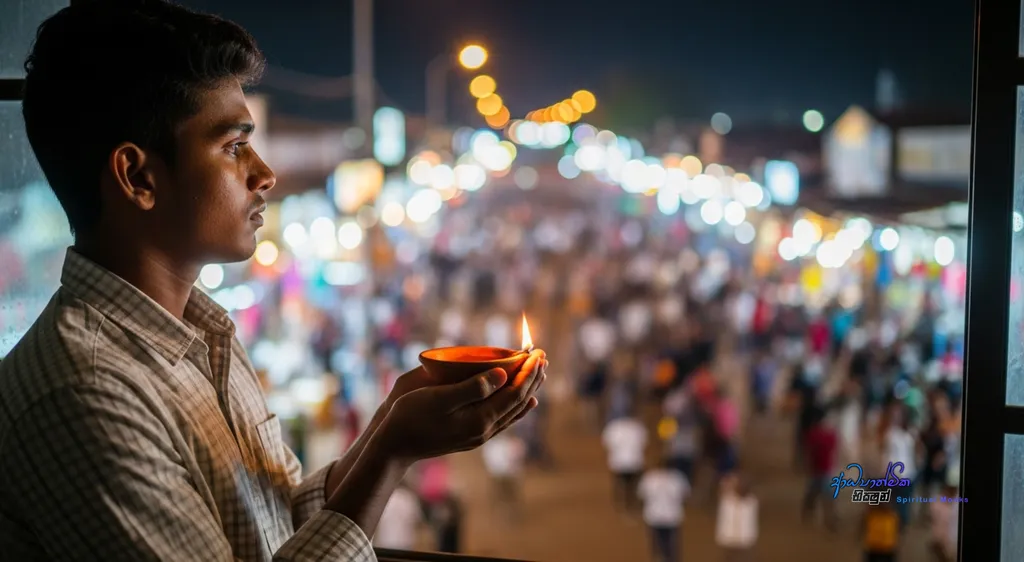
You might sometimes wonder why, despite your best efforts at righteous living, you still face economic hardship and cannot seem to find happiness. You see others who live what you might call a ‘fun’ life, seemingly without a care, and you might think, “No matter how righteously I try to live, it just doesn’t seem possible to get ahead.” You see them with fine cars and houses, beautiful jewelry and clothes, traveling abroad, going on trips with family and friends, singing and enjoying themselves. They might indulge in intoxicants and alcohol, living a life that seems full of pleasure. It’s natural to then look at your own life and feel a sense of injustice. You might think, “I protect the Five Precepts.
I follow the teachings, perhaps even meditating and chanting as we discuss in these articles. I try to live a good life that aligns with the Buddha’s path. Yet, I still face money problems, economic stress, and even family issues.” This feeling is understandable. We have touched upon this topic before in our series of articles about Māra, the tempter, and we encourage you to explore those teachings for a deeper understanding. However, this discussion will approach the issue from a different angle.
Defining an Unrighteous Life in Buddhist Philosophy
Before we go further, we must first understand what unrighteousness truly means. The Buddha taught that for laypeople, the foundation of righteous living is the Five Precepts, or PancaSila. These are the ethical trainings one undertakes to protect.
They are:
- Abstaining from taking life (Pāṇātipātā).
- Abstaining from taking what is not given (Adinnādānā).
- Abstaining from sexual misconduct (Kāmesumicchācāra).
- Abstaining from false speech (Musāvāda).
- Abstaining from intoxicants that cause heedlessness (Surāmerayamajjapamādaṭṭhānā).
If a person does not protect these five precepts, they are living unrighteously. Furthermore, the Buddha pointed out five types of livelihoods that should not be practiced. These are known as the ‘wrong livelihoods’:
- Trading in weapons.
- Trading in living beings (including raising animals for slaughter and selling meat).
- Trading in poisons.
- Trading in slaves or human beings.
- Trading in intoxicants and alcohol.
The Buddha identified those who engage in these trades, or who consistently break the Five Precepts, as people living an unrighteous life. These teachings, given over 2,500 years ago, are just as valid today as they will be in the future. Now, as you look at society, you might see people engaged in these very things, or simply ignoring the precepts, yet they appear to prosper far more than you.
The Visible Reason: The Unstoppable Law of Kamma
When we see unrighteous people enjoying immense wealth and pleasure more than those dedicated to righteous living it’s important not to fall into envy or jealousy. We should not wish them ill. Instead, we should cultivate joy for their good fortune and wish that they receive even more happiness. By doing this, we subdue our own envy and gladden our own hearts.
The key here is to understand the natural law of Kamma (in Pali) or Karma (in Sanskrit), which means intentional action. According to the Buddha’s teachings, the immense prosperity these individuals are experiencing is often the result of powerful wholesome actions, or kusala kamma, performed in previous lives.
Though they may be living unrighteously now, in a past existence they may have performed a great act of generosity. For example, perhaps they offered food to the community of monks (the Sangha) with a mind free from greed, hatred, and delusion. At that moment, their minds were filled with the wholesome roots of non-greed (alobha), non-hatred (adosa), and non-delusion (amoha). The joyful, pure intention behind that act created powerful positive kamma.
The results of such an action may not ripen in that same life. It can carry forward, leading to rebirth in heavenly realms or, as a human, in a wealthy family with abundant resources. What you are witnessing is the ripening of that past good kamma. The merit from a past life is still bearing fruit.
It is crucial to understand that no one can stop the results of someone’s kamma. No government, no king, not even a Buddha or a powerful deity like Sakka, the ruler of the gods, can prevent a wholesome kamma from giving its fruit. The same is true for unwholesome kamma. The Buddha tried to help his cousin Devadatta, who had committed terrible acts, but he could not prevent Devadatta’s kamma from leading him to a woeful rebirth. When the conditions are right, what is meant to come will come, and what is not meant to come will not.
To grasp these deep laws the law of kamma (kamma niyama), the workings of mind and mental factors (citta-cetasika), matter (rūpa), and the ultimate reality of liberation (Nibbāna) one can study the Abhidhamma, the Buddha’s higher teachings. Simple introductions like ‘Abhidharma Margaya’ by the venerable Rerukane Chandawimala Nayaka Thero or ‘Abhidharma Pradipikava’ by Amaradasa Rathnapala can be very helpful. This is a gradual study, to be undertaken slowly and with care.

The Invisible Reason: The Influence of Unseen Beings
Now, let us turn to a more hidden aspect, something we have perceived through years of spiritual experience, through what might be called the ‘spiritual third eye’. This explanation goes beyond past kamma and applies to some, but not all, situations. It is a subtle factor, and one must have developed spiritual insight to perceive it directly.
You may have seen people, sometimes from different faiths, who seem to enjoy life even more than devout Sinhala Buddhists. They travel, enjoy fine things, and live a life of worldly pleasure, sometimes rising from poverty to riches almost overnight. Often, these individuals may not strictly keep the Five Precepts. They might not be causing great harm to society, but their focus isn’t on righteous living. They may not engage in meritorious deeds or follow the Buddha’s path. Yet, they prosper.
In some of these cases, the prosperity is not just from past kamma. It is actively supported by unseen, non-human beings, or amanussas. Often, these are departed relatives who have been reborn in unfortunate states as beings like yakshas (a type of powerful spirit or demon), yakshinis (their female counterparts), or malapreta (a type of hungry ghost). These beings are not in the heavenly realms. They exist in a state analogous to the henchmen of a local politician they aren’t in the main government but have influence on a local level. Some are aligned with deities, but many are not.
These beings have a need to survive and a desire to remain close to their former families. They realize that to stay near their living relatives, they must provide them with what they want: wealth and success. So, they begin to help. Suddenly, your income streams might increase. Your business ventures succeed.
Promotions, money, and vehicles come easily. It may feel like your own skill and effort, and for someone who doesn’t believe in the unseen, that is a natural conclusion. “My talent brought me here,” they think. But behind the scenes, these spirit relatives are influencing the minds of others customers, clients, bosses to favor you. They create an attraction around you to bring you success.

How These Beings Sustain Themselves and The Hidden ‘Pact’
You might wonder why these powerful beings need you if they can manifest wealth. The truth is, they cannot create it themselves. They work by manipulating the world around you. And in return, they feed. The Buddha taught, “Sabbe sattā āhāraṭṭhitikā” all beings are sustained by food. For these beings, their ‘food’ is the unwholesome energy you generate.
- When you consume meat and fish in excess, certain types of spirits feed on that energy.
- When you consume alcohol or drugs, other spirits who crave these substances live vicariously through you, pushing you toward greater addiction. This is why one person may feel intoxicated after a small amount of alcohol, while another needs an entire bottle the latter may be ‘sharing’ it with an unseen entity that has possessed them.
- Some beings feed on filth, drawn to the smells of waste, blood, and decay.
- Crucially, many feed on negative emotions. Anger, hatred, and rage are a source of strength for them. You may recall the story of the demon who sat on the throne of Sakka, the king of the gods. The more the other gods scolded him, the larger and more powerful he grew. But when Sakka instructed them to praise him, he shrank away. The demon fed on their hatred.
- Sensual lust (rāga) is another powerful food source. A spirit may have a lingering attachment or desire for a living relative and feed on the sexual energy they generate.
These beings are often not alone; they work in groups of ten, twenty, or more to exert their influence. They form an unseen ‘team’ that supports your worldly life. They are not giving you a ‘varama’ a divine blessing to become a shaman or healer, as some might think. Their blessing, their ‘varama’, is simply to help their relatives live a materially successful life so they can stay close and feed.

The Spiritual Test: Is Your Success from Merit or from Spirits?
Here is how you can begin to discern whether your success stems from your past wholesome kamma or from the intervention of these unseen entities. Try to shift toward righteous living. See what happens.
Start to perform meritorious deeds (puñña kamma). Make a donation to a children’s home, offer flowers at a sacred site like the Ruwanwelisaya stupa, invite monks for a meal offering, or simply make an offering at a Bodhi tree. The moment you begin to engage in these wholesome, spiritual acts, you may notice a change. Suddenly, your income begins to drop. The success that came so easily starts to disappear. Why? Because these unwholesome beings cannot tolerate the pure, positive energy of meritorious deeds. They think, “If he continues on this path, we can no longer depend on him, we cannot survive near him.” To discourage you, they withdraw their support.
You might go to a temple and receive a blessed thread (pirith noola) to wear on your wrist. While you wear it, business may falter. As soon as you remove it, things return to normal. This is a clear sign. The intelligent person will understand what is happening.
If you move toward righteous living and your prosperity continues or even grows, it is a strong indication that your success is built on the solid foundation of your own past good kamma. But if it crumbles, you know that your success was not entirely your own. The sudden increase in wealth you experienced was not from your past merit alone; the foundation of your past merit provided you with enough to live, but the ‘boost’ came from this other source. When you start generating spiritual merit, these beings can no longer co-exist with you. Your aura becomes too bright and powerful for them. They must retreat, and with them goes the artificial success they provided.

The Ultimate Danger: The Trap at the Moment of Death
While it may seem beneficial to have unseen helpers, you must understand the grave danger. These beings will not support you forever. The moment an opportunity arises a slip in the bathroom, a car accident they may orchestrate your demise. Their goal is to be present at your final moments. As you are dying, they will appear before you. Your final thought-moment, the cuti citta, will grasp onto their image.
This final thought determines your next rebirth. By ensuring they are the object of your mind at death, they pull you into their ‘team’. You will be reborn among them as a demon or a ghost, trapped in a state of suffering. The precious human life you had, with its rare opportunity to practice the Dhamma and find liberation, will be lost, and you will fall into the four lower realms (the apāya). This is a tactic often employed by Māra, the embodiment of evil and delusion, to keep beings trapped in the cycle of suffering (saṃsāra).
This is why unrighteous living is so perilous. The pleasure it provides is limited to this single life. In the next life, to put it simply, you will be ruined. That temporary success is a karmic dead end. The same applies to those who gain wealth through deceit, fraud, and corruption. Their success in this life is real, but the karmic consequences are severe. Those close to such people know the truth of how their fortune was made whether righteously or unrighteously.
Your Life, Your Choice: Embracing a Path of Lasting Peace
Therefore, you must make a conscious choice. Do you want to continue living with the support of these unwholesome entities, or do you want to rely on the strength of your own kamma and your commitment to righteous living?
The choice may be difficult. When you turn towards the Dhamma, these beings may retaliate. They might cause arguments in your family or financial problems to punish you for your meritorious deeds. They will try to steer you away from wholesome friends and push you towards those who indulge in unwholesome habits. They try to control who you associate with, breaking your connections with righteous people by showing you their faults or causing misunderstandings.
It is also important to know that there are different kinds of non-human beings. Not all are powerful. A poor person who breaks all the precepts may not become wealthy because the spirits attached to them are weak. Conversely, there are also righteous spirits who support those on the good path. As described in the Atanatiya Sutta, there are both benevolent and malevolent non-human beings. A righteous spirit might cause the rice pot to spoil if the evening offering of light to the Buddha is neglected, gently nudging the family back to their practice.
But the beings who support an unrighteous life are never the wholesome kind. They are feeding on you, living in your body, possessing your mind, and controlling your life for their own survival. Even while they give you wealth, you are their prisoner.
With this understanding, you must use your wisdom (paññā) to decide your future. Will you choose the temporary pleasure of this life, bought at the price of your future spiritual well-being? Or will you choose the path of righteous living, which builds wholesome kamma, secures good future lives, and leads you steadily towards the end of all suffering Nibbāna?
The decision is yours. In a future article, we will discuss how to live righteously and how to garner the support of wholesome, unseen forces on your spiritual journey. For now, reflect on these teachings. May the power of the Buddha, Dhamma, and Sangha help you to understand these matters clearly, to live a life of virtue in both practice and principle, and to develop your own wholesome strengths without reliance on unwholesome aid. May your own good kamma flourish and support you on your path.
We invite you to walk this path with us. Read our teachings, and most importantly, apply them practically in your own life. as you practice, questions will naturally arise. Please feel free to share your experiences and questions in the comments below, via email or contact form. I will do my best to offer guidance in future talks based on your progress. For now, begin this practice with an open heart and a mind free from expectation. Cultivate it correctly, and may you find the clarity and peace you seek.
Thank you for joining us. We hope this blog will be of great benefit to your spiritual journey.
May you all be well and happy.
May the blessings of the Triple Gem be with you all!.


