


Categories: Maintaining Mindfulness
May the blessings of the Triple Gem be with you all. Welcome. In our ongoing series of teachings, we have often explored the practice of mindfulness. Today, we hope to deepen that understanding by focusing on the very heart of our experience: the mind. Many of you have been practicing and are beginning to see the truth of these teachings for yourselves. You are starting to confirm, through your own experience, the practical and timeless wisdom of the Buddha.
This path is open to anyone, regardless of nationality, religion, or age. It is a practical path, which is why the Buddha’s teachings are called a practical Dhamma. The foundation of this entire practice, the root of every experience you have, is what we call consciousness, the mind, or awareness. In Pali, these are known as Viññāṇa, Sitha, or Manasa. Though we use different words, they all point to the same fundamental thing. This is the first crucial point to grasp.

The Mind: The Sole Receiver of All Experience
Consider this: when you feel immense joy, or even a little happiness, where is that feeling experienced? It is felt in this very consciousness, this mind. Likewise, when you feel deep sorrow or a subtle sadness, that too is experienced only by the mind. All feelings, all sensations, are registered in one place: your mind. Nothing is felt outside of it.
We interact with the physical world through our five senses: the eye, ear, nose, tongue, and body. These are like five doorways through which data from the external world flows. Sights, sounds, smells, tastes, and touches are all gathered and brought into one central processing unit, the mind, or consciousness. Our entire life, our very existence as a human being, is sustained by this constant flow of data. Just as a vehicle needs fuel to run, our mind requires this sensory input to maintain its journey through life. Without this ‘fuel,’ the journey cannot continue. This is a fundamental truth you must understand.

The Inner World: When the Senses Rest
Through your senses, you are constantly gathering experiences. The eyes take in forms and colors. The ears perceive all kinds of sounds, those you like and those you dislike. The nose takes in pleasant and unpleasant odors. The tongue experiences sweet, sour, and other tastes you may or may not enjoy. The body feels physical contact. All of this information arrives in your mind.
But what happens when these five senses are not actively gathering new information? Imagine you are lying in bed with your eyes closed, resting quietly. In these moments, your mind does not stop. It turns inward and begins to process what it has already stored. You start to recall the past: memories from your school days, your university years, your career, past relationships, foods you’ve eaten, everything comes flooding back into your awareness.
And it’s not just the past. Your mind also projects into the future. You make plans: ‘I need to buy this kind of car,’ ‘I want to build a house like that,’ ‘I hope to get married and have children,’ ‘My wedding should be this way.’ You think about your children and grandchildren, about traveling abroad. People from all walks of life, according to their intelligence and education, plan their futures. And where does all this planning, this remembering, take place? It all happens within your own mind, your consciousness. You can see, then, that the mind is the foundation of everything.

Mind vs. Brain: A Clash of Worldviews
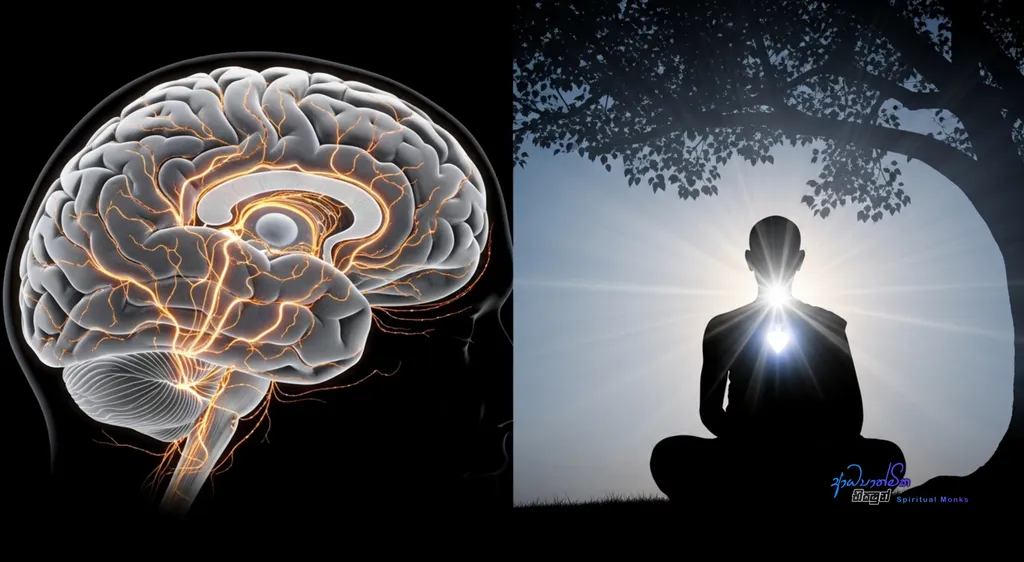
Now, there are scientists, particularly in the West, who hold a materialistic view. They do not have a deep understanding of consciousness, the mind, or awareness as we discuss it. They argue that such a thing doesn’t exist independently; they claim that all our thoughts and experiences are simply functions of the brain. However, the Buddha’s teaching, especially as detailed in the Abhidhamma, the higher psychological and philosophical part of the scriptures, explains that the mind is the true planner and controller.
According to the Abhidhamma, the brain is an organ that governs the physical body, connecting the nervous system and the heart to control movement. It is a vital component, but it is not the ultimate controller. For the brain to function, the mind, or consciousness, is essential. Think about a person who has passed away. Their brain is still physically present in their body. If the brain were the sole source of life and consciousness, shouldn’t that person be able to live, to act, to fulfill their desires? They cannot. Why? Because what we call death, from a deeper perspective, is the departure of consciousness, the mind, from the physical body.
This is something that Western science, focused on the physical, cannot detect. It can only be understood by those who have developed their minds. Western science develops external, physical things. But the sages, the Buddhas, the enlightened ones of the East, they developed their inner world, their own minds. This is the crucial difference to grasp. While Western scientists develop the external, our spiritual ancestors developed the internal.
The Universe Within: The Path of Inner Discovery
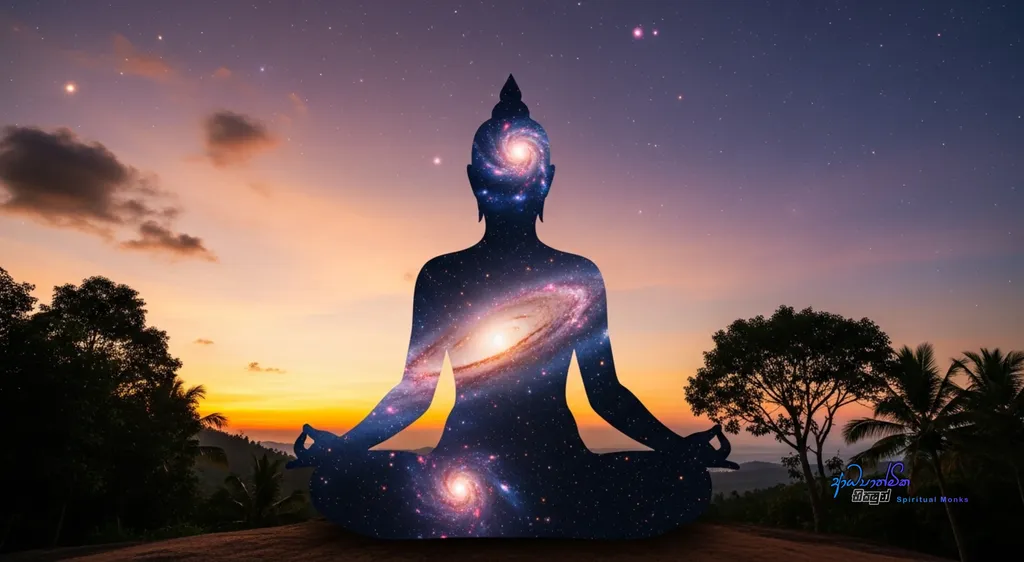
When you were conceived, it was your mind, your consciousness, that arose first, not your physical form. Therefore, if a person begins to investigate this very mind, they gain the ability to understand the nature of the entire universe, how it exists, how it functions, and how it is formed. It is possible to access this information without using the five physical senses, simply by developing the mind.
This is precisely what the Buddha did. He never enrolled in a university to earn a degree or study externally. Through the power of his accumulated virtues (pāramitā) over countless lifetimes, he focused on one thing: developing the mind. By cultivating his spirituality, he came to understand the universe, nature, and the ultimate truth of existence. This shows us that the mind is the foundation for everything. If we ignore this inner exploration and spend our entire lives investigating the external world, we waste our precious lifespan. Often, we might start a project, like creating a new product, but die before it is finished. We see and hear of such stories all the time, both today and in the past.
A Balanced Path: Embracing Both Inner and Outer Wisdom
Now, we are not saying that technology or Western science is bad or that we should reject it. The key is to avoid extremism. We should not fall into the trap of thinking one way is the only right way. We must become balanced individuals. Technology is necessary for people in this world. Not everyone will feel the calling to develop their mind or investigate consciousness, just as not everyone can become a Western scientist. People follow their own inclinations and interests. We are not attacking any particular path.
What we are suggesting is this: if you truly wish to understand the universe and the nature of reality, the easiest and most direct path is the development of your own mind. And as we’ve been discussing, the foundation for everything is this mind, this consciousness. The power of the mind is the key.
The Mind’s Grip: Desire, Aversion, and Daily Life
Look at your everyday life. When you do your daily work, your actions are driven by the desires that arise in your mind. If you feel a craving for your favorite food, the thought to eat it arises in your mind first. Your mind decides, ‘I must eat this now.’ You might even overeat, driven by the mind’s desire. You eat until your stomach can’t take any more, and only then do you stop, even if the mind’s craving, which we might call greed (perēthakama), is still strong. The body’s limit forces the mind to pause.
After you are full, even if someone offers you the most delicious food, you will refuse it. You’ve had enough to the point of feeling repulsed. You might even say, ‘I won’t eat that again until tomorrow.’ A common example in Sri Lanka is kottu. People crave it intensely. But after eating a large portion, many say they won’t want it again for a while. Yet, the next day, the mind often asks for it again. Notice how the mind is never permanently satisfied. The aversion is only temporary. This simple example shows, once again, how the power of the mind is central to all your experiences.
The Source of Love, Hate, and All Emotions
This principle applies to everything. Nothing exists without the mind as its source. When you love someone, that love is rooted in the mind. When you hate someone, that hatred is also rooted in the mind. When you show kindness, compassion, and loving-kindness (mettā), that too originates in the mind. If you feel envy or jealousy towards someone’s success, if you can’t bear to see them prosper, where is that feeling of intolerance located? It is in your mind.
Think about it wisely. For a moment, imagine you could separate your mind from your physical body and set it aside. Would your physical body feel that jealousy? If the body felt it, then dead bodies should be unable to bear the success of their enemies. But that doesn’t happen. The anger and intolerance you feel when you see someone else succeed arise in that very thing we call by three names, mind, consciousness, awareness, not in the physical body. From these examples, anyone of any age or background can understand: the mind is the foundation of everything. The power of the mind is behind every single thing you do.
The Buddha’s Core Teaching: Mind Precedes All Things
This is why the Buddha began the Dhammapada, a famous collection of his sayings, with the verse: “Manō pubbangamā dhammā…” which means, ‘Mind precedes all phenomena…’ Everything you have thought, said, and done from the day you were born until this very moment has been preceded by the mind. There is nothing that did not originate in the mind. This is the truth to be understood.
This specific teaching, that you are the creator of your own experience through the power of your mind, is something that, apart from the Buddha, no other religious leader has stated so clearly. Most other paths attribute creation and control to an unseen divine being. But in Buddhism, if you study the scriptures (the Tipitaka) and, more importantly, put the teachings into practice, you will discover the truth of the Buddha’s words: “Cittena nīyati loko”, ‘The world is led by the mind.’
Our Collective Mind, Our Shared World
According to the Buddha’s teachings, the state of human minds even influences the physical world, the growth of trees, the cycles of the sun and moon, and the very existence of the Earth. A simple way to see this is to look at the world today. Because of the jealousy, anger, and hatred in people’s minds, wars erupt. Look at the immense damage these conflicts inflict upon nature. Are we not destroying our own world with the power of our minds?
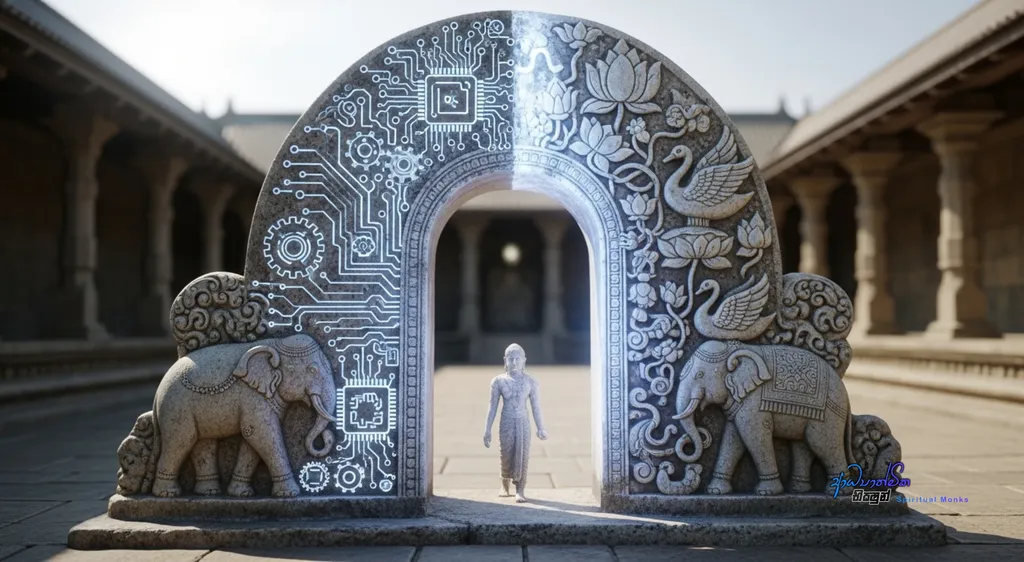
A person can be highly educated, even a brilliant Western scientist, but if they lack wisdom (paññā), their knowledge can be destructive. Wisdom is different from education. Without wisdom, a scientist might create a nuclear weapon capable of destroying an entire country in an instant. Such creations are born from ignorance about the true nature of existence. Our ancestors may have had the intelligence to create such things, but they had the wisdom not to, knowing it would lead to the world’s destruction. If they had created them, we would not be here today.
People often dismiss past civilizations as being from a ‘stone age,’ but this is a mistake. They had their own technology, one that was in harmony with nature, not one that sought to dominate it. Today’s technology, driven by the cravings in our minds, by the jealousy and hatred between nations, often works against nature. The two World Wars were born from the human mind, and a third may yet arise from it.
Reflect on this: isn’t everything, good and bad, happening based on the thoughts arising in human minds? This is how we destroy our own planet. For a deeper understanding, you can read the Aggañña Sutta in the Dīgha Nikāya, where the Buddha clearly explains how the world evolves according to the minds of its inhabitants.

The Mind’s Journey: From Hell Realms to Liberation
The central message I want to convey today is that everything you do, say, and think until the moment of your death is rooted in the mind. The very existence of this world depends on the mind. It is this very mind that causes you to be reborn in the four lower realms of suffering (Satara Apāya): the hell realm, the realm of hungry ghosts, the animal realm, and the realm of demons. It is also this mind that leads to rebirth in the human world, whether as rich, poor, or middle-class. It is this mind that leads to rebirth in the six heavenly realms, and even in the twenty Brahma realms.
All these thirty-one planes of existence together form what we call a world-system (sakvala). Our particular world-system is called a ‘propitious’ one (magul sakvala) because it is a place where Buddhas can arise. The Buddha taught that there are countless other world-systems with other human worlds.
Some are more technologically advanced than ours, and some are less, just as on our own planet, countries like America or Japan are more advanced than others. However, the beings in those other world-systems do not have the opportunity to meet a Buddha. To attain liberation (Nibbāna), they must first aspire and perform meritorious deeds with the wish to be reborn here, in this propitious world-system. Contemplate how fortunate you are to have been born here.

The Trap of Wrong Views and the Inconceivable Cosmos
However, even in this fortunate realm, if you hold firmly to wrong views, for example, denying the law of action and its results (kamma), you will not be reborn in the lower realms of this world-system, but in the lower realms of other, less fortunate world-systems, falling even deeper into suffering. Therefore, the Buddha’s constant advice was to purify the mind. Do not trust this mind blindly, for it is the very thing that can lead you to the lowest hells.
The Buddha also taught that the full extent of the cosmos is an ‘inconceivable’ topic (acinteyya). You can never finish exploring it. No matter how many space agencies like NASA we have, we can never map it all. Our lives will end before the task is complete. It is a pointless pursuit. Periodically, our world itself goes through cycles of destruction and re-creation, and we have to start all over again from a primitive state.
The wise path is to develop the technology we need to live, but to use our limited time here to cultivate our inner, spiritual lives. This realization, however, only comes to those who have some faith and understanding of the Buddha’s teachings. Others will never see the exploration of external worlds as a waste of time. Do not waste your energy arguing with them. If you sense the truth in this, your task is not to debate, but to study your own mind.

The Practical Path: How to Study Your Mind
So, how do you practice this? As we have explained in our series of articles on establishing mindfulness, you must learn to watch your mind.
- When you feel love for someone, observe your mind.
- When you feel hatred for someone, watch your mind in that moment.
- When that hatred prompts you to speak harshly, to slander, lie, or use idle chatter, watch your mind and see what is about to happen.
- When that anger escalates to the point where you want to physically harm or even kill someone, watch your mind in that moment.
- Conversely, when your mind inclines towards good speech, refraining from lying, slander, or harsh words—watch your mind then, too.
- When you are about to engage in harmful physical acts like killing, stealing, or sexual misconduct, practice watching your mind.
By observing your mind in all these situations, you will begin to understand a great deal about yourself, the world, and the nature of reality. You will truly get to know yourself. And as you see your own defilements and learn to reduce them, you will begin to understand the behavior of others who are still driven by them. You will be able to ‘read’ their characters, not through magic, but because you were once like them and have gained insight through practice.
The Wisdom Beyond Appearances
This is the practical result of this work. You don’t need to study special sciences to read character; it comes naturally as you purify your mind. Understand with great emphasis: those who have developed their minds can read your character from A to Z. They don’t need special psychic powers like mind-reading (paracitta-vijñāna ñāṇa), though that is also a potential development. Their insight comes from the experience of having cleansed their own defilements. So, never underestimate a person who is developing their mind. They may be young or old, but you should never try to ‘measure’ them. To do so is a sign of our own ignorance and foolishness. The Buddha’s entire teaching was a call to study this very mind.
You Are the Architect of Your World
Reflect on your life. Was not the design of your house first built in your mind? When you buy a car, does the entire process not follow the intentions in your mind? Every single thing you have created, from the decision to build a single-story or two-story house to the thought of having a child, first arose as a thought in your mind. If you examine your life, moment by moment, you will see for yourself the truth of what the Buddha and the enlightened ones realized 2,600 years ago.
Practice Over Offerings: The True Inheritance
This is why we constantly emphasize that if you get stuck only on material offerings (āmisapūjā), only offering flowers at the Ruwanwelisaya stupa, only donating requisites, whether you are a monk, a nun, or a layperson, you are not on the Buddha’s true path. The Buddha always praised the one who practices the teachings (patipatti), not the one who is trapped in material ritual. He clearly stated in the scriptures that the true heirs of his legacy are those who follow the path of practice, which is superior to the legacy of material offerings. This is a point that is sadly de-emphasized in modern Buddhism.
Again, the Buddha never said to stop making offerings. They should be done. But the greater weight, the greater opportunity, must be given to the path of practice. And even when you make an offering at a stupa or practice chanting at home, what is the root of that action? It is your mind.

The Mind: The Source of All Attainments and Liberation
When you are afraid of unseen spirits or fearful of another person, it is your mind that feels fear. Fear exists in certain parts of the mind, which you can discover through direct, practical investigation. The Buddha’s teaching is clear: the root of everything is the single reality we call mind, consciousness, or awareness.
This energy can only be seen with wisdom, not with a ‘third eye’ or the divine eye (dibba-cakkhu). In fact, all the supernormal powers, the five kinds of higher knowledge (abhiññā) like the divine eye, divine ear, reading others’ minds, remembering past lives, and psychic powers, are simply facets of the developed mind.
The eight meditative absorptions (jhānas) are also facets of the developed mind. They are all attained through the mind. Even the ultimate goal, Liberation or Nibbāna, must be realized through your own mind. There is no other way. Nibbāna is not some strange, separate thing; it is the final and complete understanding of the nature and activities of your own mind, made possible by the tool of mindfulness (sati).

Your Path Forward: A Call to Courageous Practice
When you understand this, you will no longer be afraid of experiences that arise in meditation. Many people get scared of things they see, feel, or perceive. But if you can remember, ‘This fear, this sensation, this vision, it is all happening in my mind,’ and then study it, the fear will dissolve. You will become a fearless person with the strength and personality to face anything.
Therefore, whether in meditation or in daily life, through all the ups and downs, gain and loss, fame and disgrace, praise and blame, pleasure and pain (the eight worldly conditions), whenever anything enters your mind, your task is the same: study your mind. Watch what happens to your mind because of that experience. This is what is required. By doing this, you will find the path to spiritual development.
Attaining meditative states and higher knowledge will become easy. Overcoming the five hindrances will become easy. Eradicating the defilements, destroying craving and clinging, and walking the Noble Eightfold Path, all of it will become possible for you. You will gain the ability to understand profound teachings like Dependent Origination (Paṭiccasamuppāda).
Begin Today: Your Spiritual Journey Awaits
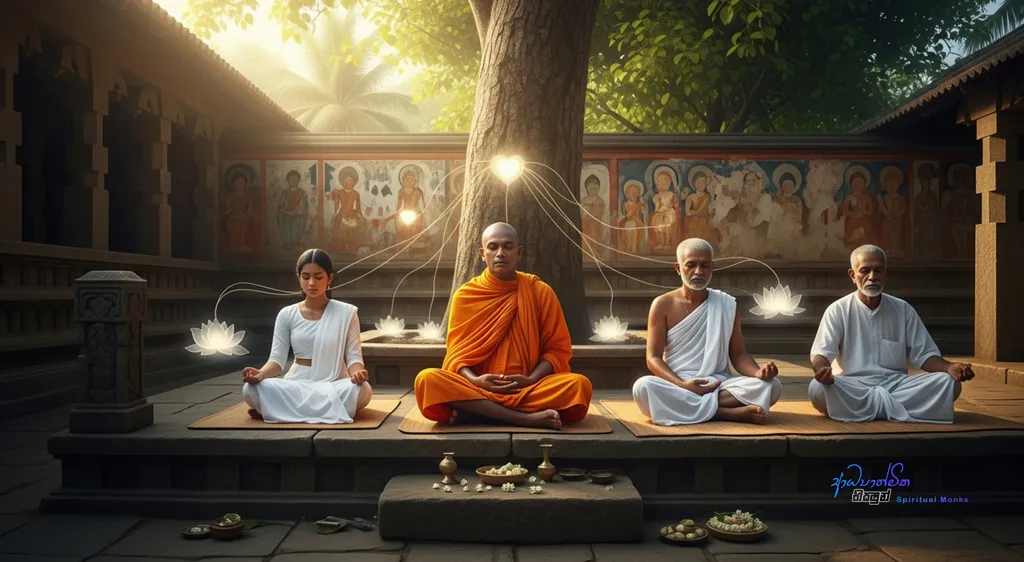
So, from this day, from this very moment, begin. Establish mindfulness and pay attention to every action of your body, every word from your mouth, and every thought that arises in your mind, whether about the past or the future. Practice this little by little. You can use the resources we have shared, such as our series of articles on establishing mindfulness and the practical application of the Four Foundations of Mindfulness (Satipaṭṭhāna), to guide you. If you do this, your age, race, or religion does not matter. Your mind will develop, and that is what spiritual progress is.
Many people talk about creating a ‘spiritually developed society,’ but they don’t truly know what it means. They themselves are often filled with jealousy, anger, and hatred. In this degenerate age, it is valuable to find teachers who are at least walking the path, even if they are not fully enlightened.
Take what is valuable from anyone who can help you develop your mind. You may be in a difficult situation, working under people who harm you. Do not wait and think, ‘I will develop my mind only after I leave this place.’ You might die before you get the chance. Use your current circumstances to develop your mind. Focus your attention on this one task: the cultivation of your mind.
The methods we have taught can be practiced anywhere, on a bus, at work, at home. If it were not possible, the Buddha would not have taught it 2,600 years ago, and we would not be teaching it now. Have faith in this and begin your spiritual development. You will find that this practice supports all other wholesome activities, from concentration meditation (samatha) to the development of wisdom.
Wisdom cannot be gained from education alone; it comes from direct experience and correct practice. Make a firm determination and start today with renewed energy. Practice your daily chanting and rituals, but also engage in the development of mindfulness. The one who balances all these aspects will surely create a rich spiritual life.

Trust Yourself: The Mind is the Path and the Goal
Finally, I want to tell you this: trust yourself. Do not place your trust in anyone else. Trust the understanding you gain from these teachings and put it into practice for yourself. Through this journey, you will realize with absolute clarity that the mind is the forerunner of all things. From our time in the womb to the moment of death, and throughout the long journey of rebirths (saṃsāra), the one thing that has been fundamental is our own mind.
Therefore, the understanding of all things and the ending of all suffering must be accomplished within this very mind. This is the message we wish to give you through this teaching. We bless you that you may be able to accomplish this.
We invite you to walk this path with us. Read our teachings, and most importantly, apply them practically in your own life. as you practice, questions will naturally arise. Please feel free to share your experiences and questions in the comments below, via email or contact form. I will do my best to offer guidance in future talks based on your progress. For now, begin this practice with an open heart and a mind free from expectation. Cultivate it correctly, and may you find the clarity and peace you seek.
Thank you for joining us. We hope this blog will be of great benefit to your spiritual journey.
May you all be well and happy.
May the blessings of the Triple Gem be with you all!.


