


Categories: Other Meditation Teachings
May the blessings of the Triple Gem be with you all!
Today, we will explore a question that many of you on a spiritual path may have: why do some people experience profound results from their spiritual practice almost immediately, while for others, progress seems slow? As you begin to develop your inner life, you may hear of or even experience certain fruits of this practice. This is a natural part of the journey, and understanding its mechanics can bring great clarity and encouragement.
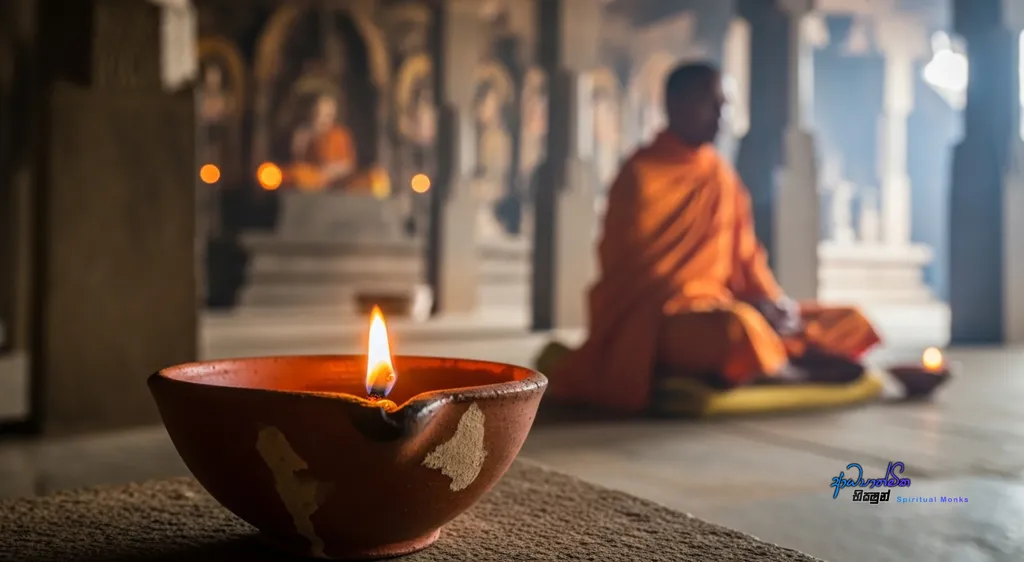
The Fruits of Practice: Higher Knowledges and Meditative States
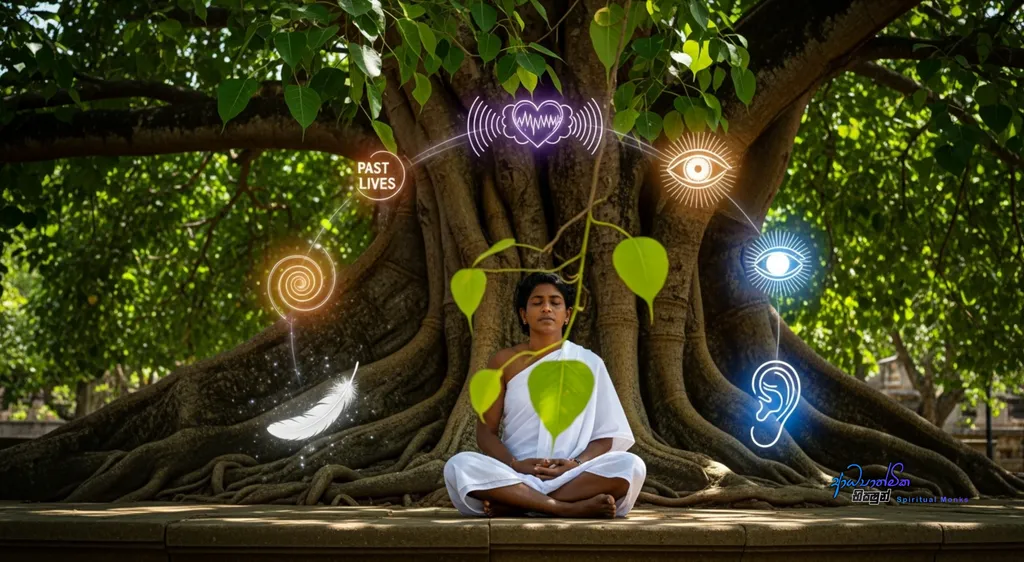
In the Buddha’s teachings, particularly within the deep psychological framework known as the Abhidhamma, we learn about remarkable spiritual attainments. One category is the Pañca-abhiññā, or the Five Higher Knowledges. These are profound psychic abilities that can arise from deep meditation:
- Dibba-cakkhu: The divine eye, or the ability to see beings in other realms.
- Dibba-sota: The divine ear, or the ability to hear sounds not perceptible by ordinary hearing.
- Paracitta-vijānana: The ability to know the minds of others.
- Pubbenivāsānussati-ñāṇa: The knowledge of recalling past lives.
- Iddhividha-ñāṇa: The knowledge of psychic powers, such as walking on water or creating forms.
Additionally, there are deep states of meditative absorption known as the Jhānas. These are eight states of profound concentration, a union of form absorptions (rūpāvacara jhānas) and formless absorptions (arūpāvacara jhānas), collectively called the Aṭṭhasamāpatti.
If a person develops any of these abilities, it is a sign they have a strong potential to attain the fruits of the path, the stages of enlightenment. It is not necessary to have all five Higher Knowledges or all eight Jhānas. Having one, two, or none at all does not ultimately prevent one from reaching liberation. However, the emergence of such results indicates a deep-seated potential for awakening within this very life, regardless of one’s background, be it race, creed, or gender.
The Echo of Past Lives: Why Your Effort is Never Wasted
So, why do some people achieve these states with relative ease, while others must strive for a very long time? The answer lies in the vast journey of our existence, the long cycle of rebirth known in Buddhism as Saṃsāra. Individuals who experience rapid spiritual progress in this life have almost certainly engaged in dedicated spiritual practice in their past lives. They have meditated, cultivated wisdom, and strived for these very goals before.
Even if they did not achieve full liberation or deep meditative states in those past lives, the effort, the intention, the kamma of that spiritual practice was not lost. That accumulated effort becomes a powerful force that ripens in this life. This is why some individuals, even young children, may naturally open their ‘third eye’ or display psychic abilities without any formal training. It is the result of immense effort from a previous existence finally bearing fruit. Their success is not random; it is the harvest of seeds planted long ago.
Carrying the Seed of Enlightenment: The Jāta Sotāpanna
There are people living among us today who are what we call Jāta Sotāpanna. This refers to someone who, in a previous life, listened to the teachings of a Buddha or an enlightened being, practiced meditation, and attained the first stage of enlightenment, known as Sotāpanna, or ‘Stream-enterer’.
Such a person is destined to attain full liberation within a maximum of seven more lifetimes in the human or heavenly realms. If they are born as a human in this life, they carry that awakened seed within them. They are already on the irreversible path to Nibbāna.
This illustrates a fundamental truth: any spiritual practice we undertake creates a powerful momentum. This practice is a form of wholesome action, or kusala. It is a training of the mind that accumulates over lifetimes, and its results are certain to manifest when conditions are right.
When Progress Feels Slow: Don’t Lose Heart
A question I often hear is, “Venerable Sir, I have been practicing for a year, but I see no results. Why is this?” We have previously explored various immediate reasons for a lack of progress in meditation, such as flaws in one’s ethical conduct (sīla) or lingering attachment to sensual pleasures. You can explore those teachings to see if any of those obstacles are present.
However, the most significant factor is often the lack of accumulated spiritual practice from past lives. If you are starting fresh in this lifetime, it may take your entire life of dedicated effort just to cultivate a certain level of concentration (samādhi). But do not be disheartened! I say this with certainty: you can absolutely develop a stable state of concentration. Even if you do not attain a full Jhāna, the effort is immensely valuable.
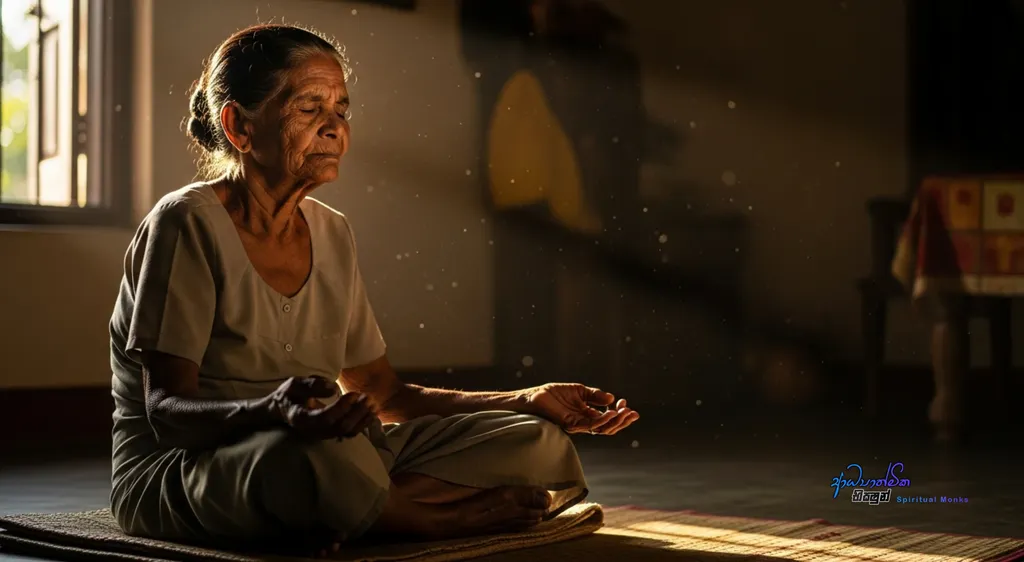
To feel despair and think, “Oh, I haven’t practiced in the past, so it’s useless now,” is a grave mistake. That thinking will only ensure your future lives follow the same pattern. Do not be foolish or stubborn. The effort you make today builds the foundation for tomorrow, whether that ‘tomorrow’ is later in this life or in a life to come. Even if you are old, sick, or bedridden, if you can hear this teaching and apply your mind to it, you are planting powerful seeds.
The Universal Power of Habit and Practice
This principle of continuity applies to both negative and positive habits. If you continually practice lying, that habit follows you through Saṃsāra, bringing its painful consequences. The same is true for any unwholesome action. Conversely, if you incline your mind towards what is good, that too becomes a powerful current. This is why the Buddha urged us not to stop at just material offerings (āmisa-pūjā) but to engage in the practice of the path (paṭipatti). This is the practice that truly develops the mind and leads to liberation.
This path of spiritual practice is universal. You may be Muslim, Catholic, Hindu, or Buddhist. These labels are not a barrier. Do not think about your age or limitations. Simply engage in the training. It will be of immense value to you on your long journey. The effort you make now is the greatest gift you can give your future self.
The Lasting Power of a Single Insight: The Story of Cūḷapanthaka
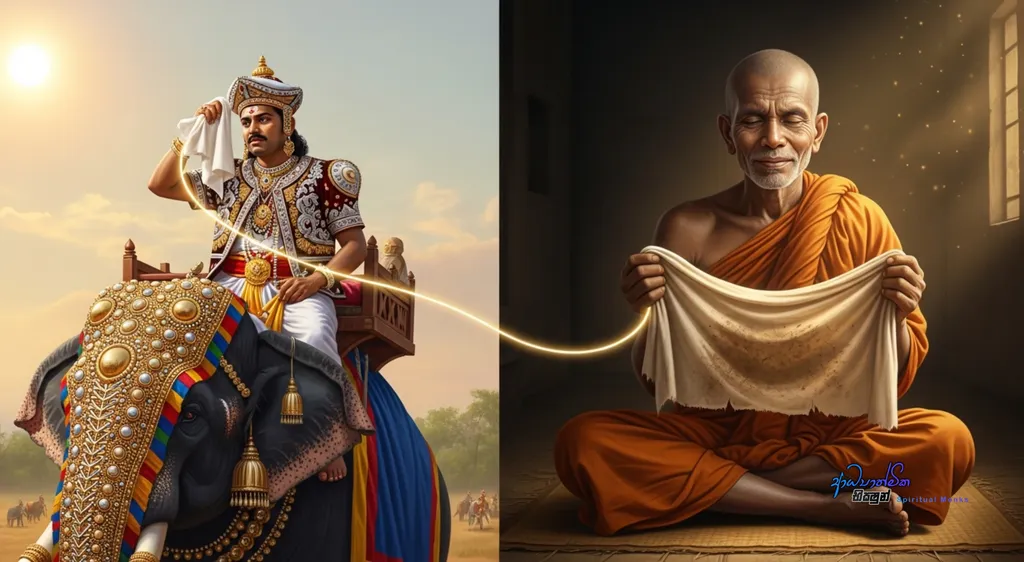
There is a beautiful story that perfectly illustrates this point: the story of the enlightened monk, Cūḷapanthaka. The Buddha gave him a single, simple meditation object: a clean, white cloth, magically created, with the instruction to wipe things while contemplating, “Taking on dust… taking on dust.” As Cūḷapanthaka cleaned, he saw the pure white cloth become stained and dirty.
At that moment, he realized with profound wisdom, far deeper than mere words, “This is impermanent! It is changing, its nature is to fade.” Seeing this truth of Anicca (impermanence) so clearly, he instantly attained full enlightenment, becoming an Arahant, and simultaneously gained psychic powers from his past efforts.
Why did the Buddha give him this specific task? Because with his omniscient mind, the Buddha saw a past life of Cūḷapanthaka. In that life, he was a king riding an elephant on a hot day. As sweat beaded on his forehead, he took a white cloth and wiped his brow. He noticed the cloth becoming discolored and briefly reflected, “All things are subject to change.” That single, fleeting moment of insight into impermanence was a powerful seed of wholesome kamma.
The Buddha’s instruction in this life was designed to awaken that dormant memory hidden deep within his consciousness, bringing that past spiritual practice to fruition. This is why it is said that these memories are not in a ‘subconscious’ or ‘unconscious’ mind as modern psychology might label it, such concepts are not found in the Abhidhamma. Rather, they are embedded in the stream of consciousness itself.
The Supreme Merit of Cultivating Wisdom
This story reveals a profound truth the Buddha taught. The merit of offering a great dana to the monastic community or even conducting a grand robe ceremony is immense. But even more powerful is the act of spreading loving-kindness (Mettā) to all beings in all ten directions, seen and unseen, even for a single second. And even more powerful than that, the Buddha said, is to contemplate the characteristic of impermanence (Anicca) for a single moment. This is the practice that directly cultivates wisdom (Paññā).
Imagine you reflect on impermanence for one minute today. You do it again in the next human life, and for ten lifetimes you cultivate this habit. When you eventually meet a Buddha, he will see this accumulated practice with his all-knowing wisdom.
He will then give you a teaching that specifically triggers this deep-seated understanding. Upon hearing it, your mind will settle into concentration, you will see the truth for yourself, and you will attain one of the stages of enlightenment, perhaps becoming a Stream-enterer (Sotāpanna), a Once-returner (Sakadāgāmī), a Non-returner (Anāgāmī), or a fully liberated Arahant, ending the journey of Saṃsāra forever. This habit of practice is the key. Without it, no amount of good deeds alone can lead to Nibbāna.
Beyond Offerings: Why Practice is More Important Than Prayer
There is a vital distinction to be made. If your spiritual life consists only of material offerings with the prayer, “May I enjoy sensual pleasures (pañcakāma) in every life,” you create a specific kind of kamma. Imagine you are reborn as a wealthy, powerful person during the time of a living Buddha.
You have cars, homes, and every luxury you could desire. You might feel inspired to make offerings to the Buddha, but the thought of practicing to attain Nibbāna might never even cross your mind. You would be too busy enjoying the very sensual pleasures you wished for, and you would miss the rarest of all opportunities: to hear the Dhamma from a Buddha and practice for your own liberation.
Therefore, perform wholesome acts of generosity, for their fruit will surely come to you. But do not stop there. You must engage in the actual spiritual practice of calming the mind (samatha) and developing insight (vipassanā). It is those who have done this in the past who quickly attain higher knowledges, Jhānas, and the fruits of the path in this life.

The Three Roots of Awakening and Navigating the Modern World
In the Abhidhamma, there is a term for those who make rapid progress: they are said to have a Trihetuka Paṭisandhi, or ‘rebirth with three wholesome roots.’ This means they were born with a mind conditioned by non-greed (alobha), non-hatred (adosa), and non-delusion (amoha) due to their past spiritual practice. They have not only performed generous acts but have actively worked to subdue defilements through meditation.
Others may be born with a Dvihetuka Paṭisandhi, with only two roots (non-greed and non-hatred), having focused more on offerings without developing wisdom to overcome delusion. They must strive harder to see results. During the Buddha’s time, many beings with the ‘three roots’ were present, which is why so many attained enlightenment.
Today, the world is in a state of decline. The influence of Māra (the tempter), attachment to sensual pleasures, and technological distractions are all increasing. This makes it harder to practice. Even beings in heavenly realms become fearful of being reborn here, worried they won’t find a proper teacher and will lose their way. This is why your personal spiritual practice is more crucial than ever.

Your Unwavering Commitment: The Path Forward
So, what is the practical takeaway from this teaching? Do not be discouraged. Do not listen to those who say that enlightenment is impossible today. Do not waste time trying to figure out if you have two wholesome roots or three; it is a fruitless search. Simply engage in the spiritual practice.
If you experience a sign of light or a state of concentration, that is a wonderful result of your efforts. But many are still taking the first steps, and that is perfectly fine. The reasons, as we’ve discussed, are past habits and present obstacles. The purpose of this teaching is to give you the courage and right understanding to continue with diligence.
We who are monks do not get discouraged. We know that this effort is never wasted. So, every morning, we engage in our practice. You too, no matter how busy you are with work or family, can do the same. Make time for your spiritual practice. Your life is uncertain; it could end in a moment from an accident or sudden illness.
When death comes, it does not care about your responsibilities. You came alone, and you will go alone. Your loved ones will grieve, but life will go on. Therefore, while fulfilling your duties, you must also walk this path for yourself.
Make a firm determination today: “From this day until the day I die, whether I see results or not, I will practice insight meditation (Vipassanā), I will practice the Four Foundations of Mindfulness (Satipaṭṭhāna), and I will cultivate the states of calm and the higher knowledges.” If you practice with this unwavering commitment, the results are certain. If not in this life, then you will create the conditions for rapid awakening in the next, where you will be guided to a true teacher.
This is how the Bodhisattvas perfected their qualities over countless eons. Your effort, no matter how small, even five minutes a day, builds strength. That five minutes can become thirty minutes in a future life, then an hour, until your diligence is perfected. Do not underestimate the power of your spiritual practice.
May you gain this proper understanding and walk the path with confidence.
We invite you to walk this path with us. Read our teachings, and most importantly, apply them practically in your own life. as you practice, questions will naturally arise. Please feel free to share your experiences and questions in the comments below, via email or contact form. I will do my best to offer guidance in future talks based on your progress. For now, begin this practice with an open heart and a mind free from expectation. Cultivate it correctly, and may you find the clarity and peace you seek.
Thank you for joining us. We hope this blog will be of great benefit to your spiritual journey.
May you all be well and happy.
May the blessings of the Triple Gem be with you all!.


