Categories: Other Meditation Teachings
May the blessings of the Triple Gem be with you all!
Welcome to this shared reflection on practical meditation and the inner workings of human consciousness. In our continuous exploration of Theravada meditation practices, we frequently discuss the stages of absorption and how the mind behaves during practice. It is essential to understand that these teachings are not mere academic theories pulled from old textbooks. They are derived entirely from direct, practical experience. Practical application is the only way you can experience genuine results on the spiritual path.
If you wish to delve deeper into these practical teachings, you can explore our written articles and library guides available on our official sites. Reading through these structured written materials will help you ground your practice in daily reflection.

Understanding the Foundational Step of Calming the Mind
When entering the spiritual path, practitioners often set high long term goals. Those practicing insight meditation, known in Buddhism as Vipassana or deep intuitive seeing, often aim directly for total liberation, called Nibbana. Others aim to realize the four noble stages of awakening. Meanwhile, those practicing tranquility meditation, known as Samatha, set goals to attain profound states of meditative absorption, known as Jhana. These include fine-material absorption states as well as immaterial absorptions like the realm of infinite space or infinite consciousness.
While having high spiritual goals is natural, many seekers experience frustrating delays. This slowness happens because of limitations in how we understand our own minds. Before aiming for lofty states, your primary immediate goal must be calming the mind. Without first achieving mental stillness, you cannot make meaningful progress. You cannot reach higher meditative absorptions or ultimate liberation if your mind lacks basic peacefulness.
The Simile of the Muddy Lake
To understand calming the mind, consider the classic illustration of a muddy lake. When a lake is disturbed, ripples and churning sediment block your vision. It takes time for the agitation to settle. As the mud slowly sinks to the bottom, the water becomes crystal clear. Only then can you see the water plants, the aquatic life, and the true depth of the lake bed.
In the exact same way, when you work on calming the mind through both tranquility and insight, the sediment of mental turbulence settles down. This clarity allows you to perceive the deepest layers of your inner world. You begin to understand who you really are and comprehend the true nature of your own mind.

Sensory Inputs and Underlying Mental Waves
Just as a lake is disturbed by a falling tree branch, a dropping leaf, or a heavy stone thrown into the water, your mind is agitated by external and internal triggers. Disturbance enters through your five physical senses, namely sight, hearing, smell, taste, and bodily touch. It also comes from internal memory, such as past recollections and future desires.
Some mental waves are powerful, while others are minor. Powerful emotions like deep resentment, anger, or intense lust act like massive boulders dropped into the lake, causing massive turbulence. Less intense thoughts create minor ripples that pass almost unnoticed. To succeed in calming the mind, you must investigate your personal mental patterns to see what specific triggers disturb your inner peace most frequently.

Overcoming the Five Mental Hindrances
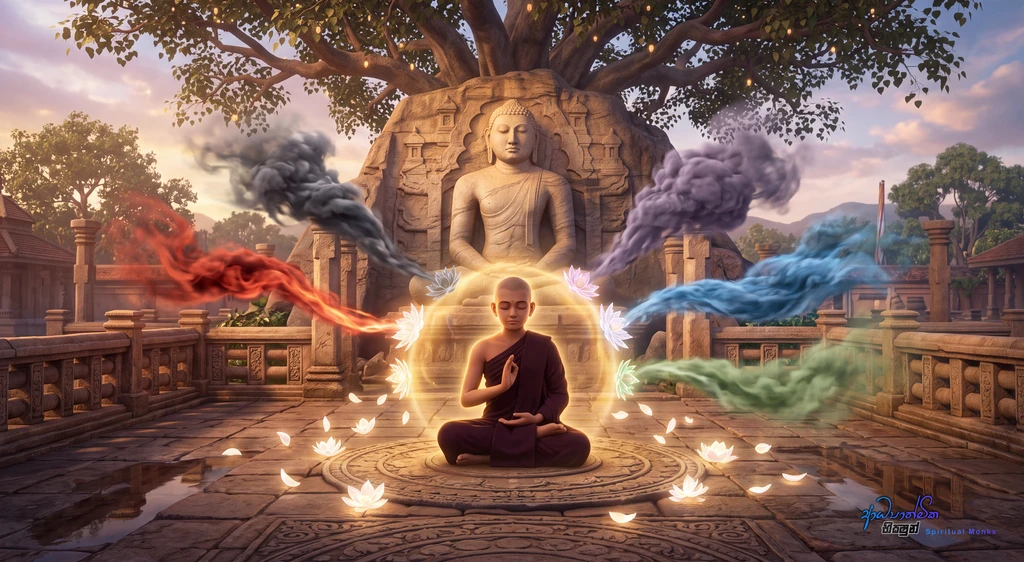
In Buddhist practice, mental agitation is largely caused by five obstacles known as the five hindrances, or Pancha Nivarana. These hindrances severely disrupt your tranquility and prevent spiritual progress. To overcome them, it is helpful to study traditional Theravada texts, such as the writings of Venerable Rerukane Chandawimala Thero and the authentic discourses of the Pali Canon.
The five hindrances consist of:
- Kamachanda, which is sensual desire or craving for pleasant sensory experiences.
- Vyapada, which represents ill-will, anger, or hatred.
- Thina-middha, referring to mental sloth, physical torpor, and dullness.
- Uddhacca-kukkucca, meaning mental restlessness and subtle remorse or regret.
- Vicikiccha, which is paralyzing skeptical doubt.
Identifying which of these five obstacles disturbs your calm is essential for developing mental stability.
A Practical Example of Obstacles During Practice
Consider how sensual craving, or Kamachanda, operates during practice. Sensual desire is not limited to physical intimacy; it includes any strong longing for sensory pleasure. Suppose you sit down for meditation, entering a tranquil space. If a lingering desire arises for a person or pleasure, you might push it away at first. However, if underlying attraction remains rooted in your subconscious, the thought grows stronger.
As your temporary concentration, called Samadhi, begins to drop, that lingering desire breaks through into full awareness. A planned thirty minute meditation session may crumble after fifteen minutes because a hindrance breached your defense. This identical disruption happens with ill-will, dullness, restlessness, and doubt. Recognizing how these hindrances break your concentration is key to protecting your meditative progress.
Bringing Mental Stillness into Daily Life
While hindrances cause frequent agitation, continuous practice helps you cultivate mindfulness, known as Sati, and intuitive wisdom, known as Panna. You should not limit calming the mind strictly to formal sitting meditation. True spiritual progress requires maintaining peaceful awareness while carrying out daily responsibilities.
Investigate your mind throughout the day. Ask yourself what root causes destroy your calm. In Theravada philosophy, all disturbances trace back to three unwholesome roots: Lobha (greed or craving), Dosa (hatred or aversion), and Moha (delusion or ignorance). These mental defilements, termed Kilesa, constantly seek to agitate your lake. By continually investigating your reactions during routine tasks, you train the mind to remain focused and calm in all situations.
The Far-Reaching Impact of Inner Peace
Consistently practicing calming the mind over weeks and months transforms both your everyday life and your spiritual journey. In daily life, mental composure allows you to work, study, and care for your family with lightness and joy. Even martial artists cultivate deep mental stillness to execute their craft effectively. Practical composure supports all mundane achievements.
On the spiritual level, mental calm prepares you for advanced Theravada meditation practices, such as foundational mindfulness meditation, known as Satipatthana, and practical higher absorptions. When engaging in specific concentration practices, such as light visualization or third-eye techniques, remember this critical advice: do not crave visual images, visions, or special achievements. Craving creates agitation. Practice purely for the sake of mental tranquility.
Continue to cultivate this quiet mind in every posture, whether sitting cross-legged or walking through daily life.

We invite you to walk this path with us. Read our teachings, and most importantly, apply them practically in your own life. as you practice, questions will naturally arise. Please feel free to share your experiences and questions in the comments below, via email or contact form. I will do my best to offer guidance in future talks based on your progress. For now, begin this practice with an open heart and a mind free from expectation. Cultivate it correctly, and may you find the clarity and peace you seek.
Thank you for joining us. We hope this blog will be of great benefit to your spiritual journey.
May you all be well and happy.
May the blessings of the Triple Gem be with you all!