Categories: Other Meditation Teachings
May the blessings of the Triple Gem be with you all!
In our shared journey of spiritual growth, gaining a correct understanding of how the mind works is essential for our meditation to progress. The Buddha consistently guided us to understand the mind, as the ultimate destination of this mental comprehension is Nibbana, the state of total liberation from stress and suffering. When one fully achieves this deep comprehension of the mind, they attain enlightenment, becoming a Buddha, a solitary Buddha known as a Pacceka Buddha, or an enlightened disciple called an Arahant. In simple terms, they realize the ultimate freedom of liberation.
Without cultivating self-awareness and discovering who we truly are at a mental level, no matter how many physical offerings or rituals we perform while wishing for liberation, we will not achieve it. Mind understanding in meditation requires direct, practical engagement rather than passive wishing.
Beyond Material Offerings: Why Wisdom and Practice Matter
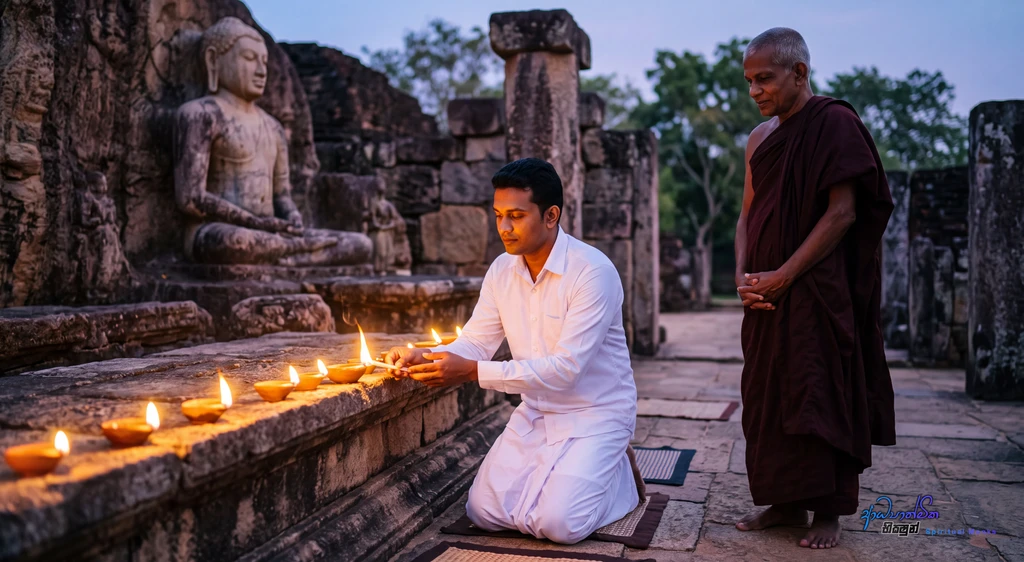
Many devoted practitioners mistakenly believe that liberation, or Nibbana, can be achieved simply by making material offerings, known as Amisa Puja, and holding a gentle wish in their hearts. They often overlook the absolute necessity of active mental practice. Wisdom, or Panna, does not arise through mere wishing.
Consider the great Bodhisattvas who cultivated the ten spiritual perfection qualities, known as Dasa Paramita. They had to systematically practice wisdom over countess lifetimes to attain Buddhahood. Similarly, continuously training ourselves in mind understanding in meditation is what builds our personal pathway to liberation. If our practice of wisdom in this present life does not fully complete the task, the momentum of our mental training carries forward into the next life or future existences. Cultivating wisdom is the fastest way to complete this spiritual journey.
The Karmic Dynamics of Offerings and Wisdom
When we engage in material offerings, the natural law of intentional action, known as Kamma, brings back pleasant cosmic rewards. These are traditionally summarized as five blessings: long life, beauty, happiness, strength, and wisdom, expressed in Pali as Ayu, Vanna, Sukha, Bala, Panna. However, to extract true wisdom from material acts, one must actively purify the mind during the act.
This means recognizing greedy mental states, or Lobha, and cultivating non-greed, or Alobha. It requires identifying angry mental states, known as Dosa, and developing non-hatred, or Adosa. Likewise, one must observe deluded thoughts, called Moha, and foster non-delusion, known as Amoha. This is precisely why Buddhist monastics remind donors during alms offerings to suppress negative roots and elevate wholesome roots.
In the higher teachings of the Buddha, known as Abhidhamma, mental consciousness is carefully categorized. It details sense-sphere wholesome thoughts called Kamavacara Kusala Citta, resultant thoughts known as Kamavacara Vipaka Citta, and functional thoughts called Kamavacara Kriya Citta. Furthermore, the nature of one's rebirth linking consciousness, whether triple-rooted as Tihetuka Patisandhi, double-rooted as Dvihetuka, or rootless as Ahetuka, depends entirely on which wholesome or unwholesome roots accompany the mind. Studying simple guides, such as those written by Venerable Rerukane Chandawimala Maha Thero, can clarify these practical mental distinctions for modern seekers.
Practical Training: Navigating Mind Wandering and Emotions
If we do not understand the inner workings of our mind, entering effective meditation becomes difficult. Whether practicing the Four Foundations of Mindfulness, called Cattaro Satipatthana, or insight practice, known as Vipassana, every valid technique requires observing your own mind.
When beginning meditation, almost every practitioner encounters a universal challenge: the mind constantly drifts into past memories and future plans. This condition of mind wandering affects everyone, regardless of age, background, or whether one practices tranquility meditation, known as Samatha, or insight meditation. Initially, practitioners often feel intense frustration toward this wandering nature, treating it like a personal enemy and asking themselves in annoyance why their focus is broken.
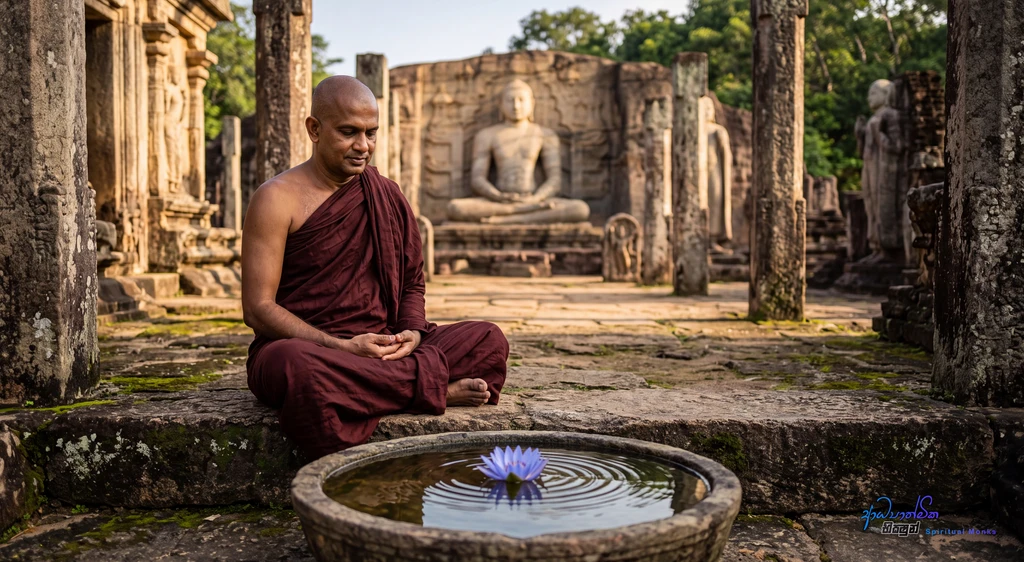
Over time, through actual reflection, meditators realize that getting angry at mind wandering is completely useless. Frustration is not a practical solution. When you recognize that drifting thoughts are simply a natural habit of the untrained mind, your attitude changes. You become neutral and develop equanimity, known in Pali as Upekkha. Once emotional resistance stops, the mind naturally gathers itself, making concentration easier to maintain. This practical realization fulfills the Buddha's advice to his disciples: Samadhing bhavetha bhikkhave, which means, develop mental concentration, O monks.
The Interplay of Past Merit and Present Wisdom
Your presence on the spiritual path is supported by past merit, known as Pina. Good merit grants you the opportunity to encounter spiritual teachers or hear authentic Theravada Buddhist teachings, even if you live far across the globe. However, merit alone is not enough to walk the path. You must apply personal wisdom to practice what is taught.
Without active wisdom, a person can spend endless lifetimes making merit while remaining trapped in cyclical existence. Consider how Prince Siddhartha practically strived for years before attaining full enlightenment under the Bodhi tree. Consider also the chief disciples, Venerable Sariputta and Venerable Moggallana. Upon hearing a single insightful four-line verse summarizing cause and effect, their sharp wisdom allowed them to instantly understand the nature of mind and attain the first stage of enlightenment, known as Stream-Entry or Sotapanna. Yet, to achieve full liberation, they still dedicated intense day and night practical effort under the Buddha's guidance.
Visiting revered ancient monuments such as the colossal white stupa Ruwanweliseya or the Sixteen Sacred Sites, known as Solosmasthana in Sri Lanka, brings wonderful temporary peace and positive cosmic results. Yet, these external visits cannot replace internal mind understanding in meditation. True mental quietude comes only through direct inner observation.
Mastering the Mind: Drivers, Jhanas, and Wise Reflection
Understanding your mind is very similar to learning how to drive a vehicle. Before driving smoothly, a student driver must learn the mechanics, how to use the gears, the accelerator, the brakes, the steering wheel, and the signal lights. Beginners place an 'L' board on their vehicle because they are still building confidence, and only after thorough practice do they drive with ease.
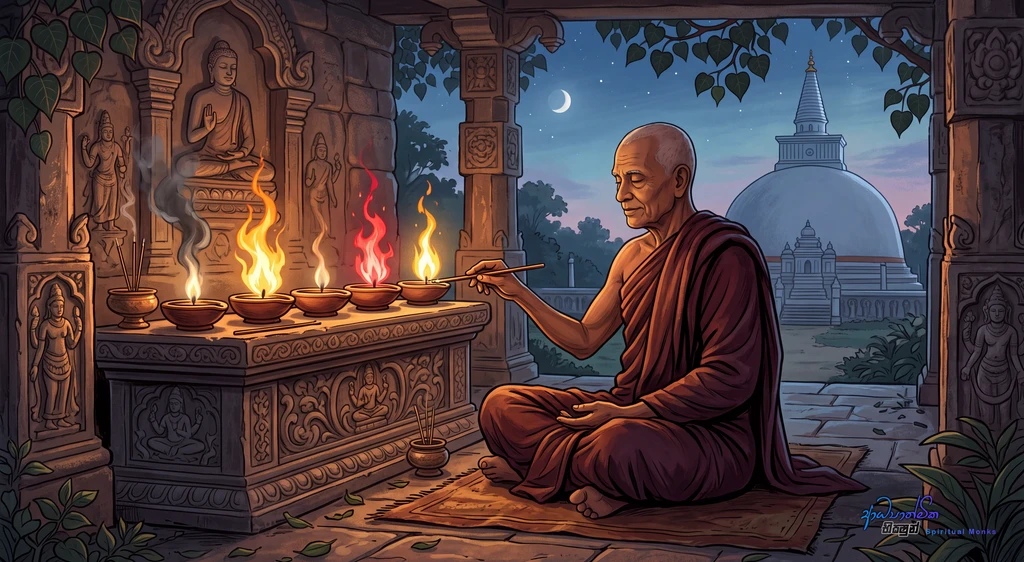
In mental training, we must systematically learn our mind's operational tools. A very helpful mental resolution to make during daily practice is: Varthamana manasa avabodha veva, which means, may my present mind be clearly understood. Continually check your mental state. Is your mind currently experiencing wholesome roots or unwholesome roots? Is your mind trapped by the five mental hindrances, known as Panca Nivarana?
These five hindrances consist of:
- Sensual desire, known as Kamacchanda
- Ill-will or resentment, known as Vyapada
- Sloth and drowsiness, known as Thinamiddha
- Restlessness and regret, known as Uddhacca-Kukkucca
- Skeptical doubt, known as Vicikiccha
Observing whether these hindrances are present requires wise reflection, termed Yoniso Manasikara in Buddhist teachings. Wise reflection is the specific key that transforms theoretical learning into direct practical growth. Even when achieving deep meditative absorption, known as the first Jhana, a meditator must use wise reflection to examine how that state feels, whether subtle hindrances affect it, and how long focus can be maintained.
Deepening Absorption, Psychic Powers, and Everyday Wisdom
There is a vast difference between simply repeating Buddhist terms from books and having genuine meditation experience. Theoretical commentators are sometimes like parrots, quoting technical lists without real inner realization. In the Chabbisodhana Sutta of the Majjhima Nikaya, the Buddha notes that true spiritual attainments must be verified through deep practical experience, comparing real practice to someone who has actually lived through a difficult challenge rather than merely talking about it.
Without deep wisdom, even special spiritual abilities can fade away. Some individuals possess natural abilities from birth or mid-life due to past life habits, such as the divine eye, known as Dibba-Cakkhu, or higher spiritual powers, known as Abhinna. However, if they lack clear mind understanding in meditation, unwholesome hindrances can cloud their progress, causing those abilities to decline.
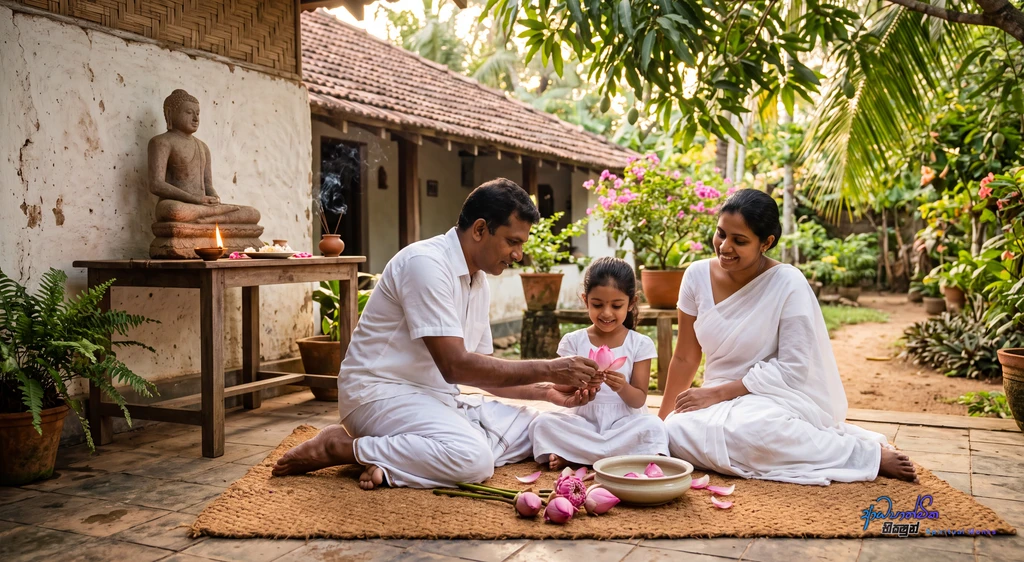
Mind understanding is not restricted to formal sitting practice on a cushion. Wisdom is equally vital in everyday secular life. It allows for harmonious understanding between husband and wife, parents and children, neighbors, colleagues, and citizens within a society. Maintaining practical awareness in every moment creates stability in both worldly tasks and spiritual goals.
Accelerating Liberation Through Sharp Wisdom
In the famous discourse on mindfulness, the Mahasatipatthana Sutta, the Buddha explains that if one practices the foundations of mindfulness with clear comprehension, liberation can be realized within seven years. However, for a practitioner with exceptionally sharp wisdom, realization can occur in as little as seven days. This shows how crucial sharp mental discernment is for spiritual breakthrough.
While modern society advances in technology and material infrastructure, inner wisdom often declines. By actively turning inward, applying wise reflection, and observing your present mental state without tension, you loosen inner stress and allow the mind to settle into natural peace.
Commit yourselves to exploring your minds with patience, clarity, and steady effort. May all of you develop sharp wisdom, overcome all inner obstacles, and experience the highest peace of full mental liberation.
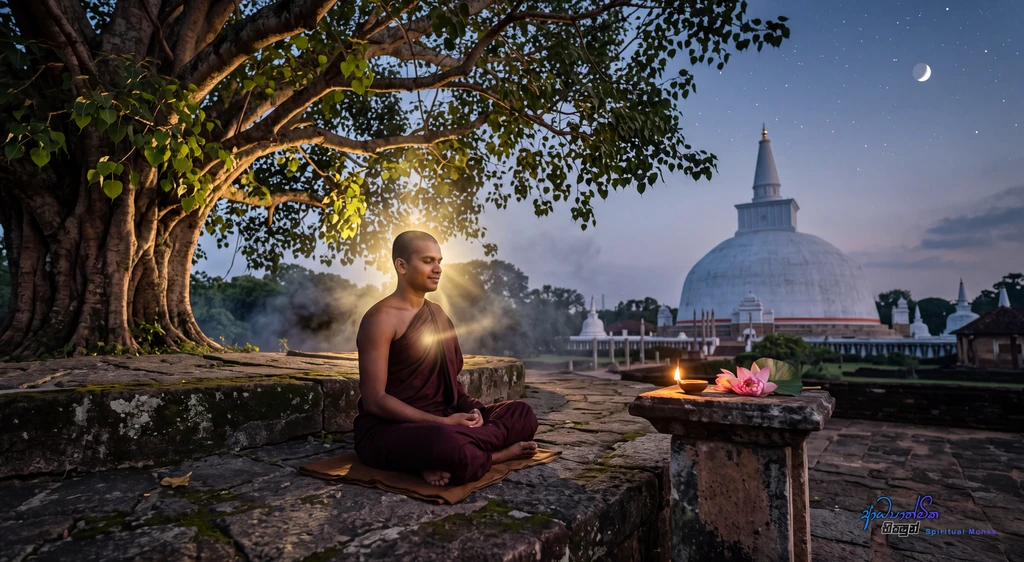
We invite you to walk this path with us. Read our teachings, and most importantly, apply them practically in your own life. as you practice, questions will naturally arise. Please feel free to share your experiences and questions in the comments below, via email or contact form. I will do my best to offer guidance in future talks based on your progress. For now, begin this practice with an open heart and a mind free from expectation. Cultivate it correctly, and may you find the clarity and peace you seek.
Thank you for joining us. We hope this blog will be of great benefit to your spiritual journey.
May you all be well and happy.
May the blessings of the Triple Gem be with you all!